
Most American brands spend nearly half of their digital marketing budget managing social media operations. For e-commerce managers trying to control costs and boost ad performance, the challenge is finding automation solutions that deliver real value without losing the human touch. This article uncovers how the latest social media automation technologies powered by artificial intelligence are changing the way managers oversee campaigns and engage audiences worldwide.
Table of Contents
- What Social Media Automation Means Today
- Key Types And Major Tools Available
- How AI Powers Automated Social Campaigns
- Essential Features For Marketing Success
- Risks, Brand Identity, And Best Practices
Key Takeaways
| Point | Details |
|---|---|
| Advancements in Automation | Social media automation has evolved into a sophisticated ecosystem using AI for content generation and audience engagement. |
| Essential Tools | Businesses should choose automation tools based on specific needs and ensure they integrate well across platforms. |
| AI in Campaigns | AI-driven tools enhance targeting and content optimization, allowing marketers to adapt to audience behaviors in real-time. |
| Risk Management | Companies must implement proactive strategies to manage risks associated with automation, ensuring brand authenticity and reputation. |
What Social Media Automation Means Today
Social media automation has rapidly transformed from a simple scheduling tool into a sophisticated ecosystem powered by artificial intelligence. Today, it represents a complex technological approach that enables businesses to generate, distribute, and manage digital content with unprecedented efficiency. Advanced AI-powered systems are reshaping how organizations interact with audiences across multiple digital platforms.
At its core, modern social media automation integrates advanced technologies like natural language processing and machine learning to accomplish tasks that were previously manual and time-consuming. These systems can now generate personalized content, analyze audience engagement patterns, and make real-time recommendations with minimal human intervention. By automating routine tasks such as post scheduling, content creation, and customer interaction tracking, businesses can dramatically reduce operational overhead while maintaining a consistent online presence.
The technological landscape of social media automation encompasses several key capabilities:
- Intelligent content generation using generative AI
- Automated audience targeting and segmentation
- Real-time performance analytics and optimization
- Cross-platform content synchronization
- Personalized interaction management
Companies leveraging these AI-powered automation techniques can expect significant improvements in audience engagement, brand visibility, and operational efficiency. The technology continues to evolve, promising even more sophisticated capabilities in content creation and audience interaction.
Pro tip: Start with a small-scale AI automation pilot to understand its potential impact on your specific social media strategy before full implementation.
Key Types and Major Tools Available
Social media automation tools have evolved into sophisticated platforms that cater to diverse business needs, ranging from basic scheduling to advanced AI-driven content management. Modern automation solutions offer a wide spectrum of capabilities designed to streamline digital marketing workflows and enhance online engagement.
The landscape of social media automation can be categorized into several key types:
- Scheduling Tools
- Buffer
- Hootsuite
- Later
- Sprout Social
- Content Generation Tools
- Jasper AI
- Copy.ai
- Writesonic
- Rekla AI
- Analytics and Performance Tracking
- Sprout Social
- Hootsuite Insights
- Google Analytics
- SocialBee
- Engagement Management
- Agorapulse
- MeetEdgar
- Sendible
- CoSchedule
Each category of tools offers unique features targeting specific aspects of social media management. Scheduling tools focus on publishing content at optimal times, while content generation platforms leverage artificial intelligence to create engaging posts. Analytics tools provide deep insights into performance metrics, and engagement management platforms help businesses interact more effectively with their audience.
Here’s a comparison of major social media automation tool types and their strategic business impact:
| Tool Type | Key Advantage | Strategic Impact |
|---|---|---|
| Scheduling Platforms | Optimal post timing | Boosts visibility, saves time |
| Content Generation | AI-driven creativity | Delivers engaging brand content |
| Analytics Solutions | Detailed performance insights | Enables data-driven decisions |
| Engagement Management | Streamlined interactions | Strengthens audience relationships |
Businesses should select automation tools based on their specific requirements, budget constraints, and strategic goals. The most effective solutions typically offer integrations across multiple platforms, robust analytics, and flexible content creation capabilities.
Pro tip: Always test automation tools with a free trial before committing to ensure they align perfectly with your social media strategy and brand voice.
How AI Powers Automated Social Campaigns
Artificial intelligence has revolutionized social media marketing by transforming how brands create, deploy, and optimize digital campaigns. Advanced predictive analytics enable marketers to develop highly sophisticated strategies that adapt in real-time to changing audience behaviors and preferences.
The core mechanisms of AI-powered social campaigns involve several sophisticated technologies:
- Machine Learning Algorithms: Continuously analyze user interactions
- Natural Language Processing: Generate and optimize content
- Predictive Modeling: Forecast engagement and conversion potential
- Real-Time Data Processing: Adjust campaign parameters instantly
At the technical core, AI-driven automation supports precise audience targeting by breaking down complex user data into actionable insights. This allows marketers to create hyper-personalized content experiences that dramatically improve engagement rates, click-through performance, and overall campaign effectiveness.

Modern AI social campaign tools can automatically generate content variations, predict optimal posting times, recommend audience segments, and even autonomously adjust bidding strategies across multiple platforms. This level of intelligent automation transforms digital marketing from a manual, time-consuming process into a dynamic, responsive system that continuously learns and improves.
Pro tip: Implement AI-powered social campaigns incrementally, starting with one platform and gradually expanding to develop a nuanced understanding of your specific audience dynamics.
Essential Features for Marketing Success
Successful social media marketing requires a sophisticated toolkit that goes beyond basic posting capabilities. Comprehensive marketing automation platforms enable businesses to transform their digital strategies through advanced technological features that drive meaningful engagement and measurable results.
Key essential features for marketing success include:
- Content Creation and Optimization
- AI-powered content generation
- Multi-format creative capabilities
- Automatic language and tone optimization
- Brand voice consistency tools
- Audience Targeting and Segmentation
- Behavioral data analysis
- Psychological profiling
- Dynamic audience segmentation
- Predictive engagement modeling
- Performance Analytics
- Real-time campaign tracking
- Comprehensive engagement metrics
- Conversion rate analysis
- Competitive benchmarking
- Workflow Automation
- Cross-platform scheduling
- Automated response management
- Social listening and trend detection
- Intelligent content distribution
Platform functionalities are increasingly becoming the cornerstone of sophisticated digital marketing strategies. These tools empower marketers to deliver personalized experiences, make data-driven decisions, and maintain consistent brand messaging across multiple channels with unprecedented precision and efficiency.
Modern marketing success demands a holistic approach that integrates advanced technologies, deep audience understanding, and agile campaign management. By leveraging these comprehensive features, businesses can create more impactful, responsive, and intelligent social media strategies that adapt in real time to changing market dynamics.
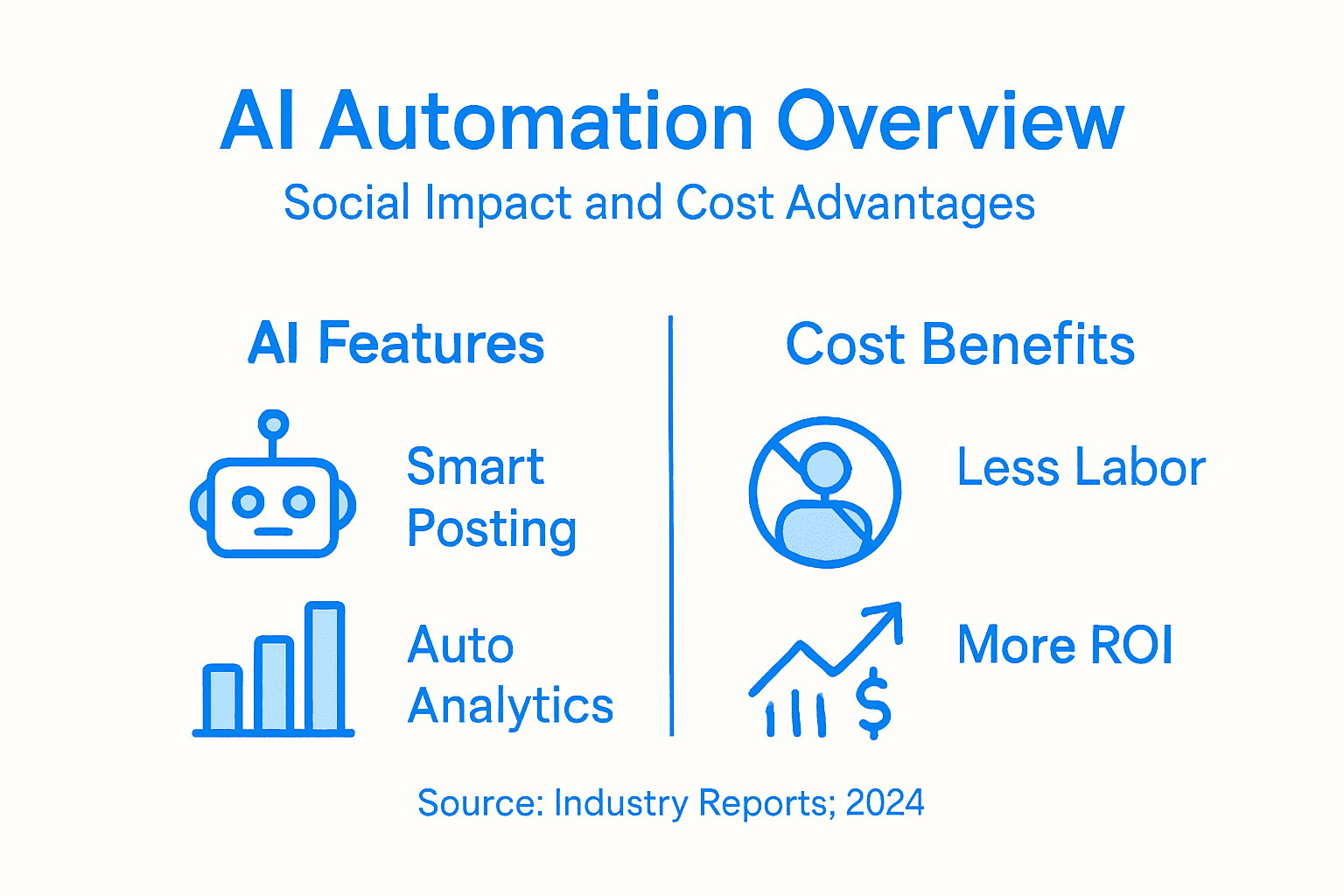
This table summarizes essential AI features marketers should prioritize for campaign success:
| Essential Feature | Marketing Benefit | Example Application |
|---|---|---|
| Predictive Modeling | Improves targeting accuracy | Forecasts campaign ROI |
| Real-Time Analytics | Enables instant campaign tweaks | Adjusts strategy on-the-fly |
| Content Optimization | Enhances brand consistency | Suggests ideal post formats |
| Automated Segmentation | Tailors messages to personas | Delivers relevant offers |
Pro tip: Conduct a quarterly audit of your marketing automation tools to ensure they continue meeting your evolving business needs and technological capabilities.
Risks, Brand Identity, and Best Practices
Social media automation presents a complex landscape of opportunities and potential pitfalls that demand strategic navigation. Proactive risk management becomes crucial in maintaining brand reputation and customer trust while leveraging technological advantages.
Key risks associated with social media automation include:
- Reputation Management Challenges
- Unintended messaging misalignment
- Loss of authentic brand voice
- Potential misinformation spread
- Platform detection and penalties
- Technical Vulnerability Risks
- Algorithm manipulation detection
- Privacy and data security concerns
- Inconsistent customer interaction quality
- Potential compliance violations
- Brand Identity Preservation Strategies
- Maintain human oversight
- Develop sophisticated content guidelines
- Create nuanced automation rules
- Implement real-time monitoring systems
Automation best practices emphasize creating a balanced approach that prioritizes authenticity and strategic intelligence. Successful implementation requires developing sophisticated systems that can adapt dynamically while preserving the unique characteristics of your brand communication.
Companies must recognize that social media automation is not about replacing human interaction but augmenting and enhancing it. By establishing clear guidelines, maintaining consistent brand voice, and implementing robust monitoring mechanisms, organizations can leverage automation technologies without sacrificing the genuine connections that drive meaningful customer relationships.
Pro tip: Conduct monthly audits of your automated systems to ensure they continue reflecting your brand’s authentic voice and strategic objectives.
Unlock the Power of AI-Driven Social Media Automation Today
The article highlights the critical challenges marketers face in managing complex social media campaigns while maintaining brand authenticity and reducing costs. If you are looking to solve pain points like inefficient manual scheduling, inconsistent audience targeting, and costly ad management, embracing AI-powered automation is essential. By leveraging advanced concepts such as AI-generated content, real-time optimization, and predictive audience segmentation, businesses can boost engagement while cutting advertising expenses.
Rekla.AI is designed exactly for this purpose. Our platform uses OpenAI and GPT technology to simplify campaign creation and automate ad deployment across over 15 platforms including Facebook and Google. With features like AI ad generation and budget management, you gain precise control while saving valuable time. To learn how Rekla.AI can transform your digital marketing efforts, visit Rekla.AI today.
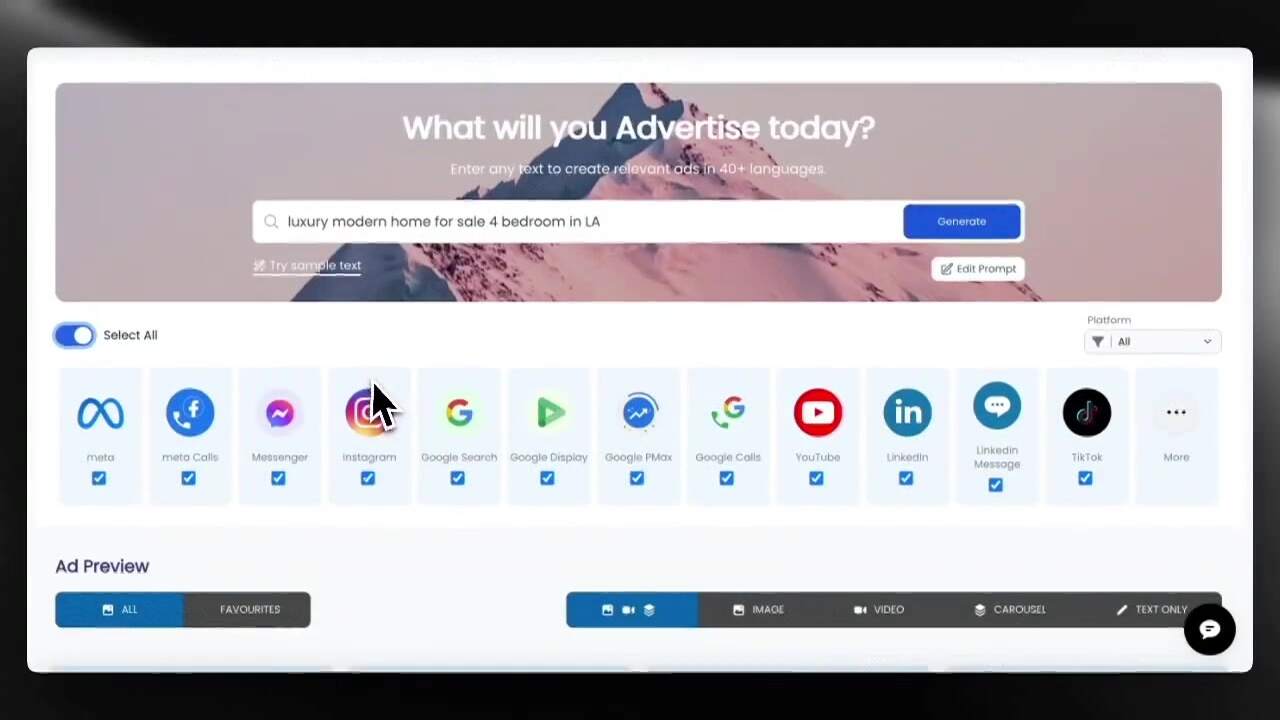
Take charge of your social media automation by trying Rekla.AI now. Experience smarter targeting, better ROI, and effortless multi-channel campaigns. Don’t let your brand fall behind; the future of efficient advertising is here. Explore the platform and start your journey towards cost-effective, AI-powered marketing at https://www.rekla.ai/.
Frequently Asked Questions
What is social media automation?
Social media automation refers to the use of technology, particularly artificial intelligence, to streamline and enhance the management of social media content, interactions, and analytics, allowing businesses to operate more efficiently.
How does AI impact social media automation?
AI enhances social media automation by enabling intelligent content generation, real-time performance analytics, and personalized audience targeting, which collectively improve engagement and operational efficiency.
What are the key types of social media automation tools?
Key types of social media automation tools include scheduling tools, content generation tools, analytics and performance tracking platforms, and engagement management systems, each serving a specific purpose in social media management.
What are the risks associated with social media automation?
Risks of social media automation include challenges in reputation management, technical vulnerabilities, and maintaining brand identity. Organizations must implement strategies to mitigate these risks while leveraging automation benefits.
 English
 English (UK)
 Polski
 Deutsch
 Español
 Français
 Português
 Svenska
 Dansk
Dansk Nederlands