

Managing digital ads across smartphones, tablets, desktops, and smart TVs often feels overwhelming when each channel demands separate attention. As today’s consumers jump between devices while shopping, single-platform campaigns can leave costly gaps and missed opportunities. By embracing cross-platform advertising, small businesses and digital marketers can create unified brand experiences and cut down repetitive manual tasks. This introduction guides you through what works, what does not, and how integrated strategies help you reach the right audience more efficiently.
Inhaltsverzeichnis
- Cross-Platform Ads Defined and Debunked
- Key Types and Platform Variations
- How Cross-Platform Advertising Works
- Major Benefits for SMBs and Marketers
- Risks, Costs, and Common Pitfalls
- Comparing Single vs. Cross-Platform Strategies
Wichtige Erkenntnisse
| Punkt | Details |
|---|---|
| Cross-Platform Advertising Enhances Brand Consistency | A unified messaging strategy across devices improves consumer engagement and brand recognition. |
| Robust Measurement is Essential | Advanced tracking and analytics are necessary to validate the effectiveness of digital ads and inform marketing strategies. |
| Understanding Platform-Specific Insights is Crucial | Tailoring ads to the unique characteristics of each platform optimizes targeting and engagement. |
| Recognize and Mitigate Risks | Addressing challenges such as data fragmentation and privacy compliance is vital for successful cross-platform campaigns. |
Cross-Platform Ads Defined and Debunked
Cross-platform advertising represents a strategic approach to digital marketing that transcends traditional single-channel strategies. By targeting consumers across multiple digital devices and platforms, businesses can create seamless brand experiences that adapt to modern consumer behavior. Digital advertising effectiveness requires sophisticated measurement techniques that go beyond simplistic click-tracking.
At its core, cross-platform advertising means synchronizing marketing messages across smartphones, tablets, desktops, and smart TVs. This approach recognizes that consumers increasingly switch between devices during their purchase journey. Key characteristics include:
- Consistent brand messaging across all platforms
- Integrated analytics tracking consumer interactions
- Personalized experiences based on device-specific data
- Adaptive content that responds to user engagement
Historically, digital advertising suffered from fragmented strategies that treated each device as an isolated marketing channel. Modern cross-platform approaches recognize the interconnected nature of digital consumer experiences. Multi-device targeting allows brands to create more nuanced, responsive advertising campaigns that feel native to each platform.
Cross-platform advertising transforms disconnected marketing efforts into a cohesive, intelligent communication strategy.
Businesses adopting cross-platform strategies must also be cautious about overestimating ad effectiveness. Robust measurement approaches are critical for validating digital ad impact, ensuring that advertising investments translate into genuine consumer engagement.
Profi-Tipp: Develop a cross-platform strategy by mapping your target audience’s device usage and creating personalized content that feels native to each platform.
Key Types and Platform Variations
Cross-platform advertising encompasses a diverse range of digital marketing strategies designed to reach consumers across multiple devices and platforms. Digital advertising types vary significantly by platform, each with unique characteristics that demand specialized approaches to engagement and targeting.
The primary types of cross-platform advertising include:
- Display-Anzeigen: Visual advertisements across websites and mobile applications
- Video-Anzeigen: Short-form and long-form video content on social media and streaming platforms
- Social Media Promotions: Targeted advertisements on platforms like Facebook, Instagram, and TikTok
- Search Engine Marketing: Sponsored listings and targeted search result advertisements
- Content Marketing: Sponsored articles, blog posts, and native advertising
Each platform variation requires a tailored approach. For instance, advertising strategies must adapt to platform-specific user interfaces and audience demographics, such as creating short-format videos for TikTok versus more detailed content for desktop platforms.
Modern cross-platform advertising demands a nuanced understanding of each platform’s unique ecosystem and user behavior.
Targeting methodologies also differ dramatically across platforms. Some focus on Interest-Based Advertising (IBA), while others specialize in Cross-App Advertising (CAA) or Viewed Content Advertising (VCA). Advertisers must understand these variations to optimize campaign reach and relevance.

Here’s a quick summary of common targeting methodologies used in cross-platform advertising:
| Methodology | Hauptthema | Typical Platform Examples |
|---|---|---|
| Interest-Based Advertising | Targets user interests and behaviors | Social media, search engines |
| Cross-App Advertising | Connects ads across different apps | Mobile devices, gaming platforms |
| Viewed Content Advertising | Matches ads to previously viewed content | Streaming services, news sites |
This overview helps clarify how each targeting method operates across digital touchpoints.
Profi-Tipp: Develop platform-specific creative variations that respect each platform’s unique user experience and engagement patterns.
How Cross-Platform Advertising Works
Cross-platform advertising operates through a sophisticated mechanism of data integration and strategic messaging across multiple digital touchpoints. Tracking and analyzing consumer behavior data enables marketers to create highly personalized, targeted advertising experiences that adapt to individual user preferences and device interactions.
The core operational process involves several critical steps:
- Audience Segmentation: Categorizing users based on demographic, behavioral, and cross-device data
- Data Integration: Collecting and synthesizing user interactions from multiple platforms
- Prädiktive Modellierung: Using machine learning to anticipate user engagement patterns
- Dynamic Content Delivery: Adapting ad content and timing to specific platform requirements
- Multi-Touch Attribution: Tracking user journey across different devices and platforms
Cross-platform advertising technologies capture comprehensive consumer interactions, allowing marketers to map complex customer journeys with unprecedented precision. This approach goes beyond traditional single-channel advertising by creating a unified, consistent brand narrative that follows consumers across their digital ecosystem.
Effective cross-platform advertising transforms fragmented user data into a coherent, actionable marketing strategy.
Advanced targeting methodologies leverage machine learning and federated learning models to optimize ad delivery while maintaining user privacy. These sophisticated algorithms analyze multiple data points to determine the most effective advertising approach for each unique user profile.
Profi-Tipp: Invest in robust data integration tools that can synthesize user interactions across platforms, enabling more nuanced and personalized advertising strategies.
Major Benefits for SMBs and Marketers
Cross-platform digital advertising represents a game-changing opportunity for small and medium-sized businesses (SMBs) to compete effectively in a complex digital marketplace. Digital advertising technologies level the playing field by providing sophisticated targeting and analytics capabilities previously accessible only to large corporations.
The key benefits for SMBs and marketers include:
- Cost-Effective Marketing: Reduced advertising expenses compared to traditional channels
- Präzises Targeting der Zielgruppe: Ability to reach niche market segments with unprecedented accuracy
- Leistungsanalyse: Real-time insights into campaign effectiveness and customer behavior
- Scalable Advertising: Flexible budget allocation across multiple platforms
- Enhanced Customer Acquisition: Improved strategies for attracting and converting potential customers
Cross-platform digital advertising empowers SMBs to navigate economic challenges, providing them with powerful tools to optimize marketing spend and drive business growth. By leveraging multiple digital platforms simultaneously, businesses can maximize their visibility and reach potential customers more efficiently than ever before.
Digital advertising transforms marketing from a cost center into a strategic growth engine for small businesses.
Advanced targeting technologies enable SMBs to create personalized marketing experiences that rival those of larger competitors. These sophisticated approaches allow businesses to craft nuanced advertising strategies that adapt in real-time to changing market conditions and consumer preferences.
Profi-Tipp: Allocate your digital advertising budget across multiple platforms, focusing on those that demonstrate the highest return on investment for your specific target audience.
Risks, Costs, and Common Pitfalls
Cross-platform advertising, while powerful, presents complex challenges that marketers must carefully navigate. Cross-platform ad tracking faces significant operational hurdles that can undermine campaign effectiveness and increase potential risks.
Key risks and potential pitfalls include:
- Fragmentierung der Daten: Inconsistent metrics across different platforms
- Einhaltung des Datenschutzes: Navigating stringent data protection regulations
- Attribution Complexity: Difficulty tracking true campaign performance
- Ad Fatigue: Risk of overexposing audiences to repetitive messaging
- High Operational Costs: Investment required for sophisticated tracking tools
Performance measurement challenges can significantly impact advertising strategies, creating potential blind spots in marketing decision-making. These complexities arise from scattered data sources, varying platform metrics, and evolving privacy constraints that make comprehensive tracking increasingly difficult.
The following table compares risks and mitigation strategies for cross-platform advertising:
| Risiko | Impact | Minderungsstrategie |
|---|---|---|
| Fragmentierung der Daten | Inconsistent metrics hinder analysis | Use unified analytics platforms |
| Einhaltung des Datenschutzes | Potential regulatory penalties | Adopt privacy-first technologies |
| Attribution Complexity | Tracking campaign success is harder | Implement multi-touch attribution models |
| Ad Fatigue | Declining audience engagement | Rotate creative content regularly |
| High Operational Costs | Increased budget requirements | Prioritize automation and smart tools |
These strategies help address major challenges faced by digital marketers.
The most successful cross-platform strategies anticipate and mitigate potential tracking and measurement challenges before they become critical issues.
Technological investments are crucial for managing these risks effectively. Businesses must adopt advanced tracking technologies, unified measurement tools, and privacy-first approaches to maintain campaign integrity and optimize advertising spend.
Profi-Tipp: Implement server-side tracking and invest in unified attribution models to reconcile data discrepancies and maintain accurate performance insights across multiple platforms.
Comparing Single vs. Cross-Platform Strategies
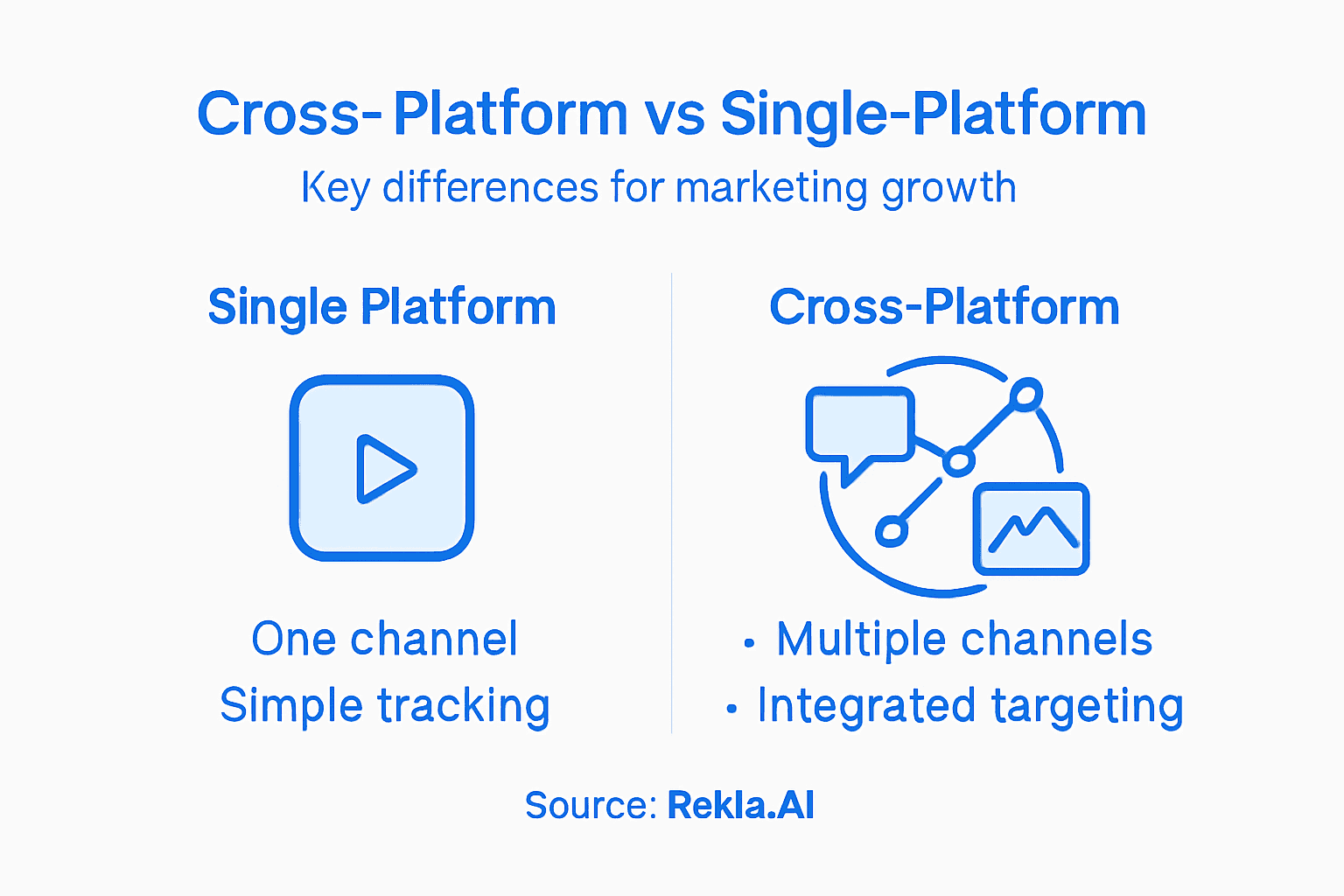
Modern digital advertising demands a nuanced approach that moves beyond traditional single-platform tactics. Comparative studies reveal significant performance differences between isolated and integrated marketing strategies, highlighting the limitations of single-channel advertising.
Key differences between single and cross-platform strategies include:
- Audience Reach:
- Single Platform: Limited to one device/channel
- Cross-Platform: Comprehensive multi-device engagement
- Data Insights:
- Single Platform: Fragmented user understanding
- Cross-Platform: Holistic consumer behavior tracking
- Messaging Consistency:
- Single Platform: Disconnected communication
- Cross-Platform: Unified brand narrative
- Campaign Flexibility:
- Single Platform: Rigid targeting
- Cross-Platform: Dynamic, adaptive advertising
Single-platform campaigns often miss critical conversion opportunities by failing to recognize consumers’ multi-device behaviors. Cross-platform strategies leverage integrated data systems and machine learning to provide comprehensive consumer insights and deliver personalized ads in real-time across different devices.
The future of digital advertising lies in understanding and adapting to the complex, interconnected user journey.
Technological sophistication distinguishes cross-platform approaches, enabling marketers to create more responsive, intelligent advertising experiences that align with modern consumer behaviors.
Profi-Tipp: Develop a comprehensive cross-platform strategy by mapping your target audience’s device interactions and creating seamlessly coordinated messaging across all channels.
Unlock Growth with Smarter Cross-Platform Advertising Today
The article highlights the key challenge businesses face in managing fragmented data and inconsistent messaging across multiple digital devices and platforms. If you struggle with complex audience targeting, tedious campaign management, and maximizing ROI on cross-platform ads, you are not alone. Rekla.AI directly addresses these pain points by offering an AI-powered platform designed to unify advertising efforts across more than 15 leading social channels and platforms. With features like AI-generated creatives, real-time optimization, and precise audience targeting, Rekla.AI helps you save time, reduce costs, and deliver consistent, compelling ads that adapt seamlessly across devices.
Experience how AI-driven automation can turn scattered, complicated campaigns into a cohesive, high-impact advertising strategy that resonates with your audience on every digital touchpoint. Are you ready to amplify your digital marketing efforts and gain a competitive edge?
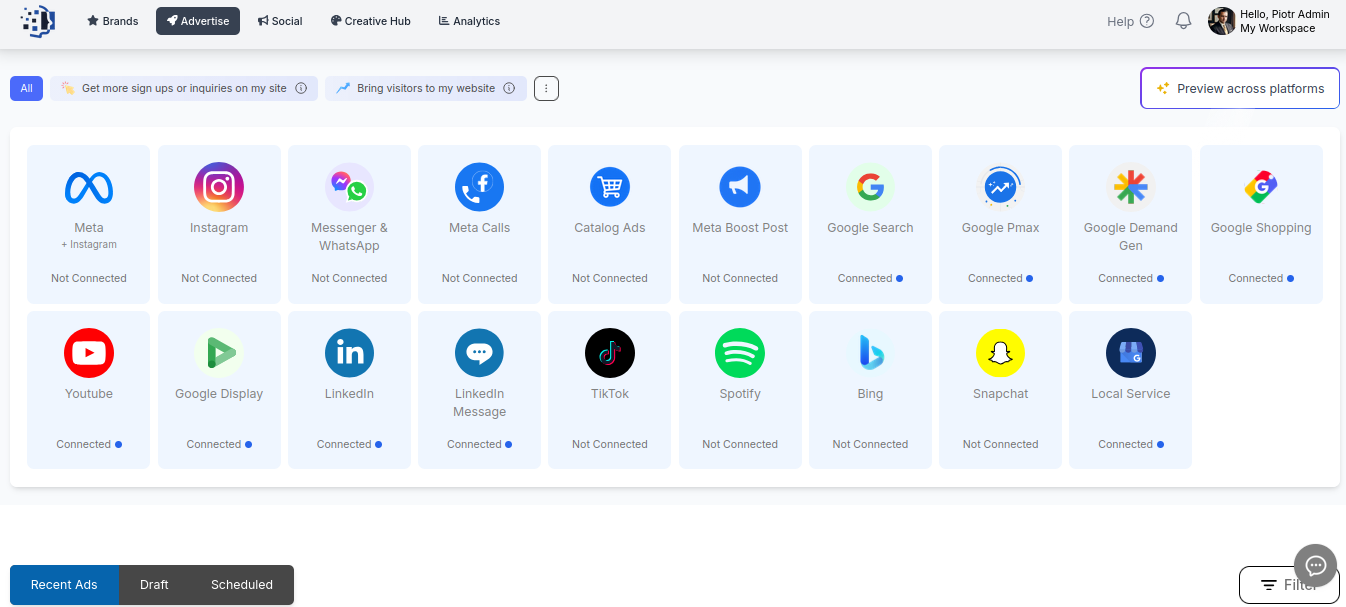
Start transforming your advertising with Rekla.AI. Visit https://www.rekla.ai/ now to explore how our intuitive platform empowers small and medium-sized businesses and marketers to create, manage, and optimize cross-platform ads effortlessly. Don’t let your advertising fall behind. Use AI-powered advertising automation to boost click-through rates, cut costs, and scale smarter campaigns across Facebook, Google, TikTok, LinkedIn, and beyond.
Häufig gestellte Fragen
What are the benefits of cross-platform advertising?
Cross-platform advertising offers benefits such as cost-effective marketing, precise audience targeting, performance analytics, scalable advertising, and enhanced customer acquisition strategies.
How does cross-platform advertising improve customer engagement?
Cross-platform advertising improves customer engagement by delivering consistent brand messaging across various devices and platforms, creating personalized experiences that adapt to user behaviors and preferences.
What are the key types of cross-platform ads?
The key types of cross-platform ads include display ads, video ads, social media promotions, search engine marketing, and content marketing, each designed to effectively reach consumers on different platforms.
What challenges should marketers be aware of with cross-platform advertising?
Marketers should be aware of challenges such as data fragmentation, privacy compliance, attribution complexity, ad fatigue, and the potential high operational costs associated with managing cross-platform campaigns.
Empfohlen
- Cross-Platform Ads: Maximizing Reach and Efficiency
- Plattformübergreifendes Anzeigenmanagement: Effiziente Steigerung des ROI
- Plattformübergreifendes Anzeigenmanagement: Effiziente Steigerung des ROI
- Scalable Advertising Strategies: Boost ROI in 2026
- How to Track ROI From Your Facebook and Google Ads – City Web Company | Digital Marketing Agency
 English
 English (UK)
 Polski
 Deutsch
 Español
 Français
 Português
 Svenska
 Dansk
Dansk Nederlands