

Reaching your customers online is tougher when everyone is facing information overload. Standing out requires more than just regular updates or ads. If messages fail to connect, you risk losing potential sales and loyal followers to faster, smarter competitors.
The right automation strategies can transform your marketing results. By taking advantage of hyper-personalized communication experiences and real-time engagement insights, you can turn interactions into lasting relationships and increased sales. These actionable methods unlock proven benefits only available through the latest advances in AI-powered marketing.
Discover the most effective ways you can use automation to engage your audience, personalize communication, and make decisions with confidence. Each approach will give your brand a competitive edge that you cannot afford to miss.
Índice
- 1. Email Automation For Personalized Campaigns
- 2. Social Media Automation To Boost Engagement
- 3. Ad Campaign Management Across Multiple Platforms
- 4. Audience Segmentation For Targeted Messaging
- 5. A/B Testing Automation To Maximize Results
- 6. Real-Time Campaign Optimization Tools
- 7. Analytics Automation For Smarter Decisions
Resumen rápido
| Para llevar | Explicación |
|---|---|
| 1. Personalize Emails for Engagement | Use automated email strategies to tailor messages based on customer behavior, increasing engagement and conversion rates effectively. |
| 2. Automate Social Media Content | Implement social media automation tools to maintain consistent content delivery and improve audience interaction across different platforms. |
| 3. Manage Ads Across Multiple Platforms | Adopt a unified strategy for advertising to present a cohesive brand message and utilize real-time adjustments to optimize campaign performance. |
| 4. Segment Audiences for Precision Marketing | Break down customer groups to develop targeted messaging that aligns with their unique preferences and behaviors, enhancing marketing effectiveness. |
| 5. Utilize A/B Testing for Optimization | Automate A/B testing to analyze different marketing approaches, allowing for informed decisions that improve conversion rates and campaign strategy. |
1. Email Automation for Personalized Campaigns
Email automation transforms how e-commerce brands connect with customers by delivering precisely targeted messages at strategic moments. By leveraging advanced technologies, marketers can now create hyper-personalized communication experiences that dramatically improve customer engagement and conversion rates.
Modern email automation goes far beyond simple batch messaging. It uses sophisticated AI algorithms to analyze customer behaviors, preferences, and interaction history to craft messages that feel individually crafted. Predictive analytics enable precise customer targeting, allowing brands to:
- Segment audiences based on detailed behavioral patterns
- Trigger emails based on specific customer actions
- Customize content dynamically for each recipient
- Optimize send times for maximum engagement
- Recover potentially lost sales through strategic follow-ups
The power of email automation lies in its ability to make each customer feel uniquely understood. Large language models now enable businesses to generate contextually relevant emails that adapt to individual user profiles, creating a more intimate and responsive communication strategy.
Personalized emails can increase open rates by up to 26% and conversion rates by 15%, making them a critical tool for e-commerce success.
Successful implementation requires understanding your customer journey and creating targeted automation workflows. This means mapping out specific scenarios where automated emails can provide value – from welcome sequences and abandoned cart reminders to post-purchase follow-ups and re-engagement campaigns.
Consejo profesional: Start by mapping your customer’s typical buying journey and identifying 3-5 key touchpoints where automated, personalized emails can provide maximum value.
2. Social Media Automation to Boost Engagement
Social media automation represents a powerful strategy for e-commerce brands to maintain consistent online presence and drive meaningful audience interactions. By leveraging intelligent technologies, businesses can now transform their digital marketing approach into a streamlined engagement powerhouse.
Artificial intelligence enables sophisticated audience engagement across multiple platforms simultaneously. This means your brand can create targeted content that resonates with specific customer segments while reducing manual workload.
Key benefits of social media automation include:
- Consistent posting schedules
- Real-time interaction tracking
- Personalized content generation
- Multi-platform content distribution
- Performance analytics and insights
- Reduced manual content management
Intelligent automation platforms can analyze user behaviors and preferences to generate contextually relevant posts. These systems learn from each interaction, continuously refining their content strategies to maximize engagement and reach.
Automated social media strategies can increase audience interaction rates by up to 35% compared to manual posting methods.
Successful implementation requires strategic planning. Brands must design automation workflows that maintain authenticity while delivering timely, relevant content across different social media channels.
Consejo profesional: Create a content library with pre-approved messaging templates and variations to enable faster, more consistent social media automation.
3. Ad Campaign Management Across Multiple Platforms
Managing advertising campaigns across multiple platforms is no longer optional for e-commerce brands. It is a critical strategy for expanding reach and maximizing marketing effectiveness in an increasingly fragmented digital landscape.
Cross-platform advertising strategies increase campaign performance by creating synchronized messaging that reinforces brand identity across different channels. This approach allows businesses to create a cohesive narrative that resonates with audiences regardless of their preferred digital environment.
Key components of effective multi-platform ad management include:
- Unified brand messaging across platforms
- Platform-specific content optimization
- Centralized campaign tracking and analytics
- Real-time performance adjustments
- Budget allocation based on channel performance
- Audience segmentation and targeting
Intelligent automation platforms can synchronize campaigns across Facebook, Google, TikTok, LinkedIn, and other critical advertising channels. These systems analyze performance metrics in real-time, allowing marketers to quickly pivot strategies and maximize return on investment.
Diversified multi-platform strategies can increase e-commerce sales by up to 5% through reinforced brand messaging and expanded audience reach.
Successful multi-platform ad management requires a holistic approach that considers each platform unique audience behaviors and content consumption preferences.
Consejo profesional: Create a centralized dashboard that aggregates performance metrics from all advertising platforms to enable faster strategic decision-making.
4. Audience Segmentation for Targeted Messaging
Audience segmentation transforms generic marketing into a precision-driven strategy that speaks directly to individual customer needs and preferences. By breaking down your audience into distinct groups, you can create messaging that resonates on a deeply personal level.
AI-powered targeting enhances audience personalization by analyzing complex behavioral patterns and consumer interactions. This sophisticated approach goes beyond traditional demographic segmentation to create dynamic user profiles that adapt in real-time.
Effective audience segmentation strategies include:
- Behavioral tracking and analysis
- Predictive purchasing intent modeling
- Geographic and demographic clustering
- Psychographic profile development
- Interest and engagement pattern mapping
- Lifetime value prediction
- Cross-platform interaction tracking
Intelligent segmentation tools can transform raw customer data into actionable insights. These systems analyze interactions across multiple touchpoints to build comprehensive user personas that enable hyper-targeted marketing approaches.
Precise audience segmentation can increase marketing campaign effectiveness by up to 50% through tailored messaging and targeted communication strategies.
Successful implementation requires continuous data refinement and an adaptive approach that respects user privacy while delivering personalized experiences.
Consejo profesional: Create at least three distinct audience segments with unique messaging strategies and regularly validate their effectiveness through A/B testing and performance metrics.
5. A/B Testing Automation to Maximize Results
A/B testing automation represents a powerful strategy for e-commerce brands to make data-driven decisions that directly impact bottom-line performance. By systematically comparing different versions of marketing assets, businesses can unlock insights that transform guesswork into strategic optimization.
Automated testing enables continuous marketing improvements through sophisticated analytical approaches that reduce manual effort and minimize statistical errors. These intelligent systems can simultaneously test multiple variables across different marketing channels and audience segments.
Key advantages of A/B testing automation include:
- Rapid experimentation and learning
- Statistically significant result generation
- Minimized human bias in testing
- Real-time performance tracking
- Cost-effective marketing optimization
- Predictive insight generation
- Continuous improvement mechanisms
Intelligent testing platforms can automatically design experiments, allocate traffic, and generate comprehensive reports that reveal actionable insights. These tools eliminate the complexity of manual testing while providing deep understanding of customer preferences.
Automated A/B testing can improve conversion rates by up to 40% through systematic, data-driven refinement of marketing strategies.
Successful implementation requires a strategic approach that balances statistical rigor with practical marketing objectives. Brands must focus on testing meaningful variables that directly impact customer behavior and revenue generation.
Consejo profesional: Establish a consistent testing cadence by scheduling automated experiments across key marketing assets and maintaining a centralized repository of testing insights and learnings.
6. Real-Time Campaign Optimization Tools
Real-time campaign optimization represents the cutting edge of digital marketing technology, enabling businesses to make instantaneous strategic adjustments based on live performance data. These intelligent tools transform traditional marketing approaches by providing continuous insights and automated recommendations.
AI-driven analytics enhance marketing precision through sophisticated tracking and dynamic strategy refinement. Modern optimization platforms go beyond simple metrics tracking by offering predictive recommendations that can dramatically improve campaign effectiveness.
Key features of advanced real-time optimization tools include:
- Instant performance monitoring
- Cross-channel data integration
- Automated budget reallocation
- Predictive performance modeling
- Dynamic audience targeting
- Continuous learning algorithms
- Granular performance insights
Intelligent optimization platforms leverage machine learning to analyze complex marketing data sets, identifying subtle patterns that human analysts might overlook. These systems can automatically adjust targeting, creative elements, and spending allocations in milliseconds.
Real-time campaign optimization can improve marketing efficiency by up to 45% through intelligent, data-driven adjustments.
Successful implementation requires selecting tools that integrate seamlessly with your existing marketing technology stack and provide actionable, intuitive insights.
Consejo profesional: Set clear performance benchmarks and configure automated rules that trigger specific optimization actions when key metrics deviate from expected ranges.
7. Analytics Automation for Smarter Decisions
Analytics automation transforms raw data into strategic intelligence, empowering e-commerce brands to make faster and more precise business decisions. By leveraging artificial intelligence and advanced machine learning algorithms, businesses can now unlock insights that were previously hidden or too complex to interpret manually.
AI-driven analytics transform decision-making processes by converting complex data streams into actionable strategic recommendations. These intelligent systems analyze massive datasets in seconds, identifying patterns and trends that human analysts might overlook.
Key capabilities of advanced analytics automation include:
- Real-time performance tracking
- Predictive trend forecasting
- Anomaly and risk detection
- Customer behavior modeling
- Resource allocation optimization
- Automated reporting generation
- Continuous learning and improvement
Intelligent analytics platforms can synthesize data from multiple sources, creating comprehensive dashboards that provide holistic views of business performance. These systems not only report historical data but also generate forward-looking insights that guide strategic planning.
Automated analytics can improve decision-making speed by up to 60% while reducing human error and operational costs.
Successful implementation requires selecting tools that integrate seamlessly with existing data infrastructure and align with specific business objectives.
Consejo profesional: Choose analytics automation tools that offer customizable dashboards and provide clear, visualized insights rather than complex raw data presentations.
Below is a comprehensive table summarizing the key strategies and benefits of automation in different e-commerce marketing areas discussed in the article.
| Tema | Implementation Strategy | Key Benefits |
|---|---|---|
| Email Automation | Leverage customer data to create personalized email campaigns and map touchpoints for workflows. | Increases open rates and conversion rates through targeting. |
| Automatización de redes sociales | Plan consistent content schedules, utilize AI tools for engagement, and analyze performance data. | Enhances audience interactions and reduces manual workload. |
| Multi-Platform Ad Management | Synchronize messaging and track performance across platforms using advanced tools. | Expands audience reach and reinforces brand identity. |
| Audience Segmentation | Utilize data to categorize the audience into targeted groups and create unique messaging strategies. | Improves marketing effectiveness with tailored communication. |
| A/B Testing Automation | Automate experiments and analyze results to optimize marketing materials and strategies. | Boosts conversion rates through systematic improvements. |
| Real-Time Campaign Optimization | Use predictive analytics and intelligent tools for responsive campaign adjustments. | Enhances campaign efficiency and reduces operational delays. |
| Analytics Automation | Deploy AI-powered systems to derive actionable insights and track performance data in real-time. | Facilitates faster and more informed decision-making processes. |
Unlock the Full Potential of Marketing Automation Today
Every e-commerce brand faces the challenge of managing complex marketing tasks like multi-platform ad campaigns, personalized audience targeting, and real-time optimization without wasting valuable time and resources. This article highlights how automation across areas like email personalization, social media, ad management, and A/B testing can radically improve efficiency and drive growth. If you are aiming to reduce advertising costs, increase engagement, and optimize your campaign performance, embracing advanced AI-powered automation is no longer optional.
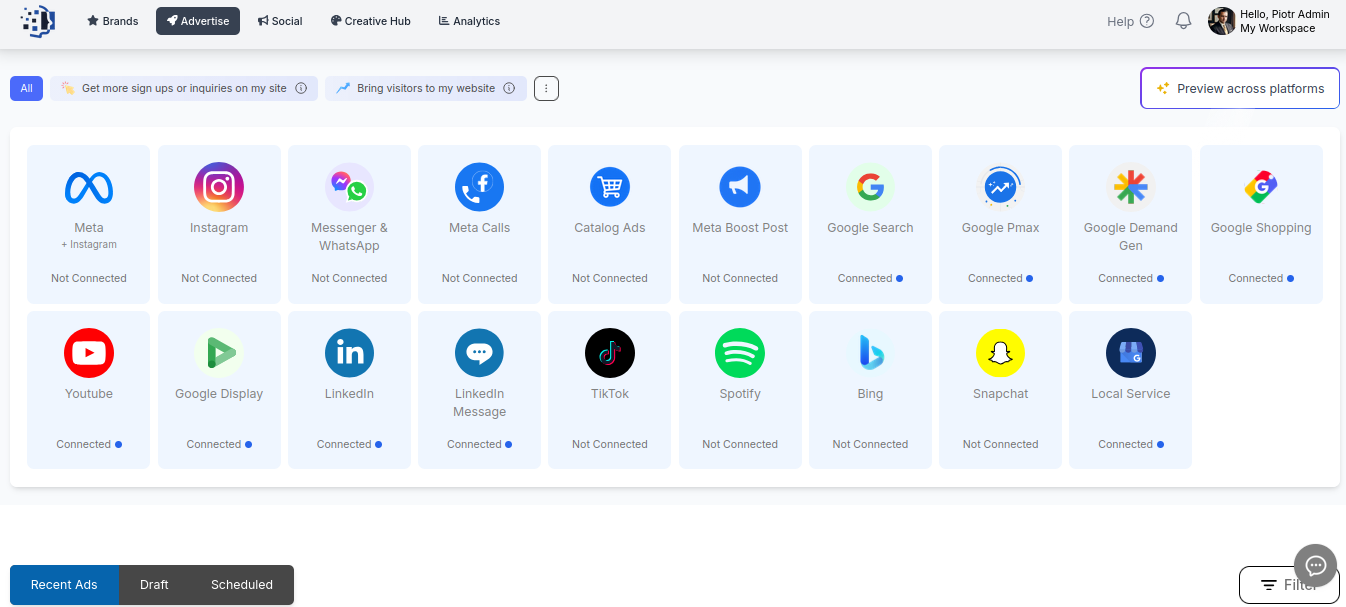
Experience how Rekla.AI simplifies your digital advertising through intelligent automation. Our platform leverages AI technologies to generate tailored ad creatives, automate multi-channel campaign deployment across more than 15 platforms including Facebook and Google, and provide real-time optimization with actionable analytics. Stop struggling with fragmented tools and manual workflows. Take control and boost your ROI with Rekla.AI. Start building smarter, scalable marketing automation workflows that align perfectly with the strategies outlined in this article. Visit https://www.rekla.ai/ and transform your e-commerce marketing today.
Preguntas frecuentes
What is email automation and how can it benefit my e-commerce brand?
Email automation allows you to send targeted messages to customers based on their behaviors and preferences. To implement it, start by mapping your customer journey and identifying key touchpoints for automated messages, such as welcome emails and abandoned cart reminders.
How does social media automation enhance audience engagement?
Social media automation helps maintain a consistent online presence and engage with your audience effectively. To boost your engagement, create a content library of pre-approved messaging templates to streamline your posting schedule and keep content relevant.
What are the key components of managing ad campaigns across multiple platforms?
Effective multi-platform ad management requires unified messaging, platform-specific content, and centralized tracking. Begin by creating a centralized dashboard to monitor performance metrics from all platforms, enabling you to allocate budgets and adjust strategies efficiently.
How can audience segmentation lead to more targeted messaging?
Audience segmentation breaks down your audience into specific groups, allowing you to tailor your messaging. To increase effectiveness, establish at least three distinct audience segments and develop unique messaging strategies for each, testing their performance regularly.
What is the purpose of A/B testing automation in e-commerce marketing?
A/B testing automation allows you to compare different marketing approaches to improve performance efficiently. Set a consistent testing schedule for your marketing assets, and regularly analyze results to refine your strategies for maximum impact.
How can I utilize analytics automation for better decision-making?
Analytics automation transforms raw data into actionable insights for faster decision-making. Choose an analytics tool that provides customizable dashboards to visualize performance data quickly, helping you respond more effectively to trends and make informed choices.
Recomendado
- 7 tipos de plataformas publicitarias que todo vendedor de comercio electrónico debe conocer
- 7 tipos de plataformas publicitarias que todo vendedor de comercio electrónico debe conocer
- Por qué automatizar las campañas publicitarias: Maximizar el retorno de la inversión y la escala
- Por qué automatizar las campañas publicitarias: Maximizar el retorno de la inversión y la escala
 English
 English (UK)
 Polski
 Deutsch
 Español
 Français
 Português
 Svenska
 Dansk
Dansk Nederlands