
Juggling multiple ad platforms and constant performance tweaks can feel overwhelming for any digital marketing manager. Staying competitive requires more than manual effort, especially when campaign objectives, audience analysis, and technology integrations are all demanding attention. This guide empowers you to harness campaign-specific objectives and modern automation strategies that reduce costs and turn data into higher ROI, with step-by-step approaches proven for small-to-medium e-commerce brands.
Table des matières
- Step 1: Prepare Campaign Objectives And Integrations
- Step 2: Generate Ad Creatives And Target Audiences With AI
- Step 3: Launch Multi-Channel Campaigns Using Automation
- Step 4: Optimize Campaigns With Real-Time Data Insights
- Step 5: Verify Results And Refine Future Ad Strategies
Résumé rapide
| Main Insight | Detailed Explanation |
|---|---|
| 1. Set SMART Campaign Objectives | Define Specific, Measurable, Achievable, Relevant, and Time-bound goals to guide all advertising efforts effectively. |
| 2. Leverage AI for Ad Creation | Utilize AI tools for automated generation of ad copy and visuals, enhancing both creativity and targeting efficiency. |
| 3. Automate Multi-Channel Campaigns | Implement automation to synchronize campaigns across platforms, ensuring consistency and maximizing efficiency in execution. |
| 4. Optimize Using Real-Time Data | Track performance continuously and adjust strategies based on real-time analytics to improve ROI and campaign outcomes. |
| 5. Evaluate and Refine Campaigns | Conduct thorough performance assessments after campaigns to gather insights for future advertising strategies and improvements. |
Step 1: Prepare Campaign Objectives and Integrations
Setting clear digital advertising objectives transforms scattered efforts into strategic campaigns. You’ll be defining precise goals, analyzing target audiences, and establishing seamless technological integrations that power your marketing performance.
Begin by developing campaign-specific objectives that are measurable and aligned with your broader business strategy. Strategic campaign planning requires breaking down your goals into granular, actionable metrics. Consider these critical components:
- Revenue generation targets
- Customer acquisition goals
- Brand awareness metrics
- Engagement benchmarks
Your objectives should follow the SMART framework – Specific, Measurable, Achievable, Relevant, and Time-bound. This approach ensures your digital advertising efforts remain focused and trackable across multiple platforms.
Next, map out your technological integrations. Modern digital advertising demands interconnected systems that communicate seamlessly. Identify which advertising platforms, analytics tools, and customer relationship management (CRM) systems you’ll utilize. Create a comprehensive integration strategy that allows data to flow smoothly between your chosen platforms.
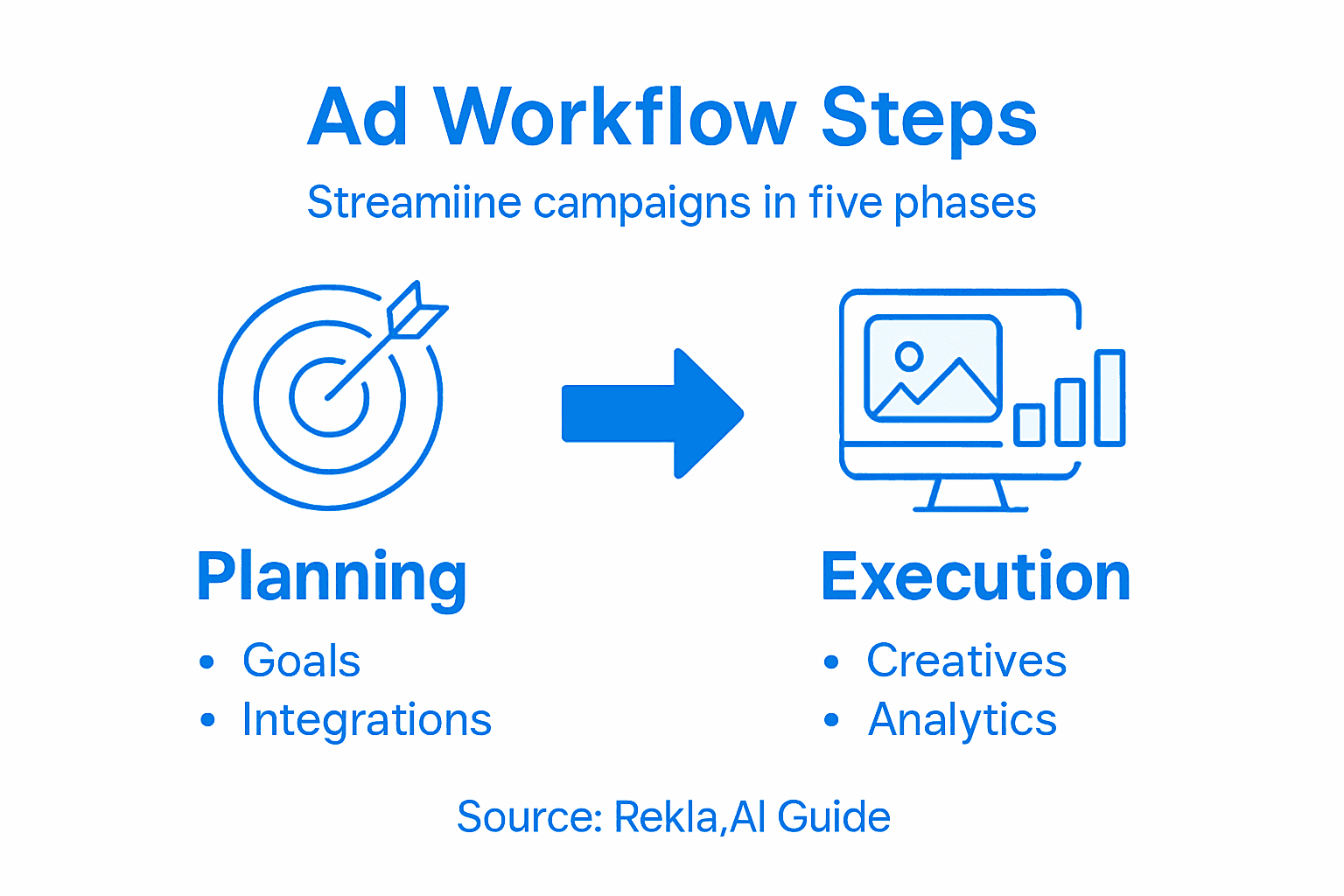
The goal is creating a unified ecosystem where your advertising efforts can be monitored, optimized, and scaled efficiently. Your integration approach should minimize manual work and maximize automated insights.
Conseil de pro : Always maintain a flexible integration strategy that can adapt to emerging advertising technologies and platform updates.
Step 2: Generate Ad Creatives and Target Audiences with AI
Artificial intelligence has revolutionized digital advertising by transforming how brands create compelling ad content and precisely target potential customers. In this step, you’ll leverage AI technologies to streamline your creative development and audience targeting processes, dramatically reducing manual effort and increasing campaign effectiveness.
Generative AI technologies enable rapid content creation across multiple ad formats. Your AI-powered workflow will involve several critical components:
- Text generation for ad copy
- Image and visual content creation
- Segmentation dynamique de l'audience
- Personalized creative variations
Start by inputting your brand guidelines, campaign objectives, and target market details into the AI system. The platform will use these parameters to generate contextually relevant ad creatives that align with your specific marketing goals. Advanced AI systems can produce multiple creative variations, allowing you to A/B test different approaches quickly.
For audience targeting, utilize AI’s sophisticated data analysis capabilities. The system will help you identify and segment potential customers based on demographics, online behavior, and engagement patterns. This approach ensures your ads reach the most relevant audience segments with laser-focused precision.
AI-powered ad generation transforms creative limitations into unlimited possibilities.
Next, review and refine the AI-generated content. While artificial intelligence provides an incredible starting point, human oversight ensures brand consistency and emotional resonance.

Conseil de pro : Continuously train your AI system with successful past campaign data to improve future creative outputs and targeting accuracy.
Here’s a quick summary of how AI enhances different stages of digital advertising campaigns:
| Campaign Stage | AI Contribution | Expected Outcome |
|---|---|---|
| Creative Generation | Automated copy and image creation | Faster creative production |
| Ciblage de l'audience | Predictive segmentation | Improved ad relevance |
| Performance Optimization | Real-time analytics | Quicker adjustments, higher ROI |
| Reporting & Review | Automated data analysis | Insightful campaign evaluation |
Step 3: Launch Multi-Channel Campaigns Using Automation
Multi-channel campaign automation empowers digital marketers to coordinate complex advertising strategies across different platforms with unprecedented efficiency. You’ll streamline your campaign deployment by leveraging advanced automation technologies that synchronize messaging, timing, and audience targeting across multiple digital channels.
Multichannel marketing automation enables precise coordination of your advertising efforts. Your automation workflow will focus on these critical components:
- Cross-platform campaign synchronization
- Automated audience targeting
- Real-time performance tracking
- Dynamic content adaptation
Begin by configuring your centralized marketing automation platform. This system will serve as the command center for your multi-channel campaign, allowing you to design, schedule, and monitor advertisements across social media, search engines, display networks, and email channels simultaneously.
Establish clear communication protocols between different platform APIs to ensure seamless data flow. Your automation setup should include predefined triggers that activate specific campaign elements based on audience interactions, enabling intelligent response mechanisms that adjust messaging in real time.
Automation transforms scattered marketing efforts into a unified, responsive advertising ecosystem.
Integrate robust tracking mechanisms that provide comprehensive analytics across all channels. This approach allows you to understand campaign performance holistically and make data-driven adjustments quickly and efficiently.
Conseil de pro : Create flexible automation rules that can dynamically adjust campaign parameters based on real-time performance metrics and audience engagement.
Here is a comparison of manual vs. automated multi-channel campaign management approaches:
| Aspect | Manual Approach | Automated Approach |
|---|---|---|
| Efficiency | Time-consuming, prone to delays | Fast, streamlined processes |
| Cross-Channel Consistency | Difficult to maintain alignment | Consistent messaging and timing |
| Data Integration | Fragmented, requires manual export | Centralized, seamless flow |
| Responsiveness | Slow reaction to market changes | Real-time campaign adjustments |
Step 4: Optimize Campaigns with Real-Time Data Insights
Data-driven optimization transforms digital advertising from guesswork into a precise, responsive strategy. In this critical stage, you’ll leverage real-time analytics to continuously refine your campaign performance, making intelligent adjustments that maximize your return on investment.
Campaign optimization techniques enable marketers to track and improve advertising effectiveness dynamically. Your optimization workflow will focus on these essential elements:
- Performance metric tracking
- Continuous A/B testing
- Audience segment analysis
- Real-time budget reallocation
Begin by establishing a comprehensive analytics dashboard that aggregates data from all advertising channels. This centralized view allows you to monitor key performance indicators in real time, identifying trends, opportunities, and potential bottlenecks instantaneously.
Implement advanced tracking mechanisms that go beyond surface-level metrics. Look deeper than clicks and impressions – analyze engagement quality, conversion rates, and customer lifetime value. Your goal is understanding not just how many people see your ads, but how effectively those ads drive meaningful business outcomes.
Data transforms advertising from a cost center into a strategic growth engine.
Create automated rules that can dynamically adjust campaign parameters based on predefined performance thresholds. This approach enables your advertising strategy to respond quickly to changing market conditions and audience behaviors.
Conseil de pro : Set up automated alerts that trigger when specific performance metrics deviate from expected ranges, allowing for immediate strategic interventions.
Step 5: Verify Results and Refine Future Ad Strategies
Successful digital advertising requires continuous learning and strategic adaptation. In this final stage, you’ll comprehensively evaluate campaign performance, extract meaningful insights, and develop actionable strategies to improve future advertising efforts.
Strategic marketing evaluation methods help marketers transform raw data into strategic improvements. Your verification and refinement process will focus on these critical components:
- Performance benchmark comparison
- Consumer behavior analysis
- Campaign objective assessment
- Emerging trend identification
Begin by conducting a comprehensive campaign retrospective. Gather all performance metrics, comparing actual results against initial objectives. Look beyond surface-level statistics to understand the deeper narrative behind your campaign’s success or challenges.
Analyze each advertising channel’s performance independently and holistically. Identify which platforms delivered the most value, which audience segments responded most positively, and where potential optimization opportunities exist. This nuanced understanding will guide your future strategic decisions.
Continuous improvement transforms good advertising into exceptional marketing.
Document your findings systematically, creating a knowledge base that informs future campaign design. Capture not just numerical data, but qualitative insights about audience engagement, creative effectiveness, and strategic alignment.
Conseil de pro : Create a standardized campaign review template that ensures consistent, comprehensive evaluation across all future advertising initiatives.
Simplify Your Digital Advertising Workflow with Rekla.AI
Struggling to manage complex ad campaigns that demand constant optimization, creative generation, and precise audience targeting The article highlights challenges many marketers face such as integrating multiple platforms, launching multi-channel campaigns efficiently, and optimizing in real time. Rekla.AI tackles these pain points head-on by offering an AI-powered platform that streamlines each step—from smart ad creative generation to seamless cross-channel automation. With Rekla.AI, you can reduce costs, increase click-through rates, and save valuable time without needing extensive expertise.
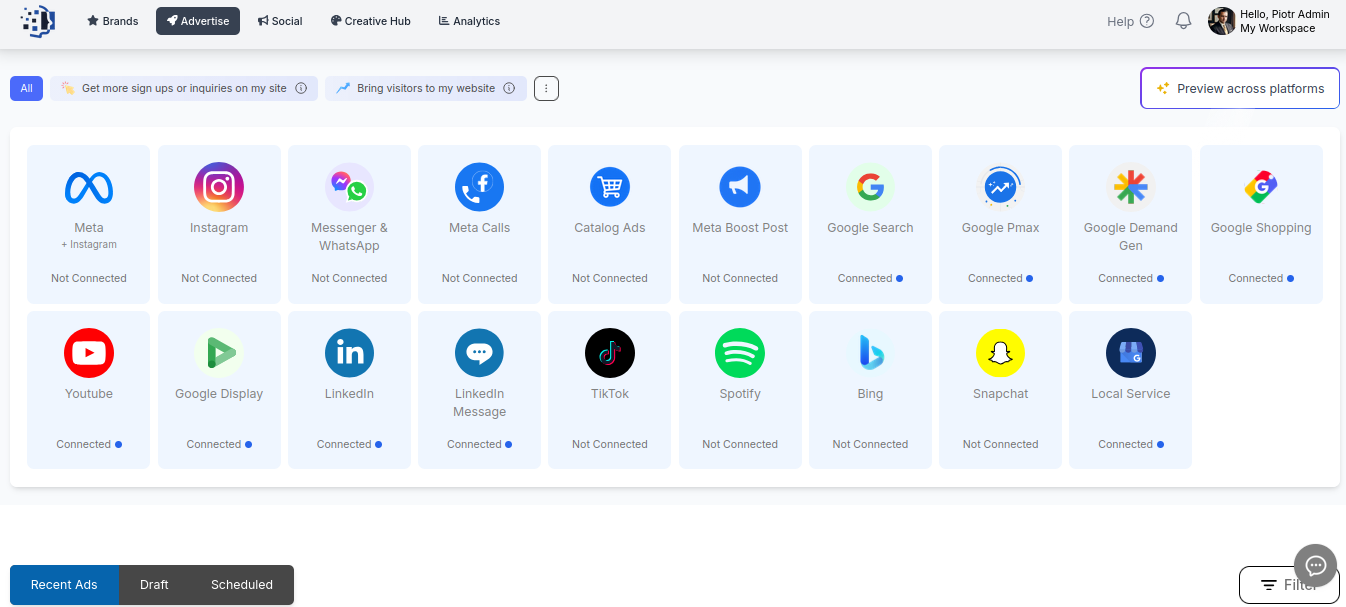
Harness the power of AI-driven advertising automation. Experience how easy it is to generate personalized ads, tightly segment your audiences, and launch synchronized campaigns across more than 15 platforms including Facebook and Google. Don’t let fragmented workflows hold you back. Visit Rekla.AI today and discover the future of digital advertising. Take control of your campaigns now and watch your marketing efforts reach new heights.
Foire aux questions
How can I set clear campaign objectives for my digital advertising workflow?
Establish clear, measurable campaign objectives by following the SMART framework—specific, measurable, achievable, relevant, and time-bound. Break your goals down into detailed metrics such as revenue targets and engagement benchmarks to ensure clarity and focus throughout your campaign.
What role does technology integration play in streamlining campaign creation?
Technology integration is crucial for creating a seamless digital advertising ecosystem. Identify your advertising platforms and customer relationship management systems to develop a comprehensive integration strategy that allows for smooth data flow and reduces manual work.
How can I use AI to enhance my ad creatives and audience targeting?
Utilize AI technologies to automate ad copy and image generation, along with dynamic audience segmentation. Input your brand guidelines and target market details into the AI system to generate contextually relevant ad creatives quickly, improving efficiency and campaign effectiveness.
What are the key elements of launching multi-channel campaigns with automation?
Focus on cross-platform campaign synchronization, automated audience targeting, and real-time performance tracking for effective multi-channel campaigns. Set up a centralized marketing automation platform to coordinate your advertising efforts across various channels efficiently.
How can I optimize my digital advertising campaigns using real-time data?
To optimize campaigns, establish a comprehensive analytics dashboard that tracks performance metrics in real time. Analyze deeper metrics like engagement quality and conversion rates, and set automated rules to adjust campaign parameters based on performance thresholds, improving your return on investment.
Recommandé
- Digital Ad Campaign Basics: Powering Smart ROI
- Digital Ad Campaign Basics: Powering Smart ROI
- Guide d'optimisation des publicités numériques pour maximiser facilement le retour sur investissement
- Guide d'optimisation des publicités numériques pour maximiser facilement le retour sur investissement
- Build a High-Converting Digital Marketing Workflow – Lind Creative
- Content Marketing Workflow: Complete Guide for 2025 – Jarrod Harman
 English
 English (UK)
 Polski
 Deutsch
 Español
 Français
 Português
 Svenska
 Dansk
Dansk Nederlands