

Most American businesses spend over $58 billion a year on social media advertising, yet many struggle to measure real results. For digital marketers and small business owners, every ad dollar counts and waste means lost opportunity. Learning how to set clear objectives, track the right KPIs, and harness AI technology helps you cut costs and reach the right audience without guesswork. This guide reveals practical steps to transform your american social media ad campaigns for maximum impact.
Table of Contents
- 1. Define Clear Campaign Objectives And Kpis
- 2. Identify And Segment Your Target Audience
- 3. Select The Best Social Media Platforms
- 4. Craft Compelling Ad Creatives Using Ai Tools
- 5. Set Smart Budget And Bidding Strategies
- 6. Implement A/B Testing For Ad Optimization
- 7. Monitor Performance And Optimize In Real-Time
Quick Summary
| Takeaway | Explanation |
|---|---|
| 1. Define SMART Objectives | Establish Specific, Measurable, Achievable, Relevant, and Time-bound objectives to guide your campaigns effectively. |
| 2. Segment Your Target Audience | Break down your audience into distinct groups for targeted messaging that drives engagement and conversions. |
| 3. Choose the Right Platforms | Select social media platforms based on your audience demographics and content type to optimize reach. |
| 4. Employ A/B Testing | Systematically compare different ad variations to identify what resonates best with your audience. |
| 5. Monitor and Optimize Performance | Continuously track key metrics in real-time to adjust strategies and enhance campaign effectiveness. |
1. Define Clear Campaign Objectives and KPIs
Successful social media advertising starts with crystal clear campaign objectives and measurable key performance indicators (KPIs). Without a strategic roadmap, your ad campaigns are like ships sailing without a destination.
Defining campaign objectives is crucial because they provide direction and focus for your marketing efforts. By establishing SMART objectives that are strategic and measurable, you create a framework for tracking progress and determining success. These objectives should align directly with your broader business goals such as increasing brand awareness, generating leads, or driving sales.
When developing KPIs, focus on metrics that directly reflect your campaign’s performance. Key metrics might include:
- Website traffic generated from ads
- Click through rates
- Conversion rates
- Cost per acquisition
- Social media engagement levels
The most effective KPIs are specific, quantifiable, and tied to concrete business outcomes. Marketing KPIs help evaluate strategy effectiveness by tracking progress through different stages of the marketing funnel including awareness, consideration, and decision.
To implement this approach, start by asking yourself: What specific, measurable result do I want from this social media ad campaign? Your answer will guide your objective setting and KPI selection.
Pro tip: Create a tracking dashboard that automatically updates your KPIs in real time to provide immediate insights into campaign performance.
2. Identify and Segment Your Target Audience
Understanding who your audience is represents the foundation of any successful social media advertising strategy. Without precise audience targeting, your ads will scatter like seeds in the wind hoping something might grow.
A social media target audience is more than just a generic group. It represents people most likely to engage with your product based on specific shared characteristics. Effective audience segmentation involves breaking down your potential customers into distinct groups with similar traits such as:
- Demographics (age, gender, income)
- Geographic location
- Interest categories
- Purchase behavior
- Professional backgrounds
Social media groups and segmentation allow you to craft personalized content that speaks directly to each subgroup. By understanding these nuanced differences, you can create messaging that resonates more deeply and drives higher engagement rates.
Start by developing detailed audience personas. These fictional representations help you visualize your ideal customers and understand their motivations, challenges, and preferences. Use analytics tools from social media platforms to gather insights about your existing followers and potential customer base.
Pro tip: Regularly update your audience segments by analyzing campaign performance data and tracking shifts in demographic behavior to maintain precise targeting.
3. Select the Best Social Media Platforms
Choosing the right social media platforms can make or break your advertising strategy. Your platform selection determines how effectively you reach and engage your target audience.
Social media platform strengths vary significantly depending on user demographics and content styles. Understanding each platform’s unique characteristics helps you allocate your advertising budget more strategically.
Key platforms to consider include:
- Facebook: Massive user base with extensive targeting options
- Instagram: Visual platform ideal for lifestyle and product marketing
- LinkedIn: Professional network perfect for B2B marketing
- TikTok: Short video platform reaching younger audiences
- YouTube: Comprehensive video marketing opportunities
When selecting platforms, evaluate your target audience’s primary demographics. A professional service might find more success on LinkedIn, while a fashion brand could thrive on Instagram. Top social media advertising platforms in 2025 offer diverse opportunities for targeted marketing.
Consider your content type as well. Video content works best on YouTube and TikTok, while image driven campaigns excel on Instagram. Professional content finds its home on LinkedIn, and broad reach campaigns work well on Facebook.
Remember that you do not need to be on every platform. Focus on 2 3 platforms where your ideal customers are most active and where your content can shine.
Pro tip: Conduct a small test campaign on multiple platforms to determine which delivers the most cost effective results for your specific business goals.
4. Craft Compelling Ad Creatives Using AI Tools
Artificial intelligence has revolutionized how marketers create social media advertisements. AI tools now enable unprecedented speed and creativity in developing engaging ad content.
Generative AI tools are transforming ad creative production by providing powerful capabilities for generating visuals and copy quickly. These advanced technologies leverage natural language processing and computer vision to produce tailored content that resonates with specific audiences.
Key advantages of using AI for ad creatives include:
- Rapid content generation
- Personalized visual variants
- Consistent brand voice alignment
- Multiple creative iterations
- Advanced audience targeting
To effectively use AI tools, start by providing detailed prompts that specify your brand voice, target audience, and desired emotional response. AI technologies help mitigate ad fatigue by generating fresh and diverse content that maintains audience interest.
When crafting AI generated ads, focus on clear communication and emotional connection. Experiment with different styles and formats to discover what resonates most with your audience. Remember that AI is a tool to enhance creativity not replace human insight.
Pro tip: Always review and refine AI generated content to ensure it maintains your brand authenticity and meets your specific marketing objectives.
5. Set Smart Budget and Bidding Strategies
Budget allocation and bidding strategies can make or break your social media advertising performance. Understanding how to strategically invest your marketing dollars is crucial for maximizing return on investment.
Social media advertising bidding strategies encompass several key approaches that align with different campaign objectives.
Primary bidding strategy types include:
- Cost Per Click (CPC): Ideal for driving website traffic
- Cost Per Impression (CPM): Best for brand awareness campaigns
- Cost Per Acquisition (CPA): Focused on direct conversions
When selecting a bidding strategy, consider your primary marketing goal. Are you looking to increase brand visibility, generate leads, or drive direct sales? Each strategy offers unique advantages depending on your specific objectives.
Automatic bidding tools can dynamically adjust your spend based on real time performance data. These intelligent systems analyze audience response and competitor landscape to optimize your ad expenditure.
Start with a conservative budget and gradually increase spending as you identify high performing ad variations. Monitor your campaigns closely and be prepared to reallocate resources quickly based on performance metrics.
Remember that the lowest cost is not always the best strategy. Focus on the highest quality interactions that move you closer to your business goals.
Pro tip: Allocate 10 20 percent of your budget for experimental campaigns that test new audience segments and creative approaches.
6. Implement A/B Testing for Ad Optimization
A/B testing represents the scientific approach to social media advertising optimization. By systematically comparing different ad variations, you can uncover precisely what resonates with your target audience.
Social media A/B testing divides audience segments to compare campaign variables and generate data driven insights. This method allows marketers to make informed decisions based on actual performance metrics rather than guesswork.
Key elements to test in A/B experiments include:
- Ad headlines
- Visual imagery
- Call to action text
- Color schemes
- Target audience demographics
- Ad placement locations
When conducting A/B tests, Google Ads testing methodology recommends focusing on one variable at a time to ensure clear and actionable results. This approach helps you understand exactly which specific element drives improved performance.
To implement effective A/B testing, create two nearly identical ad versions with a single differentiating element. Run these variations simultaneously and track key performance indicators such as click through rates, conversion rates, and overall engagement.
Ensure your test runs long enough to generate statistically significant data. Typically this means collecting information from at least 100 to 500 interactions depending on your audience size and campaign objectives.
Pro tip: Allocate a small percentage of your total ad budget specifically for testing new creative approaches to minimize financial risk while gathering valuable insights.
7. Monitor Performance and Optimize in Real-Time
Successful social media advertising requires constant vigilance and rapid adaptation. Real time performance monitoring transforms your campaigns from static strategies to dynamic, responsive marketing machines.
Real-time social media analytics enable precise campaign tracking, allowing marketers to make immediate data driven decisions. This continuous monitoring provides critical insights into audience engagement, reach, and conversion potential.
Key performance metrics to track include:
- Click through rates
- Engagement percentages
- Conversion rates
- Cost per acquisition
- Audience growth
- Demographic interaction patterns
Campaign performance dashboards help consolidate data across multiple platforms, providing a comprehensive view of your advertising efforts. These tools enable you to quickly identify what is working and rapidly adjust strategies that are not delivering expected results.
Implement automated alerts that notify you of significant performance shifts. Set up thresholds for key metrics so you can take immediate action when an ad begins underperforming or when you discover a high performing variation.
Remember that optimization is an ongoing process. Regularly review your analytics, experiment with different approaches, and be prepared to pivot your strategy based on real world performance data.
Pro tip: Create a weekly optimization ritual where you dedicate 30 minutes to reviewing campaign metrics and making data informed adjustments to maximize your advertising effectiveness.
Below is a comprehensive table summarizing the strategies and practices for successful social media advertising outlined in the article.
| Step | Details and Actions | Advantages and Benefits |
|---|---|---|
| Define Campaign Objectives and KPIs | Set clear, measurable goals aligned with business aims. Use specific metrics like website traffic and conversion rates. | Focuses efforts, enables tracking progress, and determines success effectively. |
| Target Audience Identification | Segment audience based on demographics, interests, and behaviors. Develop audience personas and utilize analytics tools. | Enhances ad relevance and engagement. Improves targeting precision. |
| Platform Selection | Choose platforms based on audience demographics and content style compatibility. Conduct small test campaigns. | Utilizes resources efficiently and ensures maximum audience reach. |
| Creative Ads Using AI Tools | Leverage AI to generate visual and text content quickly. Tailor content to resonate with specific audiences. | Accelerates content production and maintains audience interest. |
| Budget and Bidding Strategies | Employ strategies like CPC, CPM, and CPA. Start with a manageable budget and adjust based on performance evaluation. | Balances cost and ROI, optimizing expenditure for better outcomes. |
| A/B Testing | Compare variations of ads by altering one variable at a time, such as headlines or visuals. Track performance metrics for insights. | Identifies effective strategies through data-driven decisions, enhancing campaign performance. |
| Monitor and Optimize | Use real-time analytics to track campaign performance. Adjust strategies based on data interpretation. | Responds dynamically to performance changes, maximizing advertising effectiveness. |
Elevate Your Social Media Ad Strategy with AI-Powered Automation
Every marketer knows defining clear objectives, understanding target audiences, and continuous optimization are essential yet challenging steps for successful social media advertising. If you want to conquer these hurdles and avoid wasted budget on ineffective ads, it is time to leverage technology designed specifically for these pain points. Rekla.AI offers an AI-powered advertising automation platform that seamlessly integrates key concepts like audience targeting, A/B testing, real-time optimization, and smart budget management into one user-friendly solution.
By combining advanced AI ad creation and precision targeting, Rekla.AI empowers small-to-medium businesses and marketers to generate compelling creatives and launch campaigns efficiently across over 15 platforms including Facebook, LinkedIn, and TikTok. Imagine saving time while increasing click-through rates and reducing ad costs through intelligent automation that adapts with your data.
Take control of your advertising success today. Explore how Rekla.AI can transform your social media advertising checklist into a winning strategy.
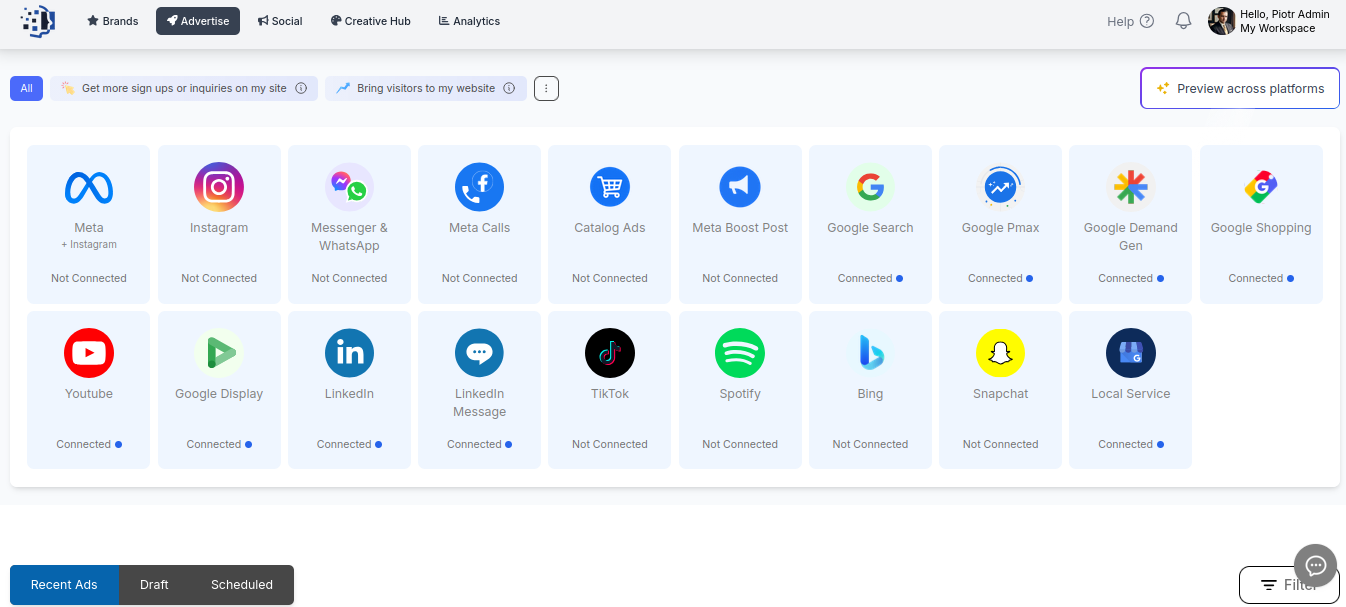
Ready to boost your campaign performance with AI-driven insights and automation? Visit Rekla.AI now to get started and experience smarter social media advertising. Learn more about how you can automate multi-channel campaigns with ease at our platform landing page. Discover the future of advertising optimization with Rekla.AI.
Frequently Asked Questions
How do I define clear campaign objectives for my social media ads?
To define clear campaign objectives, identify specific outcomes you want to achieve with your social media ads, such as increasing brand awareness or driving sales. Use the SMART criteria—specific, measurable, attainable, relevant, and time-bound—to create a solid framework.
What are some effective KPIs to track the performance of my social media ad campaigns?
Effective KPIs include website traffic generated from ads, click-through rates, conversion rates, and cost per acquisition. Focus on metrics that align with your campaign goals to ensure you measure the right aspects of performance.
How can I segment my target audience for better ad relevance?
Segment your audience by analyzing traits such as demographics, geographic location, interests, and purchasing behavior. Create detailed audience personas to understand your ideal customers and tailor your messaging to resonate with each group.
What factors should I consider when selecting social media platforms for advertising?
When selecting platforms, evaluate where your target audience spends their time and consider the type of content you plan to use. For example, if your audience is professional, LinkedIn may be more effective than Instagram.
How can I implement A/B testing to optimize my social media ads?
To implement A/B testing, create two nearly identical ad variations that differ by only one element, such as a headline or image. Run both ads simultaneously and analyze their performance metrics to determine which version is more effective.
What steps can I take to monitor performance and optimize my social media ads in real time?
Set up performance tracking to monitor key metrics such as click-through rates and conversion rates regularly. Establish automated alerts for significant changes in performance and be ready to adjust your campaigns quickly based on the data you collect.
Recommended
- Launch Your First AI Powered Ad Campaign | A Step-by-Step Guide
- Launch Your First AI Powered Ad Campaign | A Step-by-Step Guide
- LinkedIn Ads vs. Other Social Media Platforms: Which Is Best?
- LinkedIn Ads vs. Other Social Media Platforms: Which Is Best?
- Blog – Jarrod Harman
- Complete Guide to FB Ad Metrics for Mobile Gaming – playablemaker.com Complete Guide to FB Ad Metrics for Mobile Gaming
 English
 English (UK)
 Polski
 Deutsch
 Español
 Français
 Português
 Svenska
 Dansk
Dansk Nederlands