

Surging online competition has forced digital marketers to rethink audience targeting, especially as over 60 percent of American and European advertisers now leverage AI-driven segmentation to grow revenue. For small and medium-sized e-commerce brands, the pressure to keep pace is intense. This guide breaks down dynamic audience targeting so you can harness powerful AI tools that deliver real-time insights, smarter ad spend, and higher return on investment—without overwhelming your team.
Table of Contents
- Defining Dynamic Audience Targeting And Key Concepts
- Variations Of Dynamic Targeting Methods Explained
- How AI And Data Power Real-Time Segmentation
- Practical Use Cases Across Ad Platforms
- Costs, Compliance, And Data Privacy Risks
- Common Pitfalls And Mistakes To Avoid
Key Takeaways
| Point | Details |
|---|---|
| Dynamic Audience Targeting | This approach uses AI and machine learning for real-time updates to customer profiles, enhancing personalization and engagement. |
| Methodological Diversification | Combining demographic, psychographic, and behavioral strategies results in more precise audience segmentation for effective marketing. |
| Compliance and Privacy | Maintaining transparency and robust data governance is crucial to mitigate risks related to data collection and ensure regulatory compliance. |
| Continuous Improvement | Regular audits of targeting algorithms and data management practices are essential for optimizing campaign efficiency and avoiding common mistakes. |
Defining Dynamic Audience Targeting And Key Concepts
Digital marketing has undergone a radical transformation with the emergence of dynamic audience targeting, a sophisticated approach that transcends traditional segmentation methods. Unlike static demographic groupings, this strategy leverages artificial intelligence and machine learning to create fluid, responsive customer profiles that adapt in real time. Dynamic audience targeting involves frequent updates to customer target lists using predictive analytics, enabling marketers to capture nuanced insights about potential customers.
The core mechanism of dynamic audience targeting relies on sophisticated data processing techniques that continuously analyze customer behaviors, interactions, and preferences. By integrating multiple data sources such as browsing history, purchase patterns, social media engagement, and geographic information, AI algorithms can construct intricate audience segments that shift dynamically. This approach allows businesses to move beyond broad demographic categories and create highly personalized marketing experiences that resonate with individual customer needs.
Key components of dynamic audience targeting include:
- Real-time data processing: Instant analysis of customer interactions
- Predictive modeling: Using machine learning to forecast potential customer behaviors
- Multichannel integration: Synchronizing insights across various digital platforms
- Adaptive segmentation: Continuously refining audience groups based on emerging patterns
Pro tip: Implement a robust data collection strategy that captures granular customer interactions to fuel more accurate AI-driven audience targeting models.
Variations Of Dynamic Targeting Methods Explained
Marketing professionals today have access to increasingly sophisticated dynamic targeting methods that go far beyond traditional demographic approaches. Advanced audience targeting strategies now encompass sophisticated combinations of demographic, psychographic, and behavioral targeting techniques, enabling unprecedented precision in audience segmentation.
These dynamic targeting variations can be categorized into several distinct methodological approaches. User similarity modeling allows marketers to identify and group individuals with comparable characteristics and behaviors, while real-time bid adjustments enable instantaneous optimization of advertising spend based on immediate audience engagement signals. Each method provides unique advantages in creating more responsive and intelligent marketing strategies.
Key dynamic targeting variations include:
- Demographic Targeting: Segmenting audiences by age, income, education, and location
- Psychographic Targeting: Analyzing audience personality traits, values, and lifestyle preferences
- Behavioral Targeting: Tracking online interactions, purchase history, and engagement patterns
- Contextual Targeting: Matching ad content with relevant website or platform contexts
The most advanced dynamic targeting approaches integrate multiple methodologies simultaneously, creating nuanced audience profiles that adapt in real time. By continuously analyzing user responses and interactions, marketers can develop increasingly precise targeting strategies that maximize campaign effectiveness and return on investment.
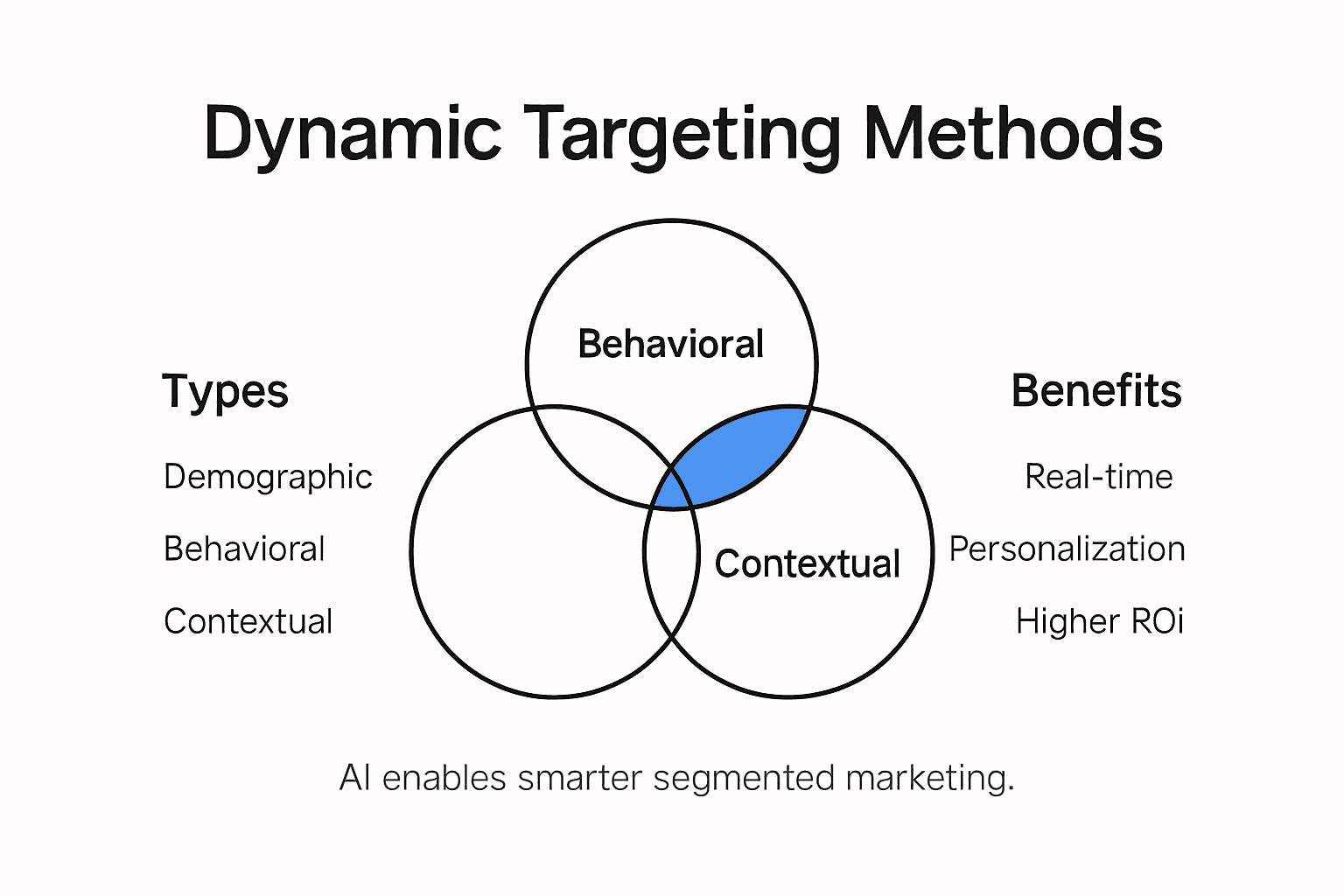
Here’s a comparison of dynamic targeting methods and how they’re used in marketing:
| Method | Main Data Used | Example Application | Unique Benefit |
|---|---|---|---|
| Demographic | Age, location | Displaying ads by region | Targets audiences efficiently |
| Psychographic | Values, interests | Lifestyle-driven campaigns | Resonates with motivations |
| Behavioral | Online actions | Retargeting cart abandoners | Responsive to real activity |
| Contextual | Platform content | Ad matching articles/topics | Highly relevant placements |
Pro tip: Implement a multi-dimensional targeting approach that combines at least three different targeting methods to create more comprehensive and responsive audience segments.
How AI And Data Power Real-Time Segmentation
The convergence of artificial intelligence and advanced data processing has revolutionized audience targeting, creating unprecedented capabilities for real-time customer segmentation. AI-powered dynamic audience clustering uses sophisticated machine learning algorithms to segment audiences instantly, leveraging predictive analytics and continuously updated data inputs, enabling marketers to create precisely targeted customer groups with remarkable accuracy.

At the core of this technological breakthrough are complex machine learning models that can rapidly analyze multiple data streams simultaneously. These intelligent systems process vast amounts of user interaction data, tracking everything from browsing behaviors and purchase histories to social media engagement and geographic movements. By continuously monitoring these diverse signals, AI can detect subtle shifts in customer preferences and automatically recalibrate audience segments within milliseconds.
Key components of AI-driven real-time segmentation include:
- Predictive Pattern Recognition: Identifying emerging customer behavior trends
- Multi-dimensional Data Integration: Combining structured and unstructured data sources
- Adaptive Learning Algorithms: Continuously refining segmentation models
- Instantaneous Behavioral Mapping: Tracking and responding to real-time user interactions
The most advanced AI systems go beyond traditional segmentation by creating dynamic customer profiles that evolve in real time. These profiles are not static snapshots but living, breathing representations of customer potential that shift and adapt based on the latest behavioral signals. This approach allows marketers to move from broad demographic targeting to hyper-personalized engagement strategies that feel uniquely tailored to individual user needs.
Pro tip: Implement machine learning models that can process at least five different data streams to create more nuanced and responsive audience segments.
Practical Use Cases Across Ad Platforms
Digital marketers are discovering transformative strategies for audience targeting across multiple advertising platforms, each with unique capabilities and challenges. Real-time bidding platforms now implement dynamic targeting strategies that continuously adjust bids and audience segments based on live user data, revolutionizing how businesses approach online advertising.
Across different ad platforms, dynamic targeting manifests in several distinctive approaches. Facebook Ads might leverage detailed demographic and interest-based segmentation, while Google Ads focuses on search intent and behavioral targeting. TikTok’s platform emphasizes content-driven audience matching, and LinkedIn prioritizes professional demographic and career-related targeting parameters.
Key platform-specific dynamic targeting strategies include:
- Facebook/Instagram: Hyper-granular interest and behavior-based targeting
- Google Ads: Intent-driven targeting using search history and browsing behaviors
- LinkedIn: Professional demographic and career-stage segmentation
- TikTok: Content consumption pattern and trend-based audience matching
- Spotify: Listening habit and lifestyle-based targeting
The most advanced advertisers are now creating cross-platform targeting ecosystems that synchronize audience insights across multiple channels. This approach allows for more holistic audience understanding, enabling marketers to craft consistent messaging that resonates across different digital touchpoints while maintaining precise, real-time targeting capabilities.
Pro tip: Create a unified audience profile that can be dynamically adapted across different ad platforms to maximize targeting consistency and campaign performance.
Costs, Compliance, And Data Privacy Risks
Dynamic audience targeting introduces complex challenges at the intersection of technological innovation and regulatory compliance. Data privacy risks stem from continuous data collection and profiling, necessitating transparent practices and robust user consent mechanisms, creating significant operational and financial considerations for digital marketers.
The financial implications of maintaining compliant dynamic targeting systems are substantial. Organizations must invest in sophisticated data management infrastructure, privacy protection technologies, and ongoing compliance monitoring. These expenses include implementing secure data storage solutions, developing comprehensive consent management platforms, and creating transparent user tracking mechanisms that meet evolving international privacy regulations like GDPR, CCPA, and emerging global data protection frameworks.
Key compliance and privacy challenges include:
- Data Collection Transparency: Clearly communicating data usage practices
- User Consent Management: Implementing granular opt-in/opt-out mechanisms
- Cross-Border Regulatory Compliance: Navigating different international privacy laws
- Data Security Infrastructure: Protecting collected user information from breaches
- Ethical Data Usage: Preventing manipulative targeting practices
The most advanced organizations are developing proactive privacy strategies that view data protection not as a compliance burden but as a competitive advantage. By building trust through transparent, ethical data practices, companies can differentiate themselves in an increasingly privacy-conscious marketplace, potentially reducing long-term legal and reputational risks associated with invasive targeting approaches.
To help clarify privacy and compliance strategies, here’s a summary table:
| Challenge | Potential Risk | Mitigation Strategy |
|---|---|---|
| Data Collection Opacity | User distrust | Transparent privacy notices |
| Weak Consent Controls | Regulatory fines | Granular opt-in/opt-out settings |
| Cross-border Regulations | Legal complications | Automated compliance checks |
| Data Breach | Financial, reputational loss | Strong encryption protocols |
Pro tip: Develop a comprehensive data governance framework that prioritizes user consent, transparency, and ethical data usage to mitigate compliance risks and build customer trust.
Common Pitfalls And Mistakes To Avoid
Digital marketers must navigate a complex landscape of potential missteps when implementing dynamic audience targeting strategies. Common mistakes include over-reliance on historical data without real-time updates, ignoring data privacy laws, and failing to integrate diverse data sources, which can significantly undermine campaign effectiveness and create potential legal risks.
The most critical errors often emerge from fundamental misunderstandings about data management and audience segmentation. Marketers frequently create segments that are either too broad and generic or impossibly narrow and complex, reducing the potential for meaningful audience engagement. Sophisticated targeting requires a delicate balance between granularity and actionable insights, demanding continuous refinement and strategic data integration.
Key pitfalls to avoid in dynamic audience targeting include:
- Data Staleness: Relying on outdated customer information
- Segment Oversimplification: Creating overly broad audience categories
- Privacy Non-Compliance: Neglecting international data protection regulations
- Algorithmic Bias: Failing to audit AI targeting models for potential discrimination
- Insufficient Testing: Deploying targeting strategies without comprehensive validation
The most successful marketers approach dynamic audience targeting as an iterative, adaptive process. They continuously monitor segment performance, validate data sources, and maintain transparency in their targeting methodologies. This approach transforms potential pitfalls into opportunities for strategic refinement, ensuring that audience targeting remains both precise and ethically responsible.
Pro tip: Implement a quarterly audit process that reviews your audience targeting algorithms for accuracy, bias, and compliance to maintain high-performance targeting strategies.
Unlock Smarter Audience Targeting with Rekla.ai
The article highlights the complexity and evolving challenges of dynamic audience targeting, such as managing real-time data, integrating AI-driven segmentation, and ensuring privacy compliance. If you are struggling to keep up with constantly shifting audience segments while trying to maximize your campaign ROI, Rekla.ai provides the perfect solution. Our platform harnesses the power of AI to simplify the entire process—helping you create precise, adaptive audience profiles and automate multi-channel campaigns effortlessly.
With Rekla.ai, you can leverage real-time optimization, AI-generated creatives, and seamless audience targeting across more than 15 platforms including Facebook, Google, TikTok, and LinkedIn. This means you save time, reduce advertising costs, and boost click-through rates by delivering the right message at the perfect moment. Say goodbye to data staleness and privacy headaches while gaining a competitive edge through adaptive and scalable AI-driven advertising automation.
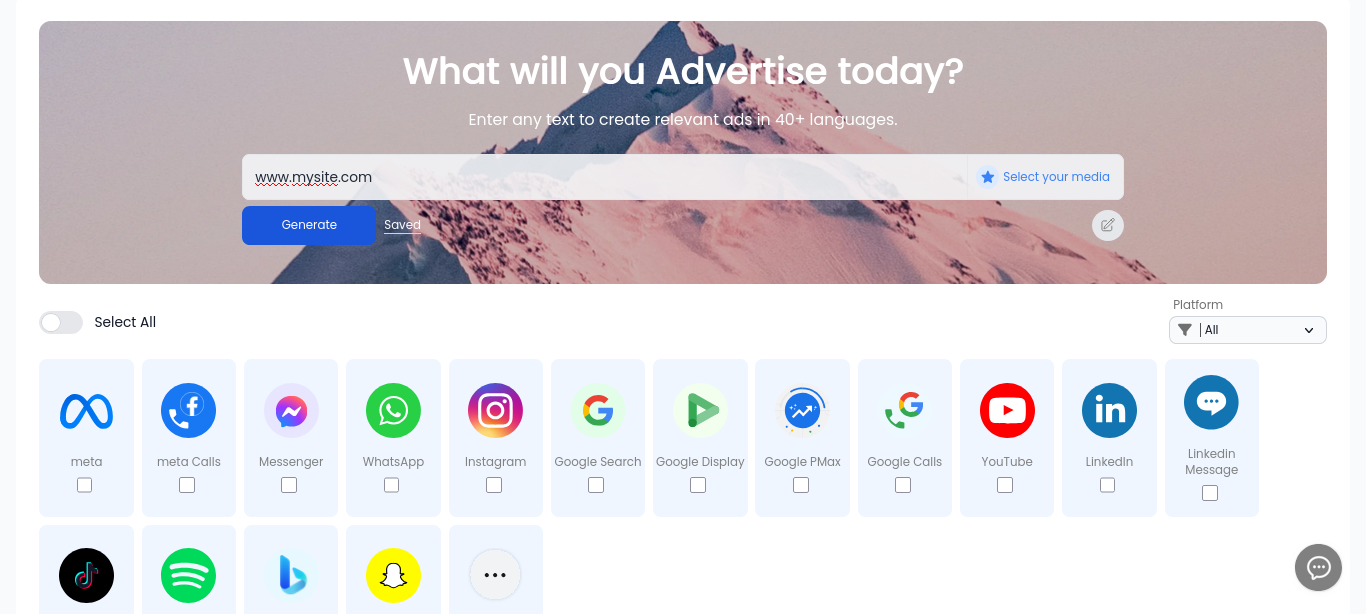
Ready to transform your digital advertising strategy with intelligent, dynamic audience targeting? Visit Rekla.ai to get started today. Explore how easy it is to manage AI-powered campaigns, improve ROI, and stay ahead with cutting-edge marketing technology. There is no better time than now to automate smarter targeting and turn complex data into meaningful action.
Frequently Asked Questions
What is dynamic audience targeting?
Dynamic audience targeting is a digital marketing strategy that utilizes artificial intelligence and machine learning to create adaptive customer profiles based on real-time data. This approach moves beyond traditional demographic segmentation by capturing detailed customer interactions and preferences to enhance personalized marketing efforts.
How does AI enhance dynamic audience targeting?
AI enhances dynamic audience targeting by processing vast amounts of data quickly, allowing for real-time segmentation based on customer behavior, interactions, and preferences. This enables marketers to create highly targeted campaigns that are responsive to the latest consumer trends and insights.
What are some common dynamic targeting methods?
Common dynamic targeting methods include demographic targeting (age, income), psychographic targeting (values, lifestyle), behavioral targeting (purchase history, online actions), and contextual targeting (matching ads with relevant content). Each method provides unique advantages in reaching specific audience segments.
What are the compliance challenges with dynamic audience targeting?
Compliance challenges with dynamic audience targeting include ensuring data transparency, obtaining user consent, adhering to cross-border regulations, and protecting user information from breaches. Marketers must implement robust data governance frameworks to address these challenges and maintain customer trust.
 English
 English (UK)
 Polski
 Deutsch
 Español
 Français
 Português
 Svenska
 Dansk
Dansk Nederlands