

Managing ad spend while driving sales often feels like a constant balancing act, especially for smaller e-commerce businesses without dedicated analytics teams. Automating ad campaigns with artificial intelligence means you can skip much of the manual guesswork and still achieve sharper targeting and improved results. Learn how embracing ad campaign automation helps reduce costs, maximize ROI, and deliver smarter ads across platforms without needing deep technical expertise.
Table of Contents
- What Ad Campaign Automation Really Means
- Types of Automated Ad Campaign Solutions
- Key Benefits for E-Commerce Businesses
- How AI and Automation Improve Performance
- Risks, Costs, and Common Pitfalls to Avoid
Key Takeaways
| Point | Details |
|---|---|
| Ad Campaign Automation | Automation enhances digital advertising by enabling real-time adjustments and audience targeting through AI and machine learning. |
| Types of Automated Solutions | Solutions like Programmatic Advertising and Performance Max streamline campaign management and improve overall marketing effectiveness. |
| E-Commerce Advantages | Automated campaigns provide e-commerce businesses with precise targeting and personalized experiences, driving higher conversion rates. |
| Risks and Mitigation | Implementing automation requires careful oversight to prevent budget overruns and maintain alignment with marketing goals. |
What Ad Campaign Automation Really Means
Ad campaign automation represents a strategic approach where artificial intelligence and machine learning technologies streamline digital advertising processes. At its core, automation transforms how businesses design, deploy, and optimize advertising efforts across multiple platforms. By leveraging advanced algorithms, companies can now create more intelligent, responsive ad strategies that adapt in real time.
The fundamental mechanism behind ad campaign automation involves advanced algorithmic targeting that analyzes massive data sets to optimize ad placement and engagement. These intelligent systems continuously evaluate performance metrics, audience behaviors, and conversion rates to make instantaneous adjustments. Unlike traditional manual advertising approaches, automated campaigns can simultaneously test multiple ad variations, identify the most effective messaging, and reallocate budgets toward highest-performing channels.
Automation technologies enable marketers to move beyond static, one-size-fits-all advertising models. Modern platforms use machine learning to segment audiences with unprecedented precision, predicting potential customer interactions and personalizing ad experiences. This means digital ads can now be dynamically tailored based on individual user preferences, browsing histories, and predicted purchase intentions.
Pro tip: Start with a small, controlled budget when first implementing ad campaign automation to understand platform capabilities and minimize potential financial risks.
Types of Automated Ad Campaign Solutions
Modern digital advertising offers several sophisticated automated campaign solutions that leverage cutting-edge technologies to optimize marketing performance. Programmatic advertising platforms represent a core category of these solutions, enabling businesses to purchase digital ad space through automated real-time bidding processes that maximize efficiency and targeting precision.
These automated solutions can be categorized into distinct types, each addressing specific marketing objectives. Performance Max campaigns, for instance, provide comprehensive automation across search, display, and video channels. Audience targeting solutions use advanced machine learning algorithms to segment potential customers with remarkable accuracy, dynamically adjusting ad content and placement based on individual user behaviors and demographic characteristics.
Another critical type of automated ad campaign solution focuses on creative optimization and cross-channel management. These platforms utilize artificial intelligence to continuously test and refine ad variations, allocate budgets dynamically, and ensure consistent messaging across multiple digital platforms. By integrating data from various sources, these intelligent systems can make instantaneous decisions about ad placement, bidding strategies, and creative iterations that would be impossible through manual management.
Pro tip: Begin implementing automated ad campaigns by selecting platforms that offer granular performance tracking and allow incremental budget scaling to minimize initial financial risks.
Here’s a quick look at common types of automated ad campaign solutions and their main characteristics:
| Solution Type | Core Focus | Typical Business Impact |
|---|---|---|
| Programmatic Advertising | Real-time ad buying | Increased reach and efficiency |
| Performance Max | Multi-channel automation | Simplified cross-platform ads |
| Audience Targeting | Machine learning segmentation | Improved relevance and ROI |
| Creative Optimization | Dynamic ad testing/refinement | Better engagement and results |
Key Benefits for E-Commerce Businesses
E-commerce businesses stand to gain significant competitive advantages through automated ad campaigns, with transformative impacts across multiple operational dimensions. AI-powered marketing strategies enable online retailers to dramatically enhance customer acquisition, personalization, and overall sales performance by leveraging intelligent data-driven technologies.

Automation delivers critical benefits that directly influence an e-commerce company’s bottom line. These include precision audience targeting, real-time campaign optimization, and dramatically reduced manual labor costs. By utilizing machine learning algorithms, businesses can dynamically adjust advertising content, predict consumer behaviors, and create highly personalized shopping experiences that increase conversion rates and customer engagement.
The most compelling advantage of automated ad campaigns lies in their ability to transform data into actionable insights. Advanced platforms continuously analyze user interactions, purchase histories, and browsing patterns to create sophisticated audience segments. This allows e-commerce businesses to deliver hyper-targeted advertisements that speak directly to individual customer preferences, ultimately driving higher click-through rates, reducing advertising waste, and improving overall marketing return on investment.
Pro tip: Start by automating your lowest-performing ad campaigns first to minimize risk and gradually build confidence in your automated marketing approach.
How AI and Automation Improve Performance
AI and automation fundamentally transform advertising performance by introducing unprecedented levels of precision, efficiency, and strategic intelligence. Automated workflow optimization enables businesses to eliminate repetitive tasks, streamline complex processes, and redirect human resources toward high-value strategic planning.
The core performance improvements stem from AI’s ability to process and analyze massive datasets instantaneously. Machine learning algorithms can rapidly test multiple ad variations, identify optimal targeting parameters, and dynamically adjust campaign strategies in real time. This means marketers can achieve more sophisticated audience segmentation, predict consumer behavior with remarkable accuracy, and continuously optimize advertising spend without manual intervention.
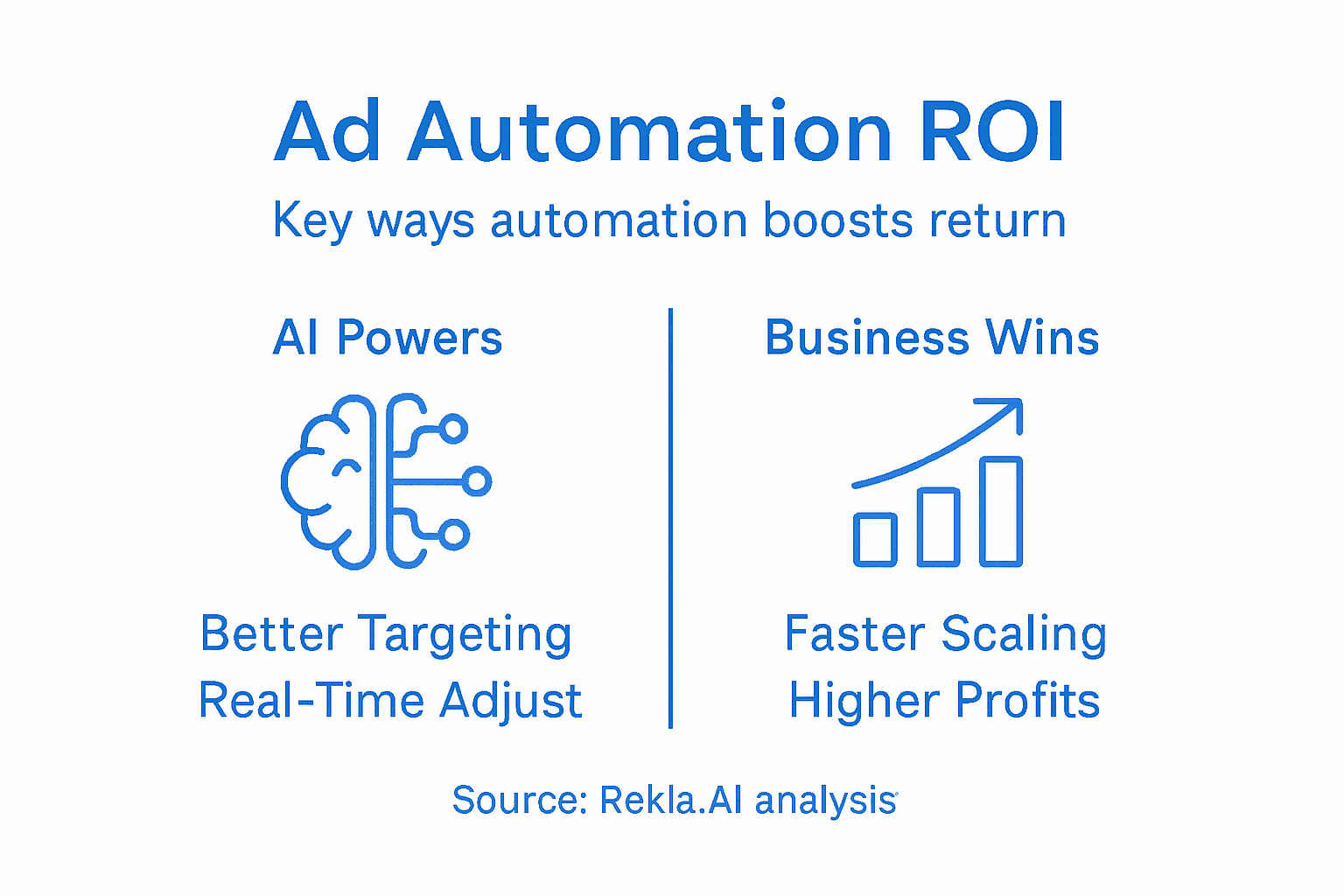
Perhaps the most significant performance enhancement comes from AI’s predictive capabilities. By analyzing historical data, current market trends, and individual user interactions, these intelligent systems can forecast potential campaign outcomes, recommend precise targeting adjustments, and minimize advertising waste. Advanced platforms now integrate complex data points such as consumer sentiment, browsing history, and purchase intent to create hyper-personalized advertising experiences that dramatically improve conversion rates and return on investment.
Pro tip: Implement a gradual AI automation strategy by first automating low-risk campaign segments and carefully measuring performance metrics before full-scale deployment.
Risks, Costs, and Common Pitfalls to Avoid
Navigating the complex landscape of ad campaign automation requires a strategic approach that balances technological capabilities with human oversight. Automation implementation challenges can quickly derail marketing efforts if businesses treat automation as a magical solution without careful planning and continuous monitoring.
One of the most significant risks involves unchecked algorithmic decision-making. Automated systems can rapidly escalate advertising costs by aggressively bidding on keywords or targeting audiences without understanding nuanced business objectives. Marketers must establish clear guardrails, set strict budget limitations, and regularly audit campaign performance to prevent runaway spending and ensure that AI-driven strategies align with specific marketing goals.
Successful automation demands a holistic approach that integrates technological capabilities with strategic human insights. While machine learning algorithms can process vast amounts of data and generate rapid optimizations, they lack the contextual understanding and creative intuition that experienced marketers bring. Businesses should view automation as a collaborative tool, not a replacement for human expertise. This means maintaining a balance where AI handles repetitive tasks and data analysis, while skilled professionals provide strategic direction, creative input, and critical oversight.
Below is a summary of key risks and how to mitigate them with ad campaign automation:
| Risk | Why It Matters | Mitigation Strategy |
|---|---|---|
| Unchecked Spending | Overshoots budget quickly | Set strict bid and cost limits |
| Algorithm Misalignment | Off-target ad placements | Align AI with business goals |
| Lack of Human Oversight | Loss of creative intuition | Weekly manual review sessions |
| Overreliance on Automation | Missed strategic insights | Maintain human-led strategy input |
Pro tip: Implement a 20% manual review rule for all automated campaigns, dedicating time each week to critically examine algorithmic recommendations and adjust strategies accordingly.
Unlock Effortless Ad Campaign Automation to Maximize Your ROI
The article highlights the challenge of managing complex advertising campaigns manually and the risks of uncontrolled spending without human oversight. It points out the need for precise audience targeting, real-time optimization, and creative testing to improve ad performance while reducing costs and time. If you want to overcome these common pitfalls and harness the power of AI-driven automation, Rekla.AI offers the perfect solution. Our platform simplifies multi-channel campaign management, enabling small-to-medium-sized businesses to scale efficiently with advanced features like AI-generated creatives, budget management, and real-time analytics.
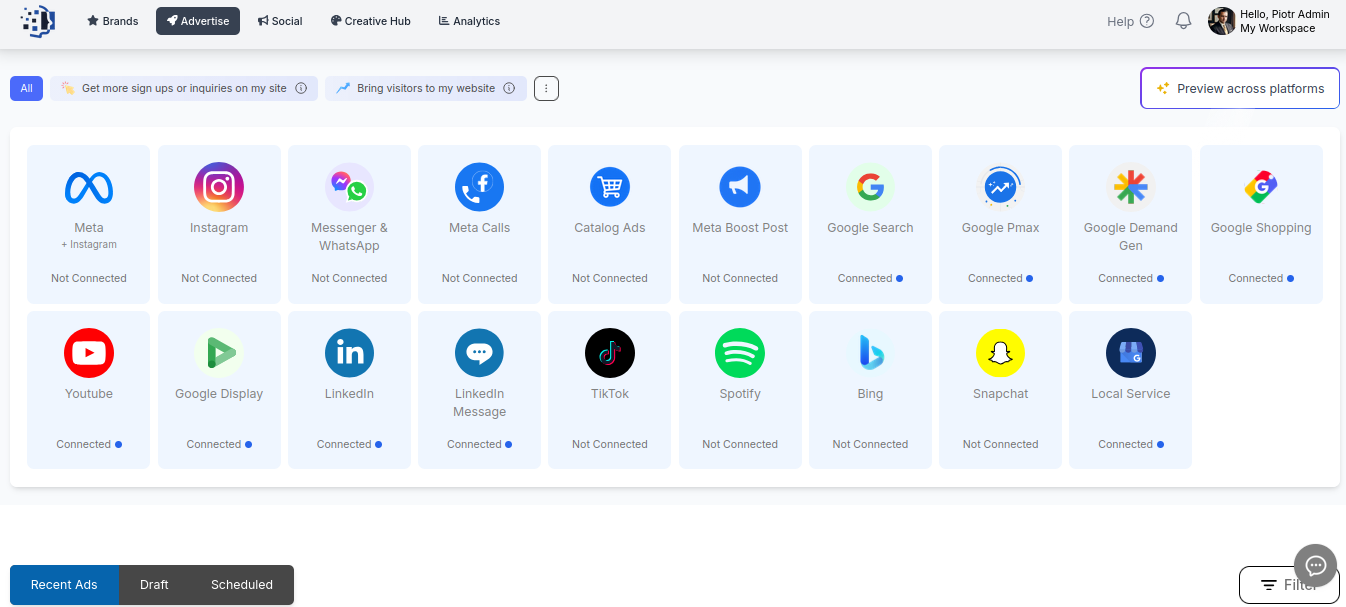
Take control of your advertising success with Rekla.AI today. Experience smart automation that balances algorithmic precision with strategic human insight. Discover how easy it is to launch campaigns across top platforms like Facebook, Google, and TikTok without prior expertise. Don’t wait until unchecked spending or missed opportunities hold you back. Visit Rekla.AI now and start transforming your ad campaigns into high-ROI assets immediately.
Frequently Asked Questions
What is ad campaign automation?
Ad campaign automation is the use of artificial intelligence and machine learning technologies to streamline digital advertising processes, enabling businesses to create, deploy, and optimize advertising efforts more efficiently.
How can automating ad campaigns maximize ROI?
Automated ad campaigns can maximize ROI by using advanced algorithms to optimize ad placement and engagement in real-time, allowing for better audience targeting, dynamic budget allocation, and personalized ad experiences that increase conversion rates.
What types of automated ad campaign solutions are available?
Common types of automated ad campaign solutions include programmatic advertising, Performance Max campaigns, audience targeting solutions, and creative optimization platforms, each designed to address specific marketing objectives and improve performance.
What are the key risks associated with ad campaign automation?
Key risks include unchecked spending due to aggressive algorithmic bidding, misalignment with business goals, lack of human oversight, and overreliance on technology. Businesses can mitigate these risks with strict budget controls and regular performance reviews.
 English
 English (UK)
 Polski
 Deutsch
 Español
 Français
 Português
 Svenska
 Dansk
Dansk Nederlands