
Finding the right strategy to guide customers from ad click to purchase is a common challenge for many e-commerce owners. The digital ad funnel offers a powerful framework that goes beyond simple steps, recognizing user journeys are often complex and non-linear. Understanding key misconceptions and optimizing each stage with AI-driven insights helps businesses avoid wasted ad spend and improve conversions, giving you actionable ideas to maximize every marketing dollar.
Inhoudsopgave
- Digital Ad Funnel Basics And Key Misconceptions
- Main Stages Of The Digital Ad Funnel Journey
- Variations: Linear, Granular, And Modern Funnels
- How Ai Enhances Funnel Performance And Roi
- Common Pitfalls And Strategies To Avoid Them
Belangrijkste conclusies
| Punt | Details |
|---|---|
| Understanding Digital Ad Funnels | Digital ad funnels guide customers from initial awareness to conversion, utilizing online channels for precision tracking and engagement. |
| Non-Linear Customer Journeys | Customers do not always follow a linear path; their journeys are dynamic and influenced by personal interactions with the brand. |
| Importance of Optimization | Continuous optimization and robust tracking are crucial for identifying drop-off points and enhancing conversion rates. |
| AI Integration for Enhanced Performance | Implementing AI can improve audience segmentation, personalization, and overall funnel responsiveness, maximizing marketing ROI. |
Digital Ad Funnel Basics and Key Misconceptions
A digital ad funnel represents the strategic pathway customers navigate from initial ad exposure to final purchase. Unlike traditional marketing approaches, digital ad funnels leverage online channels to track, engage, and convert potential customers with precision and data-driven insights.
The funnel typically consists of several interconnected stages that map the customer journey:
- Awareness: Introducing your brand and offerings to potential customers
- Interest: Generating curiosity and encouraging deeper exploration
- Consideration: Providing detailed information that supports purchasing decisions
- Conversion: Transforming interested prospects into actual customers
- Retention: Maintaining engagement and encouraging repeat business
Contrary to popular belief, digital marketing funnels are not linear processes. Customer behavior is complex and dynamic, with users potentially jumping between stages or requiring multiple touchpoints before making a purchase. This complexity challenges the traditional, rigid funnel concept.
Most businesses misunderstand digital ad funnels by assuming all customers move uniformly through predefined stages. In reality, each customer’s journey is unique, influenced by factors like personal preferences, online behavior, and specific interaction points with your brand.
Successful digital ad funnels require continuous optimization and sophisticated tracking. Marketers must analyze user interactions, adapt targeting strategies, and create personalized experiences that guide potential customers seamlessly through each funnel stage.
Pro Tip: Regularly audit your digital ad funnel stages and track micro-conversions to identify and eliminate potential drop-off points in the customer journey.
Main Stages of the Digital Ad Funnel Journey
Digital ad funnels represent a strategic framework for understanding and guiding customer interactions across multiple online touchpoints. Purchase funnel models typically outline distinct stages that transform potential customers from initial awareness to committed buyers.
The core stages of a digital ad funnel include:
- Awareness: Introducing your brand to a broad audience
- Interest: Generating curiosity and encouraging deeper exploration
- Consideration: Providing detailed information to support purchasing decisions
- Intent: Motivating customers toward specific buying actions
- Conversion: Successfully transforming prospects into paying customers
- Retention: Maintaining engagement and encouraging repeat business
Each stage requires targeted strategies and specialized content approaches. During the Awareness stage, marketers use broad advertising channels like social media, display ads, and search engine marketing to reach potential customers. The Interest phase involves creating engaging content that demonstrates unique value propositions and encourages further investigation.

In de Consideration stage, potential customers actively evaluate different options. Marketers must provide comprehensive information, such as detailed product comparisons, customer testimonials, and transparent pricing structures. The Intent stage becomes critical, where targeted offers, discounts, and trial experiences can significantly influence purchasing decisions.
Conversion represents the culmination of previous efforts, transforming interested prospects into actual customers. However, successful digital ad funnels don’t stop at the sale. The Retention stage focuses on post-purchase engagement, creating loyalty programs, providing exceptional customer support, and developing ongoing communication strategies.
Here is a summary of the core funnel stages, including key marketing focus and sample metrics:
| Funnel Stage | Primary Marketing Focus | Example Performance Metric |
|---|---|---|
| Awareness | Brand visibility and reach | Impressions, reach |
| Interest | Audience engagement | Click-through rate (CTR) |
| Consideration | Persuasion and information sharing | Time on page, downloads |
| Intent | Motivating potential buyers | Add to cart, sign-ups |
| Conversion | Driving completed purchases | Purchase rate, CPA |
| Retention | Loyalty and repeat engagement | Repeat purchase rate |
Pro Tip: Implement robust analytics tracking at each funnel stage to identify specific drop-off points and optimize your conversion pathways.
Variations: Linear, Granular, and Modern Funnels
Digital marketing funnels have evolved significantly, moving beyond traditional linear approaches. Modern funnel models offer more dynamic customer journey representations that capture the complexity of contemporary consumer interactions.
Three primary digital ad funnel variations exist:
- Linear Funnels: Traditional, sequential models following strict progression
- Granular Funnels: Highly detailed stages with precise customer segment tracking
- Modern/Adaptive Funnels: Flexible models incorporating real-time feedback and non-linear paths
The Linear Funnel represents the most traditional approach, assuming customers move predictably through predefined stages. This model suggests a straightforward path from initial awareness to final purchase, with each stage neatly connecting to the next. However, real-world customer behaviors rarely follow such a rigid trajectory.
Granular Funnels break down each stage into more intricate substages, allowing for more nuanced tracking and optimization. These models enable marketers to identify specific drop-off points, understand micro-conversions, and develop targeted strategies for each customer segment. By introducing additional layers of segmentation, granular funnels provide deeper insights into customer motivations and behaviors.
Modern Adaptive Funnels represent the most sophisticated approach. These models recognize that customer journeys are complex, non-linear, and influenced by multiple touchpoints. They incorporate feedback loops, allowing customer experiences and interactions to dynamically reshape marketing strategies in real time.
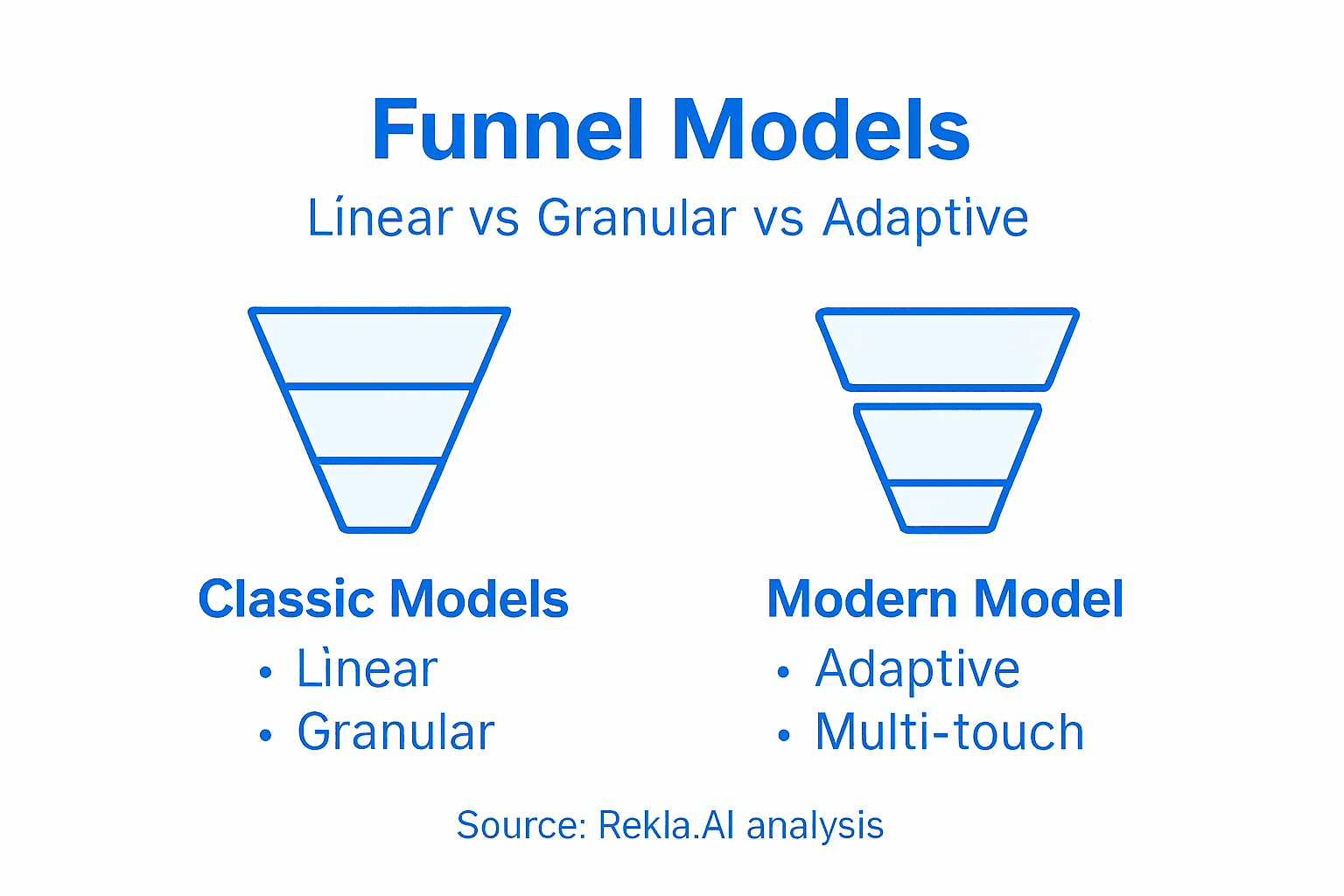
Below is a comparison of digital ad funnel variations and their unique benefits:
| Model Type | Customer Path Structure | Uniek voordeel |
|---|---|---|
| Linear | Simple, sequential steps | Easy to track and manage |
| Granular | Multiple detailed stages | Pinpoints drop-off locations |
| Modern/Adaptive | Flexible, dynamic paths | Reacts to real-time user signals |
Pro Tip: Implement multi-channel tracking to capture the complete customer journey across different platforms and touchpoints.
How AI Enhances Funnel Performance and ROI
Artificial Intelligence is revolutionizing digital marketing by transforming how businesses approach customer conversion strategies. AI technologies analyze complex customer data to create more intelligent, responsive marketing approaches that dramatically improve funnel performance.
Key AI enhancements in digital ad funnels include:
- Predictive Audience Segmentation: Identifying micro-targeted customer groups
- Real-Time Personalization: Dynamically adjusting content for individual users
- Automated A/B Testing: Continuously optimizing marketing messages
- Behavioral Prediction: Anticipating customer actions before they occur
- Intelligent Retargeting: Precision-targeting potential customers
The most significant AI breakthrough is its ability to process massive datasets instantaneously. Traditional marketing approaches relied on broad demographic targeting, but AI enables hyper-specific audience understanding. By analyzing user behaviors, interactions, and historical data, AI can predict customer preferences with remarkable accuracy.
Machine learning algorithms continuously refine marketing strategies by identifying subtle patterns humans might miss. These systems can track micro-conversions, understand complex user journeys, and recommend precise interventions that increase conversion rates. For instance, AI can determine the optimal time to display an ad, the most compelling creative content, and the most effective communication channel for each individual user.
Intelligent automation means marketers can now create more sophisticated, responsive funnel experiences. Instead of static, one-size-fits-all marketing approaches, AI enables dynamic, personalized customer journeys that adapt in real time to individual user behaviors and preferences.
Pro Tip: Implement AI-driven analytics to track granular performance metrics and continuously optimize your digital marketing funnel.
Common Pitfalls and Strategies to Avoid Them
Digital ad funnels are complex systems where seemingly minor mistakes can significantly impact overall marketing performance. Businesses often misattribute ad effectiveness by making critical errors that undermine their marketing investments.
Common digital ad funnel pitfalls include:
- Incorrect Attribution: Overestimating conversion impact
- Budget Misallocation: Investing in low-performing channels
- Narrow Targeting: Failing to reach new potential customers
- Static Strategies: Not adapting to changing user behaviors
- Incomplete Data Analysis: Overlooking crucial performance indicators
Many companies fall into the trap of retargeting existing customers who were already likely to convert, instead of focusing on acquiring new prospects. This approach wastes marketing resources and provides a false sense of campaign effectiveness. Robust attribution modeling becomes critical to understanding true incremental value generated by each marketing touchpoint.
Successful digital ad funnel management requires continuous monitoring and iterative optimization. Marketers must develop sophisticated tracking mechanisms that capture nuanced user interactions across multiple channels. By implementing comprehensive analytics and maintaining a data-driven approach, businesses can identify and address potential conversion leaks before they significantly impact overall performance.
Disciplined, systematic funnel analysis is the key to maximizing marketing ROI and minimizing wasted ad spend.
Pro Tip: Implement rigorous multi-touch attribution models that accurately track each customer interaction and assess genuine marketing channel effectiveness.
Unlock the Full Potential of Your Digital Ad Funnel Today
Navigating the complexities of a digital ad funnel can feel overwhelming when dealing with unpredictable customer journeys and the need for real-time optimization. If you are struggling with funnel drop-offs or want to harness AI-driven insights to boost your conversion rates, Rekla.AI offers the perfect solution. With powerful features like AI-generated ad creatives, precise audience targeting, and automated multi-channel campaign management, it simplifies every stage of the funnel from Awareness to Retention.
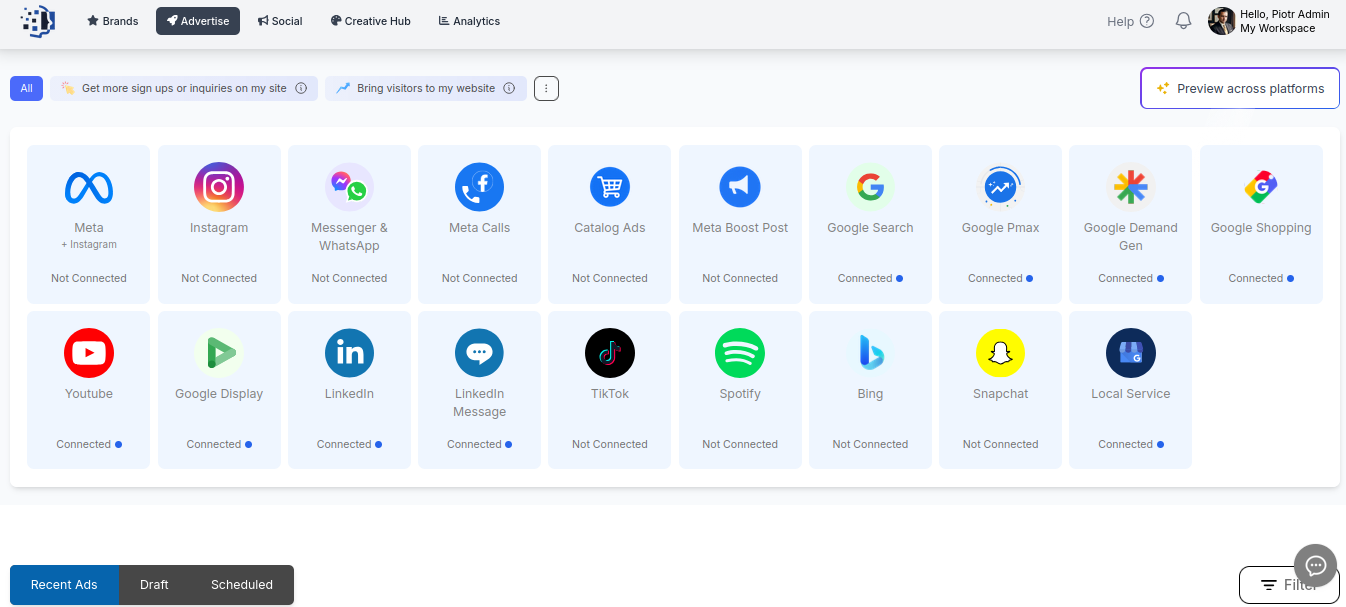
Take control of your marketing funnel with Rekla.AI to reduce wasted ad spend, increase click-through rates, and save valuable time. Explore how you can create smarter, data-driven ad campaigns without needing prior advertising expertise. Visit Rekla.AI to get started and learn more about how our platform helps optimize your funnel efficiency today.
Ready to transform your customer journey and maximize ROI? Discover practical tools and actionable insights now by visiting Rekla.AI.
Veelgestelde vragen
What is a digital ad funnel?
A digital ad funnel is a strategic pathway that customers follow from the moment they first see an advertisement to the point of making a purchase. It includes various stages such as awareness, interest, consideration, intent, conversion, and retention.
Why are digital ad funnels important for businesses?
Digital ad funnels help businesses track and optimize customer interactions across multiple online channels, enabling them to tailor marketing strategies to improve engagement and increase conversion rates significantly.
How do digital ad funnels differ from traditional marketing funnels?
Unlike traditional marketing funnels, which assume a linear progression of customer behavior, digital ad funnels recognize that customer journeys are often non-linear and influenced by various touchpoints, which requires more adaptive strategies.
What common mistakes should businesses avoid when using digital ad funnels?
Common mistakes include incorrect attribution of ad effectiveness, budget misallocation, failing to reach new customers, applying static strategies, and neglecting comprehensive data analysis. These pitfalls can lead to wasted resources and missed opportunities for conversion.
 English
 English (UK)
 Polski
 Deutsch
 Español
 Français
 Português
 Svenska
 Dansk
Dansk Nederlands