
Managing digital campaigns across multiple platforms often feels like juggling moving parts without a clear view of the big picture. Brands today face growing pressure to deliver a truly unified experience as customers bounce between online stores, social platforms, and physical locations. Adopting an omni-channel campaign strategy gives your business the integration needed to meet modern expectations, creating consistency and personalized engagement that drive loyalty and measurable results.
Spis treści
- Defining Omni-Channel Campaigns And Their Impact
- Key Variations: Omni-Channel Vs Multichannel
- How Automation And AI Transform Campaigns
- Best Practices For Orchestrating Platforms
- Common Pitfalls And How To Avoid Them
Najważniejsze wnioski
| Punkt | Szczegóły |
|---|---|
| Omni-Channel Campaigns Enhance Customer Experience | Seamless integration across physical and digital platforms creates a unified customer journey, meeting modern consumer expectations. |
| Differences Between Omni-Channel and Multichannel | Omni-channel strategies provide a coherent customer experience by integrating data and communication, while multichannel approaches result in fragmented messaging. |
| AI Drives Campaign Efficiency | Utilizing AI in marketing allows for real-time data analysis, predictive modeling, and automated personalization, significantly optimizing campaign strategies. |
| Avoiding Common Pitfalls | Organizations must ensure consistent branding and connected data systems to prevent disjointed customer experiences that hinder conversion rates. |
Defining Omni-Channel Campaigns and Their Impact
In today’s digital marketing landscape, omni-channel campaigns represent a sophisticated strategy for creating seamless customer experiences across multiple platforms. Digital marketing strategies now demand comprehensive integration of physical and digital channels to meet evolving consumer expectations.
These integrated campaigns go beyond traditional multichannel approaches by synchronizing communication, messaging, and customer interactions across every potential touchpoint. The key difference lies in creating a unified brand experience that adapts dynamically to individual customer preferences and behaviors.
Key characteristics of successful omni-channel campaigns include:
- Consistent messaging across all platforms
- Real-time data synchronization
- Personalized customer journey mapping
- Seamless transition between digital and physical interactions
- Integrated customer service channels
Modern consumers expect brands to recognize them consistently whether they’re shopping online, in-store, via mobile app, or through social media. Personalized buying experiences have become not just a competitive advantage, but a fundamental expectation across industries.
The strategic implementation of omni-channel campaigns directly impacts business performance by enhancing customer satisfaction, increasing loyalty, and ultimately driving higher conversion rates. Companies that successfully integrate their channels can expect improved customer retention and more efficient marketing spend.
Porada profesjonalisty: Start mapping your customer journey across all platforms by identifying current interaction points and potential gaps in your communication strategy.
Key Variations: Omni-Channel vs Multichannel
Marketing strategies have evolved dramatically, creating clear distinctions between multichannel oraz omni-channel approaches. Marketing channel strategies reveal fundamental differences that significantly impact customer experience and business performance.

Multichannel marketing operates channels independently, treating each platform as a separate entity with its own strategy, messaging, and customer interaction model. This approach allows businesses to expand their reach across multiple platforms but often results in fragmented and inconsistent customer experiences.
Key differences between multichannel and omni-channel strategies include:
- Data integration capabilities
- Customer journey continuity
- Personalization levels
- Communication consistency
- Operational flexibility
Omni-channel strategies prioritize seamless integration, while multichannel approaches focus on expanding platform presence.
In contrast, customer-centric marketing approaches emphasize omni-channel strategies that create unified, interconnected experiences. These strategies enable customers to transition smoothly between channels, maintaining context and personalization throughout their journey.
The primary distinctions manifest in how customer data is collected, interpreted, and applied across different touchpoints. Omni-channel approaches leverage comprehensive data integration to create holistic customer profiles, enabling more intelligent and responsive marketing interactions.
Here’s a side-by-side look at how omni-channel and multichannel marketing differ in practical terms:
| Dimension | Multichannel Approach | Omni-Channel Approach |
|---|---|---|
| Messaging Consistency | Often varies by channel | Unified across all channels |
| Data Sharing | Usually siloed | Seamless, integrated platforms |
| Customer View | Fragmented by channel | Single, holistic profile |
| Journey Continuity | Disjointed experiences | Smooth transitions and context retention |
| Personalization | Limited per channel | Dynamic and individualized |
| Śledzenie wydajności | Separate analytics | Centralized, cross-channel metrics |
Porada profesjonalisty: Audit your current marketing channels to identify disconnected platforms and develop a strategy for creating more integrated customer experiences.
How Automation and AI Transform Campaigns
Artificial Intelligence is revolutionizing digital marketing by introducing unprecedented levels of predictive analytics and automation. Modern AI-driven marketing transforms campaign strategies by enabling hyper-personalized, data-driven approaches that were impossible just a few years ago.
The core capabilities of AI in marketing automation include sophisticated data processing, real-time customer behavior prediction, and intelligent decision-making. These technologies allow businesses to create dynamic, responsive marketing campaigns that adapt instantly to changing customer preferences and interactions.
Key transformative capabilities of AI in campaign management include:
- Automated audience segmentation
- Real-time content personalization
- Predictive customer behavior modeling
- Intelligent budget allocation
- Continuous performance optimization
- Automated A/B testing
AI doesn’t just automate tasks; it fundamentally reimagines how marketing intelligence can be applied.
Omnichannel customer experience technologies enable marketers to create seamless, intelligent interactions across multiple platforms. These advanced systems analyze customer data in real-time, allowing for unprecedented levels of personalization and contextual relevance.
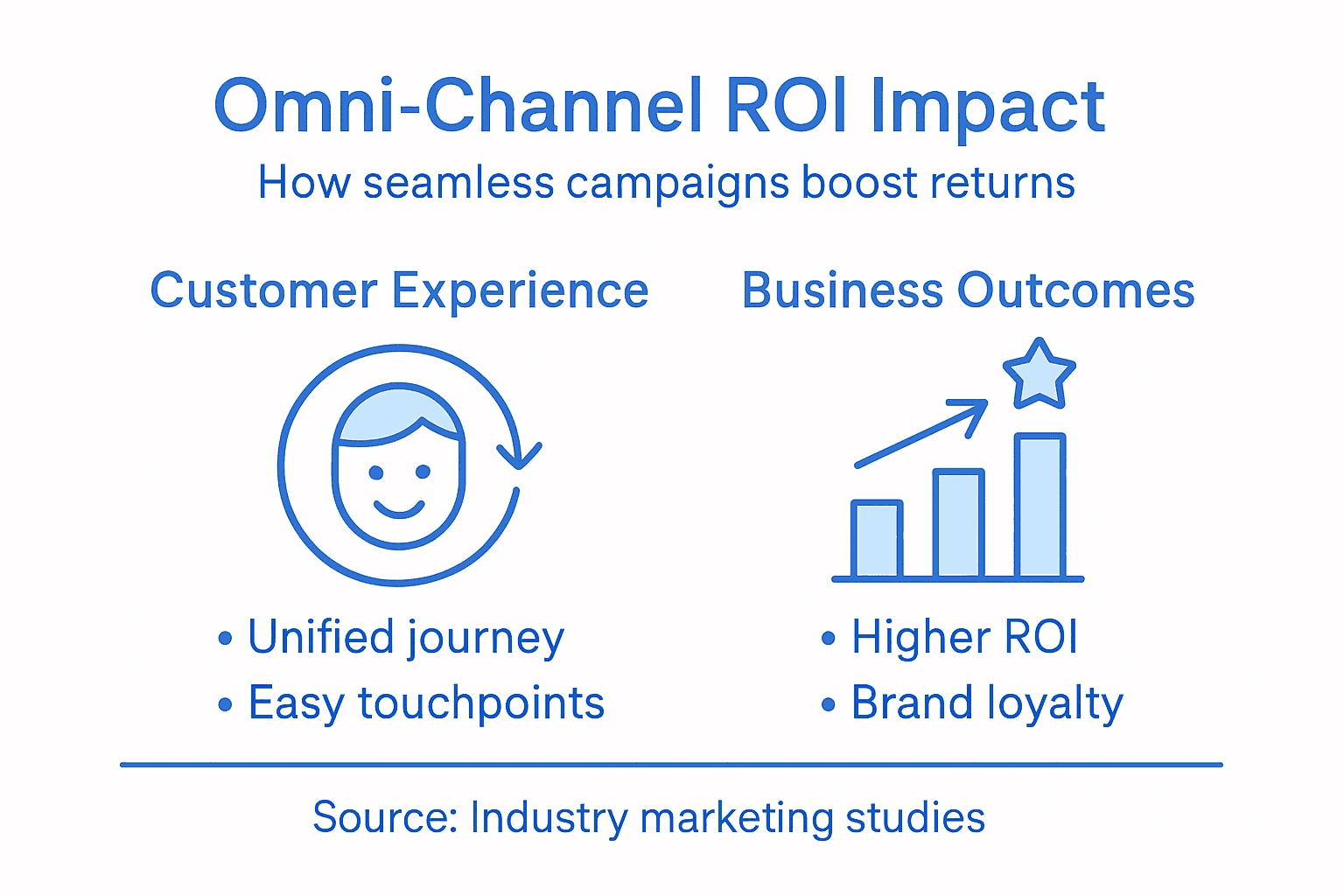
By leveraging machine learning algorithms, businesses can now predict customer needs, optimize marketing spend, and deliver precisely targeted messages with minimal human intervention. The result is a more efficient, responsive, and cost-effective approach to digital marketing.
The following table summarizes how AI-driven automation transforms omni-channel campaign management:
| AI-Driven Feature | Business Value | Notable Benefit |
|---|---|---|
| Real-time Analytics | Informed decisions instantly | Faster campaign optimization |
| Predictive Targeting | Anticipates customer behavior | Wyższe wskaźniki zaangażowania |
| Automated Testing | Rapid A/B iterations | Improved campaign performance |
| Dynamic Content Personalization | Adapts to live data | Increases conversion potential |
| Resource Allocation | Optimizes marketing spend | Enhances cost-effectiveness |
Porada profesjonalisty: Invest in AI tools that offer transparent machine learning models, allowing you to understand and refine the decision-making process behind automated campaign strategies.
Best Practices for Orchestrating Platforms
Omnichannel marketing strategies require sophisticated coordination across multiple digital and physical platforms. Modern businesses must develop comprehensive approaches that seamlessly integrate customer experiences, ensuring consistent messaging and personalized interactions.
Successful platform orchestration demands breaking down internal organizational silos and creating unified systems that enable smooth data flow and customer journey tracking. This involves implementing advanced technologies that can collect, analyze, and interpret customer data in real-time, allowing for dynamic and adaptive marketing strategies.
Key strategic elements for effective platform orchestration include:
- Comprehensive customer data integration
- Cross-platform messaging consistency
- Real-time performance analytics
- Automated personalization capabilities
- Flexible technological infrastructure
- Continuous performance monitoring
Platform orchestration is not about managing channels, but creating a unified customer experience ecosystem.
Strategic omnichannel performance management requires investing in advanced technological capabilities and employee skills. Organizations must develop robust frameworks that allow for intelligent decision-making, leveraging AI-driven analytics to monitor and optimize interactions across different touchpoints.
Technological integration goes beyond simple data sharing. It involves creating intelligent systems that can predict customer behaviors, recommend personalized experiences, and dynamically adjust marketing strategies based on real-time insights.
Porada profesjonalisty: Develop a comprehensive customer journey mapping process that tracks interactions across all platforms, identifying potential friction points and optimization opportunities.
Najczęstsze pułapki i sposoby ich unikania
Omnichannel marketing mistakes can significantly undermine digital marketing effectiveness. Most organizations struggle with complex integration challenges that prevent creating truly seamless customer experiences, leading to fragmented and ineffective campaign strategies.
The most critical errors emerge from organizational and technological disconnections that prevent unified customer interactions. These breakdowns typically manifest through inconsistent messaging, siloed data management, and disconnected communication channels that frustrate potential customers and reduce conversion potential.
Common pitfalls digital marketers must actively avoid include:
- Inconsistent brand messaging across platforms
- Disconnected customer data systems
- Lack of cross-channel communication integration
- Over-automation without personalization
- Inadequate performance tracking mechanisms
- Insufficient team collaboration
Successful omnichannel strategies require holistic thinking, not just technological implementation.
Marketing channel integration strategies demand comprehensive approaches that break down internal operational silos. Businesses must develop adaptive frameworks that enable intelligent, connected customer experiences across all digital and physical touchpoints.
Technological solutions alone cannot resolve these challenges. Organizations must simultaneously invest in team training, develop clear communication protocols, and create flexible technological infrastructures that support seamless customer interactions.
Porada profesjonalisty: Conduct quarterly cross-departmental audits to identify and resolve communication and data integration gaps across your marketing platforms.
Unlock Higher ROI with Seamless Omni-Channel Campaigns
The challenge of today’s competitive digital marketing landscape lies in creating truly unified and personalized customer experiences across multiple channels. As the article reveals, inconsistent messaging, fragmented data, and ineffective automation can limit the success of omni-channel campaigns and reduce return on investment. With goals like real-time data synchronization, dynamic personalization, and smooth platform orchestration, marketers need a solution that transforms complexity into clarity and drives measurable results.
Rekla.AI is designed to meet these exact challenges by combining advanced AI-powered automation with user-friendly tools that simplify omni-channel campaign management. Imagine launching and optimizing ad campaigns effortlessly across over 15 platforms such as Facebook, Google, TikTok, and LinkedIn while reducing advertising costs and boosting click-through rates. Rekla.AI handles audience targeting, creative generation, budget management, and A/B testing—all powered by cutting-edge AI from OpenAI and GPT technologies.
Businesses seeking to break down silos and embrace integrated marketing will find Rekla.AI indispensable to elevate their customer engagement and ROI. Start leveraging real-time optimization and predictive targeting to create personalized journeys that convert.
Ready to transform your digital advertising strategies with smart automation? Explore how Rekla.AI can drive smarter omni-channel campaigns now.
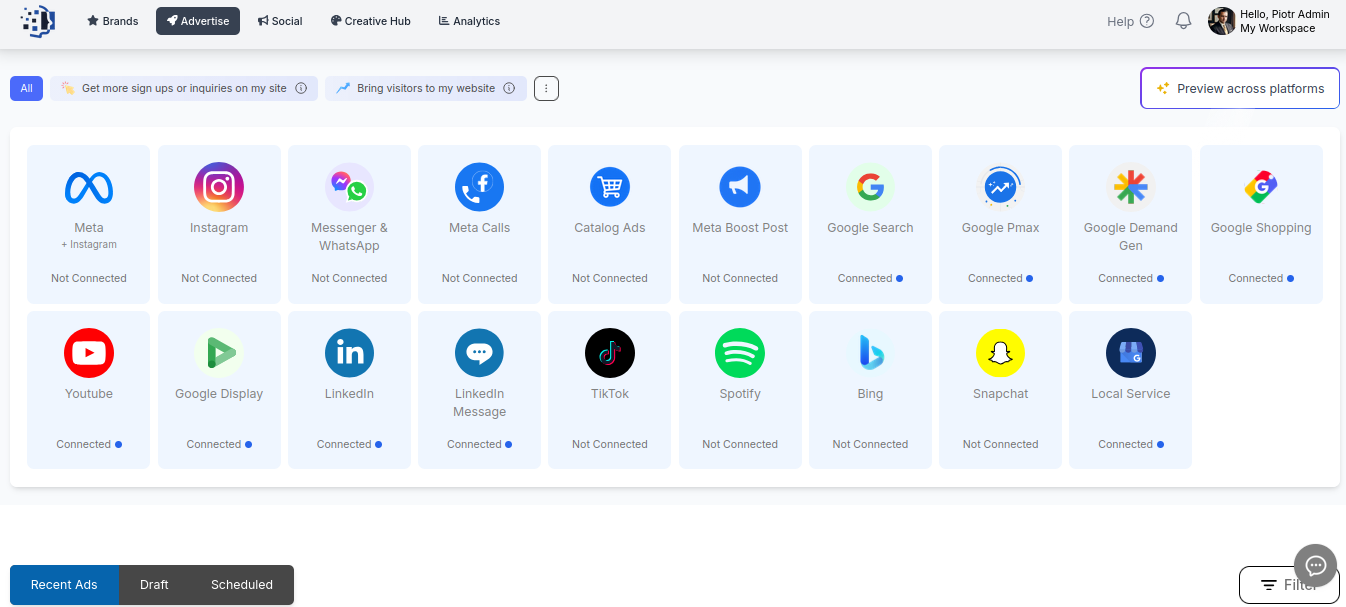
Discover the power of AI-driven omnichannel advertising today at Rekla.AI. See how easy it can be to launch smarter, faster campaigns with AI ad generation and multi-platform deployment. Take control of your marketing performance with seamless budget management and campaign analytics that deliver higher ROI in 2026 and beyond.
Często zadawane pytania
What are omni-channel campaigns?
Omni-channel campaigns involve creating a seamless customer experience across multiple platforms, integrating both digital and physical channels to enhance customer interactions and brand consistency.
How do omni-channel campaigns impact ROI?
By enhancing customer satisfaction and loyalty through personalized experiences, omni-channel campaigns lead to higher conversion rates and improved customer retention, ultimately driving a better return on investment (ROI).
What distinguishes omni-channel from multichannel marketing?
Omni-channel marketing synchronizes messaging and customer interactions across all platforms, creating a unified brand experience, while multichannel marketing operates channels separately, often resulting in inconsistent customer experiences.
How can businesses effectively implement omni-channel strategies?
To implement successful omni-channel strategies, businesses should focus on comprehensive customer data integration, real-time analytics, consistent cross-platform messaging, and automated personalization capabilities.
Zalecane
- Zarządzanie reklamami na różnych platformach: Skuteczne zwiększanie zwrotu z inwestycji
- Zarządzanie reklamami na różnych platformach: Skuteczne zwiększanie zwrotu z inwestycji
- Digital Ad Campaign Basics: Powering Smart ROI
- Digital Ad Campaign Basics: Powering Smart ROI
- Rule27 Design- Digital Powerhouse | Creative + Technical Excellence
 English
 English (UK)
 Polski
 Deutsch
 Español
 Français
 Português
 Svenska
 Dansk
Dansk Nederlands