
Competing with larger brands can feel daunting when every dollar counts. AI marketing now offers powerful and affordable solutions that help small and medium-sized businesses sharpen ad targeting and automate campaign management. By adopting a strategic framework, business owners worldwide can break through traditional barriers and access tools that deliver cost-effective scalability and smarter customer personalization. This article explains how you can use AI tools to optimize your marketing, cut advertising costs, and grow without overwhelming your resources.
Table of Contents
- AI In SMB Marketing Defined And Debunked
- Types Of AI Marketing Tools For SMBs
- How AI Automation Streamlines Campaigns
- Personalization, Targeting, And Optimization
- Costs, ROI, And Potential Challenges
- Best Practices For SMB AI Adoption
Key Takeaways
| Point | Details |
|---|---|
| AI Provides Competitive Edge | SMBs can leverage AI for hyper-personalized marketing, increasing engagement and efficiency. |
| Diverse Tool Categories Available | From foundational to advanced tools, SMBs have various options to enhance their marketing capabilities. |
| Automation Enhances Campaigns | AI-powered automation streamlines processes, reduces manual work, and improves targeting precision. |
| Strategic Implementation is Critical | A phased, well-planned approach to AI adoption is essential for successful integration and long-term benefits. |
AI in SMB Marketing Defined and Debunked
AI in small and medium-sized business (SMB) marketing represents a transformative technological shift, moving far beyond buzzword status into a practical competitive advantage. Strategic AI adoption frameworks are reshaping how businesses approach digital marketing, enabling unprecedented efficiency and precision.
At its core, AI marketing represents an intelligent approach to understanding and targeting customer behaviors through advanced data analysis and predictive modeling. Unlike traditional marketing methods that rely on broad demographic assumptions, AI-powered marketing tools can parse complex behavioral patterns, delivering hyper-personalized experiences that significantly boost engagement rates.
Key characteristics of AI marketing for SMBs include:
- Automated ad targeting that identifies most relevant audience segments
- Real-time campaign optimization adjusting strategies based on performance metrics
- Predictive customer behavior analysis to anticipate market trends
- Cost-effective scalability without requiring extensive marketing infrastructure
AI adoption research reveals that small businesses can leverage these technologies to compete effectively against larger enterprises, breaking down traditional barriers to marketing sophistication. The myth that AI is exclusively for tech giants has been definitively debunked.
Pro tip: Start with low-cost, entry-level AI marketing tools that offer modular capabilities and easily integrate with existing marketing workflows.
Types of AI Marketing Tools for SMBs
AI marketing tools for small and medium-sized businesses have evolved into a comprehensive ecosystem of solutions designed to democratize advanced marketing capabilities. AI marketing applications now span multiple categories, enabling businesses to select tools that precisely match their operational needs and strategic objectives.
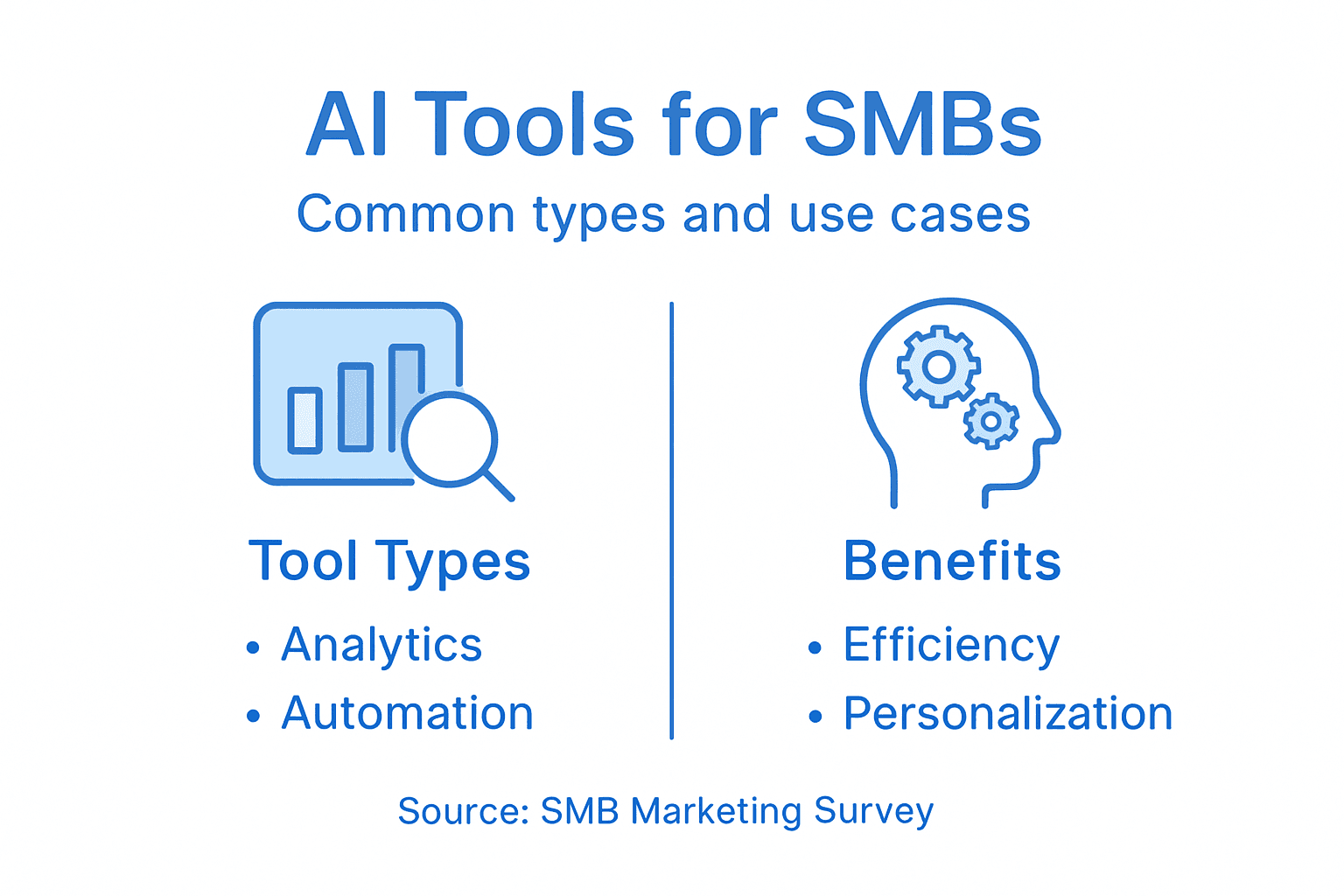
The landscape of AI marketing tools can be strategically categorized into four primary levels of technological sophistication. Small business AI solutions range from foundational awareness tools to advanced generative platforms, providing SMBs with unprecedented marketing intelligence and automation potential.
Key types of AI marketing tools include:
- Foundational AI Tools
- Basic customer segmentation software
- Entry-level predictive analytics platforms
- Simple marketing automation solutions
- General-Purpose AI Tools
- Cross-platform marketing performance dashboards
- Comprehensive audience insights generators
- Multi-channel campaign management systems
- Task-Specific AI Solutions
- Targeted ad optimization engines
- Personalized content recommendation tools
- Social media sentiment analysis platforms
- Advanced Generative AI Tools
- AI-powered creative content generators
- Dynamic marketing strategy simulators
- Intelligent customer journey mapping software
These AI marketing tools empower small businesses to compete effectively with larger enterprises by providing sophisticated marketing capabilities without requiring extensive internal resources or technical expertise.
Here’s a quick comparison of AI marketing tool categories for SMBs:
| Tool Type | Typical Use Case | Ease of Implementation | Example Benefit |
|---|---|---|---|
| Foundational AI Tools | Basic segmentation and analytics | High, beginner-friendly | Faster customer insights |
| General-Purpose AI Tools | Multi-channel campaign management | Moderate, some setup needed | Broader marketing oversight |
| Task-Specific AI | Ad optimization or recommendations | High, focused integration | Improved ad performance |
| Advanced Generative AI | Creative content generation | Low to moderate, complex | Unique, tailored campaigns |
Pro tip: Begin your AI marketing journey by selecting tools with flexible pricing models and comprehensive integration capabilities that align with your specific business growth objectives.
How AI Automation Streamlines Campaigns
AI-powered marketing automation represents a transformative approach to digital marketing, enabling small and medium-sized businesses to compete with larger enterprises through intelligent, efficient campaign management. By leveraging advanced technologies, businesses can dramatically reduce manual workload while simultaneously improving marketing precision and performance.

The core of AI marketing automation lies in its ability to transform complex, time-consuming processes into streamlined, intelligent workflows. Large Language Models have revolutionized campaign optimization by providing dynamic, data-driven insights that adapt in real-time to changing market conditions and audience behaviors.
Key benefits of AI campaign automation include:
- Accelerated Content Production
- Rapid generation of marketing copy
- Instant creative variations
- Multilingual content creation
- Enhanced Targeting Capabilities
- Precise audience segmentation
- Dynamic demographic analysis
- Predictive behavioral modeling
- Operational Efficiency
- Automated campaign adjustments
- Real-time performance monitoring
- Reduced manual intervention
- Cost Optimization
- Lower advertising development costs
- Improved click-through rates
- Intelligent budget allocation
By implementing AI automation, businesses can transform their marketing strategies from reactive approaches to proactive, intelligent systems that continuously learn and improve. This shift enables smaller organizations to compete effectively by maximizing their marketing resources and achieving more sophisticated campaign outcomes.
Pro tip: Start with modular AI automation tools that offer flexible integration and scalable features, allowing gradual implementation without overwhelming your existing marketing infrastructure.
Personalization, Targeting, and Optimization
Large Language Models have transformed digital marketing by enabling unprecedented levels of customer personalization and precise targeting for small and medium-sized businesses. These advanced AI technologies allow companies to move beyond traditional, generic marketing approaches and create highly tailored experiences that resonate with individual customer preferences and behaviors.
The core of modern marketing personalization lies in the ability to dynamically adapt content, promotions, and messaging based on real-time insights. AI-driven personalization techniques enable businesses to allocate resources more intelligently, creating promotions that account for complex customer interaction patterns and individual preferences.
Key components of AI-powered personalization include:
- Customer Segmentation
- Advanced behavioral profiling
- Predictive preference mapping
- Dynamic audience categorization
- Intelligent Targeting
- Micro-targeted content delivery
- Real-time audience refinement
- Contextual relevance optimization
- Optimization Strategies
- Automated performance tracking
- Continuous campaign adjustment
- Machine learning-driven improvements
- Ethical Personalization
- Privacy-conscious data handling
- Transparent customer communication
- Consent-driven personalization
By implementing these sophisticated AI-driven approaches, small businesses can create marketing strategies that feel individually crafted, dramatically improving engagement, conversion rates, and long-term customer relationships.
Pro tip: Start by implementing incremental personalization strategies, focusing first on segmentation and gradually expanding to more complex targeting techniques.
Costs, ROI, and Potential Challenges
AI adoption studies reveal a complex landscape of financial opportunities and strategic challenges for small and medium-sized businesses exploring artificial intelligence technologies. While the potential for significant returns exists, businesses must navigate a nuanced path of investment, implementation, and organizational adaptation.
Strategic ROI Considerations typically involve weighing immediate costs against long-term benefits. The financial potential of AI is substantial, with empirical research suggesting operational cost savings up to 30% and potential revenue increases that can transform business performance. Generative AI integration presents both exciting opportunities and critical decision points for strategic investment.
Key financial and implementation challenges include:
- Initial Investment Barriers
- High upfront technology costs
- Software and infrastructure expenses
- Training and skill development
- Technical Complexity Factors
- Data integration challenges
- Compatibility with existing systems
- Required technical expertise
- Organizational Adoption Risks
- Employee resistance
- Cultural adaptation challenges
- Change management requirements
- Performance Uncertainty
- Unpredictable AI model performance
- Potential inconsistent results
- Need for continuous monitoring
Successful AI implementation demands a strategic, measured approach that balances technological potential with pragmatic business considerations. Small businesses must view AI not as a one-time purchase but as an evolving strategic investment requiring ongoing refinement and commitment.
Below is a summary of AI ROI factors and common small business challenges:
| ROI Factor | Challenge Faced | Key Consideration |
|---|---|---|
| Cost Savings (up to 30%) | High initial expenses | Invest incrementally, monitor ROI |
| Revenue Growth Potential | Data integration issues | Ensure system compatibility |
| Faster Market Response | Employee resistance to change | Prioritize clear communication |
| Long-term Scalability | Ongoing monitoring requirements | Schedule regular performance checks |
Pro tip: Conduct a comprehensive cost-benefit analysis and start with small, low-risk AI pilot projects to demonstrate value before making significant organizational investments.
Best Practices for SMB AI Adoption
AI adoption frameworks highlight the critical importance of a strategic, phased approach for small and medium-sized businesses exploring artificial intelligence technologies. Successfully integrating AI requires more than just purchasing tools—it demands a comprehensive transformation of organizational capabilities and mindset.
Leadership plays a pivotal role in driving successful AI implementation. Strategic commitment involves creating a clear vision, establishing governance frameworks, and fostering an organizational culture that embraces technological innovation. Effective AI integration requires a holistic approach that goes beyond technical implementation.
Key best practices for SMB AI adoption include:
- Strategic Planning
- Define clear AI adoption objectives
- Align AI initiatives with business goals
- Develop a comprehensive roadmap
- Skill Development
- Invest in employee AI literacy training
- Create cross-functional AI learning programs
- Develop internal AI champions
- Technological Infrastructure
- Start with low-cost, modular AI tools
- Ensure system compatibility
- Implement scalable solutions
- Ethical Considerations
- Establish data privacy guidelines
- Create transparent AI usage policies
- Monitor algorithmic bias
- Continuous Learning
- Regularly assess AI tool performance
- Stay updated on emerging technologies
- Maintain flexibility in implementation
Successful AI adoption is not a destination but an ongoing journey of technological and organizational adaptation. Small businesses must approach AI as a strategic investment that requires continuous refinement, learning, and alignment with evolving business objectives.
Pro tip: Begin with pilot projects in one department, document measurable outcomes, and use those insights to gradually expand AI adoption across your organization.
Unlock AI Marketing Success with Rekla.AI Today
The article highlights the challenges small and medium-sized businesses face when adopting AI for marketing. Common pain points include high initial costs, technical complexity, and the need for scalable, easy-to-use tools that enable effective audience targeting and real-time campaign optimization. Many SMBs want to harness AI-driven automation and personalization yet struggle without the right platform that simplifies integrating these advanced technologies.
Rekla.AI directly addresses these concerns by offering an intuitive AI-powered advertising automation platform designed for SMBs. Leveraging OpenAI and GPT technologies, Rekla.AI helps you generate creative ads, precisely target audiences, and automate campaigns across more than 15 platforms such as Facebook, Google, and LinkedIn. This reduces your advertising costs while increasing click-through rates and campaign efficiency. Whether you are new to AI or looking to scale, Rekla.AI provides the modular tools and real-time insights you need to transform your marketing strategy.
Experience smarter marketing with features like:
- AI-generated ad creatives tailored to your audience
- Dynamic budget management and A/B testing
- Comprehensive campaign analytics for continuous improvement
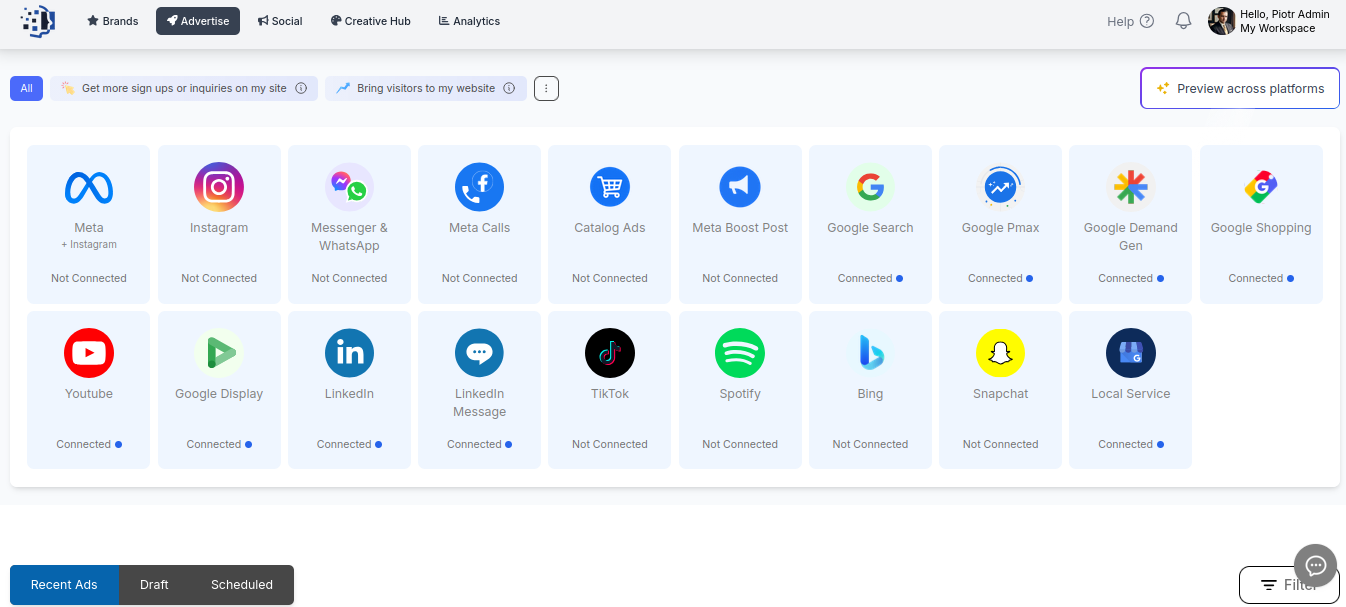
Ready to compete confidently in the digital advertising space? Visit Rekla.AI now to start your AI marketing journey. Learn more about how our AI-powered platform can help you overcome common SMB marketing challenges and achieve better ROI with less effort.
Frequently Asked Questions
What are the key benefits of using AI in SMB marketing?
AI in SMB marketing offers benefits such as automated ad targeting, real-time campaign optimization, predictive customer behavior analysis, and cost-effective scalability, enabling small and medium-sized businesses to enhance marketing efficiency and customer engagement.
How can small businesses start implementing AI marketing tools?
Small businesses can begin by exploring low-cost, entry-level AI marketing tools that integrate with existing workflows. Starting with modular capabilities allows gradual implementation without overwhelming current systems.
What types of AI marketing tools are available for SMBs?
AI marketing tools for SMBs can be categorized into foundational tools, general-purpose tools, task-specific solutions, and advanced generative platforms, each serving different operational needs and levels of sophistication.
What strategies should SMBs adopt for effective AI implementation?
SMBs should focus on strategic planning, skill development, investing in modular technologies, addressing ethical considerations like data privacy, and committing to continuous learning and adaptation to maximize their AI marketing efforts.
 English
 English (UK)
 Polski
 Deutsch
 Español
 Français
 Português
 Svenska
 Dansk
Dansk Nederlands