
Most american e-commerce businesses lose thousands each year due to inefficient ad campaigns. When every dollar must count, understanding ad campaign optimization is critical for achieving real results. With advances in AI-driven strategies, digital marketing managers can replace guesswork with data-backed improvements that increase ROI. This guide breaks down the key concepts and shows how smart tools transform everyday advertising into measurable success.
Table of Contents
- Defining Ad Campaign Optimization and Core Concepts
- AI’s Role in Modern Campaign Optimization
- Key Strategies for Improving Ad Performance
- Common Pitfalls and How to Avoid Them
- Cost Savings and Maximizing ROI with Optimization
Key Takeaways
| Point | Details |
|---|---|
| Ad Campaign Optimization | Systematic improvement using data and technology maximizes return on investment through continuous refinement. |
| AI’s Role in Optimization | AI enhances campaign management with real-time adaptability and personalized advertising experiences, moving beyond traditional methods. |
| Effective Strategies | Focus on precise audience targeting and technical optimization to improve ad performance and align with consumer behavior. |
| Risk Management and ROI | Implement dynamic budget allocation and predictive modeling to reduce waste and maintain cost-effectiveness in advertising campaigns. |
Defining Ad Campaign Optimization and Core Concepts
Ad campaign optimization represents a strategic approach that transforms digital advertising from guesswork to precision-engineered performance. At its core, optimization is about systematically improving advertising efforts to maximize return on investment (ROI) by leveraging data, technology, and continuous refinement. Advanced computational advertising techniques enable marketers to analyze consumer behavior and dynamically adjust campaign parameters in real time.
The fundamental goal of ad campaign optimization involves creating a sophisticated feedback loop where every advertising element—from audience targeting to creative design—is constantly evaluated and enhanced. Marketers can now utilize AI-powered analytics to track performance metrics, identify high-performing segments, and automatically adjust strategies. This process goes beyond traditional static marketing approaches, focusing instead on agile, data-driven decision making that responds instantly to market signals and consumer interactions.
Key components of effective ad campaign optimization include precise audience targeting, content personalization, strategic resource allocation, and continuous performance monitoring. By implementing real-time campaign optimization strategies, digital marketers can dynamically adapt messaging, reallocate budgets, and fine-tune audience segments to improve overall campaign effectiveness. The most successful optimization strategies integrate multiple data sources, utilize machine learning algorithms, and maintain a holistic view of campaign performance across different platforms and channels.
Pro tip: Set up automated performance tracking with predefined success metrics to enable immediate insights and rapid campaign adjustments.
AI’s Role in Modern Campaign Optimization
Artificial intelligence has dramatically transformed digital advertising by introducing unprecedented levels of precision and automation to campaign management. Advanced machine learning techniques now enable marketers to analyze complex consumer behaviors and dynamically adjust advertising strategies in milliseconds, moving far beyond traditional manual optimization approaches. AI-powered systems can process massive datasets, identifying subtle patterns and insights that human analysts might overlook.
The core strength of AI in campaign optimization lies in its ability to continuously learn and adapt. Predictive modeling and automated decision-making allow digital marketers to create highly personalized advertising experiences that respond in real time to audience interactions. By leveraging natural language processing and sentiment analysis, AI can understand nuanced consumer preferences, helping marketers craft more resonant messaging and precisely target specific audience segments across multiple platforms.
Moreover, AI-driven optimization goes beyond simple performance tracking, implementing sophisticated reinforcement learning strategies that automatically refine advertising parameters. These intelligent systems can dynamically allocate budgets, adjust bidding strategies, and optimize ad placements to maximize return on investment. The result is a more efficient, responsive, and data-driven approach to digital advertising that reduces wasted spend and increases overall campaign effectiveness across complex marketing ecosystems.
Pro tip: Implement AI-powered tracking tools that provide granular performance insights and enable automated campaign adjustments based on real-time data.
Here’s a comparison of traditional versus AI-powered ad campaign optimization to highlight their distinct advantages and limitations:
| Aspect | Traditional Optimization | AI-Powered Optimization |
|---|---|---|
| Decision Speed | Manual, slower adjustments | Instant, real-time adaptation |
| Data Utilization | Limited, simple metrics | Complex, large-scale data analysis |
| Personalization Level | Basic audience segmentation | Hyper-targeted personalization |
| Cost Efficiency | Fixed spend, less flexibility | Dynamic budget allocation |
| Adaptability | Reactive, periodic updates | Proactive, ongoing learning |
Key Strategies for Improving Ad Performance
Successful ad performance hinges on a comprehensive, data-driven approach that goes beyond simple creative design. Customer-centric marketing strategies require systematic alignment of campaign objectives with precise targeting, compelling messaging, and continuous performance evaluation. Digital marketers must develop a holistic framework that integrates audience insights, technical optimization, and adaptive measurement techniques to drive meaningful results.
Core strategies for enhancing ad performance involve multiple interconnected components. Audience segmentation emerges as a critical first step, enabling marketers to develop highly targeted campaigns that resonate with specific consumer groups. This approach involves deep analysis of demographic data, behavioral patterns, and interaction histories to create nuanced audience profiles. Advanced targeting techniques allow for granular customization, ensuring that each advertisement speaks directly to the most relevant potential customers across different platforms and marketing channels.

Technical optimization represents another crucial dimension of improving ad performance. Marketers must focus on key metrics like click-through rates, conversion rates, and cost per acquisition while simultaneously refining ad creative, testing multiple variations, and implementing sophisticated tracking mechanisms. This requires a dynamic approach that embraces continuous experimentation, leveraging A/B testing, multivariate analysis, and real-time performance monitoring to incrementally improve campaign effectiveness. The goal is creating a responsive, intelligent advertising ecosystem that can quickly adapt to changing market conditions and consumer preferences.
Pro tip: Develop a standardized performance tracking dashboard that aggregates key metrics across all advertising channels to enable rapid, data-driven decision making.
Common Pitfalls and How to Avoid Them
Digital marketing campaigns frequently encounter systemic challenges that can dramatically reduce their effectiveness and efficiency. Campaign quality management requires marketers to proactively identify and address potential performance limitations before they significantly impact overall results. Understanding these common pitfalls provides a strategic framework for developing more resilient and adaptive advertising approaches.
One of the most critical mistakes marketers make involves inadequate audience targeting. Broad, unfocused campaigns waste significant budget by displaying advertisements to individuals with minimal potential interest. Precise audience segmentation demands deep understanding of demographic characteristics, behavioral patterns, and specific consumer pain points. Successful marketers develop comprehensive audience personas that go beyond basic demographic information, incorporating nuanced insights about motivation, preference, and potential interaction likelihood with specific messaging.
Another substantial challenge emerges from static marketing strategies that fail to adapt to rapidly changing consumer behaviors. Modern digital advertising requires continuous monitoring, real-time adjustment, and flexible resource allocation. Marketers must implement sophisticated tracking mechanisms that enable immediate performance analysis and strategic pivoting. This means developing robust analytics dashboards, establishing clear performance benchmarks, and creating predefined intervention protocols that allow for swift campaign modifications when initial results deviate from expected outcomes. The most successful campaigns maintain a dynamic, responsive approach that treats advertising as an ongoing optimization process rather than a static, one-time effort.
Pro tip: Establish a weekly campaign performance review process that includes mandatory strategy reassessment and data-driven adjustment recommendations.
Cost Savings and Maximizing ROI with Optimization
Optimizing digital advertising campaigns requires a sophisticated approach to financial management that goes far beyond simple budget allocation. Mathematical budget optimization models provide marketers with powerful frameworks for strategically distributing resources across multiple platforms to maximize return on investment. By applying advanced analytical techniques, businesses can transform advertising spending from a cost center into a precision-driven growth engine.
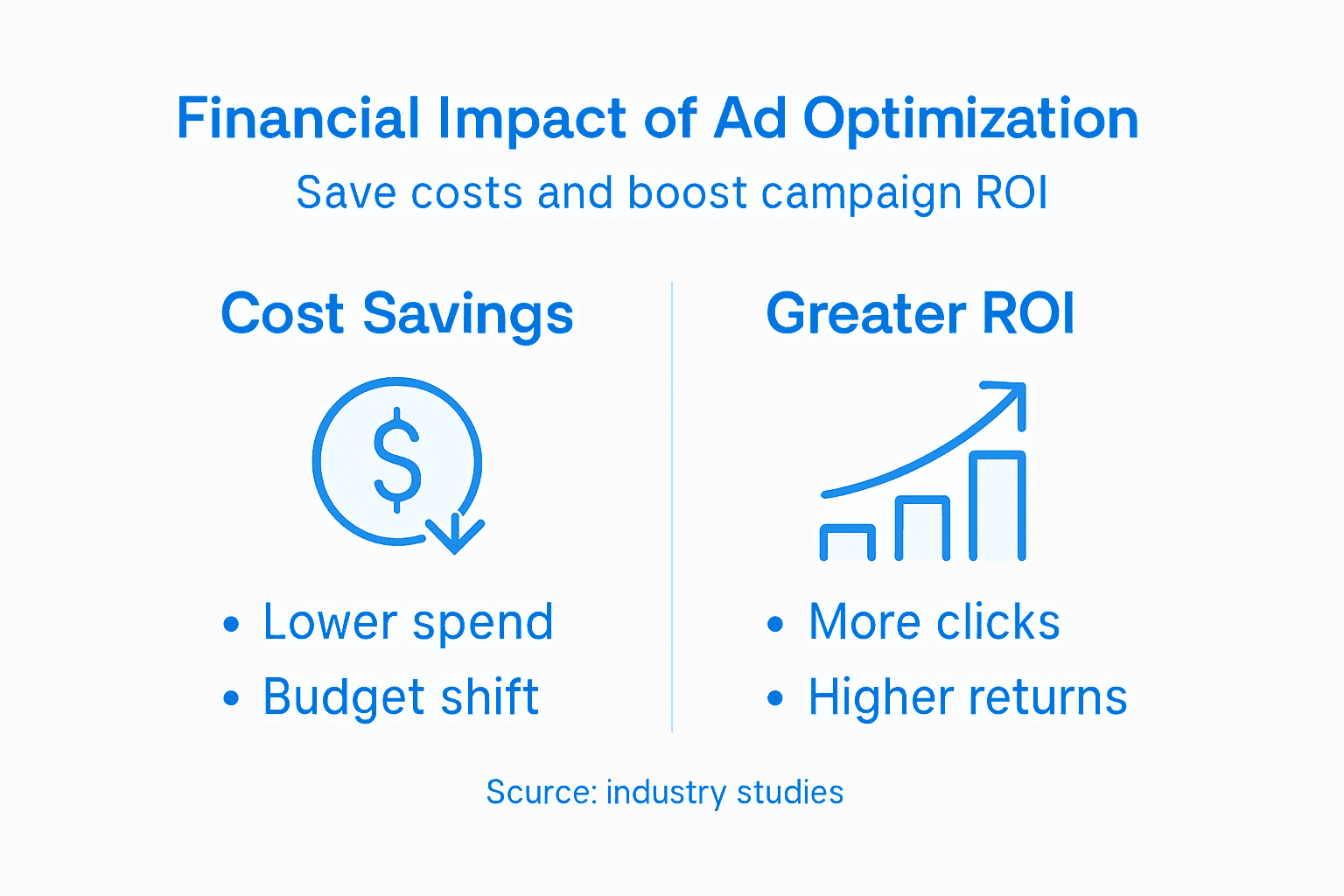
The core principle of ROI optimization involves creating a dynamic budget allocation strategy that continuously adapts to performance metrics. Intelligent resource distribution means moving beyond fixed spending patterns and embracing data-driven decision making. Successful marketers analyze granular performance data across different channels, identifying high-performing segments and rapidly reallocating budgets to maximize conversion potential. This approach requires sophisticated tracking mechanisms that provide real-time insights into campaign performance, enabling swift and strategic financial adjustments.
Risk management represents another critical dimension of optimization strategies. Robust optimization frameworks help marketers navigate the inherent uncertainties of digital advertising environments. By incorporating predictive modeling and expert knowledge, businesses can develop more resilient advertising strategies that maintain performance even during market fluctuations. This means creating adaptive budgeting protocols that automatically adjust spending based on predefined performance thresholds, ensuring consistent cost efficiency and minimizing potential wastage.
Pro tip: Implement a monthly budget optimization review that uses performance data to dynamically redistribute advertising spend across the most effective channels.
The table below summarizes essential strategies that maximize digital advertising ROI:
| Strategy | Financial Benefit | Risk Management Impact |
|---|---|---|
| Dynamic budget allocation | Optimizes spend efficiency | Mitigates wasted investment |
| Granular performance tracking | Increases ROI transparency | Enables rapid intervention |
| Predictive modeling | Enhances future planning | Reduces unexpected losses |
| Adaptive marketing protocols | Maintains cost-effectiveness | Sustains campaign resilience |
Unlock Superior Ad Campaign Results with Rekla.AI
If you are struggling with inefficient audience targeting or wasting budget on static ad strategies, you are not alone. The article highlights the key challenges marketers face such as the need for real-time optimization, data-driven decision making, and dynamic budget allocation to maximize ROI. Rekla.AI directly addresses these hurdles by offering an AI-powered advertising automation platform that transforms complex campaign management into a simple, automated process. Our platform uses advanced machine learning to precisely target audiences, generate compelling ad creatives, and continuously optimize your campaigns across more than 15 platforms including Facebook, Google, and TikTok.
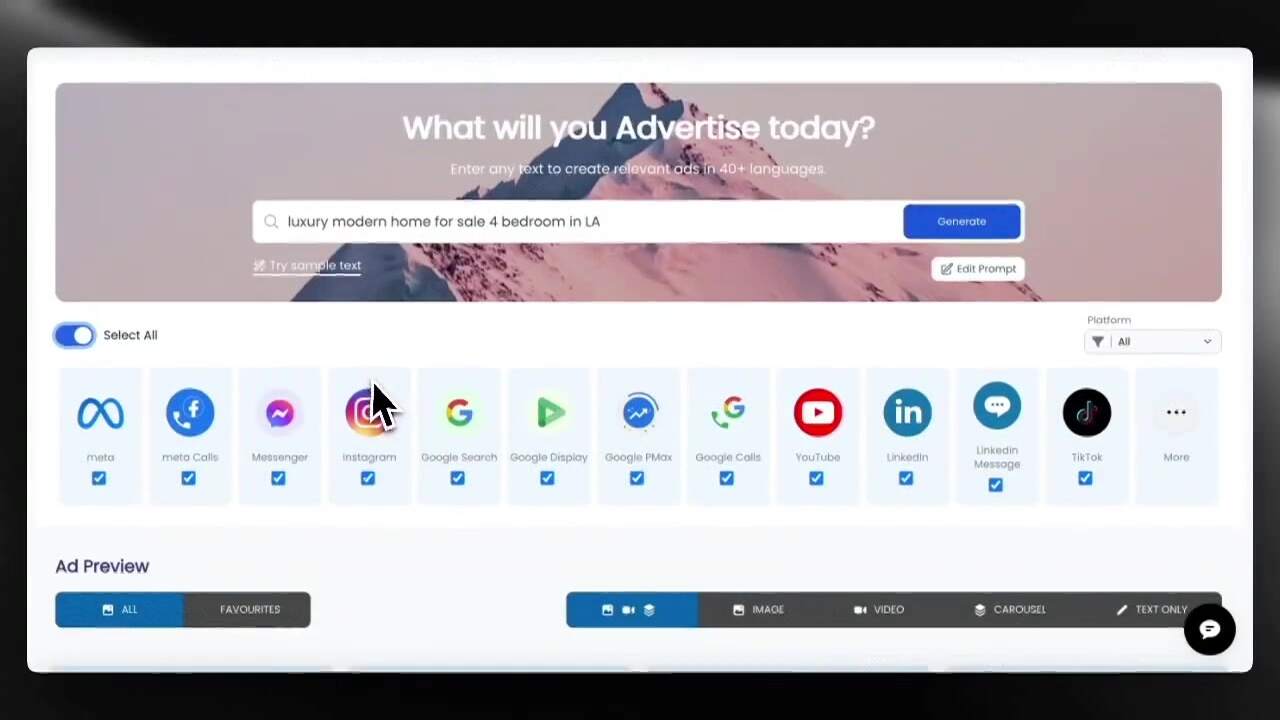
Experience firsthand how AI can eliminate guesswork and boost your campaign effectiveness with Rekla.AI. Reduce wasted spend while increasing click-through rates and conversions through automated A/B testing and real-time analytics. Don’t let manual optimization slow you down—take control of your advertising with Rekla.AI today. Visit https://www.rekla.ai/ to start your free trial and see how intelligent optimization can maximize your advertising ROI now.
Frequently Asked Questions
What is ad campaign optimization?
Ad campaign optimization is a strategic process aimed at improving digital advertising efforts by leveraging data and technology to maximize return on investment (ROI) through real-time adjustments and continuous refinement.
How can AI improve the effectiveness of ad campaigns?
AI enhances ad campaigns by enabling data analysis at scale, providing insights into consumer behavior, allowing for hyper-targeted advertising, and facilitating real-time adjustments to optimize performance and resource allocation.
What strategies can I use to improve ad performance?
Improving ad performance involves strategies such as precise audience segmentation, continuous technical optimization, testing multiple ad variations, and implementing robust performance tracking systems to enable quick adjustments as needed.
What are common pitfalls in ad campaign management, and how can I avoid them?
Common pitfalls include inadequate audience targeting and static marketing strategies. To avoid these, focus on creating detailed audience personas and continuously monitor campaign performance, enabling real-time adjustments when necessary.
Recommended
- Introducing Optimization Folders: Simplify and Maximize Ad Campaign Performance
- Introducing Optimization Folders: Simplify and Maximize Ad Campaign Performance
- Introducing Rekla.AI’s “Optimize for Me”: Your 24/7 Personal Ad Manager
- Introducing Rekla.AI’s “Optimize for Me”: Your 24/7 Personal Ad Manager
- Promovarea SEO: ce presupune | e Timpul SEO
 English
 English (UK)
 Polski
 Deutsch
 Español
 Français
 Português
 Svenska
 Dansk
Dansk Nederlands