

Increasing advertising spend often leads to questions about efficiency and growth. When every dollar counts, understanding how to scale digital ad campaigns without ballooning costs or complexity becomes vital for small-to-medium-sized e-commerce businesses. Mastering digital ad scalability can transform the way you manage campaigns, improve reach, and maximize return on investment while keeping your team lean and agile.
Inhaltsverzeichnis
- Defining Digital Ad Scalability And Core Concepts
- Types Of Digital Ad Scalability In Advertising
- How Automation And Ai Drive Scalability
- Cost Implications And Roi Benefits
- Common Challenges And Mistakes To Avoid
Wichtige Erkenntnisse
| Punkt | Details |
|---|---|
| Digital Ad Scalability | Businesses can expand advertising reach and performance without proportional increases in costs through technology, efficiency, and optimization strategies. |
| Types of Scalability | Vertical and horizontal scaling, along with platform-based and network-driven approaches, provide unique advantages for optimizing advertising strategies. |
| Role of AI and Automation | Employing AI-driven automation enhances audience targeting, content optimization, and budget allocation, leading to improved campaign performance and cost efficiency. |
| Common Challenges | Avoid overextending capabilities and neglecting performance metrics; set realistic goals and remain agile in adapting strategies based on data insights. |
Defining Digital Ad Scalability and Core Concepts
Digital ad scalability represents a strategic approach for businesses to expand their advertising capabilities efficiently across multiple platforms and audiences. At its core, scalability enables marketing teams to increase ad campaign reach and performance without proportionally increasing operational costs or complexity.
Scalability in digital advertising fundamentally involves three critical dimensions:
- Technological Infrastructure: Ability to handle increased ad volume and complexity
- Kosteneffizienz: Maintaining or reducing per-unit advertising expenses while expanding reach
- Performance Optimization: Ensuring consistent or improved ad performance across scaled campaigns
The conceptual framework of digital ad scalability is deeply rooted in understanding how digital processes enable replication with low variable costs. This means businesses can strategically expand their advertising efforts without experiencing linear increases in expenditure or operational overhead.
Businesses achieve digital ad scalability through several key strategies:
- Leveraging AI-powered automation tools
- Implementing cross-platform advertising technologies
- Utilizing real-time performance analytics
- Developing adaptable audience targeting mechanisms
The economic potential of scalable digital advertising extends beyond simple cost management. Network effects play a crucial role, where increased campaign reach can generate exponential returns through improved audience engagement and more sophisticated targeting capabilities.

Profi-Tipp: Start small with scalable advertising strategies, continuously monitor performance metrics, and incrementally expand your approach based on quantitative insights.
Types of Digital Ad Scalability in Advertising
Digital advertising scalability encompasses multiple strategic approaches that enable businesses to expand their marketing capabilities efficiently. Entrepreneurial scalability strategies reveal that businesses can leverage different models to optimize their digital advertising performance across diverse platforms and markets.
The primary types of digital ad scalability include:
- Vertical Scaling: Enhancing existing ad campaign performance by deepening targeting precision
- Horizontal Scaling: Expanding ad reach across multiple platforms and audience segments
- Platform-Based Scaling: Utilizing technological infrastructure to manage increasingly complex advertising ecosystems
- Network-Driven Scaling: Leveraging interconnected digital networks to amplify campaign effectiveness
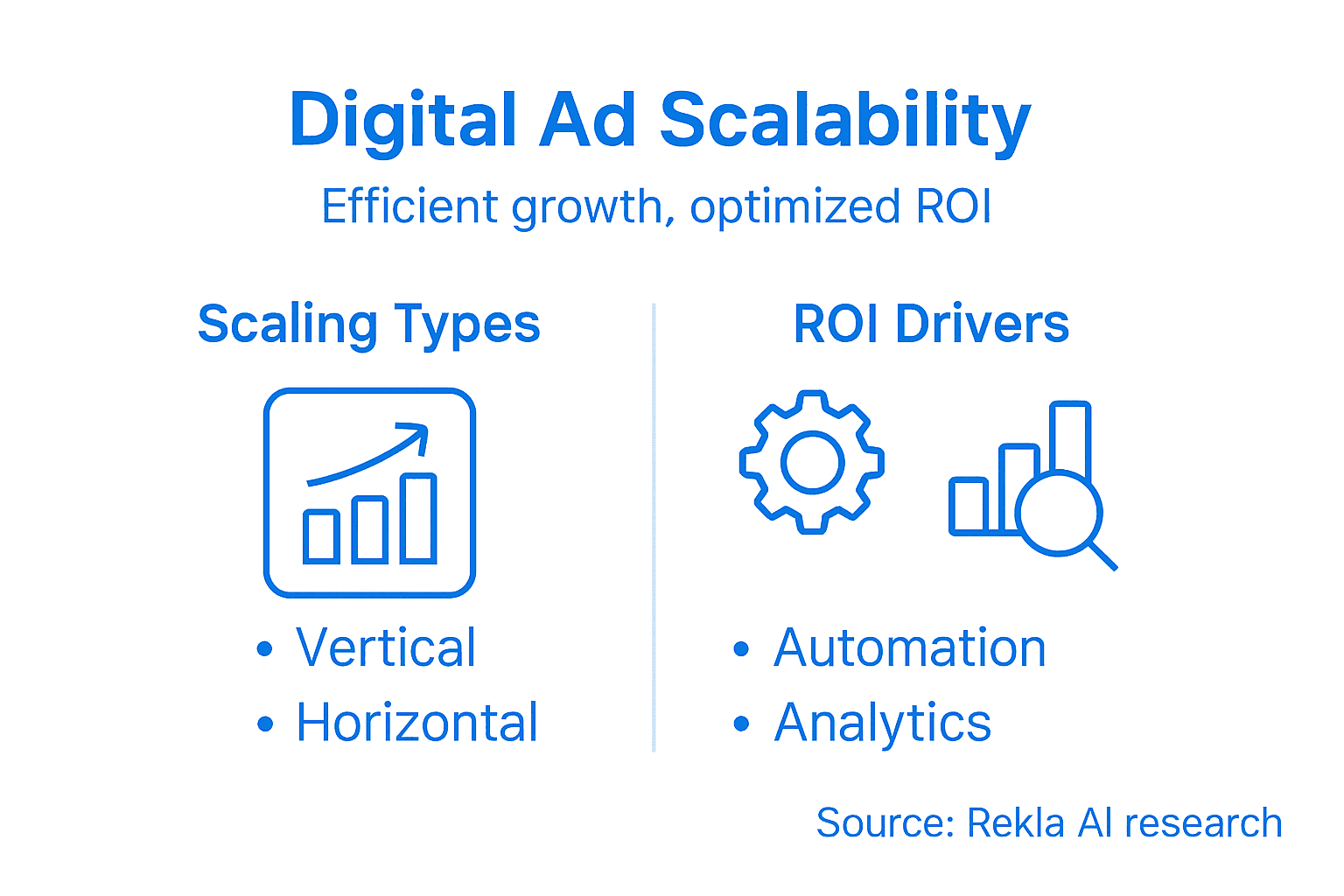
Each scalability type offers unique advantages for digital marketers seeking to optimize their advertising strategies. Vertical scaling focuses on refining audience targeting and improving per-ad performance, while horizontal scaling emphasizes broad market penetration and diversification of advertising channels.
Here’s a comparison of digital ad scalability types and their typical business impact:
| Scalability Type | Ansatz | Geschäftlicher Nutzen |
|---|---|---|
| Vertical Scaling | Deepens existing targeting | Increases conversion rates |
| Horizontal Scaling | Expands across platforms | Broadens audience exposure |
| Platform-Based Scaling | Centralizes tech management | Streamlines campaign operations |
| Network-Driven Scaling | Leverages connected networks | Amplifies reach and engagement |
Technological advancements have dramatically transformed digital ad scalability approaches. Modern businesses now employ sophisticated tools that enable:
- Real-time performance analytics
- AI-powered audience segmentation
- Cross-platform campaign management
- Dynamische Haushaltszuweisung
The evolution of digital advertising measurement has further refined scalability strategies. Advanced marketing mix modeling and user-level data attribution provide unprecedented insights into campaign performance, allowing marketers to make more informed scaling decisions.
Profi-Tipp: Implement a phased scaling approach, starting with small, targeted campaigns and progressively expanding based on measurable performance metrics and audience engagement.
How Automation and AI Drive Scalability
AI-driven automation technologies are revolutionizing digital advertising scalability by transforming how businesses approach marketing strategy and campaign management. These advanced technologies enable marketers to optimize workflows, automate routine tasks, and dramatically improve overall advertising performance across multiple platforms.
Key mechanisms through which automation and AI enhance digital ad scalability include:
- Intelligent Targeting: Using machine learning algorithms to identify and reach most relevant audience segments
- Dynamic Content Optimization: Automatically adjusting ad creatives based on real-time performance data
- Predictive Budget Allocation: Distributing advertising spend across channels with highest potential return
- Continuous Performance Monitoring: Tracking campaign metrics and making instant adjustments
Modern AI technologies provide unprecedented capabilities for digital advertisers. By converting complex data streams into actionable insights, these tools enable businesses to scale their advertising efforts with minimal manual intervention. Automated systems can process thousands of data points simultaneously, making split-second decisions that would be impossible for human marketers.
The scalability potential of AI-powered advertising extends across multiple operational dimensions:
- Reduced human resource requirements
- Faster campaign deployment
- More precise audience targeting
- Enhanced real-time optimization capabilities
- Verbesserte Kosteneffizienz
Complex digital platforms now leverage AI to personalize interactions and seamlessly scale operations without compromising quality. This technological evolution allows even small businesses to compete effectively in increasingly sophisticated digital advertising landscapes.
This table summarizes how automation and AI transform digital ad scalability across key operational areas:
| Operational Area | Role of Automation/AI | Resulting Advantage |
|---|---|---|
| Audience Segmentation | Machine learning-driven targeting | More precise customer acquisition |
| Optimierung der Inhalte | Real-time creative adjustments | Higher engagement and relevance |
| Budget-Zuweisung | Predictive channel spending | Better ROI and lower waste |
| Leistungsüberwachung | Automated metric tracking | Faster response to trends |
Profi-Tipp: Start with small-scale AI automation experiments, carefully measuring performance and gradually expanding your technological integration to minimize risks and maximize learning.
Cost Implications and ROI Benefits
Digital advertising cost structures represent a complex landscape where scalable technologies can dramatically transform financial performance. By reducing variable costs and optimizing resource allocation, businesses can achieve significantly improved return on investment through strategic digital advertising approaches.
Key cost and ROI considerations in digital advertising scalability include:
- Reduced Operational Expenses: Minimizing manual labor through automation
- Optimized Budget Allocation: Dynamically redistributing funds to highest-performing channels
- Lower Acquisition Costs: Improving targeting precision to reduce wasted ad spend
- Enhanced Performance Tracking: Implementing real-time measurement for immediate optimization
The economic advantages of scalable digital advertising extend beyond simple cost reduction. Intelligent systems enable businesses to achieve exponential growth by creating more efficient marketing ecosystems that continuously adapt and improve performance.
Advanced ROI measurement strategies demonstrate the financial impact of scalable advertising technologies:
- Decreased customer acquisition costs
- Higher conversion rates
- More precise audience segmentation
- Improved long-term marketing efficiency
- Reduced manual intervention expenses
Companies can transform their financial performance by embracing technologies that provide granular insights and automated optimization. These approaches allow even smaller businesses to compete effectively by maximizing every advertising dollar spent.
Profi-Tipp: Implement a systematic ROI tracking framework that measures both direct and indirect advertising performance metrics to understand the true economic value of your digital campaigns.
Common Challenges and Mistakes to Avoid
Entrepreneurial scalability strategies reveal critical pitfalls that digital advertisers must navigate when expanding their marketing capabilities. Understanding these challenges is crucial for maintaining sustainable growth and avoiding costly strategic missteps in digital advertising scalability.
Most common challenges in digital ad scalability include:
- Overextension: Expanding beyond current operational capabilities
- Resource Misalignment: Inadequate technological or human infrastructure
- Unrealistic Goal Setting: Creating unachievable performance expectations
- Neglecting Performance Metrics: Failing to track and adjust campaign strategies
Digital advertising scalability demands a nuanced approach that balances technological innovation with strategic planning. Businesses frequently encounter obstacles when attempting to rapidly expand their marketing efforts without proper foundational work.
Key mistakes that can derail digital ad scaling efforts include:
- Ignoring data privacy constraints
- Relying on outdated attribution models
- Failing to adapt measurement frameworks
- Overlooking audience segmentation complexity
- Underestimating technological integration challenges
Successful scalability requires continuous adaptation and a willingness to modify strategies based on real-world performance data. Companies must remain flexible and responsive to changes in digital advertising technologies and market dynamics.
Profi-Tipp: Develop a comprehensive scalability roadmap that includes incremental testing, continuous performance evaluation, and built-in flexibility for technological and strategic adjustments.
Scale Your Digital Ads with Ease and Precision
The article highlights common challenges such as maintaining cost efficiency while scaling digital ad campaigns and optimizing performance with limited resources. If you are looking to overcome issues like overextension, resource misalignment, and ineffective audience targeting, Rekla.AI offers a proven solution. Our AI-powered advertising automation platform simplifies multi-channel campaign management, real-time optimization, and precision audience targeting all in one place.
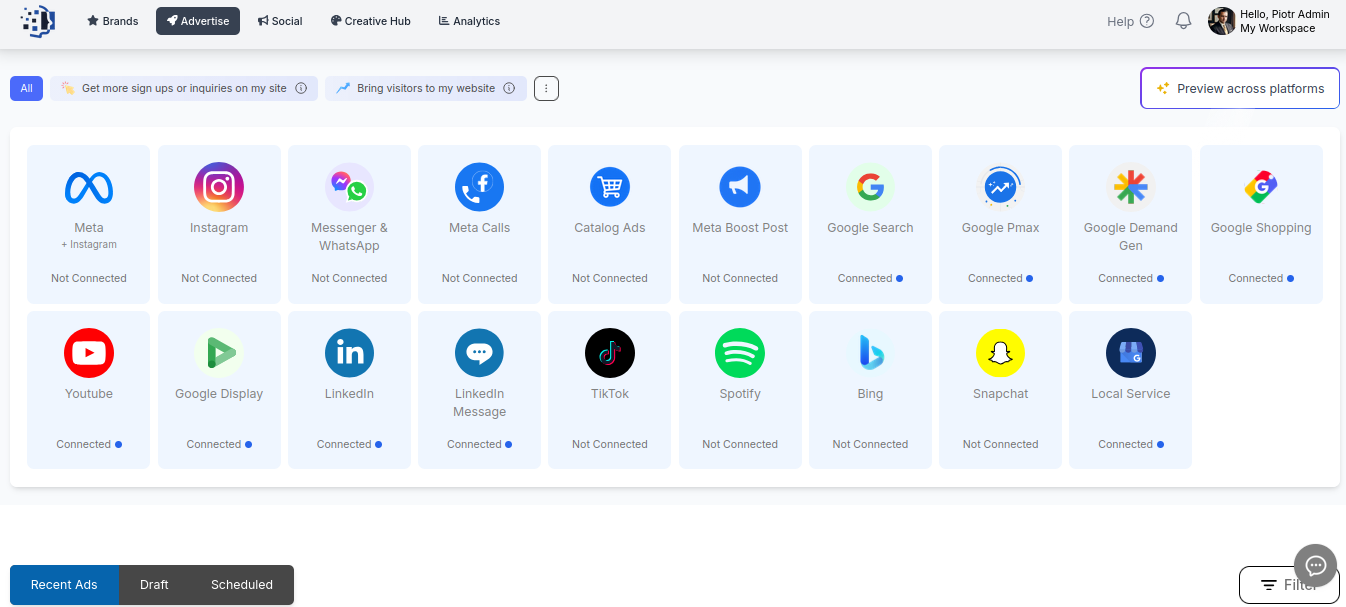
Unlock smarter, scalable digital advertising by harnessing Rekla.AI’s advanced tools for KI-Anzeigenerstellung, budget management, and continuous performance analytics. Whether you want to experiment with vertical focusing or horizontally expand across platforms like Facebook, Google, TikTok, and more, our platform helps you make every advertising dollar count. Don’t miss the opportunity to increase ROI and reduce operational costs today by exploring Rekla.AI. Start with our easy-to-use solution and transform your ad scalability challenges into growth opportunities now.
Häufig gestellte Fragen
What is digital ad scalability?
Digital ad scalability refers to the ability of a business to efficiently expand its advertising efforts across multiple platforms and audiences without proportionally increasing costs or complexity.
How can businesses achieve scalable digital advertising?
Businesses can achieve digital ad scalability by leveraging AI-powered automation tools, implementing cross-platform advertising technologies, utilizing real-time performance analytics, and developing adaptable audience targeting mechanisms.
What are the types of digital ad scalability?
The main types of digital ad scalability include vertical scaling, horizontal scaling, platform-based scaling, and network-driven scaling, each offering unique advantages for optimizing digital marketing strategies.
What role does AI play in digital ad scalability?
AI enhances digital ad scalability by enabling intelligent targeting, dynamic content optimization, predictive budget allocation, and continuous performance monitoring, allowing businesses to improve efficiency and maximize advertising performance.
 English
 English (UK)
 Polski
 Deutsch
 Español
 Français
 Português
 Svenska
 Dansk
Dansk Nederlands