

Running an online store often means watching your digital ad budget disappear faster than the returns can keep up. For many small business owners, figuring out where money goes and which ads actually work can feel confusing. Understanding your true ad performance is the first step to smarter spending and stronger results. This guide introduces simple, actionable ways to assess, refine, and automate your ad strategies, helping you achieve more with less.
Inhaltsverzeichnis
- Step 1: Assess Current Ad Spend and Targets
- Step 2: Leverage AI Tools for Campaign Creation
- Step 3: Implement Smart Audience Targeting
- Step 4: Optimize Ads Continuously with Real-Time Data
- Step 5: Analyze Results and Adjust Budgets
Kurze Zusammenfassung
| Wichtigste Einsicht | Erklärung |
|---|---|
| 1. Assess Current Ad Spend Clearly | Gather data on ad spend, clicks, conversions, and metrics from various platforms to understand performance. |
| 2. Utilize AI for Campaign Efficiency | Leverage AI tools for ad copy, visuals, and targeting to create campaigns faster and potentially increase performance. |
| 3. Focus on Smart Audience Targeting | Identify your best customer profiles and use AI for look-alike and micro-segmentation targeting to reduce wasted ad spend. |
| 4. Optimize with Real-Time Data | Set up dashboards to monitor key metrics, enabling immediate adjustments to improve ad performance and reduce costs. |
| 5. Analyze Results for Budget Adjustments | Conduct weekly performance analyses to identify top-performing and underperforming campaigns for strategic budget reallocation. |
Step 1: Assess Current Ad Spend and Targets
Before you optimize anything, you need a clear picture of where your money is going and what results you are getting. This step forms the foundation for all cost-reduction decisions that follow.
Start by gathering your advertising data from the past 3 to 6 months. Pull reports from every platform where you are running ads: Google Ads, Facebook, Instagram, TikTok, LinkedIn, or any other channels your business uses. Look for consistency across platforms.
Track these key metrics for each channel:
- Total spend amount
- Clicks and impressions
- Conversions (purchases, signups, form submissions)
- Click-through rate (CTR)
- Cost per click (CPC)
- Cost per conversion or cost per acquisition (CPA)
Calculate your current return on ad spend (ROAS) for each channel. Divide your revenue from ads by your total ad spend. If you spent $1,000 and generated $3,500 in revenue, your ROAS is 3.5x. Understanding digital ad optimization metrics helps you spot which channels perform best.
Next, define your target metrics. What ROAS do you want to achieve? What’s your ideal cost per conversion? What percentage of your revenue should come from paid ads? These targets guide your optimization strategy. According to research on data-driven marketing measurement, marketers who set clear performance goals ahead of time adjust their strategies more effectively.
Your baseline metrics are your starting point. You cannot reduce costs strategically without knowing where you are today.
Document everything in a simple spreadsheet. Organize by platform, then by campaign. This makes trends visible and comparisons easy. You will reference this data constantly as you optimize.
Profi-Tipp: Set a recurring monthly reminder to pull and compare these reports. Tracking trends over time reveals patterns that single snapshots miss, helping you spot optimization opportunities before they cost you significant budget.
Step 2: Leverage AI Tools for Campaign Creation
Now that you understand your current performance, it’s time to use AI to create better ad campaigns faster and cheaper. AI tools handle the heavy lifting of content generation, audience targeting, and creative optimization, freeing you to focus on strategy.
Beginnen Sie mit AI ad copywriting tools. These generate multiple headline and description variations based on your product or service. You input your key selling points, target audience, and campaign goal. The AI produces dozens of options in seconds. Pick the strongest performers for A/B testing. This process that typically takes hours now takes minutes.

Next, use AI for visual content creation. Tools can generate or suggest images tailored to your audience demographics and campaign theme. Understanding AI capabilities for personalization and automation helps you choose the right features for your budget.
Leverage AI for these campaign elements:
- Ad headlines and descriptions
- Landing page copy
- Email subject lines
- Product descriptions
- Image suggestions and optimization
- Audience segment recommendations
- Bid strategy optimization
Many platforms now offer built-in AI ad generation features that connect directly to your campaign setup. This eliminates manual steps between creation and deployment. You create once, publish everywhere.
Test AI-generated content against your existing ads. Compare click-through rates, conversion rates, and cost per conversion. AI often discovers angles you would not have considered. Your competitors may still be doing this manually.
AI tools reduce campaign creation time by 70 to 80 percent while often improving performance simultaneously.
Start small. Test 3 to 5 AI-generated variations per campaign element. Measure results carefully. Scale what works. Kill what doesn’t. This iterative approach builds confidence while protecting your budget.
Profi-Tipp: Combine multiple AI tools for different tasks rather than relying on one platform. Use specialized copywriting AI for text, dedicated image generation tools for visuals, and your advertising platform’s native AI features for targeting and optimization to get the best output for each element.
Here’s a comparison of manual campaign creation versus AI-powered creation:
| Aspekt | Manuelle Herangehensweise | AI-Driven Approach |
|---|---|---|
| Time Required | Several hours per campaign | Minutes to launch variants |
| Scale of Testing | Limited variations possible | Dozens of variations instantly |
| Creative Quality | Relies on team expertise | Leverages data-driven insights |
| Anpassungsfähigkeit | Slow updates and changes | Real-time adjustments possible |
| Kosteneffizienz | Higher due to labor | Lower from automation benefits |
Step 3: Implement Smart Audience Targeting
Precise audience targeting is where AI truly shines. Instead of casting a wide net and hoping for conversions, you reach the people most likely to buy. This dramatically reduces wasted ad spend.
Start by identifying your best customer profile. Look back at your baseline data from Step 1. Which customers generate the highest lifetime value? What do they have in common? Age, location, interests, shopping behavior, income level? Document these characteristics.
Use AI to create look-alike audiences based on this profile. The AI analyzes your best customers and finds similar people across the entire platform. These prospects already match the behaviors and characteristics of your proven buyers. Your conversion rate improves because you are reaching warmer leads.
Next, implement micro-segmentation using AI. Instead of one broad campaign, divide your audience into smaller, specific groups. One segment might be first-time buyers interested in budget options. Another might be loyal repeat customers ready for premium products. AI-powered micro-segmentation increases conversion rates by tailoring messaging to each group’s specific needs.
Create audience segments using:
- Purchase history and behavior
- Demographics (age, location, income)
- Interests and online activity
- Device type and platform usage
- Cart abandonment status
- Customer lifetime value tier
Test different targeting strategies. Run one campaign to lookalike audiences and another to micro-segments. Compare results week by week. Which approach delivers lower cost per conversion for your business? Effective ad targeting strategies help you identify which segments deserve higher budgets.
Narrow targeting reduces wasted impressions. Fewer people see your ads, but the right people see them more often.
Adjust your targeting as you learn. If one micro-segment converts at half the cost of others, shift budget there. Kill underperforming segments. This continuous refinement cuts costs week after week.
Profi-Tipp: Set up automated rules in your advertising platform to pause or reduce spending on audience segments that exceed your target cost per conversion threshold. This prevents budget bleed while you sleep, ensuring every dollar works harder.
Step 4: Optimize Ads Continuously with Real-Time Data
This is where your cost reduction accelerates. Real-time optimization means you react to performance data instantly, not at the end of the month. Every hour, your campaigns improve.
Set up real-time dashboards that show your key metrics as they happen. Open your advertising platform and enable the analytics view. Watch click-through rates, conversion rates, and cost per conversion update throughout the day. You are looking for patterns and problems.
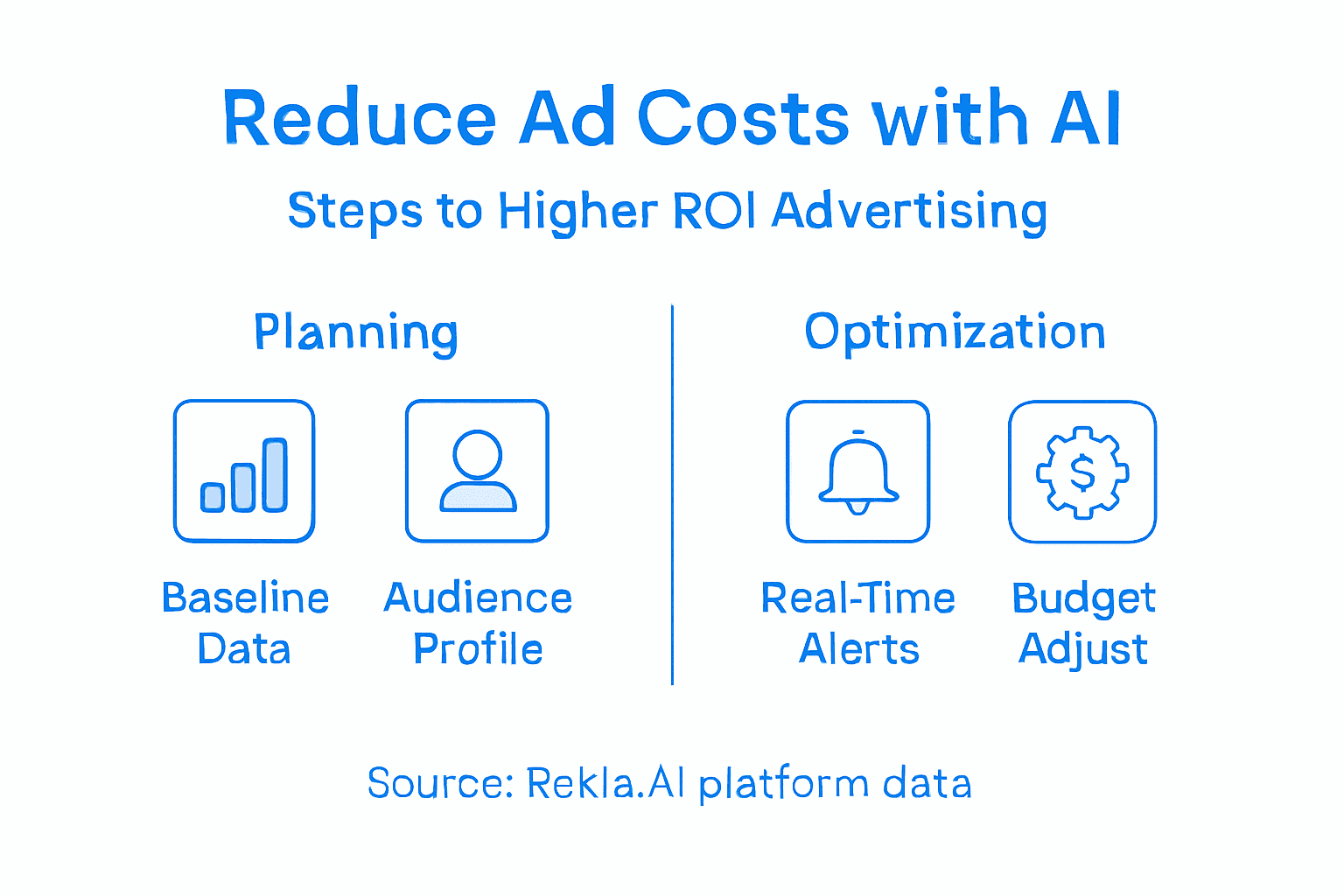
When a campaign or audience segment starts underperforming, pause it immediately. Do not wait until the budget is exhausted. Real-time analytics enables instant decision-making to dynamically adjust ad parameters and stop wasted spending before it compounds.
Implement these real-time optimization actions:
- Pause ads with cost per conversion above your target
- Increase budget for top-performing segments
- Adjust bids based on time of day performance
- Swap underperforming creatives for AI-generated variations
- Shift budget between platforms based on live results
- Test new audience segments hourly instead of weekly
Verwenden Sie automation rules to handle routine decisions without your involvement. Tell your platform: “If cost per conversion exceeds $15 for this segment, reduce spending by 50 percent.” The system executes the rule instantly when conditions are met.
Compare performance every 6 hours, not daily. Early detection of problems saves significant budget. A single bad campaign can waste thousands before end-of-day reports arrive. Real-time monitoring prevents this.
Continuous optimization compounds. Small improvements every day create dramatic savings over weeks.
Test changes one at a time and measure impact clearly. If you pause three campaigns simultaneously, you cannot identify which pause saved the most money. Change one variable, measure for 24 hours, then adjust again.
Profi-Tipp: Set up automated performance alerts that notify you when any campaign exceeds your cost per conversion threshold or when a top performer drops in CTR, allowing you to investigate and fix issues within hours rather than days.
Step 5: Analyze Results and Adjust Budgets
Weekly analysis transforms raw data into actionable budget decisions. This is where you identify which campaigns earn more budget and which ones should shrink. Strategic reallocation multiplies your ROI.
Pull a comprehensive weekly report covering all your campaigns and platforms. Include spend, conversions, cost per conversion, ROAS, and click-through rate for each channel. Compare this week against last week and against your targets from Step 1.
Identify your top performers. Which campaigns or audience segments delivered the lowest cost per conversion? Which generated the highest ROAS? These are your winners. They deserve more budget.
Spot your underperformers. Which campaigns exceeded your target cost per conversion? Which had declining CTR or conversion rates? These are budget drains. AI models predict customer behaviors enabling rapid budget adjustments that align spending with performance patterns.
Analyze these metrics weekly:
- Cost per conversion by campaign
- Return on ad spend by platform
- Click-through rate trends
- Conversion rate by audience segment
- Cost per click changes
- Weekly budget spend versus actual results
Make bold reallocation decisions. If Campaign A delivers conversions at $8 and Campaign B costs $25 per conversion, shift 50 percent of Campaign B’s budget to Campaign A. Do not split the difference. Move aggressively toward winners.
Test new budgets for 5 to 7 days before making major changes. Sometimes underperforming campaigns need time to accumulate data. Give them a fair test window.
Weekly analysis beats monthly analysis. Four optimization cycles per month compound faster than one.
Document every budget change and its results. Over time, you will notice patterns about which adjustments work best for your specific business. This builds expertise.
The following table summarizes key metrics to monitor for efficient ad budget allocation:
| Metrisch | Use in Optimization | Example Decision |
|---|---|---|
| Cost per Conversion | Identifies most efficient campaigns | Increase budget for low-cost ads |
| ROAS (Return on Ad Spend) | Measures ad profitability | Pause low-ROAS segments |
| CTR (Click-Through Rate) | Reveals ad engagement | Test new creatives for low CTR |
| Umrechnungskurs | Tracks audience relevance | Refine targeting for low rates |
| CPC (Cost per Click) | Assesses cost efficiency | Optimize bids for high CPC |
Profi-Tipp: Set a recurring calendar reminder every Monday to pull and analyze your weekly performance report, then implement budget changes by Tuesday morning to maximize the full week’s impact on your adjusted allocations.
Unlock Powerful AI Advertising to Slash Your Ad Costs and Boost ROI
The challenge of reducing advertising costs while maximizing return on investment is a critical hurdle for many businesses today. As detailed in the article “How to Reduce Ad Costs with AI for Higher ROI,” precise audience targeting, continuous real-time optimization, and efficient campaign creation are key to unlocking better performance. These strategies address common pain points like high cost per conversion, inefficient budget allocation, and slow campaign iterations. Rekla.AI offers a seamless solution by integrating advanced AI technologies to automate ad creation, optimize bids, and deliver personalized audience targeting across more than 15 platforms.
Mit Rekla.AI können Sie:
- Generate AI-powered ad creatives instantly for faster campaign launches
- Implement precise audience segmentation to reduce wasted spend
- Access real-time analytics and automation rules to optimize budgets continuously
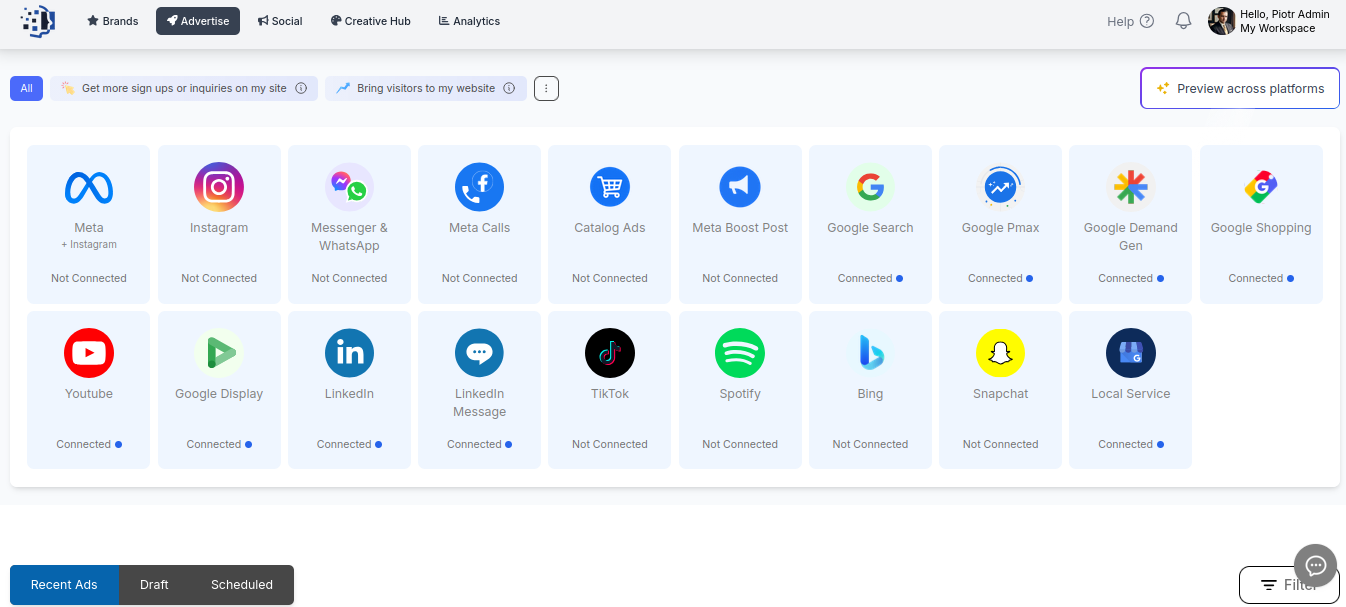
Experience how AI-driven automation can transform your advertising approach today. Visit Rekla.AI to explore how our platform makes cutting ad costs and increasing click-through rates straightforward. Start your journey to smarter ad campaigns with features like AI ad generation, real-time optimization, and multi-channel deployment. Don’t wait for monthly reports to save your budget act now to leverage continuous performance improvements and watch your ROI soar.
Häufig gestellte Fragen
How can I assess my current ad spend to reduce costs?
Start by gathering advertising data from the past 3 to 6 months across all platforms where you run ads. Track key metrics like total spend, click-through rate, conversions, and return on ad spend to understand where your budget is going and identify opportunities for cost reduction.
What AI tools can I use to create better ad campaigns?
Leverage AI ad copywriting and visual content creation tools to generate multiple variations of your ads quickly and efficiently. Use these tools to create engaging headlines and tailored images; this can save you 70 to 80 percent of the time typically spent on ad creation.
How can I optimize my audience targeting using AI?
Use AI to create look-alike audiences and implement micro-segmentation based on your best customer profiles. Tighten your targeting to reach specific groups, which can reduce wasted ad spend and improve your conversion rates significantly.
What are the benefits of real-time data optimization for ads?
Real-time optimization allows you to react instantly to performance data, pausing underperforming campaigns and increasing budgets for winners. Set up real-time dashboards to monitor key metrics continuously, enabling proactive adjustments that can enhance your ROI daily.
How often should I analyze my ad performance to adjust budgets?
Conduct a comprehensive analysis weekly to evaluate campaign performance against set targets. This frequent review allows for quick reallocation of budgets to top-performing campaigns, potentially improving your overall ROI by making timely budget shifts.
What actions should I take if a campaign exceeds my cost per conversion target?
Immediately pause the campaign to prevent further budget loss if it exceeds your cost per conversion threshold. Analyze and refine your targeting or creatives before considering reactivation to ensure more effective use of your budget in the future.
 English
 English (UK)
 Polski
 Deutsch
 Español
 Français
 Português
 Svenska
 Dansk
Dansk Nederlands