

Managing digital ad campaigns for a growing e-commerce business can feel like a constant balancing act between reaching the right customers and controlling ad spend. For Digital marketing managers in Canada, the United States, Europe, and beyond, staying competitive depends on using smarter, more adaptive solutions. By combining clear campaign goals with AI-powered audience targeting and creative optimization, you can unlock precise reach and cost savings while gaining valuable insights for better results.
Inhaltsverzeichnis
- Step 1: Define Campaign Goals And Audience Profiles
- Step 2: Set Up AI-Driven Ad Assets And Targeting
- Step 3: Launch Ads Across Multiple Platforms
- Step 4: Run A/B Tests And Monitor Real-Time Results
- Step 5: Refine Strategies Based On Performance Data
Kurze Zusammenfassung
| Wichtiger Punkt | Erklärung |
|---|---|
| 1. Define clear campaign goals | Establish specific, quantifiable objectives to guide your digital ad strategy effectively. |
| 2. Utilize AI for targeted campaigns | Incorporate AI technologies to analyze data and refine audience targeting for higher engagement. |
| 3. Leverage multi-platform strategies | Implement campaigns across various platforms for cohesive brand messaging and broader reach. |
| 4. Conduct thorough A/B testing | Test different ad variations systematically to identify which elements drive better performance. |
| 5. Continuously refine based on data | Analyze performance metrics regularly to make informed adjustments and improve campaign effectiveness. |
Step 1: Define campaign goals and audience profiles
Successful digital ad campaigns start with crystal clear goals and precisely defined audience profiles. Your objective is to create a strategic roadmap that transforms broad marketing intentions into targeted, measurable actions.
Begin by establishing specific, quantifiable campaign objectives that connect directly to your business outcomes. These goals might include increasing website traffic, generating leads, boosting product sales, or enhancing brand awareness. Developing comprehensive communication strategies requires understanding that each goal demands unique targeting and measurement approaches. For instance, a lead generation campaign will differ significantly from a brand awareness initiative in terms of key performance indicators and audience targeting.
Here’s a comparison of common digital ad campaign goals and their key considerations:
| Campaign Goal | Primary Metric | Main Audience Factor |
|---|---|---|
| Website Traffic | Click-through rate | Online activity levels |
| Lead-Generierung | Conversion rate | Decision-making triggers |
| Product Sales | Purchase transactions | Buying behavior |
| Brand Awareness | Impressions/reach | Interests and values |
To craft effective audience profiles, dive deep into demographic data, behavioral patterns, and psychographic insights. Audience profiling involves analyzing complex behavioral networks beyond simple age and location markers. Consider factors like purchasing habits, online behaviors, interests, pain points, and communication preferences. Create 3-4 detailed persona profiles that represent your ideal customer segments, giving each a name and comprehensive background to make them feel real and actionable.
Profi-Tipp: Use data analytics tools to validate and refine your audience profiles continuously, ensuring your targeting remains precise and adaptable to changing market dynamics.
Step 2: Set up AI-driven ad assets and targeting
Transforming your digital advertising strategy requires leveraging advanced AI technologies that intelligently craft and target your marketing assets. This step will help you harness cutting-edge tools to create highly personalized, performance-optimized ad campaigns.
AI-powered audience targeting revolutionizes how marketers approach digital advertising by analyzing extensive datasets to create precise audience segments. Start by connecting your existing customer data platform or CRM system with your AI advertising tool. This integration allows the AI to analyze behavioral patterns, demographic information, and engagement history to build sophisticated targeting models. Focus on key parameters like purchase history, browsing behavior, geographic location, and interaction levels with previous marketing materials.
Next, utilize AI creative generation tools to produce multiple ad variations rapidly. These advanced systems can generate hundreds of unique ad creatives by analyzing your brand guidelines, previous successful campaigns, and current market trends. Experiment with different visual styles, headline variations, and call-to-action phrases to discover which combinations resonate most with your target audience. AI-powered ad targeting automates audience selection and enables real-time bid management, dramatically reducing manual optimization efforts while maximizing campaign performance.
Profi-Tipp: Implement a continuous learning approach by regularly reviewing AI generated performance metrics and using those insights to refine future targeting and creative strategies.
Below is a summary of benefits provided by AI-driven ad technologies:
| AI Feature | How It Helps | Auswirkungen auf die Wirtschaft |
|---|---|---|
| Advanced Targeting | Analyzes large datasets | Improves ad relevance |
| Automated Creative Testing | Generates ad variations fast | Speeds up optimization |
| Real-time Bid Management | Adjusts bids automatically | Reduces wasted ad spend |
| Einblicke in die Leistung | Tracks results instantly | Enables quick adjustments |
Step 3: Launch ads across multiple platforms
Expanding your digital advertising strategy requires a systematic approach to deploying campaigns across diverse online channels. Your goal is to create a seamless, integrated marketing experience that maximizes your brand’s visibility and engagement potential.

Multi-platform campaigns integrate digital channels to deliver cohesive brand experiences. Begin by selecting platforms that align with your target audience’s preferences. Map out each platform’s unique strengths and audience demographics carefully. For instance, LinkedIn works best for B2B marketing, while Instagram and TikTok excel for younger consumer audiences. Configure your ad settings to maintain consistent messaging across platforms, ensuring your brand voice remains uniform while subtly adapting to each platform’s specific communication style.
Utilize platform-specific tools to optimize your ad delivery and tracking. Most digital advertising platforms offer robust analytics that allow you to monitor performance in real time. Set up conversion tracking, implement pixel tracking, and create custom audience segments for each platform. Pay close attention to metrics like click-through rates, engagement levels, and cost per acquisition. Continuously adjust your targeting parameters and creative assets based on the performance data you collect, allowing for dynamic optimization across your multi-platform campaign.
Profi-Tipp: Allocate a small percentage of your budget for experimental ad variations on each platform to discover unexpected high-performing combinations.
Step 4: Run A/B tests and monitor real-time results
Precision and data-driven decision-making are the cornerstone of successful digital advertising campaigns. Your mission in this stage is to systematically test and refine your advertising strategies through structured experimentation and continuous performance analysis.
Real-time monitoring transforms A/B testing by providing immediate insights into experiment performance. Begin by identifying key variables to test, such as ad headlines, visual imagery, call-to-action phrases, or audience targeting parameters. Create two distinct versions of your ad with only one variable changed at a time. This approach ensures you can accurately attribute performance differences to specific modifications. Set up your tracking tools to capture critical metrics like click-through rates, conversion rates, cost per click, and engagement levels for each variant.
Implement a robust tracking system that allows for dynamic adjustment during the testing phase. Most advanced advertising platforms offer real-time analytics dashboards that update performance data instantaneously. Monitor your test variants closely, looking for statistically significant differences in performance. Be prepared to quickly pause underperforming variants and allocate more budget to the winning version. Remember that meaningful A/B test results typically require a sufficient sample size, so resist the temptation to make hasty decisions based on limited data. Aim to run tests long enough to gather comprehensive insights while remaining agile enough to optimize your campaign continuously.
Profi-Tipp: Maintain a detailed log of your A/B test variations and their corresponding performance metrics to build a strategic knowledge base for future campaign optimizations.
Step 5: Refine strategies based on performance data
Digital advertising success hinges on your ability to continuously analyze and adapt your marketing approach. This stage transforms raw performance metrics into actionable strategic insights that drive meaningful improvements in your campaign effectiveness.
Performance measurement requires strategic analysis of key performance indicators that reveal your advertising campaign’s true impact. Begin by establishing a comprehensive dashboard that tracks critical metrics such as return on ad spend, conversion rates, customer acquisition costs, and engagement levels. Compare these metrics against your initial campaign objectives to identify gaps between expected and actual performance. Look for patterns in audience response, noting which ad variations generated the highest engagement, which targeting parameters produced the most cost effective results, and where potential optimization opportunities exist.
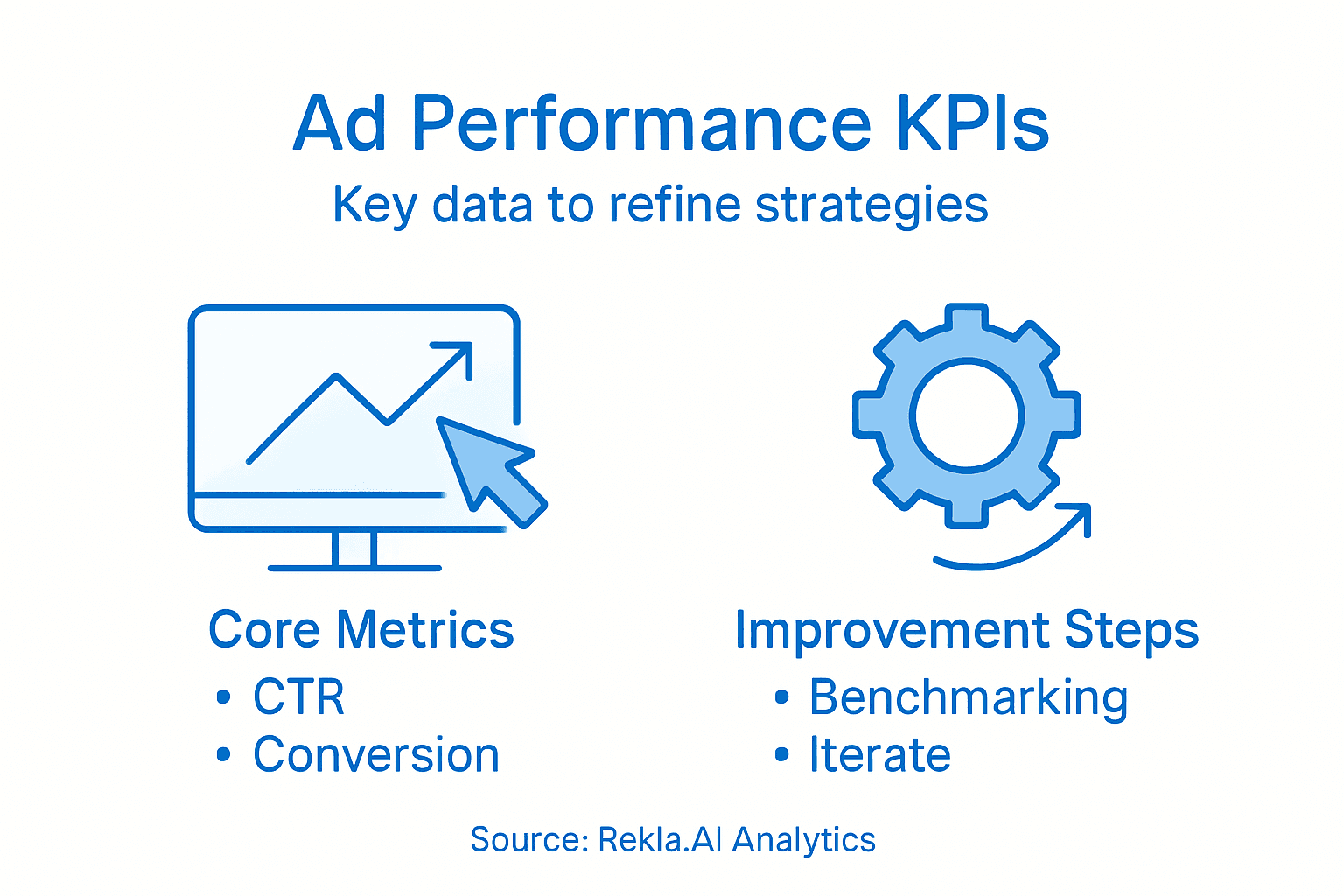
Implement a systematic approach to strategy refinement by creating iterative improvement cycles. Effective benchmarking involves analyzing internal and external data to identify strengths and weaknesses in your advertising approach. Regularly schedule strategic review sessions where you critically examine performance data, test new hypotheses, and make incremental adjustments to your targeting, creative assets, and bidding strategies. Treat each campaign as a learning opportunity, maintaining a flexible mindset that prioritizes continuous improvement over rigid adherence to initial strategies.
Profi-Tipp: Create a centralized performance tracking document that logs all campaign variations, their specific modifications, and corresponding performance metrics to build institutional knowledge over time.
Unlock the Full Potential of Your Digital Ad Campaigns with Rekla.AI
The article highlights the challenges marketers face in defining precise audience profiles, generating high-impact creatives, and optimizing campaigns in real time to maximize ROI. If you are struggling with multiple platform management or spending too much time on manual adjustments, Rekla.AI offers a powerful solution designed to simplify these pain points. Our AI-powered advertising automation platform leverages OpenAI and GPT technologies to deliver advanced audience targeting, automated multi-channel ad deployment, and continuous A/B testing so you can focus on results instead of busy work.
Experience how Rekla.AI turns strategy into action by:
- Generating personalized ad creatives at scale that resonate with your target segments
- Automating cross-platform campaign management across over 15 channels including Facebook, TikTok, and LinkedIn
- Providing real-time performance insights that enable dynamic bidding and rapid optimization
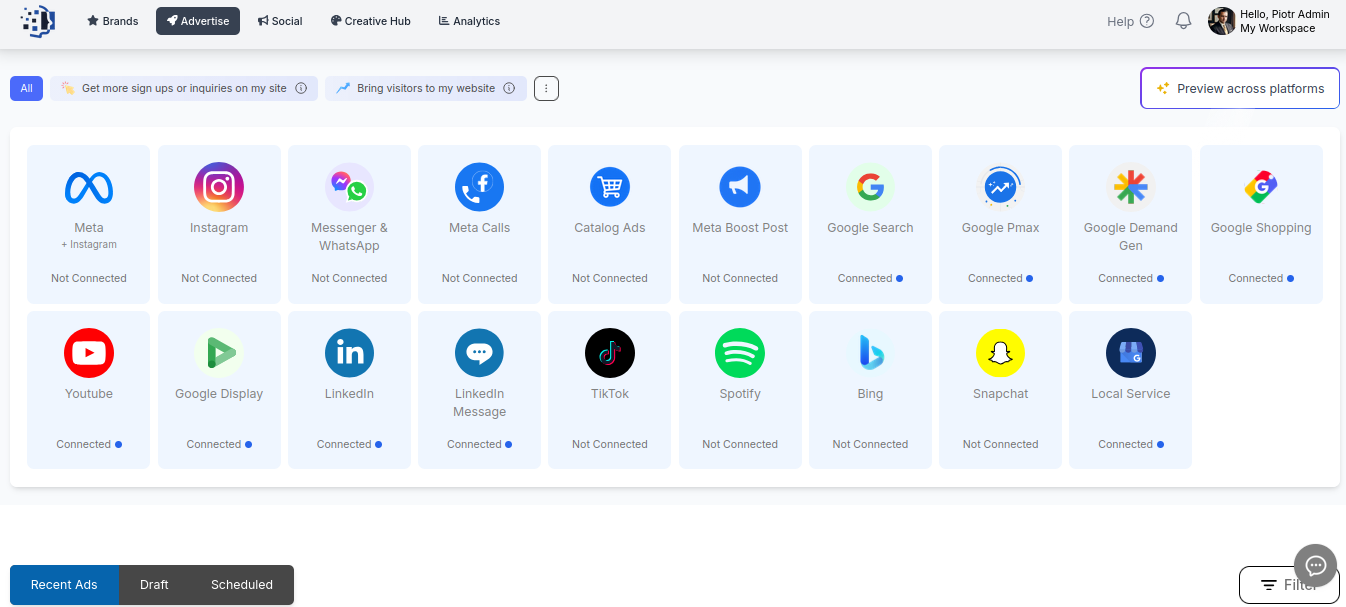
Ready to maximize your digital advertising ROI with intelligent automation and data-driven precision Start your journey today with Rekla.AI and see how effortless and effective digital ad optimization can be Visit us at Rekla.AI to learn more and get started now. For a deeper dive into automated ad management, explore our AI-powered advertising automation platform and begin transforming your marketing strategy instantly.
Häufig gestellte Fragen
What are effective campaign goals for digital ad optimization?
Establishing effective campaign goals involves defining specific and measurable objectives, such as increasing website traffic or generating leads. Begin by identifying what success looks like for your business and create a roadmap for your campaigns to follow.
How can I create detailed audience profiles for my campaigns?
To create detailed audience profiles, analyze demographic data, behavioral patterns, and psychographic insights. Develop 3-4 specific persona profiles that reflect your ideal customers, including their interests and preferences, to guide your targeting efforts.
What role does AI play in optimizing digital ad campaigns?
AI plays a significant role by automating audience targeting and generating ad variations quickly. Use AI tools to analyze customer data and create personalized ads that enhance performance, aiming to reduce manual optimization efforts by up to 30%.
How do I monitor the performance of my ad campaigns in real time?
Monitor your ad campaigns by setting up robust tracking systems to capture critical metrics like click-through rates and conversion rates. Regularly review your analytics dashboards and be prepared to make quick adjustments based on this real-time data.
What steps should I take to run effective A/B tests on my ads?
When running A/B tests, isolate one variable at a time, such as ad headlines or images, to accurately assess performance differences. Create distinct ad variations and utilize a tracking system to identify which version performs best, optimizing as needed to improve results within a few weeks.
How can I refine my ad strategies based on performance data?
Refining your ad strategies involves systematically analyzing key performance indicators and comparing them to your initial campaign objectives. Schedule regular review meetings to identify areas for improvement, implementing changes that can boost effectiveness by at least 15% over time.
 English
 English (UK)
 Polski
 Deutsch
 Español
 Français
 Português
 Svenska
 Dansk
Dansk Nederlands