

Manual campaign tweaks can quickly eat up your team’s time while draining budgets faster than expected. For e-commerce businesses aiming to cut costs and upgrade results, switching to advertising automation marks a practical solution. By putting machine learning and predictive modeling to work, your campaigns can handle targeting accuracy and real-time optimization automatically, allowing you to reclaim hours for strategic projects instead of tedious ad adjustments.
Inhoudsopgave
- Defining Advertising Automation and Its Benefits
- Main Types of Advertising Automation Tools
- How Advertising Automation Platforms Work
- Essential Features for Effective Ad Automation
- Risico's, kosten en te vermijden valkuilen
Belangrijkste conclusies
| Punt | Details |
|---|---|
| Advertising Automation Boosts Efficiency | Utilizing AI tools for real-time adjustments enhances targeting precision and resource allocation, allowing businesses to focus on strategic growth. |
| Essential Automation Features | Look for real-time optimization, advanced audience targeting, and multi-channel deployment to maximize campaign performance. |
| Monitor Automation Performance | Regular audits and transparency in processes are crucial to avoid costly mistakes and maintain effective budget utilization. |
| Gradual Implementation is Key | Start by automating basic functions like audience targeting, then advance to more complex optimizations once you have established performance metrics. |
Defining Advertising Automation and Its Benefits
Advertising automation is the practice of using artificial intelligence and algorithmic systems to manage, optimize, and execute digital ad campaigns across multiple platforms with minimal manual intervention. Rather than manually adjusting bids, targeting, and creative elements, automation handles these tasks continuously, learning from performance data in real time.
De kern, computational advertising uses AI techniques like predictive modeling, machine learning algorithms, and programmatic systems to streamline campaign operations. For a small to medium-sized e-commerce business, this means your ads can run and optimize themselves while you focus on strategy and growth. The system processes performance metrics instantly, making micro-adjustments that would take a human team hours or days to execute manually.
The benefits for your business are substantial and measurable. AI drives improvements in targeting precision, personalization at scaleen faster creative optimization. Instead of running the same ad set for a week and checking results, automation continuously tests variations and amplifies what works. Research shows that AI advancement in advertising includes targeting, personalization, content creation, and optimization, resulting in better consumer engagement and smarter resource allocation across your ad spend.
For budget-conscious e-commerce managers, the cost advantage is real. Automation eliminates wasted ad spend by pausing underperforming variations faster than any manual process could. Your daily budget stretches further because the system allocates funds to the highest-performing audience segments and placements automatically. You’re also gaining the ability to explore how benefits of ad automation work specifically for SMBs when leveraging multi-platform deployment, which multiplies your efficiency gains across Facebook, Google, TikTok, and other channels simultaneously.
Time savings emerge as an underrated benefit. Instead of logging into multiple platforms each day to adjust campaigns, you review performance dashboards and let the system do the operational heavy lifting. This frees your team to focus on business strategy, product launches, and customer experience improvements rather than tactical ad management.
Pro-tip: Start by automating your audience targeting and budget allocation first, then layer in creative optimization once you have 2-3 weeks of performance data, allowing the system to understand your baseline before testing variations.
Main Types of Advertising Automation Tools
Advertising automation tools break down into distinct categories, each solving specific challenges in your campaign workflow. Understanding these types helps you choose the right combination for your business needs and budget constraints.
The first category covers AI-powered bid management and budget allocation tools. These systems automatically adjust your cost per click, daily budgets, and spending across platforms based on real-time performance. Instead of manually setting bids each week, the tool learns which audience segments and placements deliver the best return on ad spend, then concentrates your budget there. For e-commerce businesses, this means your advertising dollar works harder because it flows toward conversions rather than vanishing clicks.

Second, you have audience targeting and segmentation platforms. These tools analyze customer data to identify who actually converts for your business, then find lookalike audiences across platforms. AI-driven targeting improves accuracy by processing behavioral patterns, purchase history, and demographic signals that humans would miss. Your ads reach people genuinely interested in your products rather than casting a wide net.
Third come creative generation and optimization tools. These systems use machine learning to test multiple ad variations simultaneously, measuring performance across headlines, images, and copy. Rather than guessing which version performs best, automation identifies winners within days. Some tools automatically generate new creative variations based on your brand guidelines, accelerating your testing cycle significantly.
Finally, analytics and performance optimization platforms consolidate data from multiple advertising channels into unified dashboards. You see which campaigns drive actual revenue, not just clicks. These tools highlight underperforming elements and recommend specific adjustments, removing guesswork from optimization decisions. When evaluating tools, look for platforms that combine multiple capabilities rather than using standalone solutions for each function.
Here’s a summary comparing key types of advertising automation tools and their primary business impact:
| Tool Category | Main Function | Zakelijke impact | Example Use Case |
|---|---|---|---|
| Bid Management & Budget Allocation | Adjusts bids and budget in real time | Maximizes ad spend efficiency | Automatically raises bids for high-performing segments |
| Audience Targeting & Segmentation | Finds best converting customers | Boosts conversion rates and relevance | Builds lookalike audiences on social platforms |
| Creative Generation & Optimization | Tests multiple ad versions quickly | Identifies top-performing creative | Swaps headlines/images for higher engagement |
| Analytics & Performance Optimization | Compiles cross-channel results | Informs strategic decisions with data | Highlights campaigns driving real sales |
Pro-tip: Start with a tool that handles bid management and audience targeting first, as these typically deliver the fastest cost reduction, then add creative optimization once you have clean performance baseline data from 3-4 weeks of campaigns.
How Advertising Automation Platforms Work
Advertising automation platforms operate through a coordinated system of AI algorithms, real-time data processing, and programmatic infrastructure. Understanding this mechanical process helps you see why automation delivers results faster than manual campaign management.
The foundation starts with data collection and audience analysis. When you connect your platform to advertising channels like Facebook, Google, and TikTok, the system pulls historical campaign data, customer information, and behavioral signals. Machine learning algorithms process this information to identify patterns about who converts, who bounces, and what messaging resonates with different segments. This happens continuously, not weekly or monthly.
Next comes the prediction and decision-making layer. AI algorithms predict consumer behavior and optimize bidding in real-time across thousands of possible decisions. The platform evaluates factors like time of day, device type, audience location, and competitive landscape to determine whether a specific impression is worth your bid. This happens milliseconds before your ad appears on someone’s screen.
Then the system executes through programmatic media buying. Programmatic advertising platforms automate ad purchase and placement via real-time auctions on ad exchanges. Rather than reserving ad space weeks ahead, your budget enters auctions instantly, competing for spots that match your target audience. Demand-Side Platforms (DSPs) handle the buying mechanics while machine learning manages your dynamic bidding strategy.
The final piece involves continuous optimization and reporting. After ads run, the platform collects performance data—clicks, impressions, conversions, cost per acquisition. It tests variations automatically, comparing different headlines, images, and audience segments. Winning variations receive more budget allocation while underperformers pause. You see this all summarized in dashboards that show real revenue impact, not vanity metrics.
The speed matters. While you sleep, the platform makes thousands of micro-decisions that humans could never execute manually. That’s where the efficiency gains come from.
Pro-tip: Connect your conversion tracking properly before launching automation, as the system learns optimization patterns from actual sales data—without clean conversion data, automation has nothing intelligent to optimize toward.
Essential Features for Effective Ad Automation
Not all automation platforms deliver the same results. The difference lies in which features they include and how well those features work together. Your platform needs specific capabilities to actually reduce costs while improving campaign performance.
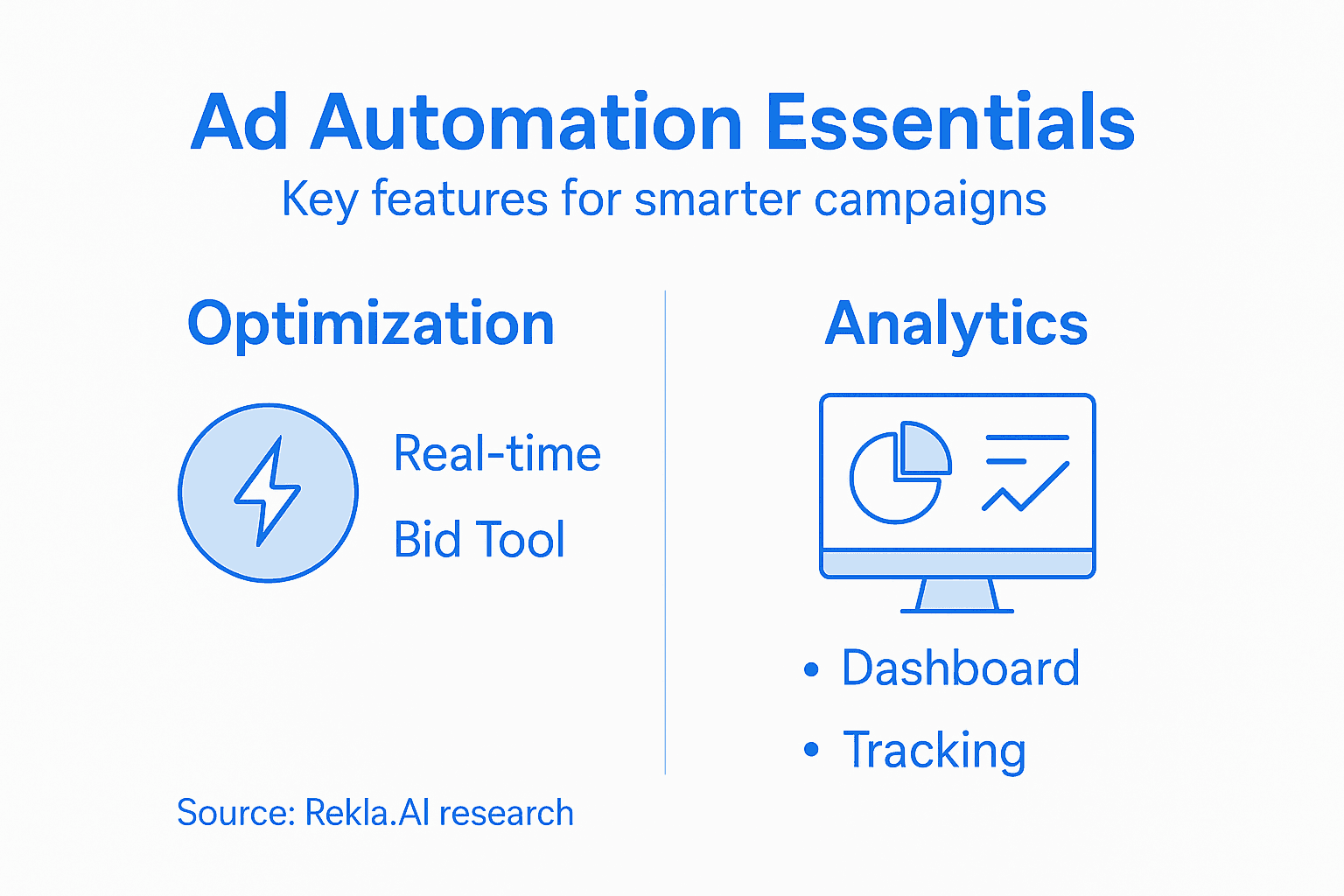
Real-time optimization tops the list of non-negotiable features. This means the system adjusts bids, budgets, and audience targeting continuously throughout the day, not just once daily. When a particular audience segment starts converting better at 2 PM on weekdays, the platform should recognize this pattern instantly and shift budget accordingly. Manual management misses these micro-moments entirely.
Second, look for advanced audience targeting and segmentation. The platform should analyze your customer data to build detailed audience profiles, then automatically find lookalike audiences across multiple channels. This goes beyond basic demographic filters. The system identifies behavioral patterns, purchase intent signals, and engagement indicators that predict who will actually buy from you.
Third, automated campaign management and dynamic content generation are critical for scaling without scaling your team size. The platform should create multiple ad variations, test them simultaneously, and automatically pause underperformers. Some platforms even generate new creative variations based on your brand guidelines, cutting your creative bottleneck significantly.
Data analytics and transparency matter more than you’d think. Your platform should provide clear dashboards showing which campaigns drive actual revenue, not just impressions or clicks. You need to understand why certain strategies work so you can replicate success. When costs spike, the system should highlight the cause, not hide it behind vague metrics.
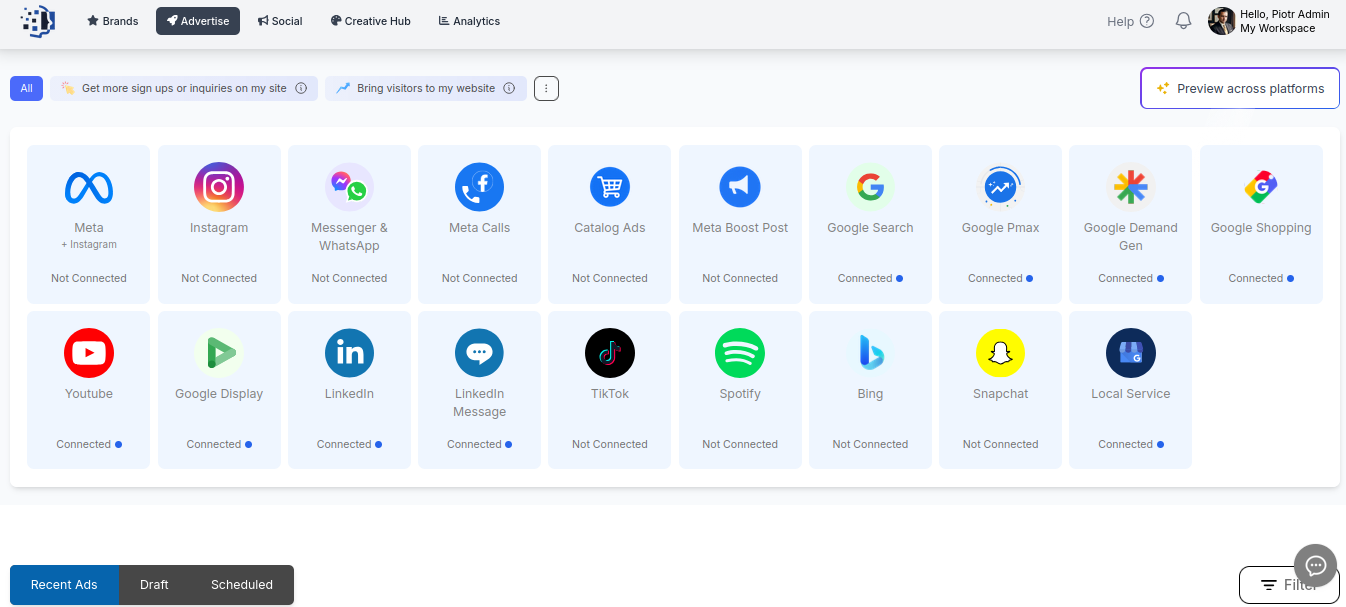
Finally, ensure the platform supports multi-channel deployment. Facebook and Google alone won’t reach your entire audience. Your platform should manage campaigns across TikTok, Instagram, LinkedIn, Spotify, and other channels from a single interface, coordinating budgets and messaging across all of them simultaneously.
For quick reference, here are essential features to look for in a high-performing advertising automation platform:
| Functie | Waarom het belangrijk is | Business Advantage |
|---|---|---|
| Real-time optimalisatie | Adapts instantly to changing trends | Captures micro-moments for higher ROI |
| Advanced Audience Segmentation | Targets high-potential buyers | Improves efficiency and conversion |
| Dynamic Content Generation | Produces tailored ad creatives | Supports large-scale testing and personalization |
| Transparent Analytics | Reveals campaign true performance | Guides profitable decision making |
| Multi-Channel Deployment | Reaches diverse audiences at once | Expands brand visibility across platforms |
Pro-tip: Prioritize platforms with robust conversion tracking integration first, as clean data flowing from your store to the automation system determines whether optimization decisions improve actual profitability or just chase vanity metrics.
Risico's, kosten en te vermijden valkuilen
Automation sounds risk-free until something goes wrong. Then it goes very wrong, very fast. Understanding what can break helps you avoid costly mistakes that erase your savings.
The biggest pitfall is treating automation as a complete replacement for human oversight. Many businesses set up their system and walk away, assuming the AI handles everything. Common pitfalls include treating automation as a silver bullet and automating broken workflows. If your audience targeting logic is flawed from the start, automation scales that mistake across all your channels, burning budget faster than you can notice.
Transparency loss presents another serious risk. When automation operates in the background, you lose visibility into why decisions get made. Your system might gradually shift budget to underperforming placements because of data lag or algorithm drift. Hidden costs in paid media automation involve loss of transparency and limited control over campaign specifics. Without regular audits, you might not notice budget leakage until your month ends with higher costs and lower returns.
Budget misallocation happens when the system optimizes for the wrong metric. If your automation targets clicks instead of conversions, it floods budget toward low-intent traffic. Similarly, optimizing for cost per click without tracking actual revenue can produce cheap clicks that never convert into sales. Your conversion tracking must be bulletproof before letting automation make decisions.
Over-reliance on automation without strategic input creates long-term weakness. The system responds to immediate performance signals but lacks understanding of seasonal trends, product launches, or competitive shifts. You need to maintain human judgment about when to pause automation, test new strategies, or pivot campaigns entirely.
Implementation costs surprise many small businesses too. Platform subscriptions, integration fees, and initial setup require upfront investment. Budget for proper training so your team understands the system rather than fighting it.
Pro-tip: Audit your conversion tracking, audience data quality, and campaign structure for 2 weeks before enabling full automation, fixing any broken workflows that would otherwise scale their mistakes across your entire spend.
Unlock Smarter Advertising Automation with Rekla.AI
The challenge of reducing advertising costs while delivering smarter campaigns is real, especially when manually managing bids, audience targeting, and creative testing takes up valuable time and often leads to wasted ad spend. This article highlights key pain points such as inefficient budget allocation, the complexity of multi-channel deployment, and the importance of real-time optimization — all hurdles that can slow your growth and drain resources.
Rekla.AI directly addresses these challenges by combining advanced AI-powered bid management, precise audience segmentation, and automated creative generation to effortlessly optimize your digital advertising. Our platform simplifies running campaigns across popular networks like Facebook, Google, TikTok, and more, ensuring your budget is focused on audiences that truly convert. By automating repetitive tasks and amplifying what works in real time, Rekla.AI helps you save time and maximize ROI without the headache of manual management.
Experience how Rekla.AI can transform your advertising approach today. Whether you are just starting or looking to scale smarter, our easy-to-use platform offers tailored solutions that make AI-powered advertising accessible and effective for small to medium businesses.
Take control of your ad spend and campaign efficiency now.
Start your journey with Rekla.AI
Explore how Rekla.AI automates multi-platform campaigns
Discover the future of advertising at Rekla.AI
Veelgestelde vragen
What is advertising automation?
Advertising automation is the use of artificial intelligence and algorithmic systems to manage and optimize digital ad campaigns across multiple platforms with minimal manual intervention.
How can advertising automation lower my marketing costs?
Advertising automation reduces wasted ad spend by pausing underperforming variations quickly and reallocating budget to high-performing audience segments, ensuring your ad dollars are utilized more efficiently.
What are the main types of advertising automation tools?
There are several categories of advertising automation tools, including bid management and budget allocation tools, audience targeting and segmentation platforms, creative generation and optimization tools, and analytics and performance optimization platforms.
What features should I look for in an advertising automation platform?
Key features to consider include real-time optimization, advanced audience segmentation, dynamic content generation, transparent analytics, and support for multi-channel deployment to ensure comprehensive campaign management.
 English
 English (UK)
 Polski
 Deutsch
 Español
 Français
 Português
 Svenska
 Dansk
Dansk Nederlands