
Running a small e-commerce business often means stretching your team and budget thin, especially when every ad dollar counts. Choosing the right AI marketing tools is no longer a luxury reserved for American tech giants or British agencies—these platforms now give businesses everywhere the power to compete more efficiently without advanced skills. In this guide, discover how AI-marketingtools combineren gegevensverzameling, machinaal leren en natuurlijke taalverwerking om campagnes te automatiseren, content te personaliseren en resultaten te optimaliseren, zodat je je kunt blijven richten op groei in plaats van op routinematige marketingtaken.
Inhoudsopgave
- Wat zijn AI-marketingtools vandaag de dag
- Belangrijkste typen en hun rol in campagnes
- Hoe moderne AI-tools advertentieprestaties stimuleren
- Essentiële functies voor kleine bedrijven
- AI-systemen vergelijken met handmatige marketing
- Kosten, risico's en veelvoorkomende valkuilen
Belangrijkste conclusies
| Punt | Details |
|---|---|
| AI versterkt marketinginspanningen | Moderne AI-marketingtools vergroten de mogelijkheden van marketeers door terugkerende taken te automatiseren en grote datasets te analyseren voor bruikbare inzichten. |
| Diverse Tool Functions | Verschillende AI-tools dienen specifieke rollen, zoals het genereren van content en klantsegmentatie, waardoor bedrijven marketingstrategieën op maat kunnen maken. |
| Real-time optimalisatie | AI-systemen optimaliseren advertentiecampagnes voortdurend op basis van prestatiegegevens, wat resulteert in een betere targeting en een hogere ROI voor reclame-uitgaven. |
| Voorzichtig vereist | Bedrijven moeten voorkomen dat ze te veel vertrouwen op AI zonder menselijk toezicht om merkconsistentie en kwaliteit in berichtgeving te garanderen. |
Wat zijn AI-marketingtools vandaag de dag
AI-marketingtools zijn geëvolueerd van eenvoudige automatiseringssoftware tot intelligente systemen die de hele marketingoperatie afhandelen. Deze platforms combineren gegevensverzameling, machinaal lerenen verwerking van natuurlijke taal to transform how businesses create campaigns, understand customers, and make decisions. Rather than replacing marketers, they amplify what teams can accomplish by handling repetitive tasks and uncovering insights from massive datasets that humans couldn’t process manually.
Today’s AI marketing tools perform specific functions that directly impact your bottom line. They generate gepersonaliseerde advertentiecreatives without requiring a designer, analyze customer behavior to predict what messaging will convert, automate campaign deployment across multiple platforms simultaneously, and optimize ad spending in real-time based on performance data. Some platforms use generatieve AI-mogelijkheden to create synthetic customer personas and test messaging before spending real money on ads. Others handle audience segmentation automatically, identifying which customer groups respond to which types of content. The key difference from traditional marketing software is that these tools learn from every campaign run, getting smarter and more accurate over time rather than operating on preset rules.
Voor eigenaren van kleine tot middelgrote e-commercebedrijven is dit belangrijk omdat je geen team van specialisten nodig hebt om geavanceerde campagnes uit te voeren. Een solomarketeer of een klein team kan nu het volgende lanceren campagnes via meerdere kanalen waarvoor vijf jaar geleden extra personeel had moeten worden aangenomen. AI-gestuurde reclamestrategieën enable you to test campaigns faster, allocate budgets toward what actually works, and reach customers at scale without the typical costs. The platform handles A/B testing automatically, identifies your best performing ad variations, and reallocates budget away from underperformers in real-time rather than waiting for monthly reports.
The practical reality is this: modern AI marketing tools give you access to capabilities that only large corporations with massive budgets could afford previously. You can generate multiple ad variations, test them across Facebook, Google, TikTok, and LinkedIn simultaneously, track which performs best, and optimize continuously. All of this happens while you focus on other parts of your business.
Pro-tip: Start by identifying one specific marketing challenge your team struggles with (like slow creative production or wasted ad spend), then find an AI tool that directly solves that problem rather than adopting a platform with features you don’t need.
Belangrijkste typen en hun rol in campagnes
AI marketing tools aren’t one-size-fits-all solutions. Different types handle different parts of your marketing operation, and understanding what each does helps you choose the right combination for your business. The main categories include platforms voor het genereren van inhoud, motoren voor klantsegmentering, tools voor voorspellende analysesen campagne automatiseringssoftware. Elk lost een specifiek probleem op en de meeste succesvolle marketingstrategieën gebruiken meerdere soorten die samenwerken in plaats van te vertrouwen op één enkel hulpmiddel.
Platforms voor het genereren van inhoud maken automatisch advertentieteksten, berichten op sociale media en onderwerpregels voor e-mails. Dit bespaart uren schrijftijd en test meerdere variaties om te ontdekken wat aanslaat bij je publiek. Motoren voor klantsegmentering en personalisering analyze your existing customer data to identify patterns, then automatically group customers by behavior, purchase history, and preferences. This means you’re not sending the same message to everyone. Instead, a first-time shopper receives different messaging than a repeat customer, increasing relevance and conversion rates. Gepersonaliseerde klantervaringen zorgen voor een hogere betrokkenheid omdat klanten het gevoel hebben dat het bericht speciaal voor hen is gemaakt in plaats van naar duizenden mensen te worden gestuurd.
Voorspellende analysetools forecast which customers are most likely to buy, which campaigns will perform best, and when engagement will drop off. These use historical data to identify patterns humans would miss, allowing you to allocate budget toward high-probability opportunities. Software voor campagneautomatisering ties everything together by managing deployment across multiple platforms, handling scheduling, adjusting bids in real-time, and reallocating budget from underperforming ads to winners automatically. Rather than logging into Facebook, Google, TikTok, and LinkedIn separately to manage campaigns, AI-marketingtools verwerken meerdere kanalen tegelijkertijd vanaf één dashboard.

Here’s what matters for your business: most platforms combine several of these types rather than offering just one function. When evaluating tools, identify which functions address your biggest pain point first. Are you spending too long writing ad copy? Prioritize content generation. Is your ad budget scattered across bad-performing campaigns? Prioritize automation and predictive analytics. Building your marketing stack this way means you’re investing in solutions that directly impact your operation.
Hier volgt een overzicht van de belangrijkste soorten AI-marketingtools en hoe elke tool de bedrijfsvoering beïnvloedt:
| Type gereedschap | Main Function | Zakelijke impact |
|---|---|---|
| Inhoud genereren | Maakt advertentieteksten en berichten | Bespaart schrijftijd; verhoogt relevantie |
| Segmentatie-engines | Groepeert klanten op gedrag | Maakt gepersonaliseerde berichtgeving mogelijk |
| Voorspellende analyses | Voorspelt waarschijnlijke uitkomsten | Identificeert de beste kansen |
| Campagne Automatisering | Beheer cross-channel campagnes | Vermindert handmatige werklast |
Pro-tip: Don’t try to implement all tool types at once; start with the one that solves your most expensive problem (whether that’s time, wasted spending, or manual work), then add other types as you see results.
Hoe moderne AI-tools advertentieprestaties stimuleren
AI tools transform ad performance by doing three things simultaneously: creating better content, targeting the right people, and adjusting campaigns in real-time. Traditional marketing relies on guesswork and monthly reviews. A marketer creates an ad, publishes it, waits weeks for data, then analyzes results. By then, you’ve already spent thousands on underperforming ads. AI eliminates this cycle by making adjustments continuously, sometimes multiple times per hour, based on what’s actually happening with your audience.
Het werkt als volgt. Wanneer je je productgegevens en merkrichtlijnen uploadt, genereert AI automatisch meerdere advertentievariaties. Dit zijn geen generieke sjablonen. In plaats daarvan analyseren ze sentiment en gedragspatronen van consumenten to create messaging that resonates with specific audience segments. One version might emphasize affordability for budget-conscious shoppers, while another highlights premium quality for luxury-seeking customers. All variations run simultaneously, and the system tracks which one generates the most clicks, conversions, and profit. Real-time optimization means your ads improve every single day without requiring manual intervention.
The numbers reflect this difference. Companies using AI-generated ad copy report measurable increases in conversion rates and lead generation. Rather than running one static campaign for 30 days, AI systems create and test dozens of variations, identify winners, and automatically shift budget toward top performers. When an underperforming ad reaches a predetermined spending threshold, the system pauses it and reallocates that budget to ads generating actual sales. This happens continuously. AI-gestuurde analyses maken real-time monitoring mogelijk en optimalisatie van campagnes, wat zich direct vertaalt in een meetbare verbetering van de ROI en een hogere klantbetrokkenheid.
For a small e-commerce business, this means your marketing dollars work harder. Traditional advertising wastes money on poor targeting and inefficient creatives because they take weeks to optimize. AI identifies waste immediately and corrects course. You also spend less time on campaign management because routine optimization happens automatically. Instead of manually adjusting bids, pausing ads, and testing variations, your team focuses on strategy and creativity, while the platform handles the execution. This combination of faster optimization, better targeting, and reduced manual work compounds into measurable performance improvements month after month.
Pro-tip: Set spending limits and performance thresholds before launching campaigns, so the AI system has clear parameters for what success looks like and automatically pauses or adjusts ads that underperform against those specific benchmarks.
Essentiële functies voor kleine bedrijven
Not every AI marketing tool feature matters for your business. When you’re running lean with limited budget and staff, you need tools that address your actual pain points rather than packed feature sets you’ll never use. The essential features for small businesses focus on saving time, reducing ad spend waste, and competing with larger competitors without requiring specialized expertise.
Automatisering van routinetaken bovenaan staat. Dit omvat het automatisch genereren van advertentievariaties, het plannen van berichten op meerdere platforms tegelijk en het beheren van bodaanpassingen zonder handmatige tussenkomst. AI-ondersteuning voor klanten via chatbots also matters because handling customer inquiries manually drains resources you don’t have. A single team member can now respond to hundreds of customer questions through automated responses that feel personalized. Beyond customer support, look for gegevensgestuurde doelgroepbenadering that automatically identifies which customer segments are most likely to buy. Instead of guessing who your ideal customer is, the platform analyzes your existing customers and finds lookalike audiences. This means your ad spend reaches people actually interested in your products rather than scattered across random demographics.
Prestatieanalyse en real-time rapportage comes next. You need to see which ads are working without waiting for complicated dashboards. The best tools show conversion rates, cost per acquisition, and ROI at a glance so you can spot winners and losers quickly. Aanpassing van de merkstem en strategische inhoudsplanning also matters for small teams. Your tool should learn your brand’s tone and messaging style, then apply it consistently across all content. This prevents the common small business problem where marketing feels disjointed because different people write different things in different ways.
Multi-channel deployment deserves emphasis. You want one platform that manages Facebook, Google, TikTok, LinkedIn, and Instagram rather than logging into each separately. This consolidation saves hours weekly. Budget management features are critical too. Small businesses can’t afford to overspend, so look for tools that automatically pause underperforming campaigns, reallocate budget toward winners, and enforce spending limits. Finally, prioritize ease of use. If implementation requires a data science degree, it won’t work for your team. The platform should be intuitive enough that marketing staff can launch campaigns without extensive training.
Pro-tip: Before committing to any platform, test it with a small campaign first; this reveals whether the interface matches your team’s skill level and whether the promised automation actually delivers before you invest heavily.
AI-systemen vergelijken met handmatige marketing
The difference between AI marketing and manual marketing comes down to speed, scale, and precision. Manual marketing relies on human intuition, creativity, and relationship building. A marketer reviews performance data weekly, makes educated guesses about what might work better, and adjusts campaigns based on experience. This approach works for complex, high-touch customer relationships where personal connection matters. However, it’s inherently slow. By the time you’ve analyzed last week’s data and made changes, market conditions have shifted and opportunities have passed. AI marketing eliminates this lag. It analyzes data continuously, tests variations simultaneously, and adjusts campaigns in real-time based on actual performance.
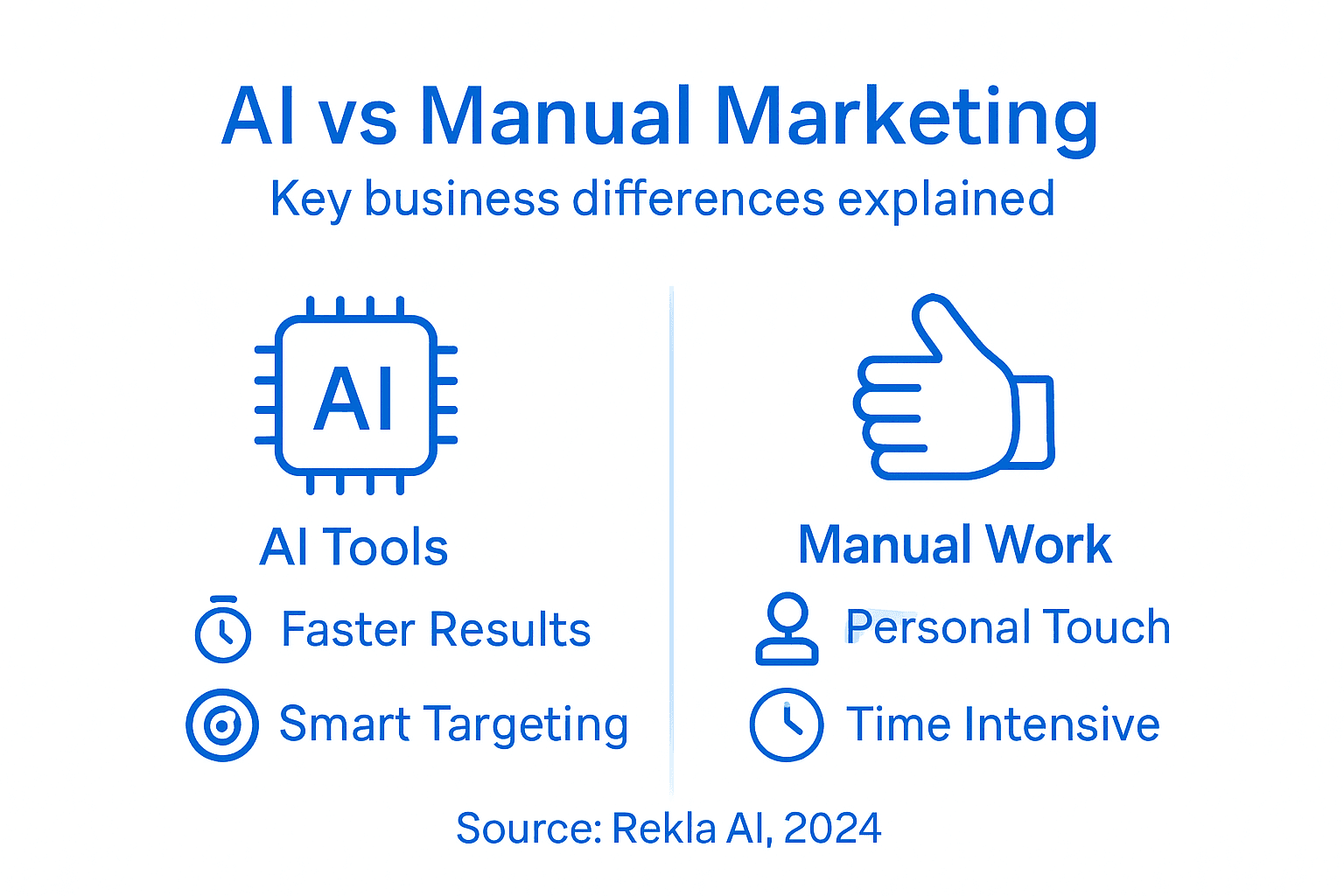
Waar AI in uitblinkt is meetbare, schaalbare prestatie. AI-marketing presteert beter dan handmatige benaderingen wat doorklik- en aankooppercentages betreft, consistently across industries and customer segments. The system creates dozens of ad variations, tests them all at once, identifies winners, and automatically reallocates budget toward top performers. A manual marketer might test two or three variations per month. An AI system tests that many variations per day. This acceleration compounds over time. After one month of AI optimization, your winning ads are significantly more refined than they would be with manual testing. After six months, the gap widens dramatically because the system has tested thousands of variations and learned which messaging resonates with which audiences.
But here’s the honest truth: human creativity and emotional connection matter. Manual marketers excel at understanding nuanced customer psychology and creating emotionally compelling narratives that resonate on a human level. AI struggles with this aspect. It optimizes for clicks and conversions, which sometimes conflicts with brand building and long-term customer loyalty. The winning approach for most small to medium businesses is hybrid. Use AI to handle the heavy lifting: generating variations, testing at scale, managing multi-channel campaigns, and optimizing performance automatically. Meanwhile, your team focuses on strategy, brand positioning, and the creative ideas that AI can refine but never originates. AI-marketing systemen zorgen voor aanzienlijke verbeteringen in conversiepercentages en customer lifetime value Terwijl je team ervoor zorgt dat die conversies je merk op de lange termijn ten goede komen.
The practical reality is this: if you’re spending time manually adjusting bids, testing variations, or managing campaign schedules, you’re not competitive with businesses using AI. Those repetitive tasks don’t showcase your team’s creativity or strategic thinking. They simply consume time better spent elsewhere. AI handles the work that doesn’t require human judgment, freeing your team for work that does.
Deze tabel zet AI-gestuurde marketing af tegen handmatige benaderingen voor kleine zakelijke voordelen:
| Aspect | AI-marketing systemen | Handboek Marketing |
|---|---|---|
| Snelheid | Real-time optimalisatie | Wekelijkse of maandelijkse wijzigingen |
| Schaalbaarheid | Verwerkt grote datasets | Beperkt door teamgrootte |
| Precisie | Hyper-gerichte advertenties | Vertrouwt op intuïtie |
| Menselijke aanraking | Beperkte emotionele nuance | Sterke creatieve richting |
Pro-tip: Don’t view AI as a replacement for your team; view it as an amplifier that handles routine optimization so your team can focus on strategy, creative direction, and customer relationship management where human judgment actually adds value.
Kosten, risico's en veelvoorkomende valkuilen
AI marketing tools aren’t free, and understanding the real costs matters before you commit. Most platforms charge monthly subscriptions ranging from $99 to $500+ depending on features, ad spend volume, and number of campaigns you manage simultaneously. Some charge a percentage of your ad budget itself. For small businesses, this overhead is worth it only if the platform generates measurable returns. Many businesses adopt AI tools expecting automatic results, then abandon them after three months when they realize the tool requires actual strategy and testing, not just activation.
The biggest risk isn’t cost. It’s over-reliance on automation without human oversight. An AI system optimizing purely for clicks might generate ads that drive traffic but produce low-quality conversions. It might emphasize price discounting to boost click-through rates, eroding your brand’s perceived value. It might create technically compliant ads that violate the spirit of platform policies or consumer expectations. Risico's zijn onder andere homogenisering van content en verlies van de stem van het merk when marketers over-automate without maintaining human judgment. Your brand sounds like everyone else’s if you let AI generate all your messaging without strategic direction. Another pitfall is bias in audience targeting. If your historical customer data skews toward one demographic, the AI system learns that pattern and amplifies it, potentially excluding profitable customer segments. Valkuilen zijn ook ethische bezwaren en gebrek aan transparantie in hoe AI beslissingen neemt, wat het consumentenvertrouwen kan schaden als klanten zich gemanipuleerd voelen door te gepersonaliseerde targeting of misleidende berichtgeving.
Privacy and compliance present real challenges. AI systems process customer data to make predictions and personalize content. If your tool doesn’t comply with GDPR, CCPA, or other privacy regulations in your markets, you face legal liability. This isn’t theoretical. Businesses have paid significant fines for AI marketing tools that collected or used customer data improperly. Intellectual property concerns also matter. Some AI tools trained on large datasets that may include copyrighted work. If your generated content infringes intellectual property rights, you’re liable, not the platform.
The practical solution involves integration of human judgment at critical checkpoints. Review AI-generated creatives before launch to ensure they align with your brand voice and strategy. Audit performance data to catch patterns where AI optimization conflicts with business goals. Use AI to automate what it’s good at (testing, bid management, audience identification) while keeping humans in charge of strategy, messaging direction, and quality assurance. Start small with limited budgets to test whether the tool actually delivers ROI for your specific business before scaling up.
Pro-tip: Set clear performance benchmarks and spending limits before launching any AI campaign, then review results weekly to catch problems early; if the tool isn’t delivering measurable returns within the first month, pause and reevaluate rather than continuing to spend in hopes of improvement.
Ontsluit bedrijfsgroei met AI-marketingautomatisering
Struggling with slow ad creation and wasted budget is a common challenge for many small and medium businesses. This article highlights how AI marketing tools solve these problems by automating campaign management, generating personalized ad creatives, and optimizing spend in real time. Rekla.AI is crafted precisely for businesses like yours looking to simplify digital advertising without needing expert skills. With features such as AI-driven ad generation, multi-channel deployment across platforms like Facebook, Google, TikTok, and LinkedIn, plus smart budget management, Rekla.AI stelt je in staat om complexe marketingtaken om te zetten in moeiteloze groeimogelijkheden.
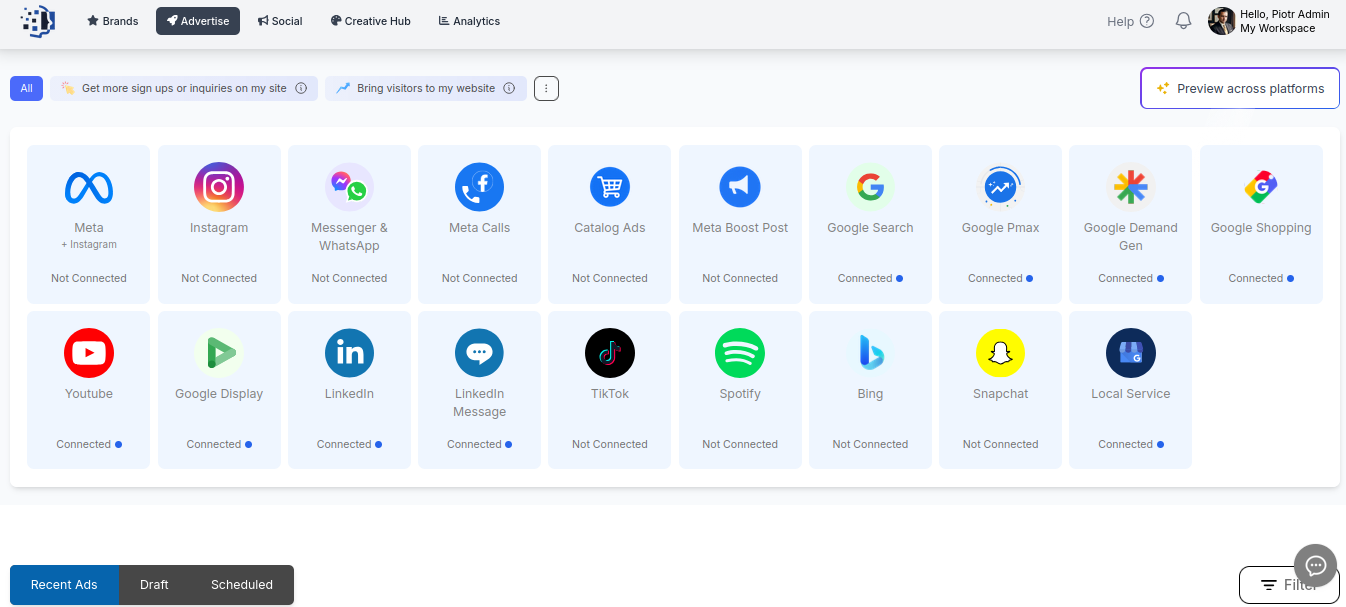
Klaar om geen tijd meer te besteden aan vervelende handmatige taken en te beginnen met het verhogen van uw ROI met slimmere campagnes? Rekla.AI vandaag nog om uw advertenties te automatiseren, de doorklikratio te verhogen en nauwkeurig de juiste klanten te bereiken. Rekla.AI en ontdek hoe eenvoudig het is om impactvolle campagnes te lanceren op meerdere platforms zonder gedoe. Ervaar nu AI-marketing die werkt voor uw bedrijf.
Veelgestelde vragen
Wat zijn AI-marketingtools en wat hebben bedrijven eraan?
AI marketing tools are intelligent systems that automate and enhance marketing operations by using data collection, machine learning, and natural language processing. They benefit businesses by increasing operational efficiency, enabling personalized marketing, and optimizing ad spending.
Hoe kies ik de juiste AI-marketingtool voor mijn bedrijf?
Start by identifying your specific marketing challenges, such as content creation or budget management. Look for tools that address these pain points first, and consider platforms that combine various functionalities, such as content generation, customer segmentation, and campaign automation.
Kunnen kleine bedrijven concurreren met grotere bedrijven met behulp van AI-marketingtools?
Yes, small businesses can effectively compete with larger companies by utilizing AI marketing tools. These tools allow small teams to run sophisticated multi-channel campaigns, optimize ad performance, and allocate budgets efficiently without needing extensive resources.
Welke essentiële functies moeten kleine bedrijven zoeken in AI-marketingtools?
Small businesses should prioritize automation of routine tasks, data-driven audience targeting, performance analytics, multi-channel deployment, budget management features, and ease of use to streamline marketing efforts and maximize ROI.
 English
 English (UK)
 Polski
 Deutsch
 Español
 Français
 Português
 Svenska
 Dansk
Dansk Nederlands