

Nearly 65 percent of American e-commerce marketers say juggling ads across Facebook, TikTok, LinkedIn, and Google eats up valuable time and resources. For digital marketing professionals in small and medium-sized businesses, this challenge can hold back growth and strain budgets. Understanding cross-platform ad management puts you in control of your spend and sets the stage for sharper, more profitable campaigns that reach the right audiences at the right moments.
Inhoudsopgave
- What Is Cross-Platform Ad Management?
- Types of Multi-Channel Ad Management Solutions
- How AI Automates Campaign Creation and Optimization
- Workflow: Setting Up and Running Cross-Platform Campaigns
- Key Challenges, Risks, and How to Avoid Them
- Alternatives to Cross-Platform Ad Management Platforms
Belangrijkste conclusies
| Punt | Details |
|---|---|
| Cross-Platform Ad Management | Integrates advertising campaigns across multiple channels to enhance brand consistency and effectiveness. |
| Automation through AI | AI-driven tools optimize campaign creation and audience targeting, reducing manual workload and increasing precision. |
| Comprehensive Strategy | Successful campaigns require detailed planning, including audience research and platform-specific content to maximize engagement. |
| Data Management Challenges | Address data fragmentation and inconsistent metrics by investing in unified tracking tools and sophisticated attribution models. |
What Is Cross-Platform Ad Management?
Cross-platform ad management is a sophisticated digital marketing strategy that enables businesses to synchronize, optimize, and track advertising campaigns across multiple online platforms simultaneously. By integrating ad efforts on different channels like Facebook, Google, TikTok, LinkedIn, and YouTube, marketers can create a cohesive brand narrative and maximize their advertising effectiveness.
At its core, cross-platform targeted advertising represents a collaborative approach where platforms work together to enhance consumer targeting precision. This strategy goes beyond simply posting the same advertisement on different networks. Instead, it involves carefully crafting messages that resonate with specific audience segments while maintaining consistent brand messaging and optimizing budget allocation across various digital channels.
The primary goal of cross-platform ad management is to create a unified marketing ecosystem that provides seamless consumer experiences. By analyzing performance metrics from each platform, businesses can dynamically adjust their strategies, reallocate resources, and develop more intelligent advertising approaches. This method allows marketers to understand how different audience segments interact with their content, enabling more nuanced and sophisticated targeting techniques.
Pro-tip: Start by establishing clear cross-platform performance benchmarks and invest in analytics tools that can aggregate data from multiple advertising channels to gain comprehensive insights into your campaign effectiveness.
Types of Multi-Channel Ad Management Solutions
Multi-channel ad management solutions encompass a range of technological approaches designed to streamline and optimize digital advertising across diverse platforms. These solutions are critical for businesses seeking to create integrated marketing strategies that maximize reach and efficiency. Unified advertising platforms typically fall into three primary categories: comprehensive management systems, specialized platform-specific tools, and hybrid integrated solutions.
Multichannel marketing frameworks provide businesses with flexible strategies for managing complex digital advertising ecosystems. The first category includes all-in-one management platforms that offer centralized control across multiple advertising channels. These systems enable marketers to create, launch, monitor, and optimize campaigns from a single dashboard, providing real-time performance analytics and automated optimization capabilities.
Specialized solutions represent another critical type of multi-channel ad management approach. These tools focus on specific platform ecosystems like social media advertising, search engine marketing, or programmatic advertising networks. Such solutions offer deep, granular controls and advanced targeting capabilities within their designated channels, allowing marketers to develop highly sophisticated and context-specific advertising strategies. Hybrid solutions combine elements of both comprehensive and specialized platforms, offering businesses scalable and adaptable advertising management frameworks that can evolve with changing market dynamics.
Here’s a side-by-side comparison of the primary types of multi-channel ad management solutions:
| Solution Type | Centralized Control | Depth of Platform Features | Schaalbaarheid |
|---|---|---|---|
| Comprehensive Platforms | Manage all channels from one dashboard | Moderate, covers most platforms broadly | High, suitable for growth |
| Specialized Tools | Focus on specific ad channels | Deep, advanced targeting per platform | Limited to chosen platforms |
| Hybrid Solutions | Combines multiple platform types | Blend of breadth and depth | Flexible, adapts with needs |
Pro-tip: Evaluate multi-channel ad management solutions based on your specific business needs, focusing on integration capabilities, reporting depth, and scalability rather than getting overwhelmed by feature lists.
How AI Automates Campaign Creation and Optimization
Artificial Intelligence has revolutionized digital advertising by transforming how marketers create, deploy, and optimize advertising campaigns. Unlike traditional methods that rely on manual intervention, AI-powered systems can now generate, analyze, and adjust marketing strategies with unprecedented speed and precision. Automated campaign management represents a quantum leap in advertising technology, enabling businesses to achieve more sophisticated targeting and personalization.
Generative AI solutions now offer comprehensive automation across multiple critical advertising functions. These intelligent systems can automatically generate ad copy, design visual creatives, identify optimal audience segments, and dynamically adjust bidding strategies in real-time. By analyzing vast amounts of performance data, AI can make instantaneous decisions about ad placement, budget allocation, and targeting parameters that would take human marketers hours or even days to process.
The core capabilities of AI-driven campaign optimization extend far beyond simple automation. Advanced machine learning algorithms can predict consumer behavior, understand complex audience interactions, and continuously refine advertising strategies. These systems analyze multiple data points including user engagement, conversion rates, demographic information, and browsing patterns to create hyper-personalized advertising experiences. The result is a more efficient, responsive, and intelligent approach to digital marketing that minimizes wasted ad spend and maximizes return on investment.
Pro-tip: Implement AI-driven campaign tools incrementally, starting with one platform or campaign type to understand their specific capabilities and gradually expanding your automated marketing strategy.
Workflow: Setting Up and Running Cross-Platform Campaigns
Executing a successful cross-platform advertising campaign requires a strategic, methodical approach that goes beyond simply posting identical content across multiple channels. Effective campaign workflows demand careful planning, platform-specific customization, and continuous performance monitoring to ensure maximum engagement and return on investment.

Cross-platform campaign execution involves developing a comprehensive strategy that synchronizes brand messaging while respecting each platform’s unique audience dynamics and content preferences. The initial phase requires marketers to conduct thorough audience research, identifying key demographics, behavioral patterns, and platform-specific engagement trends. This foundational work enables the creation of tailored content that resonates authentically with different audience segments across Facebook, Google, TikTok, LinkedIn, and other digital advertising channels.
The technical implementation of a cross-platform campaign involves several critical steps. Marketers must establish consistent brand guidelines, develop platform-specific creative assets, set unified campaign objectives, and configure advanced tracking mechanisms. Advanced advertising platforms now offer integrated dashboards that allow real-time performance monitoring, budget allocation adjustments, and automated optimization across multiple channels. This approach enables businesses to dynamically reallocate resources, target high-performing audience segments, and minimize inefficient ad spending through intelligent, data-driven decision making.
Pro-tip: Create a detailed content matrix that maps platform-specific audience characteristics, optimal posting times, and engagement metrics before launching your cross-platform campaign to maximize strategic alignment.
Key Challenges, Risks, and How to Avoid Them
Cross-platform ad management presents numerous complex challenges that can significantly impact marketing performance and return on investment. Strategic risk mitigation requires a comprehensive understanding of potential pitfalls and proactive solutions to prevent costly advertising errors and inefficiencies.
Cross-platform ad tracking challenges encompass multiple critical issues that marketers must navigate carefully. These challenges include scattered data across platforms, inconsistent metrics, complex attribution models, and evolving privacy regulations. Marketers frequently struggle with data fragmentation, where performance insights are distributed across different platforms, making holistic campaign analysis difficult. Incompatible tracking methodologies and platform-specific reporting standards further complicate accurate performance measurement and strategic decision making.
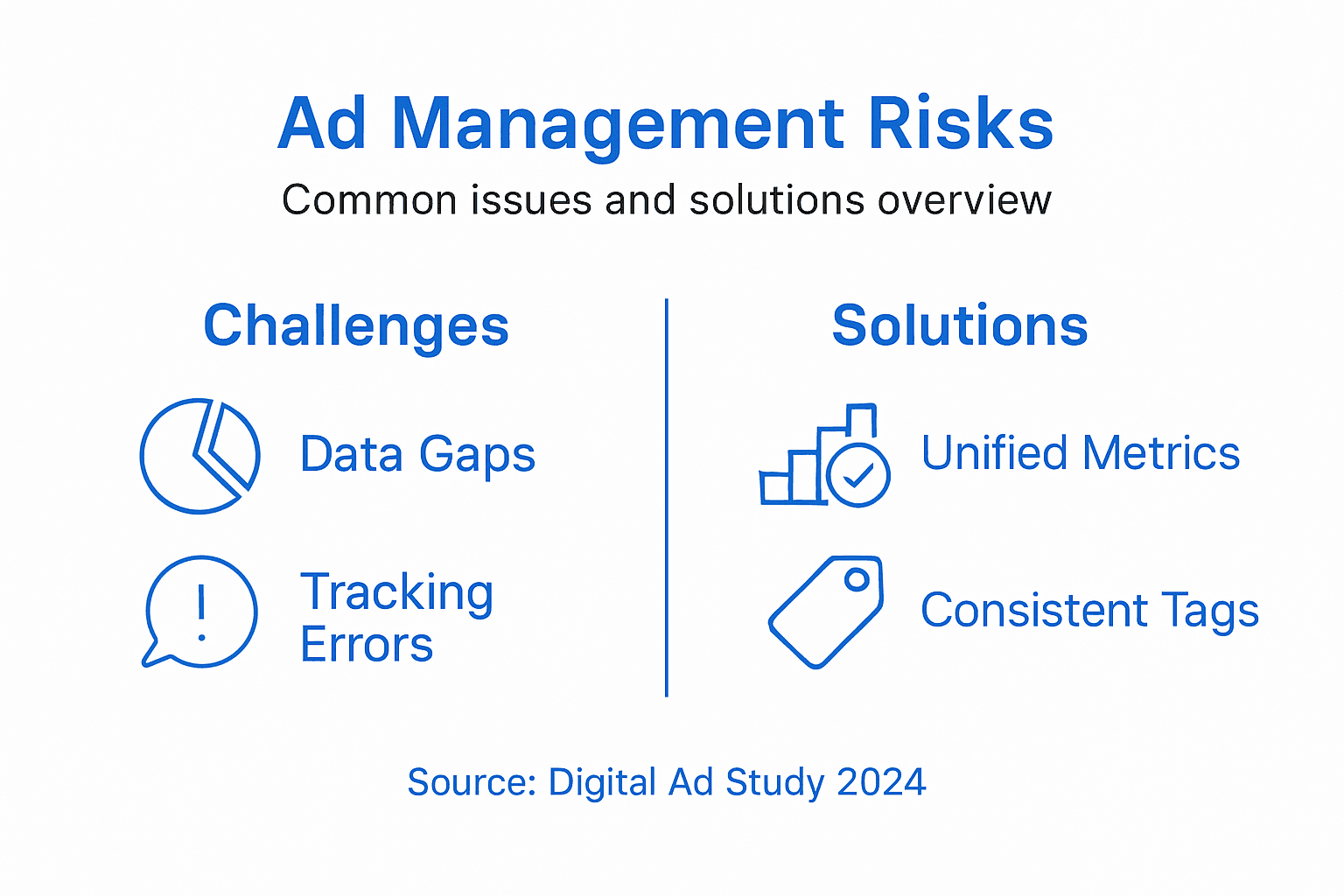
Addressing these challenges requires a multifaceted approach combining advanced technological solutions and strategic planning. Businesses must invest in unified tracking tools that can consolidate data from multiple platforms, implement privacy-compliant tracking mechanisms, and develop sophisticated attribution models that provide comprehensive campaign insights. Advanced artificial intelligence and machine learning technologies can help bridge platform differences, standardize performance metrics, and create more intelligent, adaptive advertising strategies that minimize risks and maximize campaign effectiveness.
The following table summarizes key challenges in cross-platform ad management and suggested solutions:
| Uitdaging | Impact on Campaigns | Effective Solution |
|---|---|---|
| Data Fragmentation | Hinders measurement accuracy | Use unified tracking tools |
| Inconsistent Metrics | Complicates performance analysis | Standardize reporting practices |
| Complex Attribution | Makes ROI calculation difficult | Adopt sophisticated attribution models |
| Privacy Regulations | Limits tracking capabilities | Implement privacy-compliant analytics |
Pro-tip: Develop a centralized data integration strategy that standardizes tracking parameters across all advertising platforms before launching complex multi-channel campaigns.
Alternatives to Cross-Platform Ad Management Platforms
Businesses seeking flexible digital advertising solutions have multiple alternatives to traditional cross-platform ad management platforms. Marketing technology ecosystems now offer diverse tools that can complement or replace comprehensive advertising management systems, providing tailored solutions for different organizational needs and budget constraints.
Meta advertising platform alternatives represent a growing market segment designed to address complex enterprise advertising challenges. These solutions typically offer advanced features like multi-account management, sophisticated integration capabilities, enhanced automation, and more granular analytics compared to native platform tools. Organizations can choose from specialized software that provides superior scalability, deeper compliance features, and more intelligent campaign optimization strategies.
The landscape of cross-platform ad management alternatives includes several key categories: native platform management tools, third-party aggregation platforms, enterprise-grade marketing suites, and custom integration solutions. Each category offers unique advantages, ranging from cost-effectiveness and ease of use to advanced analytical capabilities and multi-channel synchronization. Small businesses might prefer lightweight, affordable tools with straightforward interfaces, while larger enterprises may require comprehensive solutions that provide robust reporting, team collaboration features, and seamless integration with existing marketing technology stacks.
Pro-tip: Conduct a detailed audit of your current advertising workflows and performance metrics before selecting an alternative platform to ensure maximum compatibility and minimal disruption.
Unlock Smarter Cross-Platform Ad Management with Rekla.AI
Managing advertising campaigns across multiple platforms can feel overwhelming due to scattered data, inconsistent metrics, and complex targeting needs. This article highlights how cross-platform ad management challenges like data fragmentation and privacy regulations affect ROI and campaign effectiveness. If you want to reduce wasted ad spend while maximizing click-through rates and conversions, there is a smarter, easier way.
Rekla.AI leverages advanced AI technology to automate ad creation, real-time optimization, and precise audience targeting across over 15 major platforms including Facebook, Google, TikTok, and LinkedIn. With features like AI-generated creatives, budget management, and comprehensive analytics, Rekla.AI empowers small-to-medium businesses and digital marketers to launch sophisticated campaigns without needing expert skills. Experience seamless multi-channel campaign management that adapts dynamically to maximize your advertising impact.
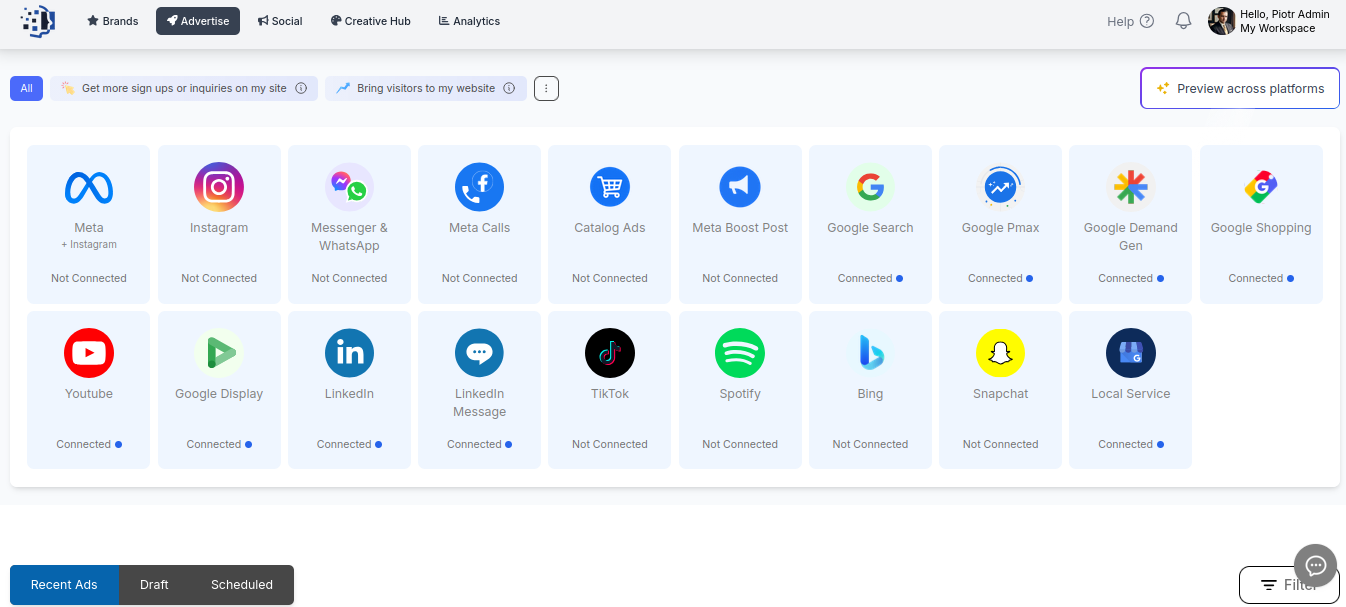
Step beyond the complexity of managing multiple platforms and unify your marketing efforts today. Discover how Rekla.AI transforms cross-platform ad management into a streamlined, efficient process that delivers measurable results. Visit Rekla.AI now to start building smarter campaigns and boost your ROI effortlessly. Learn more about our AI-powered automation and how we simplify multi-channel ad deployment to keep you ahead in digital advertising.
Veelgestelde vragen
What is cross-platform ad management?
Cross-platform ad management is a digital marketing strategy that allows businesses to streamline, optimize, and track advertising campaigns across multiple online platforms simultaneously. It ensures a cohesive brand narrative and maximizes advertising effectiveness by targeting specific audience segments.
How does AI enhance cross-platform ad management?
AI enhances cross-platform ad management by automating campaign creation, optimization, and real-time adjustments, allowing for more sophisticated targeting and personalization. It analyzes vast amounts of data to make instantaneous decisions that improve campaign efficiency and ROI.
What are the main types of multi-channel ad management solutions?
The main types of multi-channel ad management solutions include comprehensive management platforms, specialized platform-specific tools, and hybrid integrated solutions. Each type offers varying levels of centralized control, targeting capabilities, and scalability for businesses.
What challenges does cross-platform ad management face?
Key challenges include data fragmentation, inconsistent metrics, complex attribution models, and evolving privacy regulations. Marketers need to address these issues through unified tracking tools, standardized reporting, and privacy-compliant analytics to maximize campaign effectiveness.
Aanbevolen
- Platformoverschrijdend adverteren: Synchroniseer uw merkboodschap op alle kanalen
- Platformoverschrijdend adverteren: Synchroniseer uw merkboodschap op alle kanalen
- Introductie van optimalisatiemappen: Vereenvoudig en maximaliseer de prestaties van advertentiecampagnes
- Introductie van optimalisatiemappen: Vereenvoudig en maximaliseer de prestaties van advertentiecampagnes
- What Is an Ad Network? Understanding Ad Networks in Mobile Gaming – playablemaker.com What Is an Ad Network? Understanding Ad Networks in Mobile Gaming
 English
 English (UK)
 Polski
 Deutsch
 Español
 Français
 Português
 Svenska
 Dansk
Dansk Nederlands