

Running social media ads can feel like tossing dollars into the wind when results do not match your effort. For American e-commerce brands, the difference between wasted spend and measurable returns starts with strong planning. By focusing on SMART goals and aligning every dollar with specific objectives, you gain clarity and control from the beginning. This approach helps you build a strategy that guides budget decisions, audience targeting, and performance measurement at every step.
Spis treści
- Step 1: Define Campaign Objectives And Budgets
- Step 2: Select And Target High-Value Audiences
- Step 3: Generate Compelling AI-Powered Ad Creatives
- Step 4: Implement A/B Testing For Ad Variations
- Step 5: Monitor Analytics And Adjust Strategies
Krótkie podsumowanie
| Main Idea | Wyjaśnienie |
|---|---|
| 1. Define clear campaign objectives and budgets | Establish specific goals and a budget to ensure effective ad spending and measurable success. |
| 2. Focus on high-value audience targeting | Identify key customer segments to maximize ROI by using customized messages that resonate with intended audiences. |
| 3. Create engaging, AI-generated ad creatives | Utilize AI tools to produce varied ad formats that attract attention and encourage audience interaction effectively. |
| 4. Conduct systematic A/B testing | Test one variable at a time to understand what aspects of your ads drive better performance and optimize continuously. |
| 5. Monitor analytics and adjust strategies | Regularly track essential performance metrics and make data-driven adjustments to enhance campaigns and achieve your goals. |
Step 1: Define campaign objectives and budgets
Before you spend a single dollar on social media ads, you need a clear destination. Defining your campaign objectives and budget is the foundation that separates businesses that waste money from those that generate real returns. This step determines what success looks like for your ads and ensures every dollar works toward measurable goals.
Start by getting specific about what you want to achieve. Are you trying to drive sales, collect email addresses, increase website traffic, or build brand awareness? Your answer matters because it shapes everything that follows. This is where SMART goals for social media campaigns come in, which stands for Specific, Measurable, Attainable, Relevant, and Time-bound objectives. Instead of saying “I want more sales,” you’d say “I want to generate 150 e-commerce purchases from Instagram ads within 60 days with a target cost per acquisition of $35 or less.” That specificity transforms a vague wish into an actionable target that you can actually measure against.
Once your objectives are locked in, allocate your budget strategically. Think about where your audience spends time and which platforms align with your goals. A local service business might find better returns on Facebook, while a fashion brand might dominate on TikTok. The strategic decisions on where and when to display advertisements directly impact your return on investment, so this isn’t a decision to make casually. Start with what you can afford to test, then scale what works. Most e-commerce brands find success starting with 30 to 50 percent of their advertising budget allocated to their strongest performing platform, with the remaining funds split across platforms being tested or maintained for stability.
Here’s a summary of how different social media platforms align with campaign goals:
| Platforma | Najlepsze dla | Targeting Capabilities | Typical Industries |
|---|---|---|---|
| Local services, leads | Age, location, behavior, interests | Services, local business | |
| E-commerce, brand awareness | Interests, engagement, demographics | Fashion, beauty, retail | |
| TikTok | Brand engagement, virality | Interests, engagement patterns | Fashion, entertainment |
| Reklamy Google | Website traffic & sales | Search intent, keywords, audience | E-commerce, software |
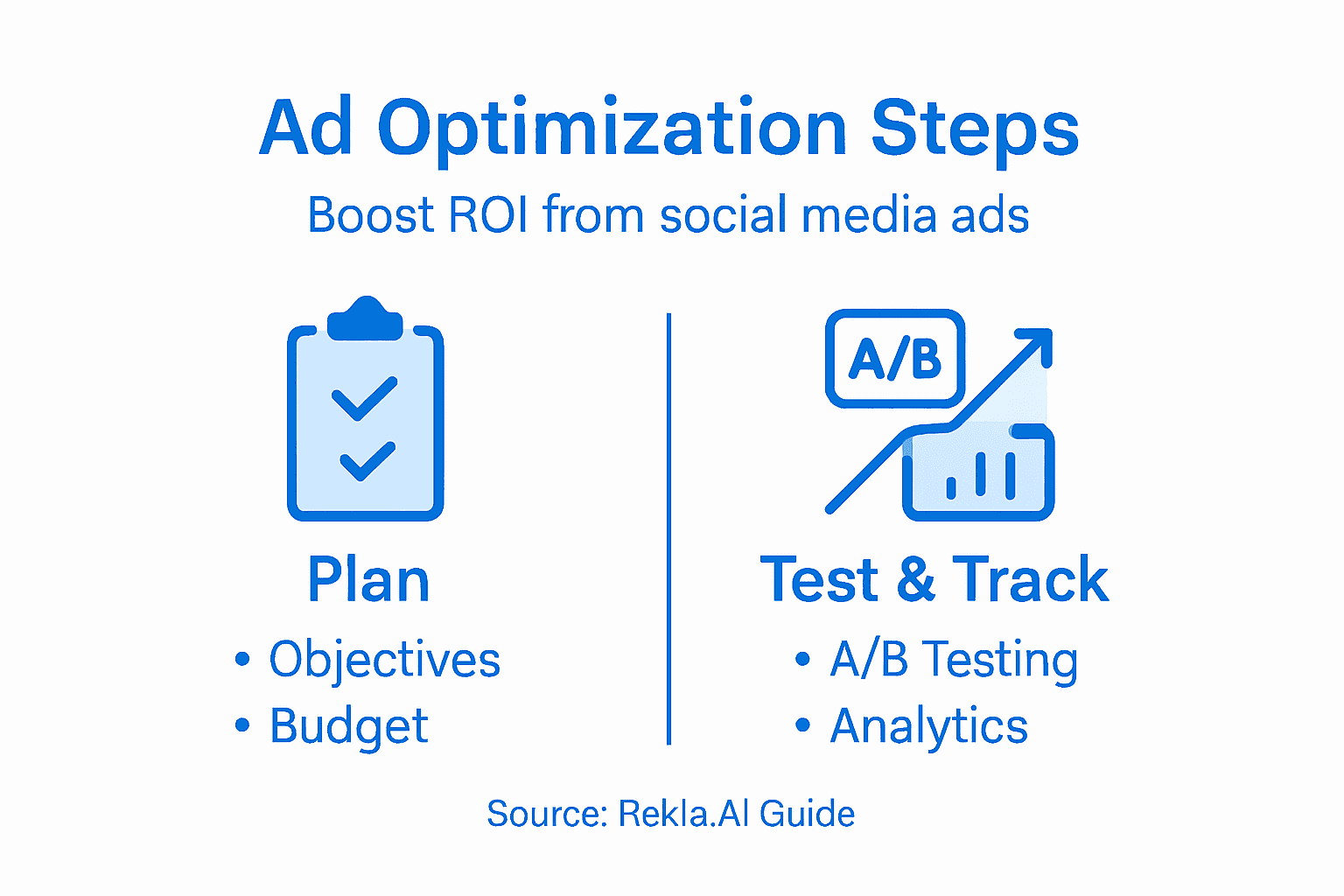
Porada profesjonalisty: Set aside 10 to 15 percent of your total ad budget as a testing reserve specifically for experimenting with new audiences, ad formats, or platforms, allowing you to discover high-potential opportunities without risking your core budget.
Step 2: Select and target high-value audiences
Not all customers are created equal, and throwing your budget at everyone wastes money fast. This step is about identifying and focusing on the people most likely to buy from you, which directly impacts your ROI. The better you understand who your high-value audiences are, the smarter you can spend your advertising dollars.
Start by analyzing your existing customer data to spot patterns. Who are your best customers? What do they have in common? Are they repeat buyers, high-ticket purchasers, or people who refer others? Look at their demographics, behaviors, interests, and purchase history. This is where audience segmentation becomes powerful. By dividing your customers into smaller groups with similar traits, you can deliver personalized messages that actually resonate with each segment rather than broadcasting the same generic ad to everyone. A 35-year-old parent interested in home improvement will respond to completely different messaging than a 22-year-old gamer, even if they both visit the same websites.
Once you’ve identified your high-value segments, use platform targeting tools to reach them. Facebook and Instagram let you target by age, location, interests, and purchase behavior. Google Ads targets based on search intent and browsing history. TikTok targets by engagement patterns and interests. The key is matching your target markets to customer segments most likely to purchase your product. Start narrow with your most profitable segments, then gradually expand to test lookalike audiences (people similar to your best customers). Your first campaigns should focus on precision over scale. A small, highly targeted audience often produces better returns than a massive, poorly targeted one. Test what works, measure the results, and scale the winners.
Porada profesjonalisty: Use your platform’s custom audience feature to upload existing customer email lists and create lookalike audiences from them, instantly expanding your reach to people with similar characteristics and purchasing power to your best customers.
Step 3: Generate compelling AI-powered ad creatives
Great targeting means nothing if your ad looks like everything else scrolling past. This step is about creating visuals and copy that actually stop people mid-scroll and make them want to engage. AI-powered tools can help you generate multiple creative variations quickly, test them, and identify which ones resonate most with your audience.

Start by gathering inspiration from your competitors and industry leaders. What ad formats are they using? What colors, messaging styles, and layouts seem to work? Then use AI to generate variations of your best-performing concepts at scale. You can create multiple ad creatives with AI image features rather than hiring a designer for each variation, which saves time and money while still maintaining quality. The real power here is that AI can produce dozens of creative combinations based on your brand guidelines and target audience. One client might respond to a minimalist design with bold copy, while another prefers lifestyle imagery with softer messaging. Instead of guessing, you let the data show you what works.
Once you have multiple creatives ready, AI-powered tools analyze your ad data to identify winning creatives and optimize copy through natural language processing, conducting automated A/B testing to see which messages and visuals drive engagement. Your first round of testing should include variations in headlines, body copy, images, and calls to action. A/B test one element at a time so you actually know what moved the needle. For example, test two different headlines while keeping everything else identical. Run each test for at least 3 to 5 days before making decisions, giving the platform enough time to gather meaningful data. As results come in, pause underperformers and scale the winners.
Porada profesjonalisty: Build a swipe file of your top-performing creatives and use them as reference templates for generating future ads, creating a consistent visual language that your audience begins to recognize and trust.
Step 4: Implement A/B testing for ad variations
You can’t optimize what you don’t measure, and you can’t improve without testing. A/B testing is where you systematically compare different versions of your ads to see which one actually performs better. This step separates marketers who guess from those who know exactly what works for their audience.
Start with a single variable to test. Pick one element that could impact performance, like your headline, image, call to action, or color scheme. Change only that one variable while keeping everything else identical. If you test too many things at once, you won’t know which change actually drove the results. Run your test with a roughly 50/50 split of your budget between version A and version B. Both versions need to reach enough people to generate meaningful data, so don’t run tests on tiny budgets. A good rule of thumb is to allocate at least 20 percent of your total ad spend to testing. Using combinatorial testing methods to evaluate ad variations helps you reduce testing costs while improving fault detection by focusing on combinations of parameters that matter most. This scientific approach means you’re not burning money on random guesses.
Let your test run for at least 5 to 7 days before making any decisions. Platforms like Facebook and Google need time to optimize delivery and show which version resonates more. After your test concludes, look at the metrics that matter to your business. If you care about clicks, compare click through rates. If you care about sales, compare conversion rates and cost per acquisition. Pause the losing version and scale the winner. Then immediately start testing the next variable. A/B testing is continuous. The best performers from this test become the baseline for your next test. Over time, these incremental improvements compound into significantly better overall campaign performance.
Porada profesjonalisty: Create a testing calendar and rotate through variables systematically, testing one element per week to build a library of winning combinations that you can apply across future campaigns and platforms.
Step 5: Monitor analytics and adjust strategies
Launching your ads is only half the battle. The real work happens after they go live, when you watch the data come in and make smart decisions based on what you see. Monitoring analytics and adjusting your strategies is what separates campaigns that waste budget from those that generate serious returns.
Start by identifying the metrics that actually matter to your business. Don’t get distracted by vanity metrics like impressions or reach. Focus on what connects to revenue. If you’re selling products, track conversion rate and cost per acquisition. If you’re building an email list, track cost per lead and list quality. If you’re driving traffic, track click through rate and landing page conversion. Set up your analytics dashboard so you can see these numbers at a glance. Most platforms like Facebook, Google, and TikTok have built-in dashboards, but you might also pull data into a spreadsheet or analytics tool for a better overview. Check your metrics daily during the first week of a campaign, then move to every other day once things stabilize. Monitoring key performance indicators helps you assess campaign success and recognize trends in audience behavior and market dynamics, allowing you to pivot strategies to optimize ROI.
This table contrasts key ad performance metrics and their primary business use:
| Metric | What It Measures | Best Used For |
|---|---|---|
| Conversion Rate | Percentage taking action | Evaluating offer effectiveness |
| Cost Per Acquisition | Cost to acquire a customer | Budget optimization |
| Click Through Rate | Engagement with ad | Creative and message testing |
| Cost Per Lead | Cost to collect a lead | Lead generation campaigns |
When you spot underperformers, take action fast. If a particular ad, audience, or platform is losing money, pause it. Don’t wait hoping it improves. Conversely, when something works well, scale it gradually. Double your budget on a winner and watch for 2 to 3 days before doubling again. Scaling too aggressively can cause performance to drop because you’re reaching less qualified people. Also watch for seasonal trends, day of week patterns, and time of day performance. You might discover that your ads crush it on weekends but flop on Tuesdays. That’s valuable information. Use it. Document what works so you can replicate it in future campaigns. Keep notes on winning audiences, creatives, messaging angles, and offers. This swipe file becomes your playbook.
Porada profesjonalisty: Set up weekly analytics reviews where you compare performance against your original objectives, identify your top 20 percent of spending that generates 80 percent of results, and reallocate budget away from everything else.
Maximize Your Social Media Ad ROI with Rekla.AI
The challenge of crafting targeted, AI-driven ad campaigns that deliver measurable results is at the core of every advertiser’s goal. If you have struggled with pinpointing high-value audiences, generating compelling creatives, or continuously optimizing performance through A/B testing and analytics monitoring, you are not alone. Rekla.AI directly addresses these pain points by simplifying complex tasks like audience segmentation, AI-powered creative generation, and budget management across more than 15 platforms including Facebook and TikTok.
Unlock smarter advertising with features tailored to the exact needs outlined in the article — from precise audience targeting to real-time optimization — so you never waste budget on guesswork again.
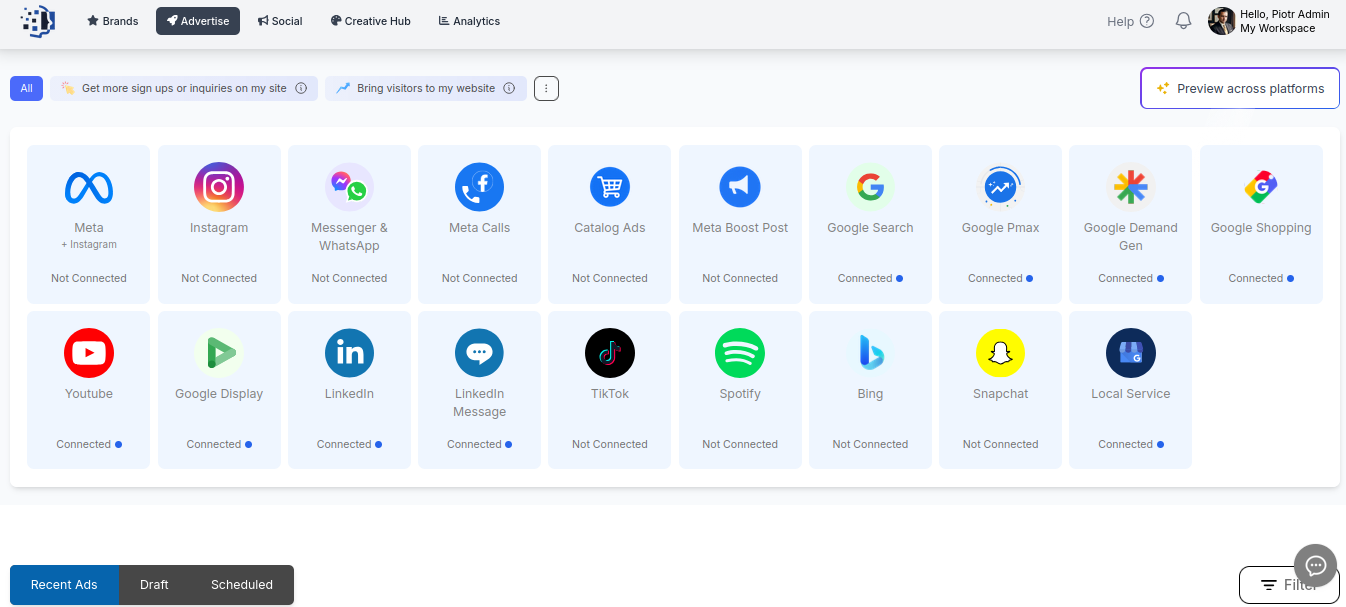
Ready to revolutionize your social media advertising strategy and start seeing higher returns today Reach your campaign goals faster by exploring how Rekla.AI uses advanced AI technology for hands-free campaign creation and continuous improvement. Learn more and start your free trial now at Rekla.AI. If targeting or ad creative creation feels overwhelming, see how our platform solves those challenges directly with our all-in-one tools designed for digital marketers and small businesses. Don’t let another dollar slip away without the power of AI-driven optimization on your side.
Często zadawane pytania
What are the first steps to optimize social media ads for higher ROI?
To optimize social media ads, start by defining specific campaign objectives and setting a budget. Determine what success looks like for your ads, such as generating 150 e-commerce purchases within 60 days, and allocate your budget based on where your target audience spends their time.
How can I identify high-value audiences for my social media campaigns?
Analyze your existing customer data to find patterns among your best customers. Focus on demographics, behaviors, and purchase history, then segment your audience to deliver personalized messages that resonate with each group.
What role does A/B testing play in social media ad optimization?
A/B testing helps compare different versions of your ads to determine which performs better. Test one variable at a time, such as a headline or image, and run the test for at least 5 to 7 days to gather meaningful data before deciding on changes.
How should I monitor analytics to adjust my social media strategies?
Focus on metrics that directly impact your business, such as conversion rates and cost per acquisition. Regularly check these numbers, especially during the first week of your campaign, to quickly identify underperformers and reallocate your budget accordingly.
What types of ad creatives should I use for better engagement?
Create visually appealing and unique ad creatives that stand out in users’ feeds. Gather inspiration from competitors, then utilize AI tools to generate multiple variations of your visuals and copy, testing which combinations yield the best engagement rates.
How can I ensure my social media ad budget is effectively utilized?
Set aside 10 to 15 percent of your total ad budget for testing new audiences and ad formats. This reserve allows you to explore high-potential opportunities while maintaining your core budget for well-performing ads.
 English
 English (UK)
 Polski
 Deutsch
 Español
 Français
 Português
 Svenska
 Dansk
Dansk Nederlands