

Selecting the perfect audience for your next digital campaign can feel like searching for a needle in a haystack. With so many potential consumer segments and an ever-growing list of data points, finding the right mix matters even more when every advertising dollar counts. This introduction breaks down how precision audience targeting helps e-commerce brands reach high-value shoppers, improve ad efficiency, and drive better returns by harnessing the latest in data analysis and artificial intelligence.
Spis treści
- Precision Audience Targeting Explained
- AI-Powered Strategies For Audience Segmentation
- Types Of Precision Targeting In Digital Ads
- Direct Impact On Campaign Performance And ROI
- Managing Costs, Privacy, And Compliance Risks
- Avoiding Common Mistakes In Audience Targeting
Najważniejsze wnioski
| Punkt | Szczegóły |
|---|---|
| Precision Audience Targeting | Utilizes advanced data analytics and AI to focus marketing efforts on specific consumer segments, enhancing engagement and reducing ad spend. |
| AI-Powered Segmentation | Employs sophisticated algorithms to analyze complex data in real-time, enabling personalized audience profiles and optimizing targeting strategies. |
| Zgodność z przepisami i prywatność | Marketers must balance effective targeting with adherence to privacy regulations, ensuring transparent data collection practices. |
| Avoiding Targeting Mistakes | Continuous refinement of audience segments is crucial; avoid broad targeting to maximize campaign effectiveness and minimize wasted resources. |
Precision Audience Targeting Explained
Precision audience targeting is a sophisticated digital marketing strategy that enables businesses to reach their most valuable potential customers with laser-focused accuracy. By leveraging advanced data analytics and artificial intelligence, marketers can now segment audiences with unprecedented granularity, moving far beyond traditional demographic targeting.
Modern precision targeting relies on multiple sophisticated data dimensions, including:
- Behavioral patterns like online browsing history
- Purchase intent signals
- Demographic characteristics
- Położenie geograficzne
- Psychographic attributes
Researchers have identified that artificial intelligence plays a critical role in audience segmentation, enabling marketers to analyze consumer behaviors with remarkable depth. AI technologies can process complex data sets and identify nuanced audience segments that human analysts might overlook.
The core value of precision targeting lies in its ability to dramatically improve advertising efficiency. Instead of broadcasting messages to broad audiences, businesses can now deliver hyper-relevant content to individuals most likely to convert. This approach significantly reduces wasted ad spend and increases return on investment.
Porada profesjonalisty: Start by creating detailed customer personas using multiple data points to refine your targeting strategy and maximize campaign effectiveness.
AI-Powered Strategies for Audience Segmentation
Artificial intelligence has revolutionized audience segmentation by enabling marketers to move beyond traditional demographic targeting and create dynamic, highly personalized audience profiles. AI-powered consumer segmentation strategies now leverage sophisticated machine learning algorithms that can analyze complex behavioral patterns in real-time.
Modern AI segmentation techniques employ multiple advanced approaches:
- Machine learning clustering algorithms
- Predictive behavior modeling
- Przetwarzanie danych w czasie rzeczywistym
- Dynamic audience profile generation
- Continuous learning and optimization
The most sophisticated AI segmentation models go beyond simple demographic categorization. They analyze intricate data points like:
- Browsing history
- Purchase behaviors
- Interaction patterns
- Content consumption preferences
- Social media engagement
These advanced techniques allow marketers to create hyper-targeted segments that adapt and evolve with changing consumer behaviors. By processing massive datasets instantaneously, AI can identify nuanced audience characteristics that human analysts might overlook.

Marketers can leverage these AI-powered strategies to deliver unprecedented personalization, dramatically improving advertising efficiency and return on investment. The ability to create granular, dynamic audience segments means businesses can craft messages that resonate deeply with specific consumer groups.
Porada profesjonalisty: Implement machine learning models that continuously refine audience segments by integrating multiple data sources and tracking real-time behavioral shifts.
Types of Precision Targeting in Digital Ads
Advanced digital advertising targeting strategies have transformed how businesses connect with potential customers, moving far beyond traditional demographic approaches. Modern targeting techniques leverage sophisticated data analysis to create highly personalized marketing experiences that maximize engagement and return on investment.
Precision digital ad targeting encompasses several key approaches:
- Kierowanie reklam na określone grupy demograficzne
- Age
- Gender
- Income level
- Education background
- Geographic Targeting
- Country
- Region
- City
- Zip code
- Targetowanie behawioralne
- Online purchase history
- Website interactions
- Content consumption patterns
- Targetowanie psychograficzne
- Interests
- Values
- Lifestyle choices
- Personal preferences
Each targeting method offers unique advantages in creating granular audience segments. Behavioral targeting, for instance, analyzes user actions to predict future engagement, while psychographic targeting delves into deeper motivational factors that drive consumer decisions.
Here’s a comparison of major audience targeting types and their primary marketing benefits:
| Targeting Type | Main Advantage | Przykładowy przypadek użycia |
|---|---|---|
| Demograficzny | Broad segment identification | Age-based clothing ads |
| Geographic | Location-specific engagement | City-level event promotion |
| Behawioralny | Predicting actions | Retargeting shoppers |
| Psychograficzny | Deep personalization | Lifestyle product launches |
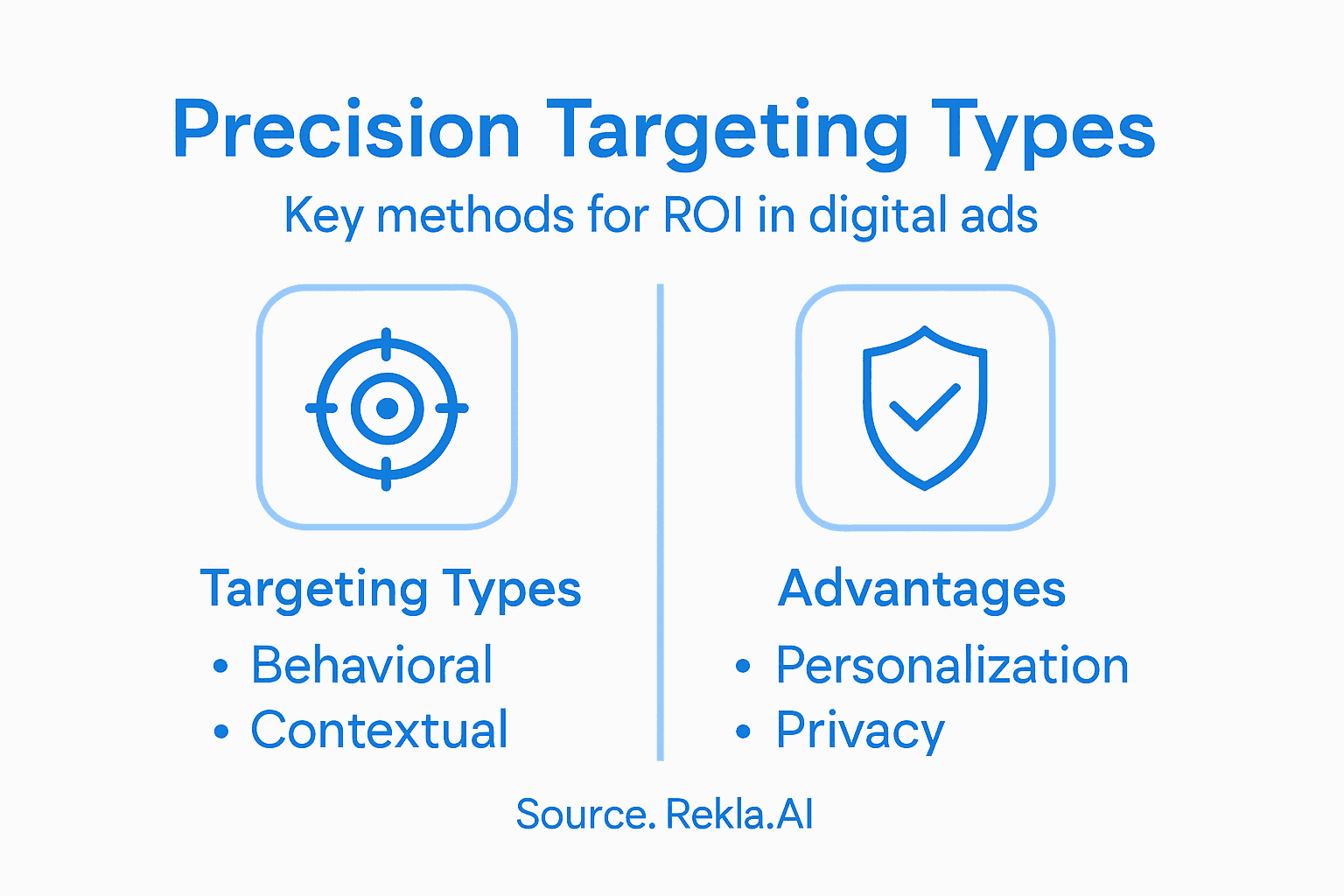
| Kontekstualny | Privacy-friendly relevance | Ads on themed content sites |
Contextual targeting represents another sophisticated approach, focusing on matching ad content with the specific environment where it appears. This method ensures that advertisements align closely with the user’s current interests and content consumption, increasing the likelihood of meaningful interactions.
Porada profesjonalisty: Combine multiple targeting strategies to create a comprehensive audience profile that captures both demographic and behavioral nuances.
Direct Impact on Campaign Performance and ROI
Precision audience targeting strategies dramatically transform digital advertising performance by enabling businesses to optimize every marketing dollar spent. By focusing on highly relevant audience segments, companies can significantly reduce wasted ad spend and improve overall campaign effectiveness.
The key performance improvements from precision targeting include:
- Increased Click-Through Rates (CTR)
- Higher engagement percentages
- More relevant ad content
- Better audience matching
- Reduced Cost Per Acquisition
- Lower marketing expenses
- More efficient spending
- Targeted resource allocation
- Enhanced Conversion Rates
- More qualified leads
- Improved sales funnel efficiency
- Higher quality customer interactions
Advanced targeting methods allow marketers to create hyper-personalized ad experiences that speak directly to specific audience segments. By analyzing complex behavioral data, businesses can predict consumer preferences and deliver precisely tailored messages that resonate more deeply than traditional broad-spectrum advertising approaches.
To help clarify the impact of precision targeting, here’s a summary of key metrics influenced by these strategies:
| Metric | Benefit | Business Outcome |
|---|---|---|
| Click-Through Rate | Higher engagement | More website visits |
| Conversion Rate | Better lead quality | Increased sales and signups |
| Cost Per Acquisition | Lower expenses | Improved budget efficiency |
| Ad Relevance | Personalized messaging | Stronger audience connections |
Research demonstrates that microtargeting can substantially improve campaign performance, though marketers must balance precision with overall reach. Some audience segments may be too narrow, potentially limiting total campaign impact. Successful strategies require continuous testing and refinement to find the optimal balance between specificity and broad market engagement.
Porada profesjonalisty: Implement A/B testing across different audience segments to systematically optimize your targeting strategy and maximize ROI.
Managing Costs, Privacy, and Compliance Risks
Balancing AI audience insights with privacy regulations has become a critical challenge for modern digital marketers. As data collection technologies become more sophisticated, businesses must navigate increasingly complex legal and ethical landscapes while maintaining effective targeting strategies.
Key compliance considerations include:
- Przejrzystość gromadzenia danych
- Explicit user consent
- Clear privacy policies
- Opt-out mechanisms
- Legal Framework Adherence
- GDPR compliance
- CCPA regulations
- International data protection standards
- Risk Mitigation Strategies
- Anonymization techniques
- Limited data retention
- Secure data management
Contextual targeting offers a privacy-friendly alternative to traditional behavioral tracking. By focusing on content relevance rather than personal data, marketers can create effective campaigns without compromising user privacy. This approach reduces re-identification risks and builds trust with increasingly privacy-conscious consumers.
The financial implications of non-compliance can be severe, with potential fines reaching millions of dollars. Companies must invest in robust data governance frameworks that balance marketing effectiveness with stringent privacy protections. Emerging technologies like clean-room targeting and privacy-preserving analytics are becoming essential tools for navigating this complex landscape.
Porada profesjonalisty: Implement a comprehensive privacy audit annually to ensure your targeting strategies remain compliant with evolving data protection regulations.
Avoiding Common Mistakes in Audience Targeting
Common mistakes in audience targeting can significantly undermine digital marketing effectiveness and waste valuable advertising resources. Understanding these pitfalls is crucial for marketers seeking to optimize their targeting strategies and maximize return on investment.
Key mistakes to avoid include:
- Overly Broad Targeting
- Lack of audience specificity
- Wasted ad spend
- Low engagement rates
- Neglecting Audience Segmentation
- One-size-fits-all approaches
- Missed personalization opportunities
- Reduced campaign relevance
- Failing to Update Targeting Criteria
- Outdated audience profiles
- Misaligned marketing messages
- Decreased campaign performance
Precision targeting requires continuous refinement and strategic thinking. Marketers must recognize that audience segments are dynamic, constantly evolving with changing consumer behaviors and preferences. Rigorous testing and data-driven adjustments become essential for maintaining targeting accuracy and campaign effectiveness.
The complexity of audience selection presents a significant challenge. Advertisers must balance the desire for highly specific targeting with the practical considerations of campaign scale and budget. Choosing microsegments that are too narrow can lead to prohibitively expensive campaigns with limited reach, while overly broad targeting results in inefficient spending and low conversion rates.
Porada profesjonalisty: Develop a systematic approach to audience targeting by creating detailed personas, conducting regular performance audits, and implementing incremental refinement strategies.
Unlock Precise Audience Targeting and Maximize Your ROI Today
The challenge of reaching the right customers with pinpoint accuracy while controlling advertising costs is at the heart of precision audience targeting. This article highlights the value of AI-powered segmentation, behavioral data insights, and continuous optimization to elevate campaign performance. Rekla.AI understands these pain points and provides a user-friendly platform that leverages advanced AI to simplify audience targeting across multiple channels. Our solution empowers small-to-medium-sized businesses to generate hyper-relevant ad creatives, manage budgets efficiently, and deploy campaigns that deliver measurable results.
Z Rekla.AI you gain access to powerful features like real-time audience targeting optimization and AI-driven ad generation that directly address the need to reduce cost per acquisition and boost click-through rates. Combine AI-powered advertising automation with dynamic audience segmentation to transform your marketing strategy into one that consistently drives higher engagement and conversions.
Are you ready to stop wasted spend and unlock the true potential of your digital ads Discover more at Rekla.AI today and experience how easy it is to launch precision campaigns that adapt with your audience.
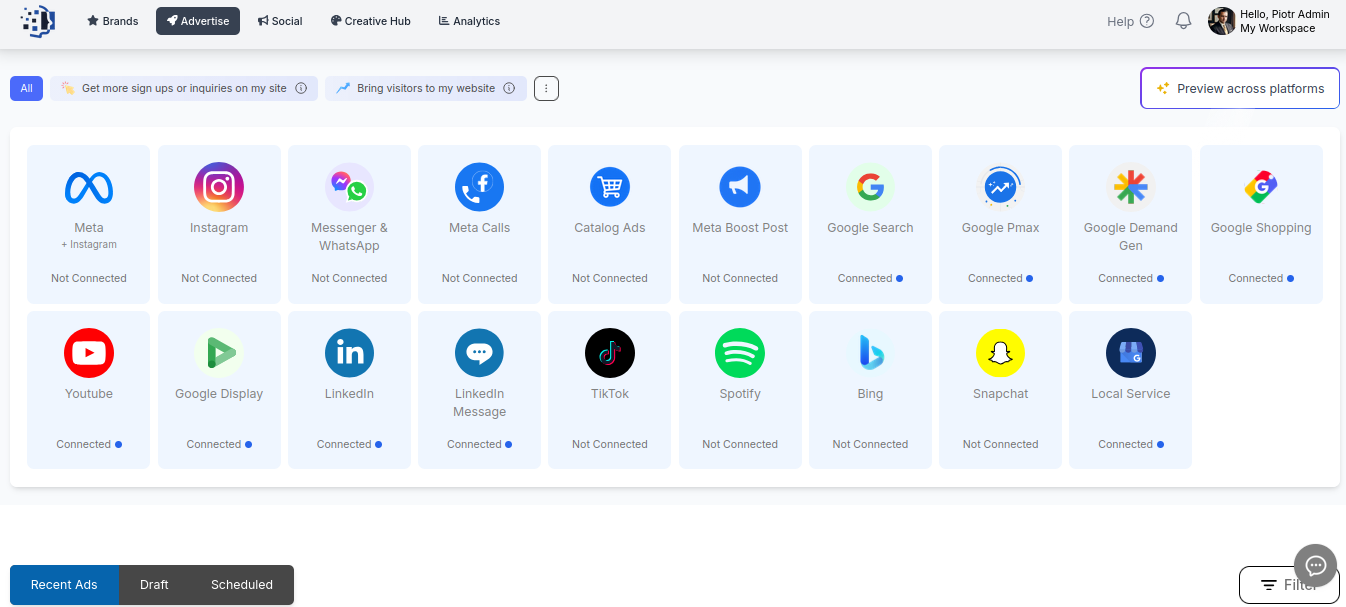
Start optimizing your campaign ROI now by exploring how our platform automates complex targeting and testing—giving you the confidence to scale smarter and faster. Visit Rekla.AI and take control of your digital advertising future.
Często zadawane pytania
What is precision audience targeting in digital marketing?
Precision audience targeting is a digital marketing strategy that allows businesses to reach specific customer segments with high accuracy, using advanced data analytics and artificial intelligence to create detailed audience profiles based on behavioral, demographic, geographic, and psychographic data.
How does artificial intelligence enhance audience segmentation?
Artificial intelligence enhances audience segmentation by processing complex consumer behavior data quickly and accurately. AI can identify nuanced audience segments based on factors such as browsing history, purchasing intent, and interaction patterns, allowing for highly personalized marketing approaches.
What are the key benefits of precision targeting for ROI?
The key benefits of precision targeting include increased click-through rates, reduced cost per acquisition, and enhanced conversion rates. By focusing on highly relevant audience segments, businesses can significantly reduce wasted ad spend while maximizing marketing effectiveness.
How can businesses ensure compliance with privacy regulations while practicing precision targeting?
Businesses can ensure compliance with privacy regulations by implementing transparent data collection practices, adhering to legal frameworks like GDPR and CCPA, and utilizing risk mitigation strategies such as anonymization and secure data management, all while focusing on privacy-friendly targeting methods like contextual targeting.
Zalecane
- Strategie targetowania reklam: Zwiększanie zwrotu z inwestycji dzięki sztucznej inteligencji
- Strategie targetowania reklam: Zwiększanie zwrotu z inwestycji dzięki sztucznej inteligencji
- Dynamiczne kierowanie reklam do odbiorców: zwiększanie zwrotu z inwestycji dzięki sztucznej inteligencji
- Dynamiczne kierowanie reklam do odbiorców: zwiększanie zwrotu z inwestycji dzięki sztucznej inteligencji
- 7 Key Content Personalization Trends for Digital Marketers
 English
 English (UK)
 Polski
 Deutsch
 Español
 Français
 Português
 Svenska
 Dansk
Dansk Nederlands