

Every digital marketing professional knows the frustration of seeing campaign numbers that do not quite add up. In the fast-moving world of e-commerce, misunderstanding digital advertising terminology can prevent teams from accurately measuring performance or fully optimizing AI-based campaigns. Mastering these terms is more than just technical jargon—it is the difference between mediocre results and true marketing impact. This guide breaks down important digital advertising language so you can make smarter, data-driven decisions for your brand.
Table of Contents
- What Digital Advertising Terminology Means
- Major Types Of Digital Ad Metrics
- Core Features And Functions Explained
- AI Impact And Modern Ad Channels
- Pitfalls, Misconceptions, And Cost Factors
Key Takeaways
| Point | Details |
|---|---|
| Master Digital Advertising Terminology | Understanding key terms is crucial for interpreting campaign metrics and enhancing marketing strategies. |
| Utilize Advanced Metrics for Insights | Incorporating advanced metrics like CLV and multi-touch attribution can refine campaign measurement and strategy. |
| Leverage AI Technologies | AI-driven tools optimize targeting and budgeting, enhancing the effectiveness of advertising campaigns. |
| Avoid Common Pitfalls | Continuous optimization and precise targeting can mitigate budget waste and improve campaign performance. |
What Digital Advertising Terminology Means
Digital advertising terminology represents the specialized language professionals use to communicate complex marketing strategies and performance metrics across online platforms. Understanding these terms is crucial for decoding campaign analytics, measuring success, and optimizing digital marketing investments. Digital marketing experts consistently emphasize the importance of mastering this technical vocabulary to drive meaningful business outcomes.
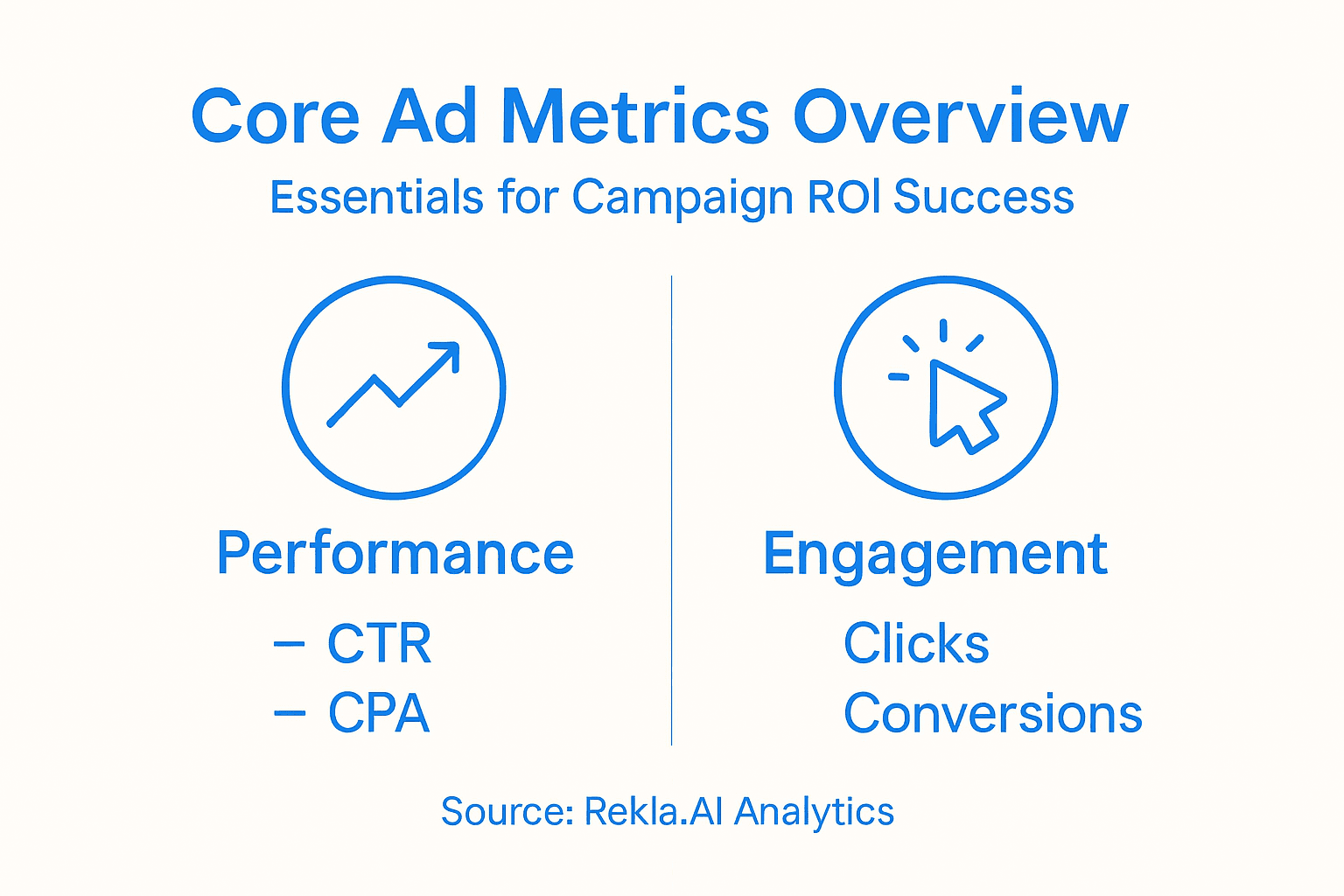
The landscape of digital advertising terminology spans multiple categories, including performance metrics, targeting techniques, pricing models, and platform-specific nomenclature. Key areas include conversion rates, click-through rates (CTR), cost per acquisition (CPA), and return on ad spend (ROAS). These terms help marketers quantify campaign effectiveness, track user engagement, and make data-driven decisions about advertising investments.
Beyond basic metrics, digital advertising terminology also encompasses advanced targeting strategies like demographic segmentation, behavioral targeting, and retargeting. These sophisticated approaches allow marketers to precision-target specific audience segments, ensuring advertising budgets are allocated more efficiently. By understanding nuanced terms like lookalike audiences, conversion pixels, and custom intent audiences, digital marketers can create more sophisticated, high-performing advertising campaigns.
Pro tip: Develop a personal digital advertising terminology glossary to quickly reference complex marketing concepts and stay updated on emerging industry language.
Major Types of Digital Ad Metrics
Digital advertising metrics provide critical insights into campaign performance, enabling marketers to measure, analyze, and optimize their advertising strategies. Top digital marketing metrics help businesses understand how effectively their advertising investments generate desired outcomes across various online platforms.
The primary categories of digital ad metrics can be broadly classified into performance, engagement, and financial measurement types. Performance metrics include click-through rate (CTR), conversion rate, and bounce rate, which directly measure how users interact with advertisements. Engagement metrics track user interactions like views, shares, comments, and time spent, providing deeper insights into audience receptiveness. Financial metrics such as cost per click (CPC), cost per acquisition (CPA), and return on ad spend (ROAS) help marketers understand the economic efficiency of their digital advertising campaigns.

Advanced digital ad metrics go beyond basic measurements, incorporating sophisticated tracking techniques that reveal nuanced audience behaviors. These include conversion path analysis, multi-touch attribution, and customer lifetime value (CLV) calculations. By analyzing comprehensive marketing metrics, businesses can develop more targeted, responsive advertising strategies that optimize budget allocation and maximize return on investment.
Here is a quick reference table highlighting the differences between basic and advanced digital ad metrics:
| Metric Type | Main Purpose | Example Metrics |
|---|---|---|
| Basic Metrics | Track immediate user actions | Click-through rate, CPC |
| Advanced Metrics | Analyze broader campaign value | CLV, multi-touch attribution |
Pro tip: Create a standardized dashboard that tracks your most critical digital ad metrics to enable real-time performance monitoring and quick strategic adjustments.
Core Features and Functions Explained
Digital advertising platforms represent sophisticated technological ecosystems designed to transform how businesses connect with potential customers. These platforms integrate multiple advanced features that go beyond traditional marketing approaches, leveraging data-driven strategies to deliver precise, targeted messaging across diverse digital channels.
The core functions of digital advertising platforms can be categorized into several critical components. Audience targeting allows businesses to segment potential customers based on demographics, behaviors, interests, and online interactions. Programmatic advertising enables automated, real-time bidding for ad placements, ensuring optimal exposure and cost-efficiency. Key features include sophisticated algorithms that analyze user data, machine learning capabilities for predictive targeting, and cross-platform integration that allows seamless campaign management across multiple digital environments.
Advanced digital advertising platforms now incorporate complex technological capabilities that transcend traditional marketing limitations. Comprehensive digital advertising systems utilize machine learning algorithms, predictive analytics, and automated optimization to continuously refine advertising strategies. These technologies enable marketers to create dynamic, responsive campaigns that adapt in real-time to user interactions, market changes, and performance metrics, providing unprecedented precision and effectiveness in digital marketing approaches.
Pro tip: Regularly audit your digital advertising platform’s targeting and optimization settings to ensure maximum performance and alignment with your current marketing objectives.
AI Impact and Modern Ad Channels
AI technologies are transforming digital advertising by introducing unprecedented levels of precision, personalization, and performance optimization. Modern ad channels now leverage sophisticated artificial intelligence capabilities that enable marketers to create more intelligent, responsive, and highly targeted advertising strategies across multiple digital platforms.
The emergence of AI-powered ad channels has revolutionized how businesses approach digital marketing. Machine learning algorithms can now analyze complex user data sets, predicting consumer behaviors with remarkable accuracy. Programmatic advertising has evolved to use real-time bidding and audience segmentation, allowing for hyper-personalized ad experiences. Key technological innovations include predictive audience modeling, automated content generation, dynamic creative optimization, and intelligent budget allocation that continuously refines campaign performance.
Advanced digital marketing research demonstrates that AI is fundamentally reshaping advertising ecosystems. Emerging ad channels now integrate natural language processing, computer vision, and predictive analytics to create more engaging, contextually relevant advertising experiences. These technologies enable marketers to develop adaptive campaigns that can instantly adjust messaging, targeting, and creative elements based on real-time user interactions and market dynamics.
Pro tip: Implement AI-driven split testing across your digital ad channels to systematically identify and scale the most effective marketing strategies.
Pitfalls, Misconceptions, and Cost Factors
Digital advertising challenges extend far beyond simple budget allocation, encompassing complex strategic and operational risks that can dramatically impact campaign performance. Many marketers mistakenly believe that high spending automatically translates to better results, when in reality, sophisticated targeting and strategic optimization are the true drivers of advertising success.
Common misconceptions in digital advertising include overestimating audience reach, misunderstanding conversion tracking, and assuming linear performance metrics. Budget inefficiency remains a significant issue, with studies showing that up to 40% of digital ad spending can be wasted through poor targeting, inappropriate channel selection, or inadequate performance monitoring. Key cost factors involve understanding complex pricing models like cost per click (CPC), cost per thousand impressions (CPM), and return on ad spend (ROAS), which require nuanced interpretation beyond surface-level metrics.
Digital advertising best practices emphasize the critical need for continuous optimization and granular performance analysis. Local market variations, audience behavior differences, and platform-specific algorithmic changes can create significant variability in advertising outcomes. Marketers must develop adaptive strategies that include robust testing protocols, precise audience segmentation, and flexible budget reallocation mechanisms to mitigate potential financial risks and maximize campaign effectiveness.
The following table outlines common pitfalls in digital advertising campaigns and ways to overcome them:
| Pitfall | Resulting Problem | Mitigation Strategy |
|---|---|---|
| Broad targeting | Budget waste, low engagement | Use precise segmentation |
| Ignoring metric analysis | Missed optimization opportunities | Monitor granular performance |
| Overreliance on one channel | Reduced ad effectiveness | Diversify channel selection |
Pro tip: Implement a quarterly comprehensive audit of your digital advertising spend, examining granular performance data to identify and eliminate underperforming channels and targeting strategies.
Unlock the Power of Digital Advertising Terminology with Rekla.AI
Understanding key digital advertising terms like click-through rate, cost per acquisition, and AI-powered optimization is essential for boosting your campaign ROI. However, mastering these concepts and applying them effectively can feel overwhelming and time-consuming. Businesses face challenges such as precise audience targeting, real-time optimization, and managing multiple ad channels all at once. Rekla.AI tackles these pain points by simplifying complex strategies with cutting-edge AI technology. Our platform transforms your marketing efforts by automating ad creation, audience segmentation, and performance monitoring across more than 15 channels including Facebook, Google, TikTok, and LinkedIn.
Experience how AI-driven automation removes guesswork and reduces advertising costs, while increasing engagement and conversions. Ready to harness the latest digital advertising terminology and boost your campaign results? Explore Rekla.AI today and get started with smarter, scalable advertising that delivers measurable ROI.
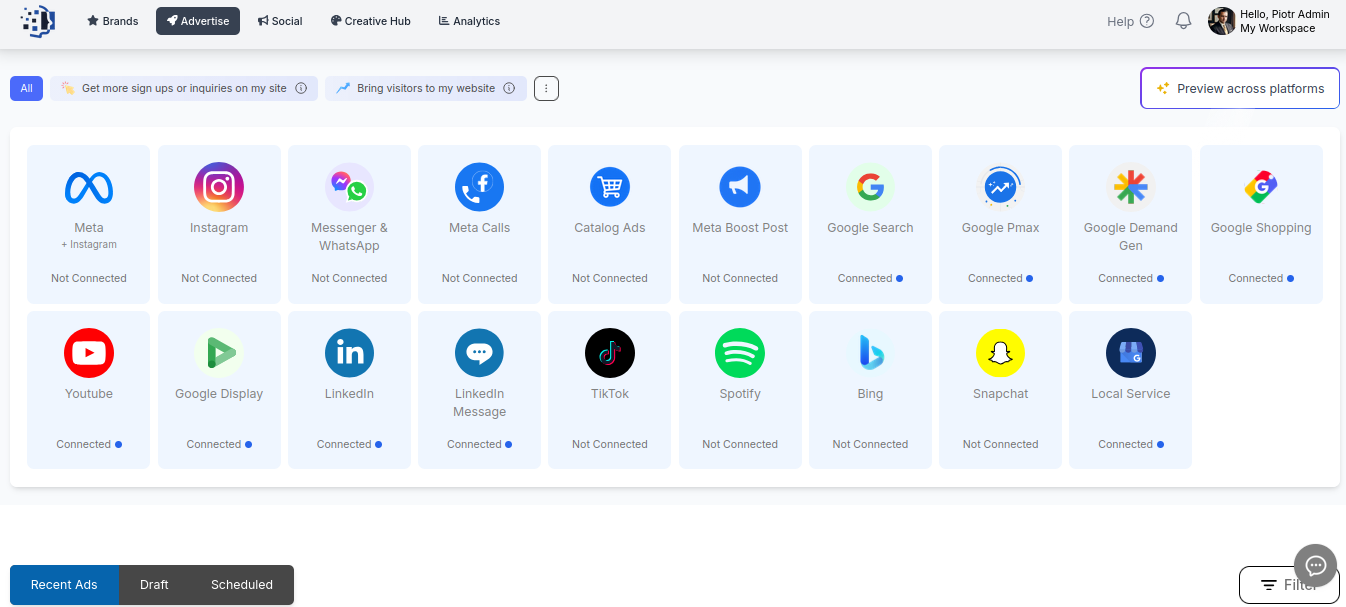
Take control of your digital marketing success with our user-friendly platform designed to optimize every aspect of your advertising strategy. Visit Rekla.AI now to launch your first AI-powered campaign, or learn more about digital advertising features that simplify targeting and budget management. Act now and transform terminology into tangible growth.
Frequently Asked Questions
What are the key digital advertising metrics to track?
Key metrics include click-through rate (CTR), conversion rate, cost per click (CPC), and return on ad spend (ROAS). These help measure the effectiveness of your campaigns and optimize your advertising strategies.
How can I improve my digital advertising ROI?
To boost ROI, focus on precise audience targeting, continuous optimization, and leveraging advanced metrics such as customer lifetime value (CLV) and multi-touch attribution. This ensures that your marketing budget is allocated efficiently.
What are advanced targeting strategies in digital advertising?
Advanced targeting strategies include behavioral targeting, demographic segmentation, and retargeting. These allow advertisers to reach specific audience segments with tailored messages, improving engagement and conversion rates.
How does AI impact digital advertising strategies?
AI enhances digital advertising by enabling predictive analytics, real-time bidding, and automated optimization. This leads to more personalized and efficient ad campaigns that can adapt to user behavior and market dynamics.
 English
 English (UK)
 Polski
 Deutsch
 Español
 Français
 Português
 Svenska
 Dansk
Dansk Nederlands