

Running ads across Instagram, Google, TikTok, and more quickly gets chaotic when you don’t have a clear system. Making sense of scattered customer data and shifting budgets can feel overwhelming. If you’re struggling to connect with your audience and maximize return, you’re not alone.
This guide promises practical advice rooted in real research. You’ll discover actionable steps for unified budget tracking, AI-driven creative testing, and channel-specific audience insights. Powerful tools, like consolidated dashboards and automated ad creation, help you make smarter decisions and avoid overspending.
Ready to learn what actually works across multiple advertising platforms? The coming list reveals proven strategies that turn complexity into results, helping you build campaigns that convert and grow your business.
Table of Contents
- Understand Your Audience Across All Channels
- Leverage AI Tools for Automated Ad Creation
- Set Unified Budgets and Track Spending
- Optimize Ad Placement for Each Platform
- Test Creatives with A/B Experiments
- Analyze Performance and Refine Strategies
Quick Summary
| Takeaway | Explanation |
|---|---|
| 1. Understand audience behavior across platforms | Different platforms require tailored messaging to reach audiences effectively based on their behavior and intentions. |
| 2. Utilize AI for efficient ad creation | Automating ad creation allows for rapid generation of multiple ad variations, saving time and enhancing creativity. |
| 3. Implement unified budget management | Centralized tracking of ad spend across channels prevents overspending and optimizes budget allocation to high-performing channels. |
| 4. Optimize ad placements for platform specifics | Ad formats must be adapted to the unique consumer behaviors of each platform for better engagement and conversion rates. |
| 5. Conduct A/B testing to refine creatives | Systematic A/B testing of ad variations reveals the most effective elements, leading to improved ROI and lower acquisition costs. |
1. Understand Your Audience Across All Channels
Your audience doesn’t live on just one platform anymore. They scroll Instagram, check email, watch YouTube, and browse TikTok, often within the same hour.
Understanding how your customers move across these touchpoints is the foundation of multi-channel success. When you know where your audience is, what they’re doing on each platform, and how they behave differently across channels, you can craft messages that actually resonate instead of shouting the same thing everywhere.
Why Channel-Specific Audience Understanding Matters
Here’s the reality: your Facebook audience might respond to lifestyle storytelling, while your LinkedIn audience wants ROI-focused value propositions. The person clicking your Google Ad at 11 PM might have completely different intentions than the same person browsing your Instagram feed at lunch.
Channel research allows marketers to map customer journeys and identify which platforms drive engagement at each stage. This structured approach prevents wasted ad spend on channels where your audience isn’t paying attention.
Understanding your audience across channels means recognizing that the same person behaves differently depending on where they encounter your brand.
Consider this: a young professional might use Instagram for inspiration, Google for problem-solving, and LinkedIn for industry news. Each touchpoint requires different creative messaging and ad formats to be effective.
How to Map Your Multi-Channel Audience
Start by collecting data across your advertising platforms. Most modern ad tools give you audience insights for each channel, but you need to connect the dots:
- Segment audiences by platform behavior (what they do on each channel)
- Track which channels drive highest-value conversions (not just clicks)
- Identify channel preferences based on demographics, interests, and past interactions
- Note timing patterns (when your audience is most active on each platform)
- Monitor message resonance (which topics perform best where)
Use AI-driven tools to unify this data. Instead of manually piecing together Facebook Analytics, Google Ads, and TikTok dashboards, consolidation tools give you a complete customer view across all platforms in one place.
The Practical Impact
When you understand your audience across channels, you stop creating one-size-fits-all campaigns. You personalize messaging based on where customers are and what they’re ready to hear.
A small e-commerce brand running ads across five platforms might discover that TikTok brings younger audiences ready to impulse-buy, while Google Ads attracts intent-driven searchers comparing options. This insight means completely different creatives, copy angles, and even product positioning for each channel.
Your ad spend becomes smarter because you’re investing more in channels where your specific audience is most receptive.
Pro tip: Start by selecting your top 3 channels and spending two weeks analyzing audience behavior data on each. You’ll quickly spot patterns that show where your highest-value customers actually spend time.
2. Leverage AI Tools for Automated Ad Creation
Manually creating hundreds of ad variations is a time-consuming nightmare. AI-powered ad creation tools eliminate this bottleneck by generating multiple creative options in minutes instead of hours.
When you automate ad creation, you free your team from repetitive design work and focus on strategy instead. This means more testing, faster iteration, and ultimately better performing ads across your channels.
How AI Streamlines Creative Production
Traditional ad creation follows a predictable, slow path: brief the designer, wait for drafts, request revisions, approve final versions. With AI, you input your product information, brand guidelines, and target audience, and the system generates dozens of ad variations automatically.
AI agents designed for simultaneous deployment across multiple platforms can create platform-specific optimizations automatically. This means your Facebook ads are formatted and written differently than your Instagram ads, which differ from your TikTok content, all without manual intervention.
Automated ad creation isn’t about replacing creativity, it’s about amplifying it by handling the repetitive work so you can focus on strategy.
The efficiency gains are significant. Instead of creating three ad variations and hoping one resonates, you can test 50 variations and analyze what actually works with your audience.
Why This Matters for Your ROI
Here’s what happens when you automate ad creation: you test more variations quickly, identify winning patterns faster, and scale successful creatives across channels. This testing-to-scaling cycle compresses from weeks into days.
Small e-commerce brands especially benefit because they lack in-house design teams. Instead of hiring freelancers for each campaign, you can generate hundreds of professional ad variations in-house using AI.
More creatives also means less reliance on any single ad. When one underperforms, you have dozens of backups ready to deploy instead of scrambling to create new ads.
Key Benefits of Automated Ad Creation
- Generate multiple variations quickly for A/B testing at scale
- Maintain brand consistency across all platforms automatically
- Reduce design costs by eliminating freelancer dependencies
- Test platform-specific formats without manual resizing
- Speed up time-to-market from concept to live ads
- Identify winning creative patterns through faster testing cycles
When creating ad campaigns with AI, you’re not just saving hours. You’re fundamentally changing how fast you can learn what your audience responds to.
Pro tip: Start with 20-30 AI-generated variations of your top-performing ad, changing one variable at a time (headline, image style, or call-to-action). Track which variations win, then regenerate new ads using those winning formulas as templates.
3. Set Unified Budgets and Track Spending
When your ad budget is scattered across five platforms with no central oversight, you lose control fast. Without unified budget tracking, you might overspend on underperforming channels while starving high-performing ones of resources.
Setting a unified budget and tracking spend in real-time keeps your campaigns profitable and prevents waste. This single step transforms chaotic multi-channel advertising into coordinated, efficient spending.
Why Unified Budget Management Matters
Most digital marketers manage budgets the hard way, jumping between Facebook Ads Manager, Google Ads, TikTok Ads, and LinkedIn Campaign Manager individually. Each platform shows its own data in different formats, making it impossible to see your total spend or ROI across channels at a glance.
This fragmented approach leads to poor decisions. You might allocate $2,000 to a channel based on incomplete information, only to discover weeks later that money would have generated better returns elsewhere.
Unified budget tracking through integrated dashboards provides real-time visibility across all platforms. When you can see every dollar spent and every conversion generated, you make smarter allocation decisions immediately.
Real-time budget visibility prevents overspending and reveals which channels actually deserve more investment for maximum ROI.
Optimizing budget allocation across channels is complex because different audiences convert at different rates on different platforms. AI-powered tools analyze this complexity and recommend budget shifts before you waste money on underperforming channels.
Setting Your Unified Budget Strategy
Start by determining your total monthly ad spend. Then allocate based on channel performance, not guesswork. This is where budget optimization algorithms become valuable, automatically recommending how to distribute spending for long-term ROI growth.
Your unified budget approach should include:
- Define your total monthly budget and reserve 10-15% for testing new channels
- Allocate based on historical performance rather than gut instinct
- Set daily spending caps per channel to prevent overspending
- Review weekly performance metrics and adjust allocations
- Track cost per acquisition across all channels for comparison
- Monitor budget burn rate to ensure you don’t run out mid-month
Real-Time Tracking Prevents Budget Disasters
Without real-time tracking, you might not notice overspending until your monthly bill arrives. By then, your budget is already blown and performance is already poor.
Real-time dashboards alert you when spending deviates from plan. If Google Ads suddenly costs 40% more than expected, you see it immediately and adjust bids downward before wasting thousands.
This immediate feedback loop also reveals opportunities. When a TikTok campaign unexpectedly outperforms projections, you can shift budget to it within hours instead of waiting for monthly review.
Pro tip: Set up daily budget alerts at 80% and 100% of your channel budgets, and review unified spend reports every morning for 5 minutes to catch anomalies early.
4. Optimize Ad Placement for Each Platform
Not all ad placements are created equal. A carousel ad that crushes it on Instagram might flop on Facebook, and a video format that performs on TikTok could underperform on YouTube.
Each platform has unique audience behaviors, screen sizes, and content consumption patterns. Optimizing your ad placements for each platform means showing the right format to the right people in the right place, dramatically improving your click-through rates and conversions.
Why Platform-Specific Placement Matters
Your audience doesn’t experience every platform the same way. Someone scrolling TikTok for entertainment has a different mindset than someone on LinkedIn researching business solutions. The ad formats they respond to differ too.
Facebook users engage with longer-form carousel ads and detailed text. TikTok audiences prefer short, native-style video content that feels organic. LinkedIn professionals respond to thought leadership and industry-focused messaging. Using the same creative across all platforms wastes money because you’re fighting platform dynamics.
Cross-channel programmatic advertising optimizes placements automatically by analyzing which ad formats and placements drive the best results on each platform. This data-driven approach replaces guesswork with precision targeting.
Platform-specific optimization means adapting format, creative style, and messaging to match how audiences naturally behave on each channel.
When you match ad format to platform behavior, engagement increases dramatically. Users are more likely to click, watch, or convert because the ad feels natural to their experience on that platform.
Key Platform Placement Strategies
Each platform requires different optimization approaches:
- Facebook and Instagram favor carousel ads with 3-5 slides, image ads with lifestyle storytelling, and collection ads for product discovery
- TikTok performs best with native-style short videos (15-30 seconds) using trending sounds and casual aesthetics
- Google Search works optimally with text ads targeting high-intent keywords where users actively search for solutions
- LinkedIn responds to professional content, thought leadership, and B2B-focused messaging in feed and sponsored content formats
- YouTube engages audiences through skippable video ads (6-20 seconds) with compelling first frames and clear value propositions
- Pinterest drives conversions with vertical pin-style ads (1000x1500px) showcasing inspirational, lifestyle-focused content
Your cross-platform ads strategy should include platform-specific creative variations. This doesn’t mean creating entirely new campaigns, but rather adapting core messaging and format to platform norms.
Implementation: Testing Platform Placements
Start by running the same campaign message across platforms but adapting creative format. Test different placements on each platform to identify which performs best. Track results separately by platform so you understand what actually works.
Use platform insights to inform placement decisions. If Instagram Stories outperforms Feed placements, allocate more budget there. If YouTube Pre-roll converts better than In-stream, double down on Pre-roll.
Over time, you’ll build a platform playbook showing exactly which placements and formats drive conversions on each channel.
Pro tip: Create one core message, then produce three format variations per platform: video, carousel, and single image. Test all nine combinations and track which format-platform combo generates the lowest cost per conversion.
5. Test Creatives with A/B Experiments
Guessing which ad creative will perform best is expensive. A/B testing removes the guesswork by pitting two variations against each other and letting data decide the winner.
When you systematically test different headlines, images, copy angles, and calls-to-action, you discover exactly what resonates with your audience. Over time, these small wins compound into significantly higher conversion rates and lower acquisition costs.
Why Creative Testing Drives ROI
Your first ad creative is rarely your best one. Even experienced marketers get surprised by what actually performs in market. The headline you thought was compelling might underperform, while a casual variation crushes it.
A/B testing forces you to make decisions based on actual audience behavior rather than assumptions. This data-driven approach eliminates creative bias and reveals audience preferences you wouldn’t discover otherwise.
Testing multiple creatives within a single campaign now automates the allocation of budget equally across variations, accelerating insights significantly. Modern platforms handle the complexity of running fair tests so you focus on analyzing winners.
A/B testing isn’t optional for high-performing campaigns. It’s the fastest way to improve ROI by learning what your specific audience actually wants.
Consider a typical scenario: two email subject lines with identical audience targeting. Line A says “Save 20% Today” while Line B says “Limited Time: 48-Hour Flash Sale.” Testing reveals that Line B generates 34% higher open rates. That’s a massive performance gap you’d never discover without testing.
What to Test in Your Ad Creatives
You can test dozens of variables, but prioritize the elements with the biggest impact:
- Headlines and copy (value proposition, emotional angle, urgency framing)
- Images and video style (lifestyle, product-focused, user-generated, animated)
- Call-to-action buttons (“Shop Now” vs. “Learn More” vs. “Get Started”)
- Audience segment messaging (different angles for different demographics)
- Ad format (carousel ads, video, single image, collection ads)
- Color schemes and design elements (contrast, typography, visual style)
Start with one variable per test. Testing multiple variables simultaneously makes it impossible to know which change drove results.
Running Effective A/B Tests
Proper A/B testing requires discipline. Give each test sufficient time and budget to reach statistical significance, typically 100-200 conversions minimum per variation. Running tests too short leads to false winners and poor decisions.
Allocate equal budget to both variations so neither gets an unfair advantage. Track metrics that matter to your business, not just clicks. Cost per acquisition, return on ad spend, and customer lifetime value tell you more than click-through rate alone.
Document your learnings from each test. Over time, you build a knowledge base showing patterns like “product images outperform lifestyle shots” or “urgency language drives conversions.” These insights become your creative playbook.
Pro tip: Run one continuous test stream where the winning creative from each experiment becomes the control for your next test. This rolling testing approach continuously improves performance without major campaign overhauls.
6. Analyze Performance and Refine Strategies
Launching campaigns is only half the battle. The real ROI gains come from analyzing what happened and refining your approach based on actual data.
Without performance analysis, you’re flying blind. You don’t know which channels deserve more budget, which creatives should be paused, or where to optimize next. Analysis transforms raw data into actionable strategy improvements.
Why Continuous Analysis Drives Long-Term ROI
Campaigns don’t perform the same way forever. Audiences evolve, competitors adjust, and platform algorithms change. What worked last month might underperform this month without optimization.
Data-driven insights enable real-time performance tracking across all channels, helping you understand which platforms actually drive customer acquisition. This insight guides smarter resource allocation and campaign refinement decisions.
Consider this scenario: you allocate $5,000 monthly across five channels. After analyzing four weeks of data, you discover that TikTok generates conversions at $12 each while Google Ads costs $34 per conversion. Should you keep equal budgets? No. Data tells you to shift budget toward TikTok immediately.
Performance analysis isn’t a one-time event. It’s an ongoing cycle where insights drive refinements that improve results continuously.
The most successful campaigns treat analysis as part of the optimization workflow, not an afterthought. Weekly or daily analysis reveals problems before they waste significant budget.
Key Performance Metrics to Track
Track metrics that directly connect to your business goals, not vanity metrics that look good but don’t drive revenue:
- Cost per acquisition across each channel and campaign
- Return on ad spend showing profit per dollar spent
- Conversion rate by platform, audience segment, and creative
- Customer lifetime value to understand long-term profitability
- Attribution data showing which channels drive first-click vs. last-click conversions
- Frequency and reach to identify audience saturation points
- Quality score trends on Google Ads and relevance scores on Facebook
How to Refine Strategy Based on Data
Optimizing campaigns requires integrating consumer insights with conversion analytics to guide resource reallocation. Start by identifying your worst-performing channel. Does it underperform because of poor targeting, weak creatives, or platform mismatch? Diagnose before cutting budget.
Next, identify your best-performing channel and test increasing budget there. If it maintains performance at higher spend, you’ve found a growth opportunity. If performance drops, you’ve hit audience saturation and should shift focus.
Pause underperforming creatives and double down on winners. If one ad generates 40% lower cost per acquisition than others, pause similar creatives and test variations of the winner.
Creating Your Analysis Rhythm
Set a consistent schedule for performance review. Weekly reviews catch urgent issues early. Monthly deep dives reveal trends and patterns. Quarterly strategy sessions reset budget allocation and campaign direction based on quarterly learnings.
Document insights and decisions. Over time, your analysis notes become institutional knowledge showing what works for your specific audience and products.
Pro tip: Create a simple spreadsheet tracking cost per acquisition, return on ad spend, and conversion rates by channel each week. Compare week-over-week changes to spot trends early, then refine accordingly before problems compound.
Below is a comprehensive table summarizing the key strategies for optimizing multi-channel marketing efforts discussed in the article.
| Topic | Core Recommendations | Benefits |
|---|---|---|
| Audience Understanding | Analyze customer behavior and preferences on different platforms. | Create targeted messages that align with platform-specific audience needs. |
| AI-driven Ad Creation | Use AI tools to generate multiple platform-specific ad variations. | Streamline creation process and enhance testing efficiency. |
| Unified Budgeting | Perform real-time tracking of spending across all advertising platforms. | Prevent overspending and inform better channel allocation decisions. |
| Platform-specific Placement | Optimize creative formats and messaging for each platform’s audience preferences. | Improve ad relevance and engagement rates. |
| Creative Testing | Conduct A/B experiments on various elements like headlines, visuals, and CTAs. | Identify high-performing ad variations efficiently. |
| Continuous Analysis | Regularly analyze campaign performance metrics to refine strategies. | Sustain long-term advertising efficacy and profitability. |
Unlock Smarter Multi-Channel Ad Campaigns with Rekla.AI
Mastering multi-channel advertising requires deep audience understanding, seamless budget management, and creative agility. The challenges highlighted in “6 Essential Multi-Channel Ad Strategies for High ROI” such as automating ad creation, tracking unified budgets, and optimizing platform-specific placements are exactly where Rekla.AI excels. Our AI-driven platform simplifies these complex tasks so small and medium businesses can compete confidently without the headache of managing multiple dashboards or struggling to design winning creatives.
Why struggle with scattered ad data and limited testing when you can:
- Precisely target and tailor messaging across over 15 platforms including Facebook and TikTok
- Automatically generate dozens of ad variations saving you time and boosting click-through rates
- Monitor and adjust campaigns with real-time analytics and integrated budget control
Harness the power of advanced AI technology combined with a user-friendly interface at Rekla.AI and turn your multi-channel marketing challenges into scalable growth opportunities.
Ready to elevate your digital ad game and maximize ROI now
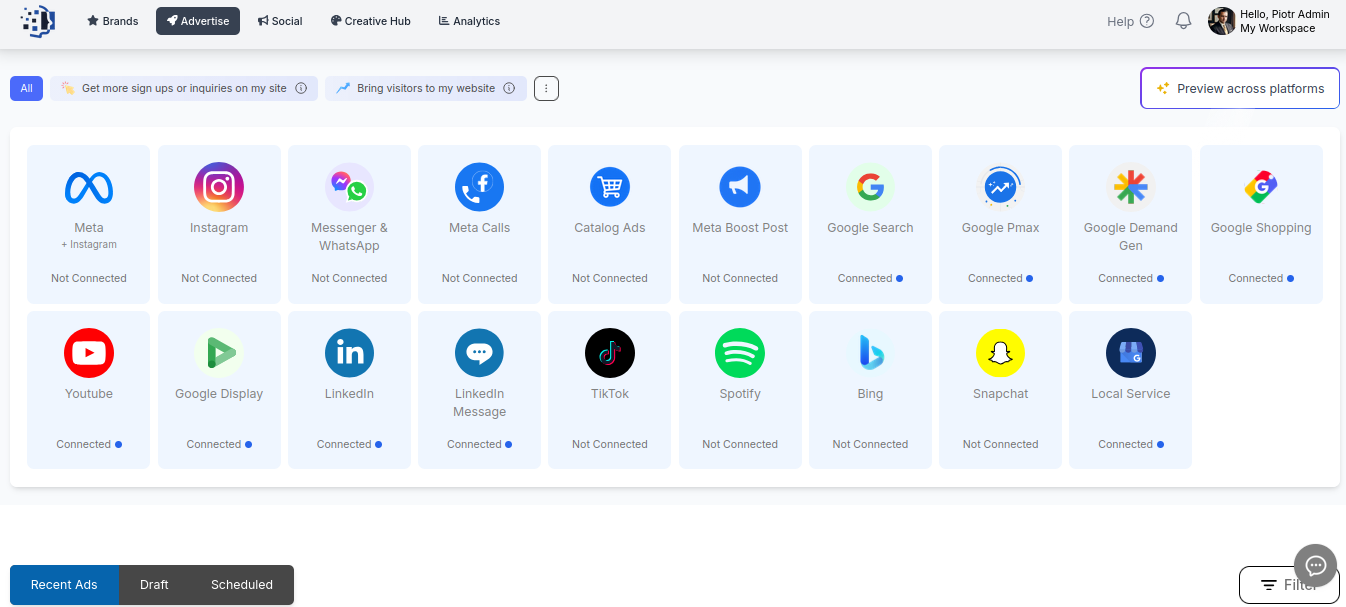
Explore how Rekla.AI’s all-in-one automation platform can transform your advertising strategy today. Visit Rekla.AI and start simplifying multi-channel campaign management like a pro.
Frequently Asked Questions
How can I understand my audience across multiple channels for better ad targeting?
Understanding your audience requires analyzing their behavior on different platforms. Begin by collecting audience insights from each channel and segmenting them based on behaviors and preferences. This will help you tailor your ad messaging to better resonate with each segment, improving engagement and conversion rates by up to 30%.
What are the steps to leverage AI tools for automated ad creation?
To use AI tools for automated ad creation, start by inputting your product details and brand guidelines into the tool. The AI will generate multiple ad variations tailored for different platforms, allowing you to test quickly. Aim to create up to 50 variations in a few minutes to maximize your ad performance efficiency.
How do I set a unified budget for my multi-channel ad campaigns?
Establish a unified budget by determining your total monthly ad spend and allocating resources based on historical performance data from each channel. Set daily spending caps to prevent overspending. Review your budget and performance metrics weekly to ensure effective allocation and adjust as needed over time.
What factors should I consider when optimizing ad placement for different platforms?
Optimize ad placement by analyzing audience behaviors on each platform and choosing formats that align with those behaviors. For instance, use carousel ads on Facebook and native short videos on TikTok. Test different placements within campaigns and track performance to refine your ad strategy effectively over time.
How can I effectively conduct A/B tests on my ad creatives?
Conduct A/B tests by creating two variations of your ad that only differ by one variable, such as the headline or image. Allocate equal budget across both variations to ensure a fair comparison and allow sufficient time for the test to reach statistical significance. Analyze the results to uncover which creative resonates best with your audience, aiming for a clear performance winner that can enhance conversions significantly.
What key metrics should I analyze to refine my multi-channel ad strategies?
Focus on critical metrics such as cost per acquisition, return on ad spend, and conversion rates for each channel. Analyze these metrics weekly to identify trends and make informed decisions about budget reallocations. By maintaining a data-driven approach, you can continuously refine your strategies and potentially reduce acquisition costs by 15% within a few months.
 English
 English (UK)
 Polski
 Deutsch
 Español
 Français
 Português
 Svenska
 Dansk
Dansk Nederlands