

Juggling ads across Facebook, Instagram, TikTok, and Google can quickly become overwhelming when every platform demands its own strategy and timing. Managing creative content, timing your posts, and tracking performance often eats up hours you could use to grow your business instead. You need a way to save time without sacrificing results or brand consistency.
The right automation tactics put you back in control. By adopting methods powered by artificial intelligence and smart scheduling, you can deliver the right message to the right audience at the perfect moment on each social platform. These strategies help you create engaging content faster, run smarter ad campaigns, and get the most from every dollar you spend.
You’re about to learn practical, actionable ways to work less while achieving more with your multi-channel ad campaigns. Discover how to build authentic brand presence, improve engagement, and optimize every aspect of your social marketing with real-world automation tools and tips.
Inhaltsverzeichnis
- 1. Scheduling Posts Across Multiple Platforms Effortlessly
- 2. Automating Audience Targeting For Higher Engagement
- 3. Using Ai To Generate Creative Ad Content Faster
- 4. Managing Budgets With Automated Spend Allocation
- 5. Streamlining Multi-Channel Campaign Reporting
- 6. Running Smart A/B Tests With Automated Tools
- 7. Automating Real-Time Campaign Optimization
Kurze Zusammenfassung
| Zum Mitnehmen | Erklärung |
|---|---|
| 1. Schedule posts strategically | Use scheduling tools to tailor your content for each platform and improve engagement by posting when your audience is active. |
| 2. Automate audience targeting | Implement AI-driven audience targeting to identify ideal customers and deliver ads effectively, maximizing your advertising budget. |
| 3. Leverage AI for ad creativity | Utilize AI to generate multiple ad variations quickly, allowing for faster testing and optimization based on real performance data. |
| 4. Use automated reporting for insights | Automate campaign reporting to view performance metrics in real-time, enabling quicker decision-making and responsive marketing adjustments. |
| 5. Optimize campaigns in real-time | Allow AI to continuously monitor and adjust your campaigns, improving overall efficiency and ROI while you focus on other business tasks. |
1. Scheduling Posts Across Multiple Platforms Effortlessly
Post scheduling is one of the most straightforward ways to save hours every week while maintaining consistent brand presence across your social channels. Rather than logging into each platform daily to post content manually, scheduling allows you to batch create content and let automation handle distribution at optimal times.
The real power of scheduling lies in timing. Your audience on LinkedIn may be most active during business hours, while your TikTok followers scroll primarily in evenings and weekends. Strategic scheduling saves time and maintains consistency by ensuring your content reaches each audience when they’re actually paying attention. This isn’t about posting once and calling it done. Tailoring content for each platform rather than simply crossposting the same message everywhere dramatically improves engagement and your return on investment. A product launch announcement performs differently on Instagram Stories than it does in a LinkedIn article, and scheduling tools let you customize messaging for each channel while managing everything from a single dashboard.
For small business owners juggling multiple responsibilities, this approach transforms your social media workflow. Instead of spending 30 minutes daily hopping between platforms, you can dedicate two hours on Monday to planning your entire week. Effective scheduling requires a well-organized content calendar aligned with your overall marketing strategy and audience activity patterns. You control when posts go live, eliminate the stress of remembering to publish, and build authentic brand consistency that resonates globally. Your followers see a reliable, professional presence rather than sporadic posting when you happen to remember.
Profi-Tipp: Schedule your content during off-peak hours when you’re thinking clearly, then batch schedule posts across all platforms in 90 minute sessions twice weekly rather than daily micro-management.
2. Automating Audience Targeting for Higher Engagement
Manual audience targeting is like fishing with a net so wide you catch everything except what you actually want. Automated audience targeting uses data and artificial intelligence to identify precisely who your ideal customers are, then delivers your ads directly to them at the moment they’re most receptive. This shift from broad casting to laser focused delivery transforms your ad spend from wasteful to strategic.
Here’s what makes automation powerful. Artificial intelligence driven audience targeting leverages predictive analytics to recognize patterns in user behavior that humans would miss. The system watches how different audience segments interact with content, which types of users convert into customers, and what messaging resonates with specific demographics. As more data flows in, the algorithm adapts automatically, continuously refining who sees your ads. Rather than you manually adjusting audience parameters weekly based on gut feelings, the system processes real time data across millions of interactions to identify your most valuable prospects. Automated segmentation means a fitness brand’s ads automatically reach people searching for gym equipment instead of blasting the entire neighborhood with the same generic message.
The practical benefit hits your bottom line immediately. Your ad budget stops getting wasted on people unlikely to buy and starts concentrating on high probability customers. Small business owners especially benefit because you don’t need a full marketing team analyzing spreadsheets to figure out audience demographics. The automation handles audience refinement continuously, adapting to shifting patterns without any manual intervention from you. You simply set your campaign goals and budget parameters, and the system does the detective work to find your best customers across Facebook, Instagram, TikTok, and other platforms. This approach not only increases engagement rates but also typically reduces cost per conversion significantly. Over time, your campaigns become increasingly efficient as the system learns which audience segments generate the strongest results.
Profi-Tipp: Start with broad targeting parameters and let automation run for at least two weeks before making adjustments, allowing the system sufficient data to identify and optimize toward your best performing audience segments.
3. Using AI to Generate Creative Ad Content Faster
Creative fatigue is real. You know the feeling. You’ve stared at blank design software for an hour trying to come up with your fifth variation of an ad, each one feeling slightly different but fundamentally the same. AI changes this equation entirely by generating multiple ad variations in minutes instead of hours. Rather than relying on your creative instincts alone, you now have a tool that produces dozens of personalized ad versions automatically.
The technology works through what’s called personalized text and image generation powered by natural language processing and computer vision. Your AI system learns from your brand voice, target audience, and campaign objectives, then generates ad copy and visuals that match your specifications. You provide parameters like target demographic, product benefits, and campaign tone, and the system produces variations tailored to reach different segments of your audience. A furniture retailer might input “modern minimalist couch,” and the AI generates dozens of ad concepts with different copy angles, color schemes, and visual compositions. Some emphasize comfort, others focus on style, while some highlight durability. You’re not starting from zero anymore. You’re selecting from multiple strong options and refining from there.
The time savings compound quickly. Instead of spending 4 hours manually creating 5 ad variations, you spend 30 minutes reviewing and tweaking 50 AI-generated options. This speed advantage means you can test more variations, identify winning creative combinations faster, and optimize your campaigns continuously. You run A/B tests more frequently, discover which messaging resonates with different audience segments, and scale what works while quickly abandoning what doesn’t. Small business owners who previously couldn’t afford a full creative team suddenly compete with bigger competitors on creative volume and iteration speed. The result isn’t just faster production. It’s smarter campaigns built on real performance data rather than creative hunches.
Profi-Tipp: Review AI generated creatives for brand consistency first, then A/B test variations with your smallest budget allocation to identify winners before scaling ad spend to your best performing versions.
4. Managing Budgets with Automated Spend Allocation
Budget management traditionally feels like a guessing game. You allocate money across Facebook, Google, and TikTok based on hunches or last month’s results, then hope for the best. Automated spend allocation removes the guesswork by letting algorithms distribute your budget intelligently based on what’s actually working right now. Instead of static budget splits that remain unchanged for weeks, your money flows automatically toward your best performing channels and campaigns.
The mechanics are straightforward but powerful. Automated spend allocation uses algorithms to dynamically distribute budget across channels based on real-time performance metrics like click-through rates, conversion rates, and return on ad spend. When Facebook ads suddenly start performing better than Instagram ads, the system detects this and gradually shifts more budget toward Facebook. If a particular audience segment converts at 40 percent but another segment converts at only 8 percent, spending automatically increases for the high converting segment. You’re not manually reviewing performance dashboards daily trying to decide where to shift resources. The system makes those decisions continuously, moment by moment, based on actual results. Think of it like a financial advisor who rebalances your portfolio automatically rather than requiring you to call and request adjustments.
For small business owners managing limited budgets, this approach transforms profitability. Every dollar works harder because it’s always being deployed toward your most effective channels and audiences. You eliminate waste from under-performing channels that might have continued draining budget under manual management. Beyond efficiency, you gain peace of mind knowing your budget isn’t sitting idle or being spent ineffectively while you handle other business responsibilities. The system optimizes continuously, adapting to seasonal changes, market shifts, and campaign performance trends without requiring your constant attention. Many businesses report spending the same total budget but achieving 30 to 50 percent better results simply because their money concentrates on what actually works rather than spreading thin across everything equally.
Profi-Tipp: Set clear performance benchmarks and let automation run for at least two weeks before making manual adjustments, allowing the algorithm sufficient data to identify optimal budget distribution patterns across your campaigns.
5. Streamlining Multi-Channel Campaign Reporting
Pulling data from five different platforms every week to create a single performance report is exhausting. You log into Facebook, screenshot metrics. Then Google Ads, then TikTok, then LinkedIn. You copy numbers into a spreadsheet, manually calculate totals, and spend hours just organizing information that should tell you one simple thing: how are your campaigns performing? Automated multi-channel reporting eliminates this tedium by gathering all your data automatically and presenting it in one unified view.
Automated reporting works through integrations and APIs that connect to your ad platforms continuously. Rather than you manually gathering data, the system pulls performance metrics automatically from every channel where you run ads. Real-time analytics and customizable reports track KPIs across platforms, letting you see exactly what matters most to your business. One report might show you that Facebook generates the highest conversion rate but Google has the lowest cost per acquisition. Another reveals that Tuesday afternoons produce your best engagement while Saturday mornings flop. You’re not wading through spreadsheets to find these insights. You’re looking at a dashboard designed specifically for your business priorities, with the metrics that actually matter highlighted and explained.
The practical benefit extends beyond time savings. Faster access to accurate data means quicker decision-making. When you notice a campaign underperforming at 2 PM instead of discovering it Friday afternoon during your weekly reporting ritual, you can adjust immediately. You catch opportunities faster too. If one audience segment suddenly spikes in performance, automated reporting surfaces this instantly so you can capitalize before momentum fades. Small business owners especially benefit because you can monitor campaign health without hiring a dedicated analyst. You spend your time making strategic decisions rather than data compilation. Your campaigns get faster, smarter adjustments. Your team stays informed with consistent reporting. You confidently explain performance to stakeholders using real-time numbers instead of yesterday’s estimates.
Profi-Tipp: Set up custom dashboards showing only your top three to five KPIs rather than dozens of metrics, making it easier to spot trends and take action on what truly impacts your bottom line.
6. Running Smart A/B Tests with Automated Tools
A/B testing is the difference between guessing and knowing. You might think your headline with an exclamation point performs better than one without, but you’re probably wrong. Automated A/B testing removes opinion from the equation by systematically comparing different ad variations and measuring which one actually wins with your audience. Rather than manually creating one version at a time and waiting weeks for results, automated tools run multiple tests simultaneously and deliver winners in days.
The technology powers testing efficiency through simultaneous experimentation. Automated A/B testing tools enable marketers to run experiments dynamically adjusting variables like headlines, images, and calls to action across different audience segments. While you used to test one headline against another and wait for a winner before testing copy length, automated systems test dozens of combinations at the same time. One version of your ad runs with headline A and image B to audience segment one. Another version uses headline C and image D to a different segment. The system tracks every interaction, measures conversion rates, and calculates statistical significance automatically so you know whether results are meaningful or random noise. You’re not guessing anymore. You’re backed by real data showing exactly which creative combinations drive results.
The practical impact on campaign performance is substantial. Your winning ad variations get identified faster, meaning you scale successful creative sooner and stop wasting budget on underperformers quickly. Instead of running one test per month, you might run five tests simultaneously, accelerating your learning curve dramatically. Small business owners with limited budgets benefit most because every testing cycle gets you closer to your optimal creative without burning through your entire ad spend on mediocre variations. You discover that your target audience responds to casual copy over formal messaging, or prefers lifestyle photos over product close-ups. These insights compound over time as you progressively refine based on actual performance data rather than assumptions. Your ads become sharper, more targeted, and more profitable with each testing iteration.
Profi-Tipp: Test only one variable at a time (headline, image, or CTA per test) so you know exactly which element drives performance improvements, rather than changing multiple elements simultaneously and losing clarity on what actually works.
7. Automating Real-Time Campaign Optimization
Traditional campaign management involves weekly reviews where you analyze performance data, identify problems, and implement changes manually. By then, three days of poor performance have already drained your budget. Real-time campaign optimization changes this equation by letting artificial intelligence monitor your campaigns continuously and make adjustments instantly without waiting for your approval. Your campaigns improve while you sleep.
The mechanics are elegant. Real-time campaign optimization uses AI algorithms to analyze live campaign data and automatically adjust bidding, targeting, and creative elements immediately. Machine learning systems watch thousands of data points simultaneously, recognizing patterns that would take humans hours to spot. If your cost per click suddenly spikes, the system detects this within minutes and adjusts your bid strategy. If a particular audience segment stops converting, spending automatically reduces for that group. If one creative variation suddenly outperforms others, budget shifts toward the winner. These adjustments happen constantly, 24 hours daily, adapting to changing market conditions and user behavior in real-time. You’re not reactively managing campaigns anymore. You’re leveraging an intelligent system that responds to performance fluctuations faster than any human could.
For small business owners, this automation transforms campaign management from a time consuming task to a set and monitor operation. You set your campaign goals and budget parameters, then dynamic optimization in digital advertising leverages machine learning to monitor key performance indicators and enhance effectiveness worldwide. The system handles micro-adjustments that accumulate into significant performance improvements over time. Your campaigns become more efficient as the optimization algorithm learns which adjustments produce the best results. You don’t need a full time analyst tracking performance and making manual adjustments. You don’t stress about missing opportunities or inefficiencies while attending to other business responsibilities. Your ad spend becomes progressively more effective as the system continuously refines its optimization strategy based on accumulated data. Over several weeks, campaigns typically show 20 to 40 percent better ROI as the optimization algorithm learns your audience and fine tunes delivery parameters.
Profi-Tipp: Start with broad optimization goals and let the system run for at least three to four weeks before adding constraints, allowing sufficient data collection for the algorithm to identify optimal adjustment patterns for your specific audience.
Below is a comprehensive table summarizing strategies and benefits for optimizing social media and digital marketing campaigns as detailed in the article.
| Thema | Summary | Vorteile |
|---|---|---|
| Scheduling Posts | Batch schedules content across platforms to target optimal audience activity periods. | Saves time; improves audience engagement; ensures consistent brand presence. |
| Automating Targeting | Uses AI-driven analytics to identify ideal audience segments dynamically. | Reduces wasted ad spend; enhances ad relevance; increases conversion rates. |
| AI Ad Content Generation | Utilizes AI for creating multiple personalized ad variations aligned with campaign goals and brand voice. | Saves creation time; enables rapid testing; maintains creativity. |
| Budget Allocation Automation | Implement algorithms to dynamically adjust ad budget distribution based on channel performance. | Optimizes spending; enhances overall campaign performance; reduces manual adjustments. |
| Multi-Channel Reporting | Centralizes real-time data into unified dashboards without manual aggregation. | Provides actionable insights faster; simplifies decision-making; improves campaign workflow. |
| Smart A/B Testing Automation | Automatically runs and evaluates numerous ad variations to identify optimal performance combinations. | Identifies high-performing creatives; improves campaign efficiency; saves resources. |
| Real-Time Campaign Optimization | Employs AI to monitor and refine campaign parameters based on live performance data continually. | Maintains campaign efficiency; enhances ROI; reduces need for manual interventions. |
Unlock the Power of Social Media Automation with Rekla.AI
The article highlights the daily challenges of managing multi-platform social campaigns, from scheduling posts and automated audience targeting to real-time optimization and budget allocation. If you are struggling to save time, reduce ad spend waste, and improve campaign results while juggling multiple responsibilities, these pain points resonate deeply. Rekla.AI is built precisely to address these obstacles by combining AI-driven features like creative ad generation, dynamic budget management, automated A/B testing, and real-time campaign adjustments. This means you can achieve consistent, scalable, and data-backed advertising success without getting bogged down by manual tasks or guesswork.
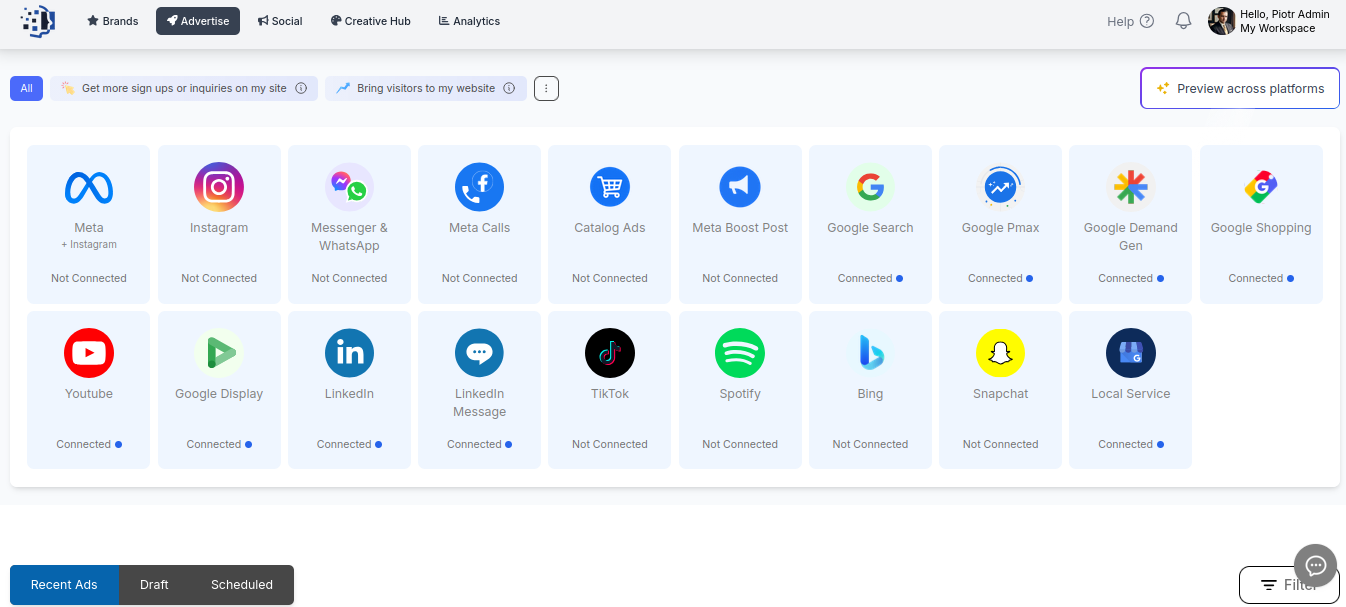
Ready to transform your social media advertising with intelligent automation and save hours every week? Discover how Rekla.AI’s user-friendly platform empowers small and medium-sized businesses to launch and optimize campaigns across 15+ platforms with ease. Visit Rekla.AI now and start leveraging AI for smarter ad targeting, creative production, and campaign management that drives higher engagement and maximizes your ROI. Experience better results while focusing on growing your business.
Explore our AI-powered solutions today and turn social media automation into your competitive advantage at Rekla.AI.
Learn more about automating your ad targeting and optimization and see why Rekla.AI is the trusted choice for businesses seeking cutting-edge advertising technology.
Häufig gestellte Fragen
How can social media automation improve my ad results?
Social media automation streamlines processes like post scheduling and audience targeting, which increases efficiency and engagement. Start by using automation tools to set up a content calendar and target your ideal audience effectively, aiming for improved ad performance within the first few weeks.
What steps should I take to set up automated audience targeting?
Begin by defining your target demographics and setting campaign goals. Utilize audience targeting features within your automation tool to let algorithms analyze user behavior and optimize who sees your ads, facilitating improvements in engagement rates and conversion costs in about two weeks.
How can I generate ad content more quickly using automation?
Implement automation tools that create multiple ad variations simultaneously based on your parameters. Input factors like target audience and product benefits; this can reduce ad creation time from several hours to mere minutes, allowing for more testing and optimization.
What is the advantage of using automated spend allocation for ads?
Automated spend allocation adjusts your budget dynamically based on real-time performance metrics. To maximize your advertising budget, set clear benchmarks and let the system optimize allocations automatically, potentially increasing your campaign results by 30-50% over time.
How do I create automated reports for my ad campaigns?
Utilize tools that integrate with your ad platforms to automatically consolidate performance data into one report. Set up customizable dashboards focused on key performance indicators, enabling quicker insights into campaign health and facilitating real-time adjustments.
What is the best way to start automated A/B testing?
Start by selecting one variable to test, such as a headline or image, using automated A/B testing tools. By rapidly running multiple tests while monitoring results, you can identify winning variations significantly faster, often within days, which leads to more effective campaigns.
 English
 English (UK)
 Polski
 Deutsch
 Español
 Français
 Português
 Svenska
 Dansk
Dansk Nederlands