

Juggling ads across Facebook, Instagram, TikTok, and Google can quickly become overwhelming when every platform demands its own strategy and timing. Managing creative content, timing your posts, and tracking performance often eats up hours you could use to grow your business instead. You need a way to save time without sacrificing results or brand consistency.
The right automation tactics put you back in control. By adopting methods powered by artificial intelligence and smart scheduling, you can deliver the right message to the right audience at the perfect moment on each social platform. These strategies help you create engaging content faster, run smarter ad campaigns, and get the most from every dollar you spend.
You’re about to learn practical, actionable ways to work less while achieving more with your multi-channel ad campaigns. Discover how to build authentic brand presence, improve engagement, and optimize every aspect of your social marketing with real-world automation tools and tips.
Table des matières
- 1. Programmer des posts sur plusieurs plateformes sans effort
- 2. Automatiser le ciblage de l'audience pour un meilleur engagement
- 3. Utiliser l'intelligence artificielle pour générer plus rapidement un contenu publicitaire créatif
- 4. Gérer les budgets grâce à l'automatisation de l'allocation des dépenses
- 5. Rationalisation des rapports sur les campagnes multicanal
- 6. Exécuter des tests A/B intelligents à l'aide d'outils automatisés
- 7. Automatiser l'optimisation des campagnes en temps réel
Résumé rapide
| À emporter | Explication |
|---|---|
| 1. Programmer les posts de manière stratégique | Utilisez des outils de programmation pour adapter votre contenu à chaque plateforme et améliorer l'engagement en publiant lorsque votre public est actif. |
| 2. Automatiser le ciblage de l'audience | Mettez en œuvre le ciblage d'audience piloté par l'IA pour identifier les clients idéaux et diffuser des annonces de manière efficace, en optimisant votre budget publicitaire. |
| 3. Tirer parti de l'IA pour la créativité publicitaire | Utilisez l'IA pour générer rapidement plusieurs variations d'annonces, ce qui permet d'accélérer les tests et l'optimisation sur la base de données de performance réelles. |
| 4. Utiliser des rapports automatisés pour obtenir des informations | Automatisez les rapports de campagne pour visualiser les mesures de performance en temps réel, ce qui permet une prise de décision plus rapide et des ajustements marketing réactifs. |
| 5. Optimiser les campagnes en temps réel | Permettez à l'IA de surveiller et d'ajuster en permanence vos campagnes, en améliorant l'efficacité globale et le retour sur investissement pendant que vous vous concentrez sur d'autres tâches professionnelles. |
1. Programmer des posts sur plusieurs plateformes sans effort
Post scheduling is one of the most straightforward ways to save hours every week while maintaining consistent brand presence across your social channels. Rather than logging into each platform daily to post content manually, scheduling allows you to batch create content and let automation handle distribution at optimal times.
Le véritable pouvoir de la programmation réside dans le choix du moment. Votre public sur LinkedIn peut être plus actif pendant les heures de bureau, tandis que vos followers sur TikTok défilent principalement le soir et le week-end. La planification stratégique permet de gagner du temps et de maintenir la cohérence by ensuring your content reaches each audience when they’re actually paying attention. This isn’t about posting once and calling it done. Tailoring content for each platform rather than simply crossposting the same message everywhere dramatically improves engagement and your return on investment. A product launch announcement performs differently on Instagram Stories than it does in a LinkedIn article, and scheduling tools let you customize messaging for each channel while managing everything from a single dashboard.
For small business owners juggling multiple responsibilities, this approach transforms your social media workflow. Instead of spending 30 minutes daily hopping between platforms, you can dedicate two hours on Monday to planning your entire week. Une programmation efficace nécessite un calendrier de contenu bien organisé aligned with your overall marketing strategy and audience activity patterns. You control when posts go live, eliminate the stress of remembering to publish, and build authentic brand consistency that resonates globally. Your followers see a reliable, professional presence rather than sporadic posting when you happen to remember.
Conseil de pro : Programmez votre contenu pendant les heures creuses, lorsque vous avez les idées claires, puis planifiez vos posts par lots sur toutes les plateformes en sessions de 90 minutes deux fois par semaine, plutôt que de les micro-gérer quotidiennement.
2. Automatiser le ciblage de l'audience pour un meilleur engagement
Manual audience targeting is like fishing with a net so wide you catch everything except what you actually want. Automated audience targeting uses data and artificial intelligence to identify precisely who your ideal customers are, then delivers your ads directly to them at the moment they’re most receptive. This shift from broad casting to laser focused delivery transforms your ad spend from wasteful to strategic.
Voici ce qui fait la force de l'automatisation. Le ciblage de l'audience par l'intelligence artificielle s'appuie sur l'analyse prédictive to recognize patterns in user behavior that humans would miss. The system watches how different audience segments interact with content, which types of users convert into customers, and what messaging resonates with specific demographics. As more data flows in, the algorithm adapts automatically, continuously refining who sees your ads. Rather than you manually adjusting audience parameters weekly based on gut feelings, the system processes real time data across millions of interactions to identify your most valuable prospects. Automated segmentation means a fitness brand’s ads automatically reach people searching for gym equipment instead of blasting the entire neighborhood with the same generic message.
The practical benefit hits your bottom line immediately. Your ad budget stops getting wasted on people unlikely to buy and starts concentrating on high probability customers. Small business owners especially benefit because you don’t need a full marketing team analyzing spreadsheets to figure out audience demographics. The automation handles audience refinement continuously, adapting to shifting patterns without any manual intervention from you. You simply set your campaign goals and budget parameters, and the system does the detective work to find your best customers across Facebook, Instagram, TikTok, and other platforms. This approach not only increases engagement rates but also typically reduces cost per conversion significantly. Over time, your campaigns become increasingly efficient as the system learns which audience segments generate the strongest results.
Conseil de pro : Start with broad targeting parameters and let automation run for at least two weeks before making adjustments, allowing the system sufficient data to identify and optimize toward your best performing audience segments.
3. Utiliser l'IA pour générer plus rapidement du contenu publicitaire créatif
Creative fatigue is real. You know the feeling. You’ve stared at blank design software for an hour trying to come up with your fifth variation of an ad, each one feeling slightly different but fundamentally the same. AI changes this equation entirely by generating multiple ad variations in minutes instead of hours. Rather than relying on your creative instincts alone, you now have a tool that produces dozens of personalized ad versions automatically.
La technologie fonctionne grâce à ce que l'on appelle la génération de textes et d'images personnalisés powered by natural language processing and computer vision. Your AI system learns from your brand voice, target audience, and campaign objectives, then generates ad copy and visuals that match your specifications. You provide parameters like target demographic, product benefits, and campaign tone, and the system produces variations tailored to reach different segments of your audience. A furniture retailer might input “modern minimalist couch,” and the AI generates dozens of ad concepts with different copy angles, color schemes, and visual compositions. Some emphasize comfort, others focus on style, while some highlight durability. You’re not starting from zero anymore. You’re selecting from multiple strong options and refining from there.
The time savings compound quickly. Instead of spending 4 hours manually creating 5 ad variations, you spend 30 minutes reviewing and tweaking 50 AI-generated options. This speed advantage means you can test more variations, identify winning creative combinations faster, and optimize your campaigns continuously. You run A/B tests more frequently, discover which messaging resonates with different audience segments, and scale what works while quickly abandoning what doesn’t. Small business owners who previously couldn’t afford a full creative team suddenly compete with bigger competitors on creative volume and iteration speed. The result isn’t just faster production. It’s smarter campaigns built on real performance data rather than creative hunches.
Conseil de pro : Examinez d'abord les créations générées par l'IA pour vous assurer de la cohérence de la marque, puis effectuez des tests A/B avec votre plus petit budget pour identifier les gagnants avant d'augmenter les dépenses publicitaires pour les versions les plus performantes.
4. Gérer les budgets grâce à l'automatisation de l'allocation des dépenses
Budget management traditionally feels like a guessing game. You allocate money across Facebook, Google, and TikTok based on hunches or last month’s results, then hope for the best. Automated spend allocation removes the guesswork by letting algorithms distribute your budget intelligently based on what’s actually working right now. Instead of static budget splits that remain unchanged for weeks, your money flows automatically toward your best performing channels and campaigns.
Les mécanismes sont simples mais puissants. L'allocation automatisée des dépenses utilise des algorithmes pour répartir dynamiquement le budget. across channels based on real-time performance metrics like click-through rates, conversion rates, and return on ad spend. When Facebook ads suddenly start performing better than Instagram ads, the system detects this and gradually shifts more budget toward Facebook. If a particular audience segment converts at 40 percent but another segment converts at only 8 percent, spending automatically increases for the high converting segment. You’re not manually reviewing performance dashboards daily trying to decide where to shift resources. The system makes those decisions continuously, moment by moment, based on actual results. Think of it like a financial advisor who rebalances your portfolio automatically rather than requiring you to call and request adjustments.
For small business owners managing limited budgets, this approach transforms profitability. Every dollar works harder because it’s always being deployed toward your most effective channels and audiences. You eliminate waste from under-performing channels that might have continued draining budget under manual management. Beyond efficiency, you gain peace of mind knowing your budget isn’t sitting idle or being spent ineffectively while you handle other business responsibilities. The system optimizes continuously, adapting to seasonal changes, market shifts, and campaign performance trends without requiring your constant attention. Many businesses report spending the same total budget but achieving 30 to 50 percent better results simply because their money concentrates on what actually works rather than spreading thin across everything equally.
Conseil de pro : Set clear performance benchmarks and let automation run for at least two weeks before making manual adjustments, allowing the algorithm sufficient data to identify optimal budget distribution patterns across your campaigns.
5. Rationalisation des rapports sur les campagnes multicanal
Pulling data from five different platforms every week to create a single performance report is exhausting. You log into Facebook, screenshot metrics. Then Google Ads, then TikTok, then LinkedIn. You copy numbers into a spreadsheet, manually calculate totals, and spend hours just organizing information that should tell you one simple thing: how are your campaigns performing? Automated multi-channel reporting eliminates this tedium by gathering all your data automatically and presenting it in one unified view.
Automated reporting works through integrations and APIs that connect to your ad platforms continuously. Rather than you manually gathering data, the system pulls performance metrics automatically from every channel where you run ads. Des analyses en temps réel et des rapports personnalisables permettent de suivre les indicateurs clés de performance. across platforms, letting you see exactly what matters most to your business. One report might show you that Facebook generates the highest conversion rate but Google has the lowest cost per acquisition. Another reveals that Tuesday afternoons produce your best engagement while Saturday mornings flop. You’re not wading through spreadsheets to find these insights. You’re looking at a dashboard designed specifically for your business priorities, with the metrics that actually matter highlighted and explained.
The practical benefit extends beyond time savings. Faster access to accurate data means quicker decision-making. When you notice a campaign underperforming at 2 PM instead of discovering it Friday afternoon during your weekly reporting ritual, you can adjust immediately. You catch opportunities faster too. If one audience segment suddenly spikes in performance, automated reporting surfaces this instantly so you can capitalize before momentum fades. Small business owners especially benefit because you can monitor campaign health without hiring a dedicated analyst. You spend your time making strategic decisions rather than data compilation. Your campaigns get faster, smarter adjustments. Your team stays informed with consistent reporting. You confidently explain performance to stakeholders using real-time numbers instead of yesterday’s estimates.
Conseil de pro : Créez des tableaux de bord personnalisés ne présentant que vos trois ou cinq principaux indicateurs clés de performance plutôt que des dizaines de mesures, ce qui permet de repérer plus facilement les tendances et d'agir sur ce qui a vraiment un impact sur votre résultat net.
6. Exécuter des tests A/B intelligents à l'aide d'outils automatisés
A/B testing is the difference between guessing and knowing. You might think your headline with an exclamation point performs better than one without, but you’re probably wrong. Automated A/B testing removes opinion from the equation by systematically comparing different ad variations and measuring which one actually wins with your audience. Rather than manually creating one version at a time and waiting weeks for results, automated tools run multiple tests simultaneously and deliver winners in days.
Cette technologie améliore l'efficacité des tests grâce à l'expérimentation simultanée. Les outils automatisés de test A/B permettent aux spécialistes du marketing de mener des expériences en ajustant dynamiquement les variables. like headlines, images, and calls to action across different audience segments. While you used to test one headline against another and wait for a winner before testing copy length, automated systems test dozens of combinations at the same time. One version of your ad runs with headline A and image B to audience segment one. Another version uses headline C and image D to a different segment. The system tracks every interaction, measures conversion rates, and calculates statistical significance automatically so you know whether results are meaningful or random noise. You’re not guessing anymore. You’re backed by real data showing exactly which creative combinations drive results.
The practical impact on campaign performance is substantial. Your winning ad variations get identified faster, meaning you scale successful creative sooner and stop wasting budget on underperformers quickly. Instead of running one test per month, you might run five tests simultaneously, accelerating your learning curve dramatically. Small business owners with limited budgets benefit most because every testing cycle gets you closer to your optimal creative without burning through your entire ad spend on mediocre variations. You discover that your target audience responds to casual copy over formal messaging, or prefers lifestyle photos over product close-ups. These insights compound over time as you progressively refine based on actual performance data rather than assumptions. Your ads become sharper, more targeted, and more profitable with each testing iteration.
Conseil de pro : Test only one variable at a time (headline, image, or CTA per test) so you know exactly which element drives performance improvements, rather than changing multiple elements simultaneously and losing clarity on what actually works.
7. Automatiser l'optimisation des campagnes en temps réel
Traditional campaign management involves weekly reviews where you analyze performance data, identify problems, and implement changes manually. By then, three days of poor performance have already drained your budget. Real-time campaign optimization changes this equation by letting artificial intelligence monitor your campaigns continuously and make adjustments instantly without waiting for your approval. Your campaigns improve while you sleep.
La mécanique est élégante. L'optimisation des campagnes en temps réel utilise des algorithmes d'IA pour analyser les données des campagnes en direct. and automatically adjust bidding, targeting, and creative elements immediately. Machine learning systems watch thousands of data points simultaneously, recognizing patterns that would take humans hours to spot. If your cost per click suddenly spikes, the system detects this within minutes and adjusts your bid strategy. If a particular audience segment stops converting, spending automatically reduces for that group. If one creative variation suddenly outperforms others, budget shifts toward the winner. These adjustments happen constantly, 24 hours daily, adapting to changing market conditions and user behavior in real-time. You’re not reactively managing campaigns anymore. You’re leveraging an intelligent system that responds to performance fluctuations faster than any human could.
Pour les propriétaires de petites entreprises, cette automatisation transforme la gestion des campagnes d'une tâche fastidieuse en une opération de réglage et de contrôle. Vous définissez les objectifs de votre campagne et les paramètres budgétaires, puis l'optimisation dynamique de la publicité numérique s'appuie sur l'apprentissage automatique pour surveiller les indicateurs clés de performance and enhance effectiveness worldwide. The system handles micro-adjustments that accumulate into significant performance improvements over time. Your campaigns become more efficient as the optimization algorithm learns which adjustments produce the best results. You don’t need a full time analyst tracking performance and making manual adjustments. You don’t stress about missing opportunities or inefficiencies while attending to other business responsibilities. Your ad spend becomes progressively more effective as the system continuously refines its optimization strategy based on accumulated data. Over several weeks, campaigns typically show 20 to 40 percent better ROI as the optimization algorithm learns your audience and fine tunes delivery parameters.
Conseil de pro : Start with broad optimization goals and let the system run for at least three to four weeks before adding constraints, allowing sufficient data collection for the algorithm to identify optimal adjustment patterns for your specific audience.
Vous trouverez ci-dessous un tableau complet résumant les stratégies et les avantages de l'optimisation des médias sociaux et des campagnes de marketing numérique, tels qu'ils sont décrits dans l'article.
| Sujet | Résumé | Avantages |
|---|---|---|
| Programmation des messages | Le contenu est programmé par lots sur les différentes plateformes afin de cibler les périodes d'activité optimales de l'audience. | Permet de gagner du temps, d'améliorer l'engagement du public et d'assurer une présence cohérente de la marque. |
| Automatiser le ciblage | Utilise des analyses pilotées par l'IA pour identifier de manière dynamique les segments d'audience idéaux. | Réduit les dépenses publicitaires inutiles, améliore la pertinence des annonces et augmente les taux de conversion. |
| Génération de contenu publicitaire par l'IA | Utilise l'IA pour créer plusieurs variations d'annonces personnalisées en fonction des objectifs de la campagne et de la voix de la marque. | Permet de gagner du temps lors de la création, d'effectuer des tests rapides et de maintenir la créativité. |
| Automatisation de l'allocation budgétaire | Mettre en œuvre des algorithmes pour ajuster dynamiquement la distribution du budget publicitaire en fonction des performances du canal. | Optimise les dépenses, améliore les performances globales de la campagne et réduit les ajustements manuels. |
| Rapports multicanaux | Centralisation des données en temps réel dans des tableaux de bord unifiés sans agrégation manuelle. | Fournit plus rapidement des informations exploitables, simplifie la prise de décision et améliore le déroulement des campagnes. |
| Automatisation intelligente des tests A/B | Exécute et évalue automatiquement de nombreuses variantes d'annonces afin d'identifier les combinaisons de performances optimales. | Identifie les créations les plus performantes, améliore l'efficacité des campagnes et permet d'économiser des ressources. |
| Optimisation des campagnes en temps réel | Emploie l'IA pour surveiller et affiner les paramètres de la campagne sur la base de données de performance en direct et en continu. | Maintient l'efficacité de la campagne, améliore le retour sur investissement et réduit le besoin d'interventions manuelles. |
Débloquer la puissance de l'automatisation des médias sociaux avec Rekla.AI
The article highlights the daily challenges of managing multi-platform social campaigns, from scheduling posts and automated audience targeting to real-time optimization and budget allocation. If you are struggling to save time, reduce ad spend waste, and improve campaign results while juggling multiple responsibilities, these pain points resonate deeply. Rekla.AI is built precisely to address these obstacles by combining AI-driven features like creative ad generation, dynamic budget management, automated A/B testing, and real-time campaign adjustments. This means you can achieve consistent, scalable, and data-backed advertising success without getting bogged down by manual tasks or guesswork.
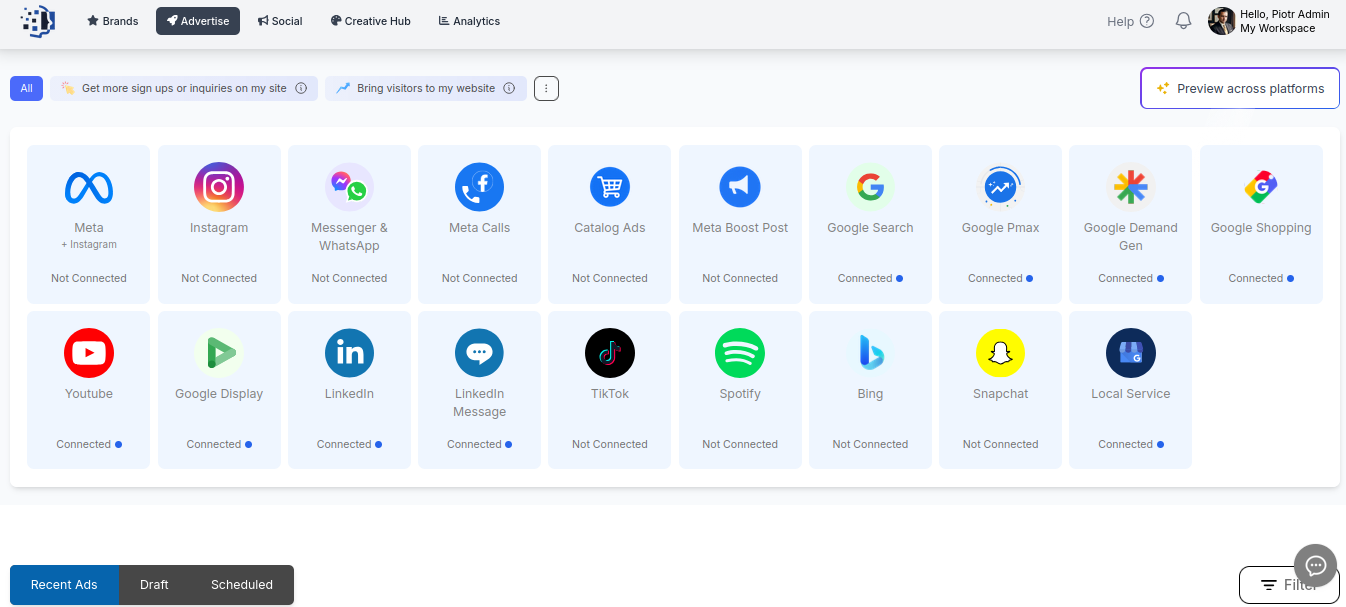
Prêt à transformer votre publicité sur les médias sociaux grâce à une automatisation intelligente et à gagner des heures chaque semaine ? Découvrez comment Rekla.AI’La plateforme conviviale d'EMC permet aux petites et moyennes entreprises de lancer et d'optimiser des campagnes sur plus de 15 plateformes en toute simplicité. Visitez le site Rekla.AI now and start leveraging AI for smarter ad targeting, creative production, and campaign management that drives higher engagement and maximizes your ROI. Experience better results while focusing on growing your business.
Découvrez dès aujourd'hui nos solutions alimentées par l'IA et faites de l'automatisation des médias sociaux votre avantage concurrentiel. Rekla.AI.
En savoir plus sur l'automatisation du ciblage et de l'optimisation de vos publicités et voir pourquoi Rekla.AI est le choix de confiance des entreprises à la recherche d'une technologie publicitaire de pointe.
Foire aux questions
Comment l'automatisation des médias sociaux peut-elle améliorer mes résultats publicitaires ?
Social media automation streamlines processes like post scheduling and audience targeting, which increases efficiency and engagement. Start by using automation tools to set up a content calendar and target your ideal audience effectively, aiming for improved ad performance within the first few weeks.
Quelles sont les étapes à suivre pour mettre en place un ciblage automatisé de l'audience ?
Begin by defining your target demographics and setting campaign goals. Utilize audience targeting features within your automation tool to let algorithms analyze user behavior and optimize who sees your ads, facilitating improvements in engagement rates and conversion costs in about two weeks.
Comment puis-je générer du contenu publicitaire plus rapidement grâce à l'automatisation ?
Implement automation tools that create multiple ad variations simultaneously based on your parameters. Input factors like target audience and product benefits; this can reduce ad creation time from several hours to mere minutes, allowing for more testing and optimization.
Quel est l'avantage d'utiliser l'automatisation de l'allocation des dépenses pour les annonces ?
Automated spend allocation adjusts your budget dynamically based on real-time performance metrics. To maximize your advertising budget, set clear benchmarks and let the system optimize allocations automatically, potentially increasing your campaign results by 30-50% over time.
Comment créer des rapports automatisés pour mes campagnes publicitaires ?
Utilize tools that integrate with your ad platforms to automatically consolidate performance data into one report. Set up customizable dashboards focused on key performance indicators, enabling quicker insights into campaign health and facilitating real-time adjustments.
Quelle est la meilleure façon de commencer des tests A/B automatisés ?
Start by selecting one variable to test, such as a headline or image, using automated A/B testing tools. By rapidly running multiple tests while monitoring results, you can identify winning variations significantly faster, often within days, which leads to more effective campaigns.
Recommandé
- Automatisation des médias sociaux : des étapes pour des campagnes publicitaires efficaces
- Automatisation des médias sociaux : des étapes pour des campagnes publicitaires efficaces
- 7 étapes essentielles pour une liste de contrôle des publicités sur les médias sociaux
- Définir l'automatisation des médias sociaux : Impact de l'IA et réduction des coûts
 English
 English (UK)
 Polski
 Deutsch
 Español
 Français
 Português
 Svenska
 Dansk
Dansk Nederlands