
Did you know that AI can reduce digital ad costs by up to 30% while boosting click-through rates by over 20%? Campaign optimization transforms how small and medium businesses approach digital advertising. This guide unpacks what campaign optimization really means, how AI and automation drive measurable results, and practical steps you can take today to maximize return on ad spend while cutting wasted budget.
Table des matières
- What Is Campaign Optimization?
- Role of AI and Automation in Campaign Optimization
- Common Misconceptions About Campaign Optimization
- Frameworks for Effective Campaign Optimization
- Tools and Technologies for Campaign Optimization
- Case Studies in Campaign Optimization
- Practical Steps for Small to Medium Businesses to Optimize Campaigns
- Optimize Your Digital Ad Campaigns with Rekla.AI
- Frequently Asked Questions About Campaign Optimization
Points clés à retenir
| Point | Détails |
|---|---|
| Campaign optimization is continuous | It’s an ongoing, data-driven process to maximize ad performance and ROI, not a one-time setup. |
| AI cuts costs and boosts performance | Automation reduces ad costs by up to 30% and increases click-through rates by 20-40%. |
| Common myths block success | Higher spend doesn’t guarantee better returns, and optimization involves more than just bid tweaking. |
| Frameworks simplify the process | Structured cycles of testing, data analysis, and adjustment balance creatives, targeting, and budgets. |
| AI-powered tools save time | SMBs can manage multi-platform campaigns efficiently, reducing manual effort by approximately 40%. |
What is Campaign Optimization?
Campaign optimization involves continuous refinement of targeting, creatives, bids, and budgets to maximize return on ad spend (ROAS). It’s not a one-and-done task or something you set and forget. Instead, it’s a systematic, data-driven approach where you constantly adjust your advertising strategy based on performance insights.
Unlike general digital marketing activities such as blogging or social media posting, campaign optimization zeroes in on paid ad campaigns. You’re analyzing metrics like click-through rate (CTR), cost per acquisition (CPA), and ROAS to identify what’s working and what’s draining your budget. For small to medium businesses with limited resources, this focus is critical because every advertising dollar must count.
Think of it as steering a ship. You don’t just point it in one direction and hope for the best. You monitor wind, currents, and position constantly, making small course corrections to stay on target. Campaign optimization works the same way with your ad spend.
Key elements refined during optimization include:
- Audience targeting precision to reach the right people at the right time
- Creative asset testing to discover which images, videos, or copy resonate most
- Bidding strategies that balance cost control with competitive visibility
- Budget allocation across platforms and campaigns for maximum efficiency
- Ad placement adjustments based on performance data from different channels
Understanding why optimize ad campaigns helps you recognize that optimization is the bridge between spending money on ads and actually seeing profitable returns. Without it, you’re essentially guessing, and guessing gets expensive fast. The digital ad optimization guide framework shows how structured approaches replace guesswork with actionable insights.
Role of AI and Automation in Campaign Optimization
AI and automation have revolutionized how businesses optimize campaigns, especially for SMBs that lack large marketing teams. AI can reduce ad costs by up to 30% and increase click-through rates by 20-40% by making split-second decisions humans simply can’t match at scale.
Automation cuts manual workload by approximately 40%, freeing your team to focus on strategy rather than repetitive bid adjustments. AI analyzes thousands of data points in real time, spotting patterns and opportunities that would take weeks to identify manually. It adjusts bids during peak conversion windows, shifts budgets toward high-performing creatives, and refines audience segments based on actual behavior.
The performance improvements are substantial. Beyond the 20-40% CTR boost, businesses see conversion improvements of around 25% when AI handles optimization tasks. These aren’t incremental gains; they’re game-changers for SMBs competing against larger competitors with bigger budgets.
Key AI-driven features that benefit SMBs include:
- Real-time bid optimization that responds instantly to market conditions and competitor activity
- Predictive audience targeting that identifies high-value prospects before they convert
- Automated creative testing that cycles through variations to find winning combinations
- Cross-platform budget allocation that moves spend to wherever it performs best
- Anomaly detection that alerts you to sudden changes in campaign performance
Pro Tip: Choose AI tools with intuitive interfaces and clear dashboards. The most powerful AI won’t help if your team can’t understand or act on its recommendations. Look for platforms that explain why they make certain optimization suggestions.
Les role of AI in SMB marketing extends beyond just cost savings. It levels the playing field, giving smaller businesses access to sophisticated optimization techniques previously available only to enterprises with dedicated data science teams. The benefits of ad automation compound over time as the AI learns from your specific business patterns and customer behaviors.
Common Misconceptions About Campaign Optimization
Several myths prevent SMBs from optimizing effectively. Let’s clear them up so you can avoid these costly mistakes.
The biggest misconception is that more ad spend automatically means better results. You hit an ROI plateau where additional budget actually decreases efficiency. Throwing money at underperforming campaigns just wastes it faster. Optimization focuses on getting more from what you’re already spending before considering budget increases.
Campaign optimization is a continuous process, not a one-time setup. Market conditions change, audience preferences shift, and competitors adjust their strategies. What worked last month might underperform today. Continuous monitoring and adjustment aren’t optional; they’re essential for sustained success.
Another myth suggests optimization is just about adjusting bids. While bidding matters, your creative assets and audience targeting often have bigger impacts on performance. A perfectly optimized bid on a terrible ad still fails. Holistic optimization considers every variable simultaneously.
Common myths and their corrections:
- Myth: Set it and forget it works fine. Reality: Performance degrades without ongoing attention and adjustments.
- Myth: Only large companies need optimization. Reality: SMBs benefit more because they have less budget to waste.
- Myth: Manual optimization is just as effective. Reality: AI spots patterns and opportunities humans miss at scale.
- Myth: Optimization guarantees immediate results. Reality: Meaningful improvements typically emerge over weeks of testing and refinement.
- Myth: Higher frequency always improves results. Reality: Ad fatigue from excessive exposure can decrease performance.
Continuous monitoring is not just recommended; it’s the foundation of effective campaign optimization. Without it, you’re navigating blind.
Understanding why optimize ad campaigns helps you recognize that optimization is about working smarter, not just harder or with more budget. The businesses that succeed view optimization as an ongoing discipline, not a project with an end date.
Frameworks for Effective Campaign Optimization
A structured framework removes guesswork and provides a repeatable process for continuous improvement. The core cycle includes four stages: data collection, hypothesis formation, testing, and adjustment based on results.
Start by gathering comprehensive performance data across all your campaigns and platforms. Look at engagement rates, conversion paths, audience demographics, and time-of-day patterns. Multi-channel data integration is particularly powerful because it reveals how different platforms work together, leading to 15% higher conversions compared to siloed optimization.
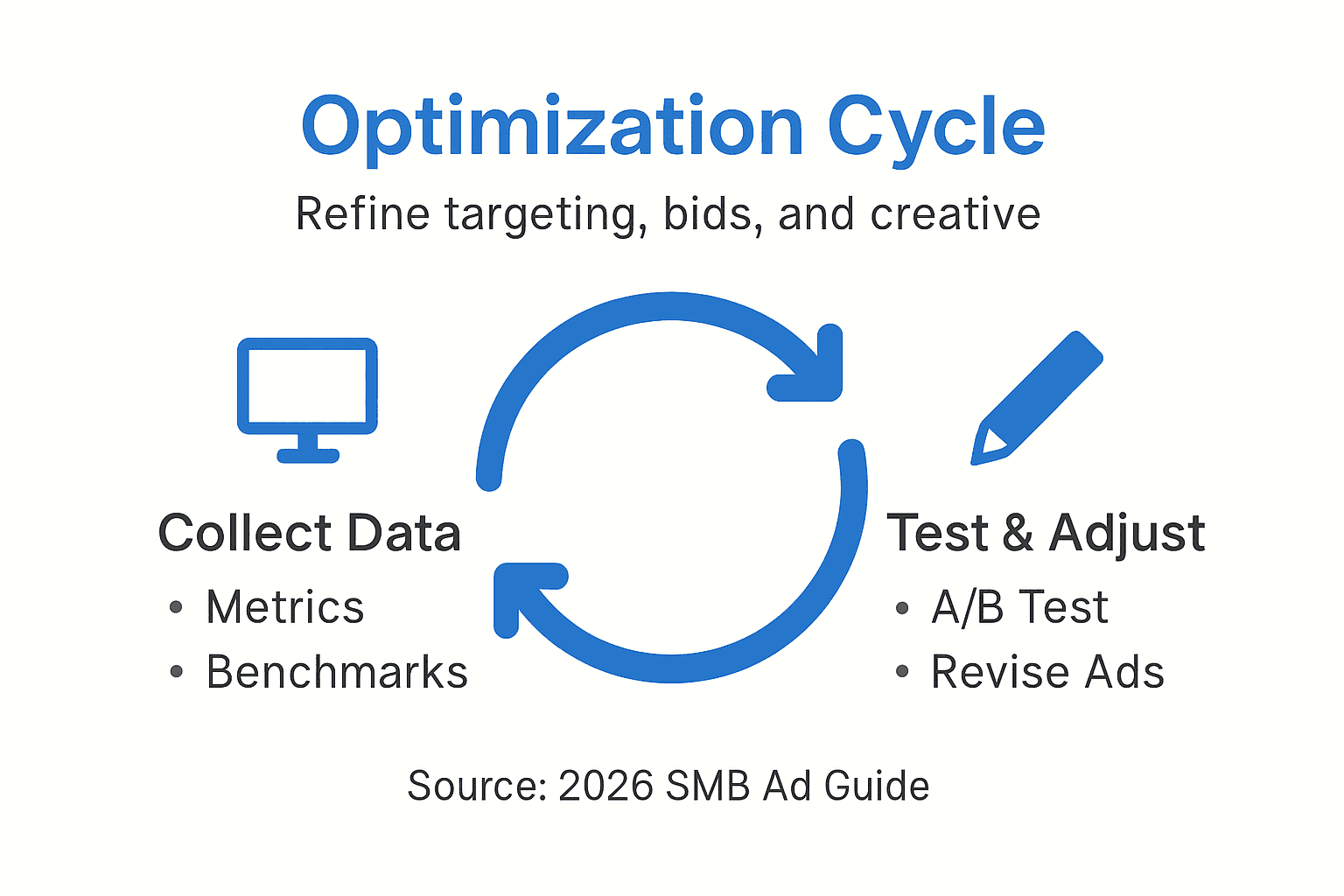
Next, form hypotheses based on what the data suggests. Maybe your audience engages more on weekends, or perhaps video ads outperform static images for a specific product. These hypotheses guide your testing priorities.
Test your hypotheses through controlled A/B experiments. Change one variable at a time so you can isolate what actually drives improvement. Run tests long enough to gather statistically significant data, typically at least a week or a few hundred conversions.
Finally, adjust your campaigns based on test results, then start the cycle again with new data. This iterative approach builds momentum as you stack successful optimizations on top of each other.
| Aspect | Manual Optimization | Optimisation par l'IA |
|---|---|---|
| Vitesse | Hours to days for adjustments | Real-time, instant responses |
| Data processing | Limited to dozens of variables | Analyzes thousands simultaneously |
| Évolutivité | Difficult across multiple campaigns | Effortless across 15+ platforms |
| Accuracy | Subject to human error and bias | Consistent, data-driven decisions |
| Cost efficiency | Requires dedicated staff time | Automates 40% of manual tasks |
Key framework steps:
- Establish baseline metrics for current campaign performance across all active platforms.
- Identify the top three underperforming areas where optimization will have the biggest impact.
- Design specific tests to address each area, focusing on one variable per test.
- Implement changes systematically and monitor results for at least one full business cycle.
- Document learnings and apply successful strategies to other campaigns.
- Repeat the cycle continuously, building on previous optimizations.
Pro Tip: Balance your optimization focus across all four pillars: creative quality, audience precision, bidding strategy, and budget allocation. Neglecting any one pillar limits your overall results, no matter how well you optimize the others.
The digital ad optimization guide provides deeper frameworks you can adapt to your specific business needs and campaign goals.
Tools and Technologies for Campaign Optimization
The right tools transform campaign optimization from overwhelming to manageable. AI-powered platforms have become essential for SMBs seeking to compete effectively without large marketing teams.
Modern optimization platforms offer automated creative generation, using AI to produce multiple ad variations tailored to different audience segments. They handle audience targeting by analyzing behavior patterns and predicting which prospects are most likely to convert. Real-time performance analytics provide instant visibility into what’s working and what needs adjustment.
These technologies reduce manual effort by approximately 40%, letting small teams accomplish what previously required multiple specialists. Instead of spending hours adjusting bids and reallocating budgets, you focus on strategy and creative direction while AI handles execution.
Key features to look for in optimization tools:
- Multi-platform integration that manages campaigns across Facebook, Google, TikTok, LinkedIn, and other major channels from one dashboard
- Automated reporting that surfaces insights without requiring you to dig through raw data
- Budget management capabilities that prevent overspending while maximizing reach
- A/B testing frameworks built directly into the platform for easy experiment setup
- User-friendly interfaces that don’t require technical expertise or data science backgrounds
- Alert systems that notify you of significant performance changes requiring attention
Choose tools that support multi-platform campaigns rather than single-channel solutions. Your audience isn’t confined to one platform, and neither should your optimization efforts be. Cross-platform optimization reveals which channels work best for different campaign objectives and how they complement each other.
Les digital campaign analytics process becomes much simpler when your tools consolidate data from multiple sources into unified dashboards. Similarly, gestion publicitaire multiplateforme capabilities let you apply successful strategies across channels quickly, multiplying your optimization impact.
Case Studies in Campaign Optimization
Real results prove the power of systematic campaign optimization. A mid-sized e-commerce brand implemented AI-driven optimization across their Google and Facebook campaigns, achieving a 35% reduction in cost per acquisition while increasing conversions by 27%. They didn’t increase their budget; they just spent it smarter.
The brand started with fragmented campaigns managed manually across platforms. After adopting an integrated optimization approach, they consolidated audience data, automated bid adjustments, and implemented continuous creative testing. Within three months, their ROAS improved from 2.8x to 4.1x.

Another SMB in the professional services sector reduced their manual campaign management time by 40% while improving lead quality. They used AI to identify high-intent prospects earlier in the buyer journey, allowing them to allocate budget more precisely. Their cost per qualified lead dropped by 42% over six months.
Key takeaways from successful campaign optimization:
- Start with clear baseline metrics so you can measure improvement accurately
- Focus on one or two high-impact areas first rather than trying to optimize everything simultaneously
- Give tests sufficient time to generate meaningful data before making conclusions
- Document what works so you can replicate success across other campaigns
- Combine AI automation with human strategic oversight for best results
- Monitor competitive activity to ensure your optimization keeps pace with market changes
These businesses didn’t have unlimited budgets or large teams. They succeeded by applying structured optimization frameworks consistently and leveraging AI to scale their efforts. The lessons apply to any SMB willing to treat campaign optimization as an ongoing discipline rather than an occasional project.
Learn more about proven strategies from businesses achieving similar results with boost advertising ROI with AI approaches tailored for resource-constrained marketing teams.
Practical Steps for Small to Medium Businesses to Optimize Campaigns
Ready to start optimizing? Follow these five practical steps to improve your campaign performance starting today.
First, collect comprehensive baseline data from all your active campaigns. You need to know where you stand before you can measure improvement. Track CTR, conversion rate, CPA, and ROAS for each campaign and platform. Look at audience demographics and engagement patterns to identify opportunities.
Second, form clear hypotheses about what might improve performance. Base these on your data analysis, not assumptions. For example, if mobile users have higher engagement but lower conversion, your hypothesis might be that mobile landing page load times are causing drop-off.
Third, design and run A/B tests to validate your hypotheses. Test one variable at a time so you know what actually drives changes. Common variables include ad copy, images, audience segments, bid strategies, and landing page elements. Run each test until you have statistical significance, typically a few hundred conversions or one to two weeks.
Fourth, implement AI automation for tasks that benefit from real-time adjustment. Automated bidding responds faster to market conditions than manual changes. Creative rotation powered by AI finds winning combinations more efficiently than manual testing. Budget allocation algorithms shift spend to high-performers automatically.
Fifth, establish a regular review cycle for multi-channel performance. Weekly check-ins catch issues early, while monthly deep dives identify bigger trends and opportunities. Use these reviews to plan your next round of optimization tests.
Detailed optimization sequence:
- Audit current campaigns to establish accurate baseline metrics and identify obvious inefficiencies.
- Prioritize optimization opportunities based on potential impact and ease of implementation.
- Set up tracking and attribution so you can measure results accurately across all touchpoints.
- Launch initial tests focusing on your highest-spend or lowest-performing campaigns first.
- Analyze results after sufficient data accumulation and roll out winners to broader campaigns.
- Implement automated alerts for performance anomalies so you can respond quickly to issues.
- Scale successful optimizations across platforms while continuing to test new hypotheses.
Pro Tip: Start with AI tools designed specifically for SMB needs rather than enterprise platforms with overwhelming complexity. Look for solutions offering templates, guided setup, and responsive support to help you get up to speed quickly without a steep learning curve.
Focus your optimization efforts on metrics that directly impact business goals: CTR indicates ad relevance, conversion rate shows offer appeal, and CPA reveals cost efficiency. Track ROAS above all else because it directly ties advertising spend to revenue generation.
Avoid common pitfalls by maintaining consistent testing schedules and documenting results systematically. Don’t make changes based on a few days of data, and resist the urge to over-optimize by changing too many variables simultaneously. Following these steps and best practices from the optimize digital ad campaigns guide helps you build sustainable, profitable advertising strategies.
Optimize Your Digital Ad Campaigns with Rekla.AI
Putting campaign optimization into practice becomes straightforward with the right platform. Rekla.AI offers an AI-powered solution built specifically for small to medium businesses seeking efficient, effective ad management across multiple platforms.
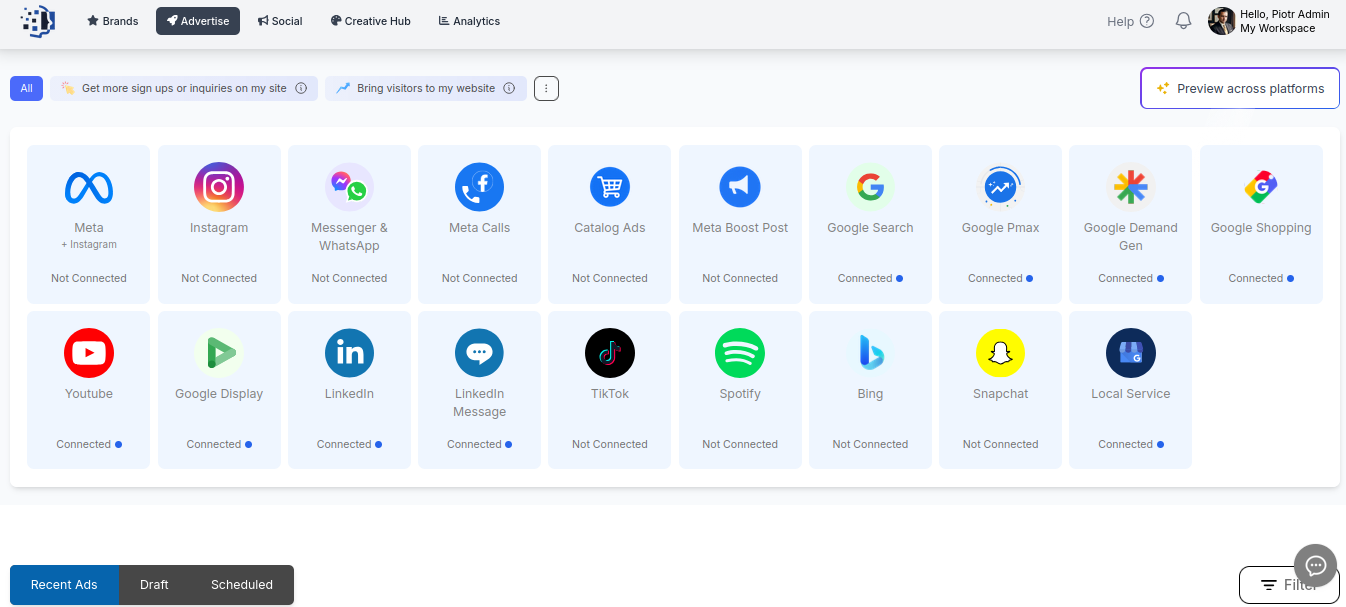
Rekla.AI combines automated bidding, AI-generated creatives, and intelligent audience targeting into one user-friendly dashboard. Manage campaigns across Facebook, Google, TikTok, LinkedIn, and 15+ other platforms without jumping between tools or mastering each platform’s unique interface. The platform reduces manual campaign management work by approximately 40%, freeing your time for strategic planning and business growth.
Real-time optimization adjusts your campaigns continuously based on performance data, implementing the frameworks and best practices covered throughout this guide. Budget management features prevent overspending while maximizing reach, and built-in A/B testing helps you discover what resonates with your audience. Whether you’re launching your first digital campaign or refining existing efforts, Rekla.AI provides the automation and insights you need to compete effectively. Explore practical implementation strategies through the boost advertising ROI with AI automation resource, review comprehensive planning frameworks in the Guide stratégique pour la publicité numérique, and get started quickly with the digital campaign setup guide.
Frequently Asked Questions About Campaign Optimization
What is the difference between campaign optimization and regular digital marketing?
Campaign optimization is a data-driven, continuous refinement process focused specifically on paid advertising campaigns to improve metrics like ROAS, CTR, and CPA. Regular digital marketing encompasses broader activities including SEO, content creation, social media management, and brand building that don’t necessarily involve paid ads or the same level of quantitative performance tracking.
How quickly can SMBs expect results from campaign optimization?
Initial improvements often appear within two to three weeks as quick wins from obvious inefficiencies get addressed. However, substantial, sustainable results typically emerge over two to three months of consistent optimization cycles. The timeline depends on campaign complexity, budget size, and how much historical data exists to guide decisions.
Can campaign optimization be done without AI tools?
Yes, manual optimization is possible and was standard practice before AI tools became accessible. However, it requires significantly more time, deeper technical expertise, and cannot match the speed or scale of AI-powered optimization. Manual approaches also miss real-time opportunities and patterns that only emerge when analyzing thousands of data points simultaneously.
What metrics should SMBs prioritize to measure optimization success?
Focus primarily on ROAS as your north star metric because it directly connects ad spend to revenue. Support this with CTR to measure ad relevance, conversion rate to assess offer appeal, and CPA to track cost efficiency. These four metrics together provide a complete picture of campaign health and optimization impact.
Are there risks of over-optimizing campaigns?
Yes, excessive tweaking creates unstable data signals that prevent algorithms from learning effectively, potentially harming performance. Making too many simultaneous changes makes it impossible to identify what actually drove results. Follow structured testing cycles with adequate time between changes, and use A/B testing frameworks to isolate variables rather than changing everything at once.
 English
 English (UK)
 Polski
 Deutsch
 Español
 Français
 Português
 Svenska
 Dansk
Dansk Nederlands