

Every North American e-commerce marketer knows the challenge of keeping ad performance consistent across Facebook, Google, TikTok, and LinkedIn while budgets stay tight. Defining multi-channel advertising success means more than just tracking vanity metrics—it is about identifying which actions truly move the needle for your business. This guide offers a clear path to setting smart metrics, understanding channel variation, and applying AI to boost campaign results without inflating costs.
Table des matières
- Defining Multi-Channel Advertising Success
- Key Platforms and Multi-Channel Variations
- How AI Enhances Multi-Channel Campaigns
- Real-World Benefits for Small Businesses
- Les pièges les plus courants et comment les éviter
Points clés à retenir
| Point | Détails |
|---|---|
| Define Success Metrics | Identify and track key performance indicators (KPIs) aligned with business goals to measure the effectiveness of your multi-channel campaigns. |
| Audience Understanding | Tailor your messaging and creative strategies to the unique demographics and behaviors of audiences on each platform. |
| Optimize Budget Allocation | Use data-driven insights to allocate ad budgets effectively across platforms, prioritizing those that deliver the highest return on investment. |
| Éviter les pièges courants | Concentrate budgets on a few high-potential platforms initially, ensuring platform-specific creatives and consistent messaging to maximize campaign performance. |
Defining Multi-Channel Advertising Success
Success in multi-channel advertising means reaching your audience wherever they are, not just on one platform. For small-to-medium e-commerce businesses, this means coordinating campaigns across Facebook, Google, TikTok, LinkedIn, and other channels simultaneously.
But what actually counts as success? It depends on your business goals. The metrics that matter most to you will shape how you measure and optimize your campaigns.
Understanding Success Metrics
Multi-channel success isn’t one-size-fits-all. Your business might prioritize different outcomes than your competitor down the street.
Key performance indicators you might track include:
- Taux de clics (CTR): How many people click your ads relative to impressions
- Taux de conversion: Percentage of clicks that result in actual purchases or leads
- Cost per acquisition (CPA): How much you spend to gain one customer
- Return on ad spend (ROAS): Revenue generated for every dollar spent on ads
- Brand awareness metrics: Reach, impressions, and audience engagement across platforms
When you spread ads across multiple channels, measuring these metrics becomes more complex. You need to track not just overall performance, but how each platform contributes to your bottom line.
Track the metrics that align with your actual business objectives, not just vanity numbers like total impressions.
The Integration Challenge
True multi-channel success requires more than running separate campaigns on each platform. Your messaging needs consistency across channels while adapting to each platform’s unique audience and format.
Consider how effective cross-platform advertising strategies create cohesive customer experiences. When someone sees your ad on Facebook, then encounters your brand on Google search results, they recognize you.
This consistency builds trust and reinforces your message. Fragmented messaging across channels confuses potential customers and wastes budget.
Balancing Reach and Efficiency
Multi-channel campaigns face a real tension: spreading your budget across more platforms can increase reach, but it can also dilute your effectiveness on any single channel.

Your goal is finding the right mix for your business. Some e-commerce brands perform exceptionally well on TikTok but struggle on LinkedIn. Others see strong returns from Google Shopping but minimal performance on Spotify.
Success means identifying which channels drive actual customer acquisition for your specific products. This requires testing, measurement, and honest evaluation of channel performance.
The Role of Audience Understanding
Successful multi-channel advertising starts with knowing your audience. Different platforms attract different demographics and user behaviors.
Your YouTube audience might include busy professionals watching videos during commutes. Your TikTok audience likely skews younger and expects entertaining, quick-cut content. Your LinkedIn audience consists of professionals evaluating business solutions.
When you understand these audience differences, you can tailor your creative and messaging appropriately.
Measurement Framework
According to marketing research on customer loyalty and digital integration, success in multi-channel advertising involves understanding how customers move between platforms and convert through different touchpoints.
This attribution problem matters. Did your customer convert because of the Facebook ad they saw, or the Google search ad they clicked the next day, or both?
Attribution models help answer this question. First-click, last-click, linear, and time-decay models each tell different stories about which channels deserve credit for conversions.
For e-commerce businesses with limited budget, getting attribution right prevents you from defunding the channels that actually drive sales.
Conseil de pro : Start with simple last-click attribution to identify your strongest converting channels, then experiment with multi-touch attribution models as you scale—this prevents early optimization mistakes.
Compare popular attribution models for multi-channel campaigns:
| Model | What It Credits | Principal avantage | Limitation |
|---|---|---|---|
| First-Click | First touchpoint | Simple, easy to track | Ignores later influences |
| Last-Click | Last touchpoint | Easy to implement | Misses brand-building steps |
| Linéaire | All touchpoints equally | Fair, holistic view | Overvalues every touch |
| Time-Decay | Closer touchpoints more | Reflects recency | Can undervalue discovery |
Key Platforms and Multi-Channel Variations
Not all advertising platforms are created equal. Each one attracts different audiences, operates under different rules, and demands different creative approaches. Understanding these differences is crucial for building an effective multi-channel strategy.
Your e-commerce business won’t perform identically on every platform. What works on TikTok falls flat on LinkedIn. What converts on Google Shopping might waste money on Spotify.
The Major Platform Categories
Digital advertising platforms operate across distinct categories, each serving different user behaviors and business goals.
The main platform types include:
- Social media platforms: Facebook, Instagram, TikTok, Pinterest, Snapchat
- Search engines: Google Search, Bing, DuckDuckGo
- Video platforms: YouTube, Vimeo, streaming services
- Professional networks: LinkedIn, professional community forums
- Audio platforms: Spotify, podcasts, audio streaming services
- Shopping platforms: Google Shopping, Amazon Advertising, eBay
- Display networks: Google Display Network, programmatic exchanges
Each category demands different creative formats, messaging strategies, and audience targeting approaches. A video ad works on YouTube but not in Google Search results.
Platform Demographics and Audience Behavior
Understanding who uses each platform determines where your ads will actually reach customers.
Facebook skews older, with strong penetration among North American adults aged 35+. TikTok attracts younger audiences, particularly Gen Z and younger millennials. LinkedIn reaches professionals making business purchasing decisions. Pinterest connects with people actively planning purchases, heavily skewed toward women.
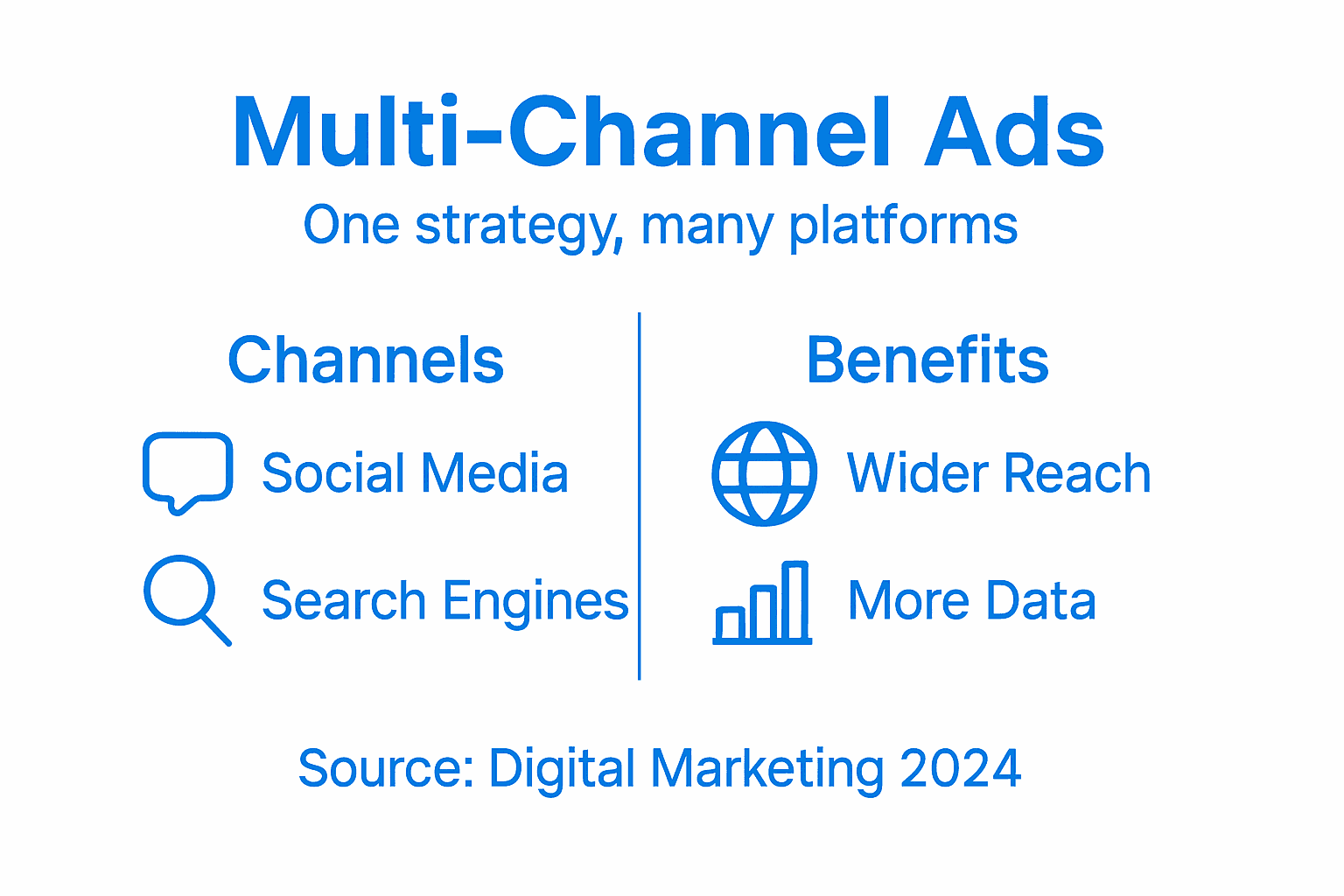
These demographic differences mean your target customer might only be reachable on specific platforms. Selling enterprise software? LinkedIn dominates. Targeting Gen Z fashion enthusiasts? TikTok is essential.
Here’s how major advertising platforms differ by audience and creative approach:
| Plate-forme | Primary Audience | Best Performing Creative |
|---|---|---|
| Adults 35+, broad demographics | Image and video ads, carousel | |
| TikTok | Gen Z, younger millennials | Short-form, native videos |
| Professionals, B2B decision makers | Thought leadership articles, lead forms | |
| Google Search | Intent-driven shoppers | Text and shopping ads |
| Women, planners, home-focused | Inspirational, vertical images | |
| YouTube | Broad, especially young adults | Skippable video ads |
| Millennials, lifestyle-focused | Visuals, reels, stories | |
| Spotify | Young adults, audio listeners | Short audio spots, sponsored playlists |
Platform demographics determine where your budget actually reaches your customers, not just where you hope they are.
Algorithmic Platform Variations
Algorithms differ significantly across platforms, affecting how your ads get distributed and who sees them. According to research on algorithmic platforms in global digital capitalism, these algorithmic variations reflect different business models, regulatory environments, and user behavior patterns.
Facebook’s algorithm prioritizes engagement and time spent. TikTok’s algorithm emphasizes content discovery over follower relationships. Google’s search algorithm responds to user intent and keyword relevance.
These algorithmic differences mean the same ad creative will perform differently on each platform, even targeting the same audience.
Regional Platform Variations
Global multi-channel advertising requires understanding that platforms operate differently in different markets. Digital platform governance frameworks vary by region, affecting platform access, data collection capabilities, and advertising restrictions.
North American businesses benefit from seamless access to Facebook, Google, TikTok, and most major platforms. However, advertising rules, data privacy restrictions, and algorithm transparency differ by country.
If you expand internationally, expect to adjust your platform mix based on regional platform availability and user adoption rates.
Platform-Specific Ad Format Variations
Each platform supports different ad formats optimized for how users consume content there.
Consider these format differences:
- Facebook/Instagram: Image ads, carousel ads, video ads, collection ads, dynamic ads
- TikTok: Native-style videos, branded hashtag campaigns, in-feed ads
- Google: Text ads, responsive search ads, shopping ads, video ads
- LinkedIn: Sponsored content, message ads, lead generation forms
- YouTube: Skippable pre-roll, non-skippable bumper ads, video action ads
Matching your creative to platform-native formats dramatically improves performance. A perfectly designed static image ad works on Facebook but wastes money on TikTok, where native-style video content converts.
Conseil de pro : Start your multi-channel strategy with 2-3 platforms where your target audience is most active, then expand only after you’ve mastered platform-specific creative formats for those initial channels.
How AI Enhances Multi-Channel Campaigns
Managing ads across 15+ platforms manually is like juggling while riding a bicycle. Something always drops. AI changes that equation by automating the repetitive work and making smarter decisions faster than any human marketer could.
For e-commerce businesses running on tight budgets, AI transforms multi-channel campaigns from overwhelming to manageable. It handles the complexity so you can focus on strategy.
Automating Campaign Creation and Optimization
AI generates ad copy, designs creative variations, and tests different messaging automatically. You describe your product once, and AI creates dozens of variations tailored to different audiences and platforms.
This saves weeks of manual work. Instead of writing 50 ad variations by hand, AI generates them in minutes. Your team spends time analyzing results instead of creating initial drafts.
Optimization happens in real time. AI continuously tests which ads perform best and shifts budget toward winners without waiting for your next review cycle. According to research on AI’s role in multi-channel marketing, AI facilitates automated content adaptation and real-time decision-making across channels, dramatically improving overall campaign effectiveness.
Audience Segmentation and Personalization
AI analyzes your customer data to identify patterns you’d never spot manually. It segments audiences by behavior, demographics, purchase history, and engagement level automatically.
Then it personalizes messaging for each segment. Someone who abandoned a cart sees different messaging than someone visiting for the first time. A previous buyer sees loyalty offers while prospects see product education.
This level of personalization scales across all your channels simultaneously.
AI personalizes campaigns at scale, delivering the right message to the right person on the right platform at the right time.
Budget Allocation Across Platforms
Deciding how much budget each platform deserves is a constant guessing game without data. AI removes the guessing by analyzing performance data and recommending optimal budget allocation.
It learns which platforms drive conversions for your specific business. If TikTok generates sales at $8 per acquisition while Instagram costs $15, AI automatically shifts more budget to TikTok.
This optimization happens continuously, adapting as seasonal trends and market conditions change.
Data Integration and Cross-Platform Insights
Your customer data lives in multiple systems: your CRM, email platform, website analytics, social media accounts, and ad accounts. AI unifies this data, creating a complete picture of customer journeys across platforms.
This unified view reveals insights impossible to see in isolation. You discover that customers who engage with your Instagram content convert better on Google Shopping. Or that email opens correlate with Facebook ad clicks days later.
These insights inform smarter campaign strategy across all channels.
Predictive Analytics for Campaign Planning
AI predicts which campaigns will succeed before you launch them. It analyzes historical performance data and identifies patterns that indicate success.
Will this product perform on TikTok? AI predicts based on similar product launches. Should you increase budget for this audience? AI recommends based on predicted conversion rates.
This predictive capability reduces wasted spend on underperforming campaigns.
Time and Resource Savings
The biggest benefit for small-to-medium businesses is reclaimed time. Tasks that consumed hours now take minutes:
- Creating ad variations: hours to minutes
- Analyzing multi-channel performance: hours to minutes
- Budget reallocation: hours to minutes
- A/B testing execution: hours to minutes
Your marketing team moves from execution and data entry to strategy and analysis.
Conseil de pro : Start with AI handling your lowest-performing channel or newest platform to test its effectiveness before trusting it with your largest ad budgets.
Real-World Benefits for Small Businesses
Multi-channel advertising sounds complex. But for small e-commerce businesses, it’s actually the path to competing against larger competitors who have bigger budgets. You level the playing field by being smarter, not by spending more.
Small businesses see tangible returns when they implement multi-channel campaigns correctly. The benefits go beyond just more sales—they transform how you operate.
Increased Revenue Without Proportional Budget Increases
Small businesses can’t outspend large competitors. So they must outsmart them. Multi-channel campaigns deliver exactly that advantage by reaching customers on multiple touchpoints simultaneously.
When your competitors are present on one or two platforms, you’re everywhere your customers are. This multiplied presence drives more conversions without requiring exponential budget increases.
A small online boutique spending $2,000 monthly on Facebook alone might generate $8,000 in revenue. Spread that same $2,000 across Facebook, TikTok, Instagram, and Google strategically, and revenue often jumps to $15,000 or more as you reach different customer segments on different platforms.
Lower Customer Acquisition Costs
Months of trial and error taught most small business owners a harsh lesson: not all platforms work equally for your business. Multi-channel testing reveals which channels drive actual customers.
Once identified, shifting more budget to high-performing channels automatically reduces your overall cost per acquisition. You stop wasting money on platforms that don’t convert for your specific products.
Finding your highest-converting channels and scaling them strategically is how small businesses achieve profitability faster.
Reduced Dependency on Single Platforms
If your entire advertising strategy relies on Facebook, you’re vulnerable. Algorithm changes, policy updates, or account issues devastate your revenue overnight. Small businesses can’t afford that risk.
Multi-channel campaigns distribute this risk. If TikTok’s algorithm shifts and performance drops temporarily, your Google Shopping and email campaigns continue generating revenue.
This diversification provides stability and predictability that single-channel businesses never achieve.
Better Data for Smarter Decisions
Managing digital advertising best practices for small e-commerce requires understanding what actually works for your specific business. Multi-channel campaigns generate rich data across multiple platforms.
This data reveals customer behavior patterns you’d never see in isolation. You discover which audiences convert best, which platforms drive repeat customers, and which messaging resonates with different segments.
Small business owners use these insights to make smarter decisions about product selection, messaging, and market expansion.
Competitive Advantage in Crowded Markets
E-commerce is crowded. Most small competitors focus on one or two platforms. You gain an unfair advantage by being present where customers are actively shopping or browsing across multiple channels.
This presence builds brand recognition faster. Customers see you repeatedly across platforms, creating familiarity and trust that single-platform competitors can’t achieve.
Time Savings for Lean Teams
Small business owners wear many hats. When AI handles multi-channel campaign management, execution, and optimization, your team focuses on strategy, product development, and customer service.
This reclaimed time directly impacts profitability. Hours spent manually managing campaigns translate into hours spent on higher-impact activities.
Conseil de pro : Track your profitability by channel for 30 days before optimizing, so you have baseline data showing which platforms already work best for your specific business.
Les pièges les plus courants et comment les éviter
Multi-channel advertising sounds straightforward until you actually launch campaigns across multiple platforms. Then reality hits. Small business owners quickly discover that more channels don’t automatically mean more sales.
Most failed multi-channel campaigns share common mistakes. Knowing these pitfalls helps you avoid expensive learning experiences.
Spreading Budget Too Thin
The biggest mistake is launching on every platform simultaneously with equal budgets. You end up underfunded on every channel instead of dominant on a few.
A $5,000 budget split evenly across 10 platforms gives you $500 per channel. That’s not enough to test properly or build momentum on any single platform.
Start concentrated, then expand. Launch on 2-3 platforms where your target audience actually spends time. Build momentum, prove the channel works, then add new platforms.
Ignoring Platform-Specific Creative Needs
This mistake wastes massive budget. Using identical creative across all platforms guarantees underperformance on most of them.
A polished, square static image works on Facebook. That same image fails on TikTok, where native-style vertical video converts better. A LinkedIn thought leadership post doesn’t work on Pinterest.
Each platform demands format and messaging tailored to how users consume content there.
Platform-specific creative formats are non-negotiable—using generic creative across channels guarantees wasted budget.
Inconsistent Messaging Across Channels
Your brand message should be consistent even as creative adapts. When customers see conflicting messaging across platforms, they lose trust.
If your Facebook ads emphasize affordability but your Instagram content suggests luxury positioning, audiences get confused. Developing coherent, aligned content strategies prevents this messaging inconsistency that undermines campaign effectiveness.
Define your core message upfront. Every platform gets that message adapted to local context, not contradicted.
Failing to Define Success Metrics Upfront
Without clear KPIs, you can’t distinguish good performance from mediocre. Many small business owners check dashboards weekly, uncertain what they’re actually looking at.
Defining clear KPIs upfront prevents this confusion. Decide before launch: Are you optimizing for clicks, conversions, or brand awareness? What’s your target cost per acquisition?
Without these benchmarks, you’ll make emotional decisions rather than data-driven choices.
Négliger la segmentation de l'audience
Treating all your customers identically wastes opportunity. A first-time visitor needs different messaging than a repeat customer. Someone who abandoned a cart needs a different offer than someone browsing casually.
Multi-channel campaigns work best when segments receive tailored messaging. The same platform can serve different audiences with completely different creative.
Not segmenting means blending all audiences together, satisfying none of them.
Skipping Campaign Testing and Optimization
Launching campaigns and ignoring performance is a guaranteed way to waste money. Small budgets require discipline around continuous optimization.
Let campaigns run for at least 2 weeks before evaluating. Then identify underperformers and pause them. Double down on what works.
This iterative process transforms mediocre campaigns into profitable ones.
Common Mistakes to Avoid
- Launching with insufficient testing period before judging performance
- Ignoring audience feedback signals and engagement patterns
- Setting identical budgets across platforms regardless of performance
- Using generic ad copy instead of platform-specific creative
- Failing to track attribution across channels accurately
- Not monitoring competitor positioning on key platforms
- Neglecting mobile optimization on mobile-first platforms
Conseil de pro : Before scaling any platform, run a 2-week test with your smallest viable budget to confirm it actually converts customers for your business before committing significant resources.
Unlock Smarter Multi-Channel Advertising with Rekla.AI
Managing multi-channel campaigns can feel overwhelming with all the challenges like budget allocation, platform-specific creative needs, and accurate attribution. You want to stop wasting money on channels that do not convert and deliver tailored messaging to the right audience segments. That is exactly where AI-powered automation makes a difference. Rekla.AI simplifies executing cohesive campaigns across more than 15 platforms including Facebook, Google, TikTok, and LinkedIn by automating ad creation, real-time optimization, and audience targeting. This cuts down hours of manual work so you can focus on scaling your small or medium business smarter not harder.
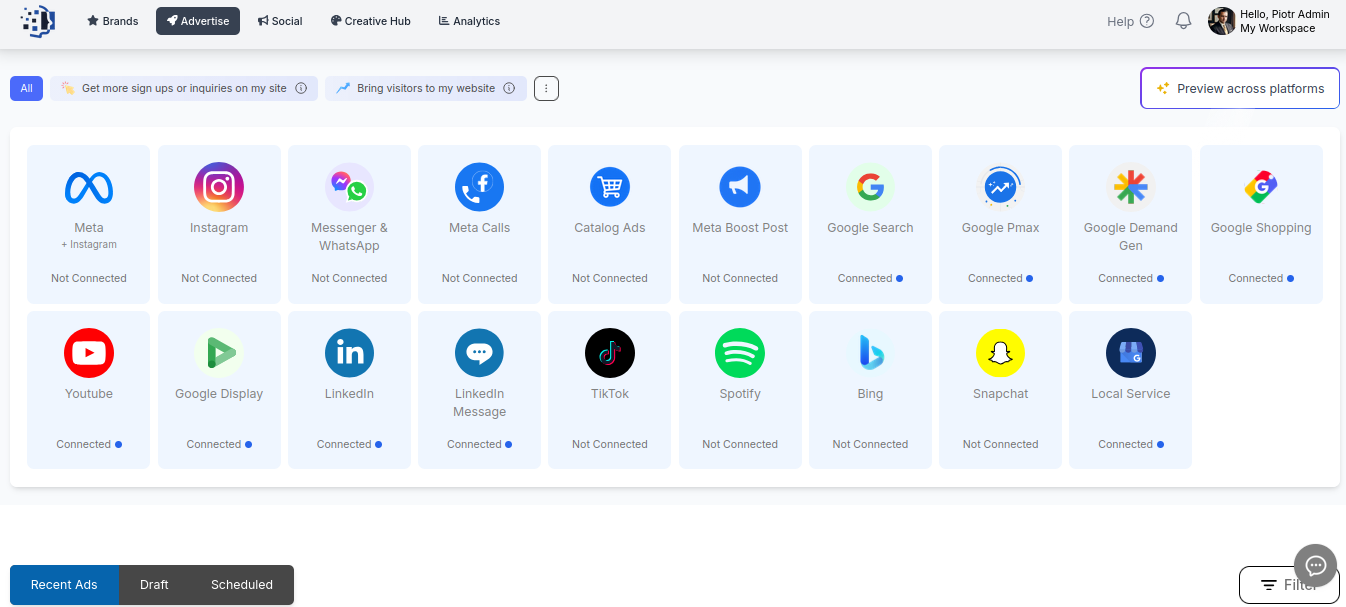
Take control of your advertising success today and stop spreading your budget too thin or using generic ads that fail to engage. Visit Rekla.AI and experience how our platform helps reduce your customer acquisition costs while increasing click-through rates. Dive deeper into how to maximize reach with effective cross-platform advertising or explore digital advertising best practices for small e-commerce tailored to businesses like yours. Start smarter multi-channel marketing now by harnessing AI that puts you ahead without the complexity.
Foire aux questions
What are the key benefits of using multi-channel advertising?
Multi-channel advertising allows businesses to reach customers on various platforms, increasing brand visibility and engagement. It enables marketers to optimize their campaigns based on which channels drive the best results, ultimately enhancing customer acquisition and reducing costs.
How do I measure the success of my multi-channel campaigns?
Success in multi-channel advertising can be measured using key performance indicators (KPIs) such as click-through rates (CTR), conversion rates, cost per acquisition (CPA), and return on ad spend (ROAS). It’s essential to track how each platform contributes to overall performance based on your specific business goals.
What challenges should I expect when managing multi-channel ads?
Common challenges in multi-channel advertising include maintaining consistent messaging across platforms, managing budgets effectively, and addressing the complexity of tracking performance and attribution across different channels. It’s crucial to focus on clear strategies and optimization efforts to overcome these hurdles.
How can AI enhance my multi-channel advertising efforts?
AI can streamline campaign management by automating ad creation, optimizing budgets across platforms, and personalizing audience messaging. It helps businesses make data-driven decisions and saves time, allowing marketing teams to focus on strategy rather than execution.
Recommandé
- Guide stratégique sur la publicité numérique pour des résultats de campagne plus intelligents
- Guide stratégique sur la publicité numérique pour des résultats de campagne plus intelligents
- Liste de contrôle du marketing numérique en 7 étapes pour des campagnes plus intelligentes
- Gestion publicitaire multiplateforme : Augmenter efficacement le retour sur investissement
 English
 English (UK)
 Polski
 Deutsch
 Español
 Français
 Português
 Svenska
 Dansk
Dansk Nederlands