

Managing campaigns across Google, Facebook, and TikTok often leaves even experienced marketers confused by unclear definitions and conflicting advice. Misunderstanding basic advertising terms can waste budget, muddle reporting, and stall growth for any e-commerce business. When you understand the fundamental terms—impressions, CTR, CPC, ROAS—you unlock clearer communication, tighter strategy alignment, and measurable efficiency across every platform.
Table of Contents
- Core Advertising Terminology And Misconceptions
- Types Of Digital Advertising Campaigns
- Key Metrics And How They Work
- Risks, Costs, And Common Pitfalls
- Legal Standards And Compliance In Advertising
Key Takeaways
| Point | Details |
|---|---|
| Understand Core Metrics | Focus on key advertising metrics like ROAS and Conversion Rate to effectively gauge campaign performance and profitability. |
| Choose Campaign Types Wisely | Select appropriate campaign types that align with customer intent and stage in the buying process to enhance ROI. |
| Prioritize Compliance | Ensure adherence to advertising standards and regulations to avoid severe penalties and reputational damage. |
| Test Before Scaling | Conduct small test campaigns to assess performance metrics before committing large budgets to campaigns. |
Core Advertising Terminology and Misconceptions
Advertising terminology can feel overwhelming when you’re managing campaigns across multiple platforms. Worse, misconceptions about what these terms actually mean can lead to wasted budget and missed optimization opportunities. Let’s clear up the confusion.
Understanding the fundamental terms starts with recognizing what your campaigns actually measure. Core advertising terms like impressions, clicks, and conversions form the backbone of every campaign decision you make.
Here are the critical terms every e-commerce manager needs to understand:
- Ad Impressions – Every time your ad appears on someone’s screen, that’s one impression. A thousand impressions means your ad displayed 1,000 times, regardless of whether anyone clicked it.
- Click-Through Rate (CTR) – The percentage of people who saw your ad and clicked it. A 2% CTR means 2 out of every 100 viewers clicked. Industry averages vary by platform, but benchmarking matters.
- Cost Per Click (CPC) – What you pay each time someone clicks your ad. On Google Ads, you might pay $0.50 to $5.00 per click depending on competition and industry.
- Conversion – When someone completes your desired action: purchases, signs up, downloads, or adds items to a cart. This is what actually drives ROI.
- Cost Per Acquisition (CPA) – Your total ad spend divided by conversions. If you spend $500 and get 10 purchases, your CPA is $50.
Common Misconceptions That Cost You Money
Misunderstanding these terms directly impacts your budget allocation and strategy.
Misconception: More impressions always mean better results. Your ad showing 100,000 times means nothing if zero people buy. A low-impression campaign with a high conversion rate outperforms massive reach with zero sales. Focus on quality impressions to relevant audiences, not volume alone.
Misconception: CTR is your most important metric. High clicks without conversions drain your budget fast. Someone clicking your ad means they showed interest, but if they bounce from your landing page without buying, that click wasted money. Conversion rate trumps click volume.
Misconception: All platforms charge the same way. Facebook charges by impressions (CPM), Google by clicks (CPC), and some newer platforms use cost per action (CPA). Understanding how each platform bills means you won’t overspend on the wrong metrics.
Misconception: “Optimization” means lowering cost per click. Reducing CPC while sacrificing conversion quality destroys profitability. Optimization means maximizing return on ad spend (ROAS), not cutting costs. A $1.00 click that converts is better than a $0.25 click that doesn’t.
Your most expensive metric is the one that doesn’t convert. Focus on conversions, not just clicks or impressions.
These standardized advertising definitions help teams communicate clearly when discussing campaign performance. When your team uses consistent terminology, strategy alignment improves immediately.
Pro tip: Create a simple spreadsheet mapping your KPIs to the actual terms you’ll report on—impressions, CTR, CPC, CPA, and ROAS. When you reference these terms consistently across campaigns, spotting performance patterns becomes exponentially easier.
Types of Digital Advertising Campaigns
Not all advertising campaigns work the same way. Your e-commerce business needs different campaign types to reach customers at different stages of their journey. Understanding which type fits your goal prevents wasting budget on the wrong channels.
Different digital marketing campaigns serve distinct purposes. Some drive awareness, others capture intent, and some nurture existing customers. Mixing the right types amplifies your overall ROI.
Here’s what each major campaign type does for your business:
Here’s a quick-reference guide distinguishing major digital advertising campaign types and when to use them:
| Campaign Type | Best Use Case | Typical Platform | Key Business Impact |
|---|---|---|---|
| Search Ads | High-intent buyers | Google, Bing | Immediate conversions |
| Social Media Ads | Building brand awareness | Facebook, TikTok | Attracts new potential customers |
| Display Ads | Broad visibility, retargeting | Google Display | Maintains top-of-mind awareness |
| Video Ads | Product education, demos | YouTube, Instagram | Explains value, builds engagement |
| Email Campaigns | Customer retention | Mailchimp, Klaviyo | Drives repeat purchases easily |
| Influencer Campaigns | Building trust via authority | Instagram, TikTok | Leverages endorsement, expands reach |
- Search Ads (Pay-Per-Click) – Your ad appears when someone searches for keywords related to your products. You pay only when they click. Perfect for capturing high-intent buyers actively looking for solutions.
- Social Media Ads – Posts, videos, or carousel ads displayed on Facebook, Instagram, TikTok, or LinkedIn. These target by interest, behavior, and demographics. Great for awareness and retargeting past visitors.
- Display Ads – Banner ads shown across websites your audience visits. These build brand awareness through repeated exposure without requiring active searches.
- Video Ads – YouTube or social platform videos that tell your brand story. Highly engaging and effective for demonstrating product benefits to skeptical audiences.
- Email Marketing Campaigns – Direct messages to your subscriber list promoting specific products or offers. Lowest cost per reach with highest conversion rates for existing customers.
- Influencer Campaigns – Partner with creators who promote your products to their followers. Builds trust through third-party endorsement rather than direct advertising.
Why Campaign Type Matters for Your ROI
Choosing the wrong campaign type is like fishing with the wrong bait. You’ll spend money but catch nothing.

Search ads work when demand exists. Someone typing “running shoes under $100” wants to buy. That’s high-intent traffic worth paying premium prices for. Use search when you know customers actively seek your product type.
Social ads work when awareness is low. New products need visibility before people search for them. Social platforms let you reach cold audiences based on interests and behaviors. You’re creating demand, not capturing it.
Email campaigns work for retention. Your existing customers already know your brand. Email converts at 5-10x higher rates than cold traffic because you’re talking to warm audiences.
Video ads work when products need explanation. Skincare routines, software features, or technical products benefit from seeing them in action. Text and images alone won’t cut it.
The best campaign type matches your customer’s buying stage. Use search for intent, social for awareness, email for retention, and video for complexity.
Most successful e-commerce businesses run multiple campaign types simultaneously. You might use search ads to capture buyers ready to purchase today while running social ads to build a pipeline of future customers. When creating your digital advertising workflow, prioritize which campaign types align with your immediate business goals.
Pro tip: Start with one campaign type that matches your strongest traffic source or biggest pain point. Once you optimize that type and see positive ROI, layer in a second campaign type. Building gradually prevents budget chaos and lets you scale what actually works.
Key Metrics and How They Work
Numbers drive decisions. Without understanding your advertising metrics, you’re flying blind and burning budget. The right metrics show exactly what’s working and what’s draining your profit margin.
You need to track metrics that actually matter to your bottom line. Essential advertising metrics reveal campaign visibility, engagement, and whether you’re making money or losing it. Knowing the difference between vanity metrics and profit metrics saves thousands monthly.
Here are the metrics that determine your success:
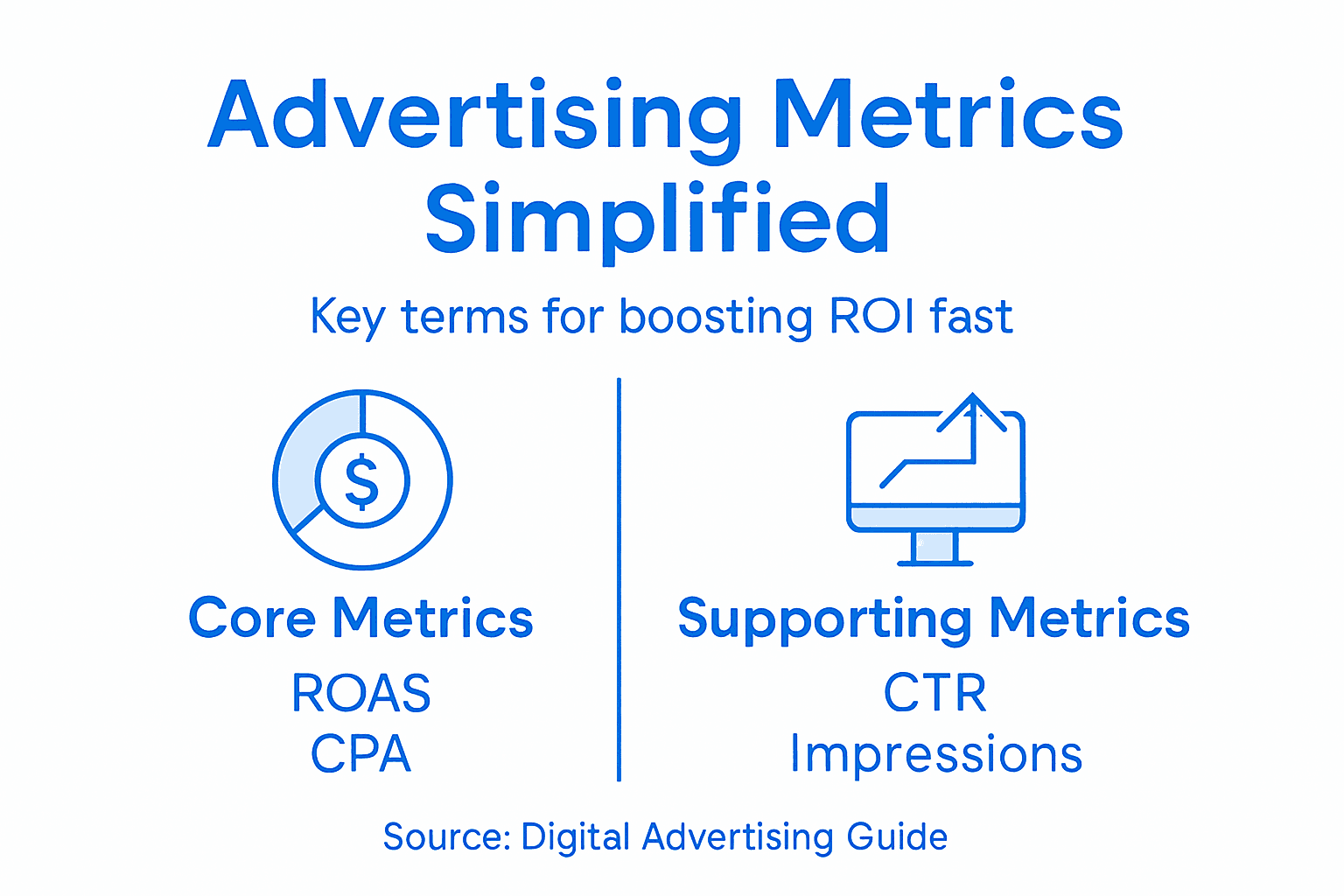
- Return on Ad Spend (ROAS) – Revenue generated divided by ad spend. A 3:1 ROAS means every dollar spent generates three dollars in revenue. This is your most important metric because it directly shows profitability.
- Cost Per Acquisition (CPA) – Total ad spend divided by number of conversions. If you spend $1,000 and acquire 25 customers, your CPA is $40. Know your profit margin before setting a CPA target.
- Conversion Rate – Percentage of visitors who complete your desired action. A 2% conversion rate means 2 out of 100 visitors buy. Higher conversion rates lower your customer acquisition cost.
- Click-Through Rate (CTR) – Percentage of people who saw your ad and clicked it. A 1.5% CTR means 1.5 out of 100 viewers clicked. CTR shows ad relevance, not profitability.
- Cost Per Click (CPC) – Amount you pay each time someone clicks your ad. Lower CPC is good, but only if clicks convert into sales.
Why These Metrics Connect to Your Profit
Each metric tells a different story about campaign health. You need all of them working together.
Roas is your north star. A campaign with 5:1 ROAS crushes one with 2:1 ROAS, regardless of impressions or clicks. Focus your optimization energy here first.
Conversion rate reveals your landing page quality. Two campaigns with identical CPC but different conversion rates show the problem isn’t your ad spend—it’s where visitors land. A 3% converter beats a 1% converter every time.
CPC and CTR measure ad quality and relevance. If your CTR drops while competitors’ stays steady, your ad creative or targeting needs work. But remember, high CTR means nothing if those clicks don’t convert.
Track ROAS as your primary goal. Everything else supports getting that number higher while keeping customer acquisition cost below your profit margin.
When reviewing your campaign analytics, prioritize metrics in this order: ROAS, then conversion rate, then CPA. Ignore impressions and clicks—focus on dollars in and dollars out.
Different campaign types emphasize different metrics. Search campaigns might show 8% CTR but only 2% conversion. Social campaigns might show 0.5% CTR but 4% conversion. The platform isn’t the problem—the metric expectations are wrong.
Pro tip: Set a weekly metric review habit. Every Monday, check your ROAS and conversion rate trends from the previous week. When ROAS drops, immediately check if CTR or conversion rate changed to pinpoint the problem quickly.
Risks, Costs, and Common Pitfalls
Every advertising dollar carries risk. Misunderstanding costs, compliance requirements, and common mistakes can turn a profitable campaign into a money-losing disaster. Protecting your business means knowing what can go wrong before it happens.
Advertising operates within complex regulatory frameworks. Regulatory compliance risks include data privacy laws, consumer protection regulations, and platform-specific policies that vary by country. Non-compliance costs range from account suspension to legal penalties that dwarf your ad spend.
Here are the major risks threatening your advertising ROI:
- Budget Drain Without ROI – Launching campaigns without profit targets wastes money fast. Many businesses burn $5,000-$10,000 monthly on ads that generate zero conversions because they never set minimum ROAS thresholds.
- Ad Fraud and Invalid Traffic – Fake clicks inflate your costs while real customers never see your ads. Up to 15% of ad traffic can be fraudulent on untrusted networks, meaning you pay for clicks that never existed.
- Data Privacy Violations – Collecting customer data improperly triggers GDPR fines (up to 4% of revenue) or CCPA penalties ($7,500 per violation). Non-compliance isn’t just expensive—it destroys customer trust.
- Platform Algorithm Changes – Facebook, Google, and TikTok modify their systems constantly. Campaigns optimized for yesterday’s algorithm perform terribly tomorrow, forcing constant creative and targeting adjustments.
- Over-Reliance on Single Channels – Betting your entire budget on one platform leaves you vulnerable. Algorithm changes, policy updates, or account issues can kill 100% of your traffic overnight.
The Hidden Costs Nobody Talks About
Visible costs are just the starting point. Hidden expenses compound quickly.
Creative production costs money. Testing 10 ad variations costs more than running one ad repeatedly. But not testing wastes exponentially more budget on poor-performing creative.
Landing page optimization requires resources. Traffic without conversion-optimized pages becomes expensive vanity metrics. You might spend $2,000 driving 1,000 visitors, but if your page converts at 0.5% instead of 2%, you lose thousands in potential revenue.
Compliance and legal review protect you. Hiring someone to audit your privacy policies, data collection, and platform compliance prevents catastrophic fines. This cost is essential, not optional.
Key advertising sector risks include brand reputation damage from ad placement issues. Your ad appearing next to controversial content damages customer trust, even though it wasn’t your fault. Monitoring ad placement requires ongoing attention.
The costliest mistake is launching without understanding your break-even point. Know exactly how much you can spend per customer before profitability disappears.
Common pitfalls that drain budgets:
- Starting without clear conversion tracking or analytics setup
- Targeting too broad (reaching everyone) or too narrow (reaching nobody)
- Ignoring negative keywords and wasting clicks on irrelevant searches
- Not testing different audiences, creative, or landing pages systematically
- Scaling budgets too quickly before proving campaign profitability
Pro tip: Before spending significant budget, run a small test campaign with 10-20% of your planned spend. Measure ROAS, CPA, and conversion rate over 2-3 weeks. Only scale to full budget if test results meet your profitability targets. This prevents catastrophic mistakes.
Legal Standards and Compliance in Advertising
Advertising laws exist to protect consumers and ensure fair competition. Ignoring them costs money, damages reputation, and attracts regulatory attention. Your business must comply with advertising standards or face serious consequences.
Advertising standards demand truthfulness, transparency, and accountability. Advertising standards and regulations enforced by agencies like the FTC require that all claims be substantiated, non-deceptive, and fair to consumers. Violations trigger fines, account suspensions, and legal action that far exceed your ad budgets.
Here are the core compliance requirements every e-commerce business must follow:
Use this summary as a compliance checklist before launching any campaign:
| Compliance Area | Consequence if Ignored | Required Action |
|---|---|---|
| Truthful Claims | Fines, lawsuits, account suspension | Verify all product/service claims |
| Disclosures | Regulatory penalties | Label sponsored or affiliate content |
| Data Privacy | Heavy fines, lost customer trust | Comply with GDPR/CCPA, update policies |
| Platform Policies | Ad removal or permanent ban | Review latest platform rules monthly |
| Testimonials Review | Legal action, reputation harm | Use real, representative testimonials |
- Truthful Claims – Every claim in your ads must be accurate and provable. Saying your product “reduces wrinkles in 7 days” requires clinical evidence. False claims invite FTC enforcement and lawsuits.
- Disclosure Requirements – Affiliate links, sponsored content, and testimonials must be clearly marked. Hiding relationships violates FTC guidelines and can cost $10,000+ per violation.
- Data Privacy Compliance – GDPR (European Union) requires explicit consent before collecting personal data. CCPA (California) gives consumers rights to access and delete their data. Non-compliance triggers fines up to 4% of annual revenue.
- Platform-Specific Policies – Facebook, Google, and TikTok each enforce their own standards beyond legal requirements. Account violations result in ad suspension or permanent bans regardless of legal status.
- Endorsement and Testimonial Standards – Reviews and testimonials must reflect typical results. Paid endorsements must disclose compensation clearly. Fake reviews violate consumer protection laws.
What Violations Actually Cost
Penalties extend far beyond fines. Regulatory action destroys business momentum.
The FTC can demand you stop running ads immediately. This halts revenue during investigation, which typically lasts months. Meanwhile, competitors without violations gain market share.
Account suspension on advertising platforms means instant loss of traffic. Getting reinstated requires extensive documentation and legal review, taking weeks or months. Losing Google Ads access means zero search visibility during that period.
Reputational damage spreads quickly. A regulatory violation becomes news coverage that customers read. Trust takes years to rebuild after a public compliance failure.
Class action lawsuits follow regulatory violations. Customers harmed by false claims can sue collectively, potentially costing hundreds of thousands in settlements even if the underlying claim was minor.
Compliance isn’t optional—it’s your legal and financial foundation. Build it into your campaign strategy from day one, not after problems emerge.
Key compliance actions:
- Audit all ad claims for accuracy and substantiation
- Add clear disclosures for affiliate links and sponsored content
- Review privacy policies against GDPR and CCPA requirements
- Monitor platform policy updates monthly
- Document your compliance efforts and decisions
Government advertising transparency principles apply increasingly to private business. Transparency standards in digital advertising emphasize accountability and public trust, influencing consumer expectations across all sectors.
Pro tip: Have a lawyer or compliance expert review your top 5 ad campaigns before scaling budget. Investing $500-$1,000 in preventive legal review prevents $50,000+ in fines and account suspensions. Compliance costs less than violations.
Master Advertising Terminology and Boost Your ROI with Rekla.AI
Understanding key advertising terms like CTR, CPC, CPA, and ROAS is essential but can be overwhelming. Misinterpreting these metrics often leads to wasted budget and poor campaign performance. If you want to turn complex data into clear strategies and stop guessing where your ad dollars go, it is time to leverage automation and AI-driven insights.
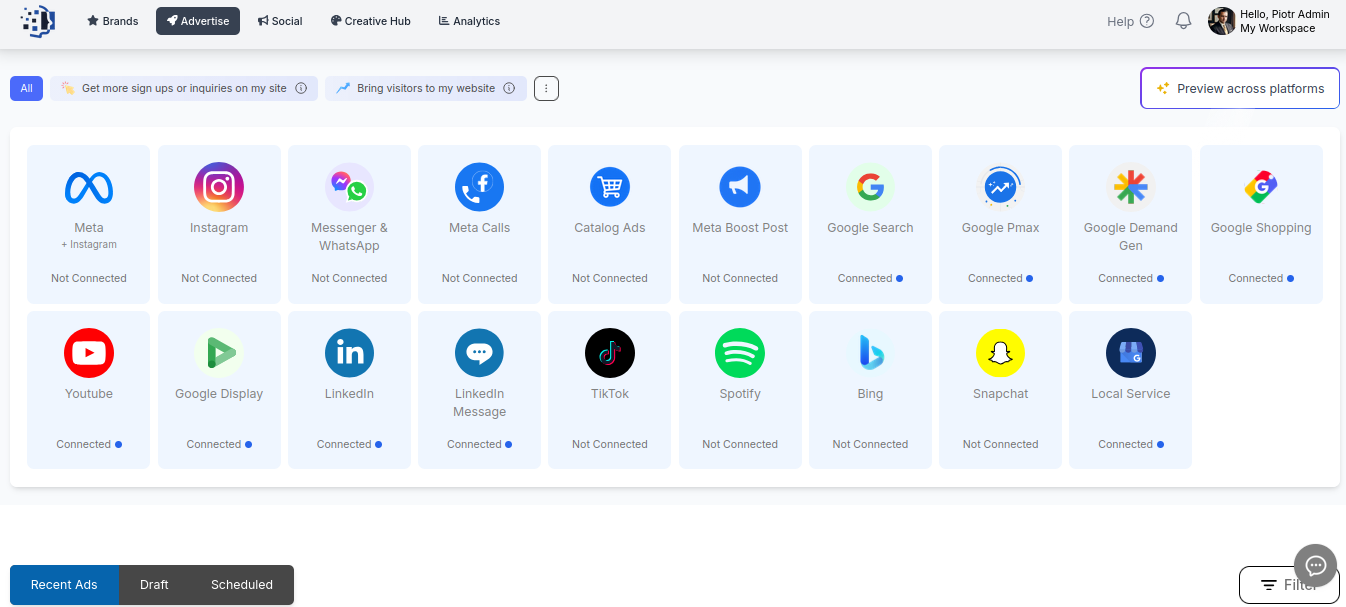
Rekla.AI simplifies your digital advertising by combining advanced AI technology with an easy-to-use platform that helps you create, target, and optimize ad campaigns across more than 15 platforms including Google, Facebook, and TikTok. Stop stressing over costly trial and error. Instead, focus on metrics that truly matter with intelligent budget management, real-time optimization, and automated audience targeting. Explore how Rekla.AI can transform your advertising approach by visiting Rekla.AI. Start now to reduce advertising costs, increase conversion rates, and confidently scale your campaigns without needing expert knowledge.
Frequently Asked Questions
What are ad impressions in advertising terminology?
Ad impressions refer to the number of times an advertisement appears on a user’s screen. It counts every time the ad loads, regardless of whether someone interacts with it.
How do I calculate Click-Through Rate (CTR)?
CTR is calculated by dividing the number of clicks an ad receives by the number of impressions it generates, then multiplying by 100 to get a percentage. For example, if an ad received 10 clicks from 1,000 impressions, the CTR would be (10/1000) * 100, which equals 1%.
What is Return on Ad Spend (ROAS) and why is it important?
ROAS is a metric that measures the revenue generated for every dollar spent on advertising. It is calculated by dividing total revenue from ads by total ad spend. A higher ROAS indicates a more profitable campaign, making it crucial for evaluating advertising effectiveness.
What are the risks associated with digital advertising?
Risks include budget drainage without ROI, ad fraud from invalid traffic, data privacy violations leading to fines, and potential penalties from non-compliance with advertising standards. It’s essential to understand these risks to protect your advertising investment.
Recommended
- Digital Advertising Terminology: Boost Campaign ROI
- Digital Advertising Terminology: Boost Campaign ROI
- Why Optimize Ad Spend: Boost ROI and Cut Costs
- Defining Digital Ad Optimization: Impact on ROI
- Industry Terms in Email Marketing: Boosting eCommerce ROI
- Maximizing ROI: 5 Benefits of AI-Managed Paid Advertising – AI Management Agency
 English
 English (UK)
 Polski
 Deutsch
 Español
 Français
 Português
 Svenska
 Dansk
Dansk Nederlands