

Trying to stretch every marketing dollar while staying competitive can feel exhausting for small e-commerce owners. The pressure to target the right buyers, pick smarter channels, and get real returns is real. With AI-powered tools and a focus on precision targeting, you can shift from guesswork to data-backed decisions that move the needle. This guide walks you through building smarter, cost-effective digital campaigns that truly connect with your most valuable customers.
Inhoudsopgave
- Step 1: Define Campaign Objectives And Target Audience
- Step 2: Configure AI-Powered Ad Creatives And Budgets
- Step 3: Select Platforms And Automate Multi-Channel Deployment
- Step 4: Monitor Campaign Performance And Apply AI Optimizations
- Step 5: Review Analytics To Refine Strategy And Maximize ROI
Korte samenvatting
| Inzicht | Uitleg |
|---|---|
| 1. Set Specific Campaign Objectives | Clearly define measurable goals, like achieving 200 online purchases in 30 days, to guide your ad strategy effectively. |
| 2. Precisely Target Your Audience | Use demographics, interests, and behaviors to create a profile of your ideal customers, ensuring your ads resonate with them. |
| 3. Utilize AI for Creative Development | Implement AI-powered tools to generate multiple ad variations, enabling data-driven decisions and optimizing creative performance at scale. |
| 4. Monitor Key Campaign Metrics | Regularly track metrics such as conversion rate and cost per acquisition to identify trends and optimize your advertising strategies. |
| 5. Analyze and Learn from Campaign Data | Review the entire campaign’s performance, focusing on successful audiences and creatives to enhance future strategies and maximize ROI. |
Step 1: Define campaign objectives and target audience
Before you build anything, clarify what success looks like for this specific campaign. Your campaign objectives give direction to every decision you’ll make, from ad creative to budget allocation. Without clear objectives, you’ll waste money on ads that don’t align with your business goals.
Start by asking yourself what you want to accomplish. Are you trying to drive sales, build brand awareness, generate leads, or increase website traffic? Be specific. “Increase revenue” is too vague, but “drive 200 online purchases within 30 days” gives you something measurable to work toward. Your objectives should tie directly to your overall business priorities, especially for small-to-medium e-commerce businesses where every dollar counts.
Once you know your objectives, the real work begins: understanding who you’re trying to reach. Using the STP framework for audience segmentation gives you a structured approach to breaking down your market. Segmentation divides your potential customers into groups based on shared characteristics like age, location, shopping habits, or pain points. Targeting then selects which of these segments align best with your product and objectives. Positioning ensures your ads resonate with these chosen groups by highlighting what makes your offer different.
Here’s how to build your target audience profile:
- Demographics: Age, gender, location, income level, occupation. Your product might appeal to a specific age range or geographic location.
- Behavior: Purchase history, browsing habits, device preferences, time of day they shop online. Mobile shoppers might need different messaging than desktop users.
- Interests and values: What your audience cares about, their hobbies, lifestyle choices. Someone interested in sustainable fashion needs different messaging than a budget shopper.
- Pain points: What problems does your product solve for them? A busy parent needs different benefits highlighted than a hobbyist.
Precision in targeting beats broad reach every single time. A smaller audience of genuinely interested buyers generates more sales than a massive audience of people who don’t care about your product.
When you’re building these profiles, lean on the data you already have. Look at your best-performing customers. What do they have in common? If you’re running your first campaign and don’t have customer data yet, research your competitors’ audiences and survey potential customers directly. Many e-commerce owners underestimate how much they can learn from a quick Facebook audience survey or email questionnaire.
Data-driven targeting strategies that align audience insights with channel selection create better campaign outcomes. This means selecting where to advertise based on where your specific audience actually spends time. Your 65-year-old customer base won’t respond to TikTok ads, but younger audiences might ignore LinkedIn ads. The channel and the audience must match.
Don’t fall into the trap of trying to reach everyone. Vague targeting wastes budget. When you define specific audience segments and match them to clear campaign objectives, you create the foundation for everything that follows. Your ad creative will be stronger because it speaks to a real person with real needs. Your budget allocation will be smarter because you’ll know which channels and audiences deliver results. Your overall ROI will improve because you’re not throwing money at people who were never going to buy from you anyway.
Pro-tip: Create a simple one-page audience profile document before building your campaign, listing your top 3 target segments, their key characteristics, and how your product solves their specific problems. Reference this constantly as you create ads to ensure everything stays aligned with your real audience, not who you think should be interested.
Step 2: Configure AI-powered ad creatives and budgets
This is where strategy becomes reality. You’ll set up the actual ads your audience will see and decide how much money flows to each campaign. Getting this right determines whether you spend your budget efficiently or watch it disappear with minimal returns.

Start with your ad creatives. Your creative is the actual image, video, or text that appears in someone’s feed. For e-commerce businesses, strong creatives showcase your product, highlight benefits, and inspire action. Rather than manually designing dozens of variations and hoping one works, AI-powered creative tools leverage machine learning to generate multiple ad variations instantly. The AI analyzes what resonates with your specific audience, personalizes messaging, and tests different approaches at scale. This means you’re not betting on one designer’s intuition. You’re letting data and AI work together to find winners.
When configuring your creatives, focus on these elements:
- Product visuals: Clear, well-lit images or videos that show your product in action. Mobile users scroll fast, so your product should be immediately recognizable.
- Headline and copy: Punchy text that speaks to the pain point your audience has. “Save 5 hours weekly” hits different than “time-saving solution.”
- Call-to-action: Clear instruction on what you want people to do. “Shop Now,” “Learn More,” or “Claim Your Discount” works better than vague language.
- Brand consistency: Color, fonts, and messaging should align with your existing brand so people recognize you.
AI doesn’t replace creativity; it multiplies it. The more variations you test, the faster you discover what your real audience responds to.
You’ll want to generate multiple creative variations. Test different headlines against the same image. Try different images with the same copy. When you create ad campaigns with AI for better ROI, the system handles these variations automatically, continuously testing and learning what drives conversions.
Now for budgets. Your budget allocation is how you distribute your total ad spend across campaigns, audiences, and platforms. Small-to-medium e-commerce businesses often make the mistake of spreading money too thin or throwing everything at one channel. Budget intelligently instead.
Start with your total available budget. Let’s say you have $2,000 to spend over 30 days. Don’t split it evenly across five platforms. Instead, allocate based on where your target audience actually is and where you’ve historically seen results. If Instagram generates 60% of your online purchases but Facebook generates 40%, reflect that reality in your budget split. If you have no historical data, research competitors in your space or run small test campaigns first to see what channels work.
AI budget optimization takes this further. Rather than manually adjusting spend every few days, AI systems analyze customer interactions and automatically reallocate budget toward top-performing combinations of audience, creative, and platform. If a specific audience segment responds 3x better to video ads than image ads, the AI moves budget accordingly. If one platform consistently delivers cheaper conversions, it gets more of your spend. This happens in real time, not weeks after your campaign ends.
When setting your budget, establish daily or total caps to prevent overspending. Most platforms let you set a daily budget (how much you’re willing to spend per day) or lifetime budget (total spend for the entire campaign period). A daily budget of $67 over 30 days gives you roughly $2,000 total spend with safety guardrails built in. This approach prevents accidental budget blowouts while keeping campaigns flexible enough to optimize.
Start conservative with your first campaign. Maybe 70% of budget goes to your best-performing audience and 30% to test new segments. Once you see what works, you can adjust. The goal is to maximize conversions per dollar spent, not simply maximize clicks or impressions.
Pro-tip: Set aside 15-20% of your budget specifically for testing new creative variations or audience segments you haven’t validated yet. This small “learning pool” generates insights that often improve your main campaign’s performance by 20-40%, making the test budget pay for itself many times over.
Step 3: Select platforms and automate multi-channel deployment
Your audience lives across multiple platforms. Facebook. Instagram. TikTok. Google Ads. LinkedIn. Spotify. The question isn’t which single platform to use anymore. It’s how to reach your people wherever they are without losing your mind managing each channel separately.
Start by identifying where your target audience actually spends time. This connects back to your audience research from Step 1. A beauty e-commerce brand might find their 25-35 year old customers on Instagram and TikTok, while a B2B software company reaches their buyers on LinkedIn. Don’t default to “all platforms.” Test where your audience congregates, then focus your budget there. You’ll get better ROI concentrating $2,000 on two platforms than spreading it thin across eight.
Here’s how to approach platform selection strategically:
Here’s a quick comparison of popular ad platforms for e-commerce campaigns:
| Platform | Typical Audience | Best Content Types | Average Conversion Cost |
|---|---|---|---|
| Adults 25-55 | Images, video, carousels | Moderate | |
| Young adults 18-35 | Visuals, Stories, Reels | Moderate to high | |
| TikTok | Gen Z, Millennials | Short videos | Low to moderate |
| Professionals, B2B | Text, insights, video | High | |
| Google-advertenties | All demographics | Search, shopping feeds | Moderate |
| Women 25-45 | Visual discovery, images | Low | |
| Spotify | Younger listeners | Audio ads | Low to moderate |
- Audience alignment: Does your target audience use this platform? Research their behavior. Instagram users expect visual content. LinkedIn users expect professional insights. Mismatch the platform to your audience and your money evaporates.
- Content format fit: Do you have videos, images, or text content? TikTok thrives on short videos. Google Shopping works best for e-commerce product feeds. Pinterest dominates visual discovery for home and fashion.
- Platform rules and policies: Each platform has different ad policies, approval timelines, and measurement capabilities. Facebook approves most ads within 24 hours. Some platforms take longer. Know this before launching.
- Competition and cost: Less competitive platforms sometimes offer cheaper clicks. But cheap clicks don’t matter if they don’t convert. Balance cost with quality.
The best platform isn’t the trendiest one. It’s where your customers already are looking for solutions.
Once you’ve selected your platforms, the real efficiency gains come from automation. Multi-channel campaign automation integrates your ad deployment across channels, synchronizing messaging, timing, and optimization. Instead of manually creating the same campaign on Facebook, then logging into Instagram, then Google Ads, then LinkedIn to replicate everything, automation handles it. You build once. Deploy everywhere. Let the system coordinate consistent messaging while adapting creative for each platform’s format.
Automation handles more than just deployment. It keeps your messaging consistent across channels while respecting each platform’s audience and format. Your core message stays the same, but the creative adapts. Your Facebook ad shows a carousel of product images. Your Instagram Story version is vertical video. Your LinkedIn version emphasizes business benefits. The underlying campaign logic and audience targeting remain unified, but the execution platform-specific. This is what true multi-channel strategy looks like.
Real-time optimization happens automatically too. If your Facebook audience responds better to video content while your Pinterest audience engages more with static images, the system learns this and reallocates impressions accordingly. You’re not guessing. The data guides allocation in real time. If one platform suddenly becomes more expensive without delivering results, your automation can dial back spend there and increase it on performers.
When setting up automation, connect your platforms to a central management system. Most modern advertising platforms support API integrations. You’ll typically authorize the system to access your Facebook Business Manager, Google Ads account, TikTok Ads Manager, and other channels. This access lets the automation tool read performance data, adjust bids, and deploy creatives without manual intervention.
Start with 2-3 platforms maximum for your first campaign. Master those channels, understand your audience’s behavior on each, then expand. Running ads across 10 platforms when you don’t understand any of them dilutes your focus and wastes budget. Better to deeply optimize three channels than to superficially run ten.
Set clear performance benchmarks before automation takes over. Define what a successful conversion costs on each platform. If you’re willing to pay $30 for a customer acquisition on Instagram but only $20 on Facebook, tell your automation system. It will optimize toward those targets. Without clear benchmarks, automation works blind.
Pro-tip: Schedule your ads to deploy during your audience’s most active times, but let automation handle real-time bid adjustments. Set platform-specific schedules (e.g., 8 AM-10 PM on weekdays for B2B LinkedIn campaigns, all day on weekends for retail Facebook), then trust the system to optimize spend within those windows based on actual conversion data.
Step 4: Monitor campaign performance and apply AI optimizations
Your campaign is live. Ads are running. Money is flowing. Now comes the part that separates successful campaigns from money-wasting ones: actually watching what happens and making adjustments. Monitoring isn’t passive observation. It’s active management where you watch for problems, identify opportunities, and let AI handle the heavy lifting of optimization.
Without monitoring, you’re flying blind. An ad that started strong might suddenly underperform. A new audience segment might respond unexpectedly well. Your budget might be flowing toward channels that stopped converting. These changes happen in real time, and your response speed determines your ROI. This is where real-time campaign optimization makes the difference. Advanced analytics continuously track performance, enabling immediate adjustments to targeting, messaging, and budget allocation as conditions change.
Start by identifying the metrics that matter for your specific objectives. If you’re driving sales, focus on conversion rate and cost per acquisition. If you’re building awareness, track impressions and reach. If you’re generating leads, watch cost per lead. Don’t obsess over vanity metrics like clicks or impressions. A million clicks worth zero if nobody buys anything.
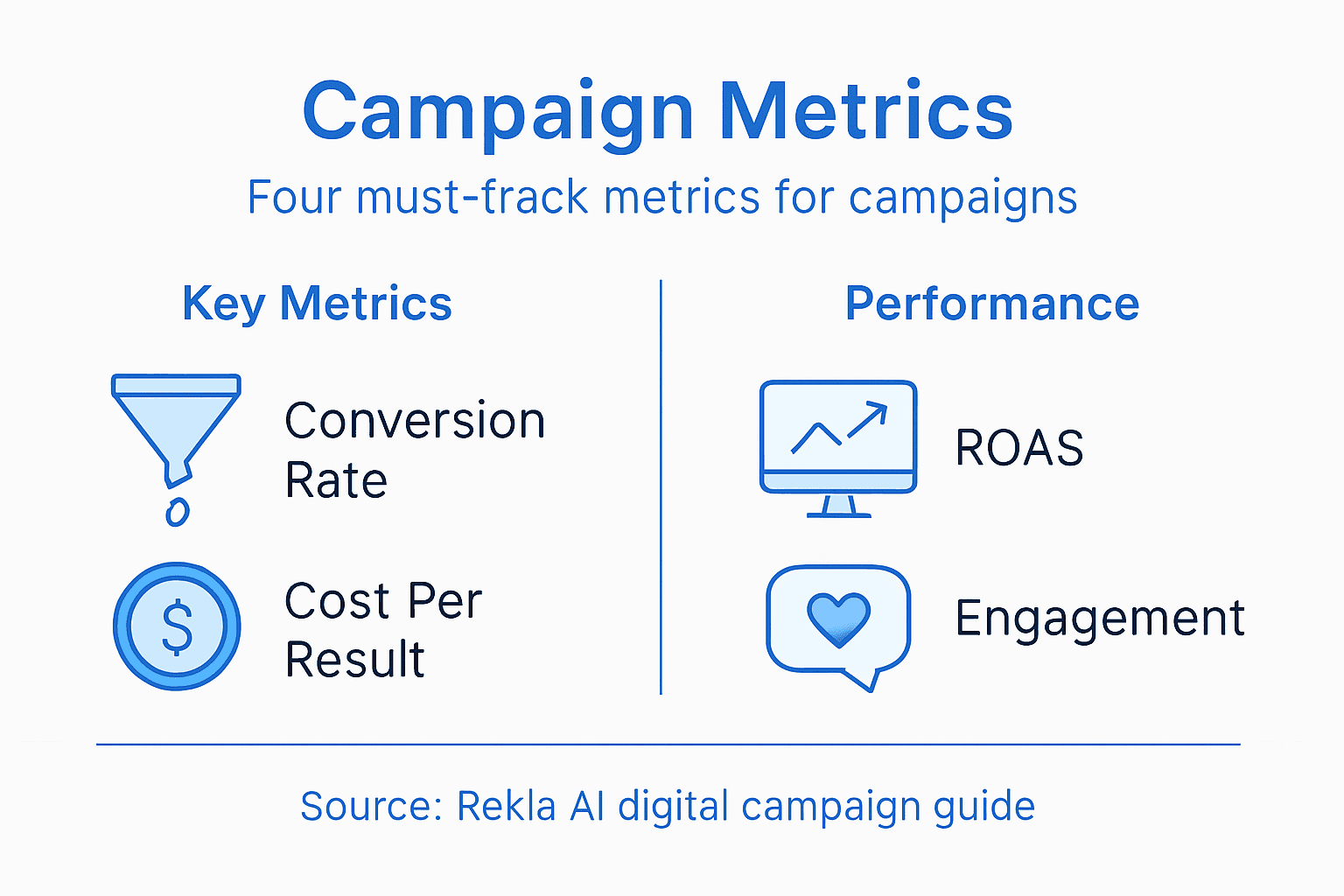
Here are the metrics you should monitor daily:
To clarify performance monitoring, here’s a summary of key campaign metrics and their business impact:
| Metrisch | Wat het meet | Waarom het belangrijk is |
|---|---|---|
| Omrekeningskoers | % of users who take action | Indicates ad effectiveness |
| Cost Per Result | Spend per conversion | Shows campaign efficiency |
| ROAS | Revenue vs ad spend ratio | Measures return on investment |
| Audience Quality | Alignment with target profile | Improves targeting and ROI |
| Cost Per Click | Spend per each ad click | Signals competition and fatigue |
- Cost per result: Whether it’s a purchase, lead, or app install, this metric shows efficiency. If your target is $30 per customer and you’re hitting $45, you need intervention.
- Rendement op advertentie-uitgaven (ROAS): For e-commerce, this is critical. If you spend $1,000 and make $4,000 in revenue, your ROAS is 4:1. Track this obsessively.
- Omrekeningskoers: What percentage of people who see your ad actually take action? If this drops from 3% to 1.5%, something changed. Find out what.
- Cost per click: Lower clicks costs only matter if they convert. But dramatic increases signal rising competition or audience fatigue.
- Audience quality: Are you reaching the right people or the wrong people? Check demographic breakdown. If your audience shifted from 30-40 year olds to 18-24 year olds unexpectedly, your messaging might not be working for the new group.
If you’re not checking your metrics daily in the first two weeks, you’re leaving money on the table. Daily monitoring catches problems before they cost you thousands.
Once you’ve got data flowing, let AI handle the optimization. Digital ad optimization powered by machine learning automatically adjusts bids, reallocates budget, and refines targeting based on performance data. You set the goals (maximize conversions at $30 cost per acquisition), and the AI figures out how to achieve them. This beats manual optimization because AI can process thousands of data points and test combinations you’d never think to try manually.
AI optimization typically handles three areas automatically. First, bid optimization adjusts how much you’re willing to pay for each click or conversion. If an audience segment converts at a much higher rate, the AI increases bids for that segment. Second, budget allocation shifts money toward top performers. If Facebook is delivering 6:1 ROAS while Instagram is delivering 2:1, the AI moves budget accordingly. Third, audience refinement gradually shifts your targeting toward people most likely to convert. Over time, your campaign reaches fewer people but higher-quality people.
The key to AI optimization working well is setting clear constraints. Tell the system what you’re trying to maximize (conversions, revenue, leads), what you’re willing to spend per result, and which platforms or audiences to prioritize. Without these constraints, AI might optimize for the wrong thing. If you don’t set a cost per acquisition limit, the system might maximize total conversions but at unsustainably high cost.
Check your dashboard at least daily during the first two weeks. Look for anomalies. Did cost per result spike overnight? Did conversion rate drop? Did a particular audience suddenly underperform? When something breaks, you want to catch it immediately. After two weeks, you can move to checking every other day if performance stabilizes. But never go more than three days without looking.
Set up alerts for critical metrics. Most platforms let you configure notifications when cost per result exceeds a threshold or conversion rate drops below a target. These alerts catch problems when you’re not actively monitoring, letting you respond quickly instead of discovering issues days later.
Expect your first week to show high costs. This is normal. Your campaign is still learning which audiences and creatives work best. By week two, costs typically drop as the algorithm figures things out. By week three, you should see your campaigns running efficiently at your target cost per result. If you’re still at week one costs in week three, something’s wrong. Either your audience is wrong, your creative isn’t resonating, or your pricing is unrealistic.
Pro-tip: Create a simple spreadsheet that tracks your three most important metrics daily for the first 30 days. Plot them on a chart so you can visualize trends rather than just staring at numbers. You’ll spot problems and improvements much faster when you see the visual pattern, and you’ll have historical data to reference when planning your next campaign.
Step 5: Review analytics to refine strategy and maximize ROI
Your campaign has run its course. Ads have stopped. Money has been spent. Now comes the analysis phase where you extract lessons and build a better strategy next time. This isn’t busywork. The insights you uncover here directly determine whether your next campaign costs half as much and delivers double the results, or repeats the same mistakes.
Start by pulling your complete campaign data. You’ll want to review the entire lifecycle, not just the flashy numbers. Look beyond clicks and impressions. Dig into what actually mattered: conversions, revenue, customer quality, and efficiency. Digital marketing analytics harnesses Big Data and AI to process vast information, providing actionable insights that inform strategic decisions. Real-time analysis facilities market responsiveness and personalization, essential for optimizing campaigns and maximizing ROI.
Here’s what you should analyze:
- Which audiences converted best: Not which audiences were biggest, but which ones actually bought. If your 25-34 year old audience converted at 4% while your 45-54 year old audience converted at 2%, your next campaign should allocate more budget to the higher-converting segment.
- Which creatives won: Did video outperform images? Did carousel ads beat single images? Which headlines generated the most conversions? Document the winners and test variations of them next time.
- Which platforms delivered ROI: Forget platform loyalty. If Facebook delivered 5:1 ROAS and TikTok delivered 1.5:1, your next budget split should reflect this reality. Some platforms work better for your business than others.
- Cost trends over time: Did costs stay stable, rise steadily, or spike suddenly? Early campaign spike followed by stabilization is normal. But if costs never dropped, your audience or creative had problems.
- Attribution paths: Did people convert on first impression, or after seeing your ad multiple times? Understanding this shapes whether you focus on awareness or conversion campaigns next.
The best campaigns aren’t single wins. They’re learned lessons applied repeatedly. Each campaign teaches you something that makes the next one better.
When evaluating ROI, use proper methodology. Key performance indicators like traffic, engagement, conversions, and advertising costs form the foundation. But advanced approaches like attribution models and customer lifetime value calculations provide deeper accuracy. For e-commerce, this means tracking not just whether someone bought, but what they bought, how much it cost to acquire them, and whether they came back to buy again.
Calculate your actual return on ad spend. If you spent $2,000 on ads and generated $8,000 in revenue, your ROAS is 4:1. But don’t stop there. Calculate your profit, not just revenue. If those $8,000 in sales had a 40% profit margin, you made $3,200 profit on $2,000 spent. That’s strong. But if profit margin was only 10%, you made $800 profit on $2,000 spent. Suddenly that looks terrible. ROAS is one metric. Profit is the metric that matters.
Identify patterns across all your data points. Look for correlations. Did certain days of the week perform better? Did specific audience combinations outperform others? Did time of day matter? If you notice that Tuesday morning ads to the 30-40 female audience convert 2x better than Friday evening ads to the same audience, that’s actionable. Test this in your next campaign.
Build a simple scorecard documenting your top learnings. What worked? What didn’t? What surprised you? What will you do differently next time? This becomes your playbook. Over time, as you run more campaigns, these playbooks get more sophisticated. You start to see patterns across multiple campaigns that inform bigger strategic decisions.
Compare your results to benchmarks for your industry. If your conversion rate was 2.5% but industry average is 3%, you’re underperforming. If you hit 4%, you’re outperforming. Benchmarks help you understand whether your results were good, bad, or mediocre. Don’t celebrate a 2:1 ROAS if your industry average is 4:1. And don’t despair at 3:1 ROAS if your industry average is 2:1.
Document what you’ll test differently in your next campaign. Will you shift budget allocation? Try different audiences? Test new creative approaches? Will you expand to new platforms or double down on winners? These decisions should flow directly from your analytics review, not from guessing or following trends.
Pro-tip: Create a one-page campaign summary document immediately after reviewing analytics, while findings are fresh. Include top three learnings, top performing audience segment, best-performing creative type, actual ROAS achieved, and your three biggest changes for the next campaign. File these summaries and review them before starting new campaigns so you don’t repeat lessons you’ve already learned.
Unlock Smarter Digital Campaigns with AI Automation
The challenge of defining precise campaign objectives, building targeted audience profiles, and managing multi-platform ad deployment can feel overwhelming. You want to avoid wasting budget on vague targeting or ineffective creatives. You need dynamic, AI-powered tools that continuously optimize your ads in real time to drive measurable results and maximize your ROI. Rekla.AI is designed to solve these exact pain points by automating the entire process from AI-generated ad creatives and precise audience targeting to seamless multi-channel deployment and budget management.
Met Rekla.AI you can:
- Generate multiple personalized ad variations that resonate with your real audience
- Automate budget allocation across platforms based on live data and performance
- Deploy and synchronize campaigns simultaneously on Facebook, Google, TikTok, LinkedIn, and more
- Monitor key metrics and apply AI-driven optimizations continuously
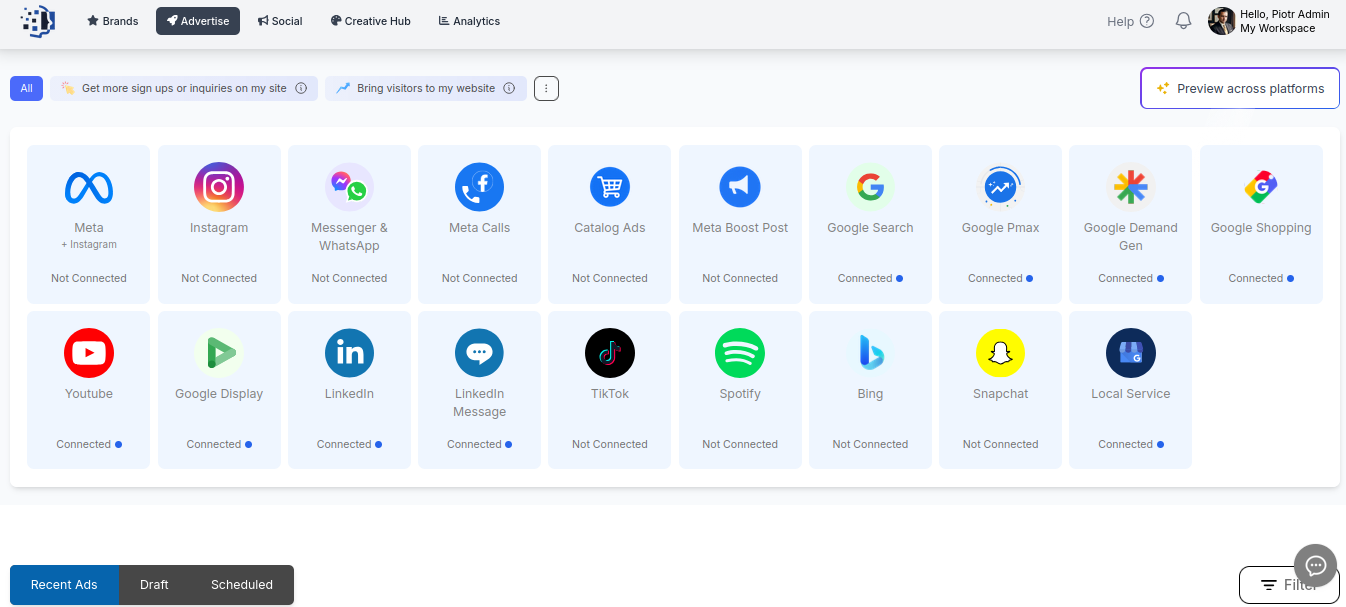
Ready to transform your digital advertising with smarter strategies and AI-driven automation? Visit Rekla.AI now to simplify campaign setup and start maximizing your ad results today. Don’t let complex campaign management hold you back when better, easier solutions are just one click away.
Veelgestelde vragen
What are the key objectives I should define for my digital campaign?
To increase the likelihood of success, clearly outline specific objectives such as driving sales, generating leads, or building brand awareness. For example, specify a goal like “achieving 200 online purchases within 30 days” to guide your campaign effectively.
How do I build a target audience profile for my campaign?
Start by analyzing demographics, behavior, interests, and pain points of your potential customers. Create a detailed audience profile focusing on critical characteristics, like age and shopping habits, to enhance your targeting accuracy.
What types of ad creatives should I configure for my digital campaign?
Focus on high-quality visuals, clear headlines, and strong calls to action that resonate with your target audience. Ensure your creatives highlight the product benefits and are consistent with your brand to improve ad performance.
How can I effectively allocate my advertising budget across channels?
Distribute your budget based on where your target audience spends time and where previous successful campaigns were conducted. For example, if a platform generated 60% of your online purchases, consider allocating a larger portion of your budget there rather than spreading it too thin.
What metrics should I monitor during my campaign?
Keep track of key performance metrics like conversion rate, cost per acquisition, and return on ad spend (ROAS) daily, especially in the first two weeks. This helps identify problems quickly and allows for adjustments to maximize your campaign’s effectiveness.
How can I analyze my campaign results to improve future campaigns?
After completing your campaign, review all data, focusing on audience performance, creative effectiveness, and ROI. Document your findings and create a one-page summary to guide adjustments for your next campaign, aiming for continuous improvement.
Aanbevolen
- Workflowgids voor digitale reclame: Stroomlijn het maken van campagnes
- Basisprincipes digitale advertentiecampagnes: Slimme ROI stimuleren
- Basisprincipes digitale advertentiecampagnes: Slimme ROI stimuleren
- Beheers het digitale campagneanalyseproces voor een hogere ROI
- What Is Ad Campaign Management? Complete Overview – Ads Daddy. Advertise on All Plattforms.
 English
 English (UK)
 Polski
 Deutsch
 Español
 Français
 Português
 Svenska
 Dansk
Dansk Nederlands