

Trying to stretch every marketing dollar while staying competitive can feel exhausting for small e-commerce owners. The pressure to target the right buyers, pick smarter channels, and get real returns is real. With AI-powered tools and a focus on nauwkeurig richten, you can shift from guesswork to data-backed decisions that move the needle. This guide walks you through building smarter, cost-effective digital campaigns that truly connect with your most valuable customers.
Inhoudsopgave
- Stap 1: Campagnedoelstellingen en doelgroep definiëren
- Stap 2: AI-gestuurde advertentiecreatives en budgetten configureren
- Stap 3: Platforms kiezen en Multi-Channel implementatie automatiseren
- Stap 4: Campagneprestaties bewaken en AI-optimalisaties toepassen
- Stap 5: Analyseer om de strategie te verfijnen en de ROI te maximaliseren
Korte samenvatting
| Inzicht | Uitleg |
|---|---|
| 1. Stel specifieke campagnedoelstellingen vast | Definieer duidelijk meetbare doelen, zoals het bereiken van 200 online aankopen in 30 dagen, om je advertentiestrategie effectief te sturen. |
| 2. Richt u precies op uw doelgroep | Gebruik demografische gegevens, interesses en gedrag om een profiel te maken van je ideale klanten, zodat je advertenties bij hen aanslaan. |
| 3. AI gebruiken voor creatieve ontwikkeling | Implementeer AI-tools om meerdere advertentievariaties te genereren, zodat datagestuurde beslissingen kunnen worden genomen en de creatieve prestaties op schaal worden geoptimaliseerd. |
| 4. Bewaak de belangrijkste campagnegegevens | Volg regelmatig statistieken zoals conversiepercentage en kosten per acquisitie om trends te identificeren en je reclamestrategieën te optimaliseren. |
| 5. Analyseer en leer van campagnegegevens | Beoordeel de prestaties van de hele campagne en richt je daarbij op succesvolle doelgroepen en creatieven om toekomstige strategieën te verbeteren en de ROI te maximaliseren. |
Stap 1: Campagnedoelstellingen en doelgroep definiëren
Before you build anything, clarify what success looks like for this specific campaign. Your campaign objectives give direction to every decision you’ll make, from ad creative to budget allocation. Without clear objectives, you’ll waste money on ads that don’t align with your business goals.
Start by asking yourself what you want to accomplish. Are you trying to drive sales, build brand awareness, generate leads, or increase website traffic? Be specific. “Increase revenue” is too vague, but “drive 200 online purchases within 30 days” gives you something measurable to work toward. Your objectives should tie directly to your overall business priorities, especially for small-to-medium e-commerce businesses where every dollar counts.
Zodra je je doelstellingen kent, begint het echte werk: begrijpen wie je probeert te bereiken. Met behulp van de STP-raamwerk voor doelgroepsegmentatie gives you a structured approach to breaking down your market. Segmentation divides your potential customers into groups based on shared characteristics like age, location, shopping habits, or pain points. Targeting then selects which of these segments align best with your product and objectives. Positioning ensures your ads resonate with these chosen groups by highlighting what makes your offer different.
Zo stel je je doelgroepprofiel op:
- Demografie: Leeftijd, geslacht, locatie, inkomensniveau, beroep. Je product kan een specifieke leeftijdsgroep of geografische locatie aanspreken.
- Gedrag: Aankoopgeschiedenis, surfgedrag, apparaatvoorkeuren, tijdstip van de dag waarop ze online winkelen. Mobiele shoppers hebben misschien andere berichten nodig dan desktopgebruikers.
- Interesses en waarden: Waar je publiek om geeft, hun hobby's, levensstijlkeuzes. Iemand die geïnteresseerd is in duurzame mode heeft een andere boodschap nodig dan een budget shopper.
- Pijnpunten: Welke problemen lost uw product voor hen op? Een drukke ouder heeft andere voordelen nodig dan een hobbyist.
Precision in targeting beats broad reach every single time. A smaller audience of genuinely interested buyers generates more sales than a massive audience of people who don’t care about your product.
When you’re building these profiles, lean on the data you already have. Look at your best-performing customers. What do they have in common? If you’re running your first campaign and don’t have customer data yet, research your competitors’ audiences and survey potential customers directly. Many e-commerce owners underestimate how much they can learn from a quick Facebook audience survey or email questionnaire.
Datagestuurde targetingstrategieën that align audience insights with channel selection create better campaign outcomes. This means selecting where to advertise based on where your specific audience actually spends time. Your 65-year-old customer base won’t respond to TikTok ads, but younger audiences might ignore LinkedIn ads. The channel and the audience must match.
Don’t fall into the trap of trying to reach everyone. Vague targeting wastes budget. When you define specific audience segments and match them to clear campaign objectives, you create the foundation for everything that follows. Your ad creative will be stronger because it speaks to a real person with real needs. Your budget allocation will be smarter because you’ll know which channels and audiences deliver results. Your overall ROI will improve because you’re not throwing money at people who were never going to buy from you anyway.
Pro-tip: Create a simple one-page audience profile document before building your campaign, listing your top 3 target segments, their key characteristics, and how your product solves their specific problems. Reference this constantly as you create ads to ensure everything stays aligned with your real audience, not who you think should be interested.
Stap 2: AI-gestuurde advertentiecreatives en budgetten configureren
This is where strategy becomes reality. You’ll set up the actual ads your audience will see and decide how much money flows to each campaign. Getting this right determines whether you spend your budget efficiently or watch it disappear with minimal returns.

Start with your ad creatives. Your creative is the actual image, video, or text that appears in someone’s feed. For e-commerce businesses, strong creatives showcase your product, highlight benefits, and inspire action. Rather than manually designing dozens of variations and hoping one works, AI-gestuurde creatieve tools leverage machine learning to generate multiple ad variations instantly. The AI analyzes what resonates with your specific audience, personalizes messaging, and tests different approaches at scale. This means you’re not betting on one designer’s intuition. You’re letting data and AI work together to find winners.
Richt je bij het configureren van je creatives op deze elementen:
- Product visuals: Duidelijke, goed belichte afbeeldingen of video's die je product in actie laten zien. Mobiele gebruikers scrollen snel, dus je product moet meteen herkenbaar zijn.
- Kop en tekst: Krachtige tekst die het pijnpunt van je publiek aanspreekt. “Bespaar wekelijks 5 uur” slaat anders aan dan “tijdbesparende oplossing”.”
- Oproep tot actie: Duidelijke instructies over wat je wilt dat mensen doen. “Nu winkelen”, “Meer informatie” of “Claim uw korting” werkt beter dan vaag taalgebruik.
- Merkconsistentie: Kleur, lettertype en berichtgeving moeten overeenkomen met je bestaande merk zodat mensen je herkennen.
AI vervangt creativiteit niet; het vermenigvuldigt het. Hoe meer variaties je test, hoe sneller je ontdekt waar je echte publiek op reageert.
Je wilt meerdere creatieve variaties genereren. Test verschillende koppen met dezelfde afbeelding. Probeer verschillende afbeeldingen met dezelfde kop. Wanneer je Maak advertentiecampagnes met AI voor een betere ROI, Het systeem verwerkt deze variaties automatisch, test voortdurend en leert wat conversies stimuleert.
Now for budgets. Your budget allocation is how you distribute your total ad spend across campaigns, audiences, and platforms. Small-to-medium e-commerce businesses often make the mistake of spreading money too thin or throwing everything at one channel. Budget intelligently instead.
Start with your total available budget. Let’s say you have $2,000 to spend over 30 days. Don’t split it evenly across five platforms. Instead, allocate based on where your target audience actually is and where you’ve historically seen results. If Instagram generates 60% of your online purchases but Facebook generates 40%, reflect that reality in your budget split. If you have no historical data, research competitors in your space or run small test campaigns first to see what channels work.
AI budget optimization takes this further. Rather than manually adjusting spend every few days, AI systems analyze customer interactions and automatically reallocate budget toward top-performing combinations of audience, creative, and platform. If a specific audience segment responds 3x better to video ads than image ads, the AI moves budget accordingly. If one platform consistently delivers cheaper conversions, it gets more of your spend. This happens in real time, not weeks after your campaign ends.
When setting your budget, establish daily or total caps to prevent overspending. Most platforms let you set a daily budget (how much you’re willing to spend per day) or lifetime budget (total spend for the entire campaign period). A daily budget of $67 over 30 days gives you roughly $2,000 total spend with safety guardrails built in. This approach prevents accidental budget blowouts while keeping campaigns flexible enough to optimize.
Start conservative with your first campaign. Maybe 70% of budget goes to your best-performing audience and 30% to test new segments. Once you see what works, you can adjust. The goal is to maximize conversions per dollar spent, not simply maximize clicks or impressions.
Pro-tip: Set aside 15-20% of your budget specifically for testing new creative variations or audience segments you haven’t validated yet. This small “learning pool” generates insights that often improve your main campaign’s performance by 20-40%, making the test budget pay for itself many times over.
Stap 3: platforms selecteren en multi-channel implementatie automatiseren
Your audience lives across multiple platforms. Facebook. Instagram. TikTok. Google Ads. LinkedIn. Spotify. The question isn’t which single platform to use anymore. It’s how to reach your people wherever they are without losing your mind managing each channel separately.
Start by identifying where your target audience actually spends time. This connects back to your audience research from Step 1. A beauty e-commerce brand might find their 25-35 year old customers on Instagram and TikTok, while a B2B software company reaches their buyers on LinkedIn. Don’t default to “all platforms.” Test where your audience congregates, then focus your budget there. You’ll get better ROI concentrating $2,000 on two platforms than spreading it thin across eight.
Hier lees je hoe je de platformkeuze strategisch aanpakt:
Hier volgt een snelle vergelijking van populaire advertentieplatforms voor e-commerce campagnes:
| Platform | Typisch publiek | Beste inhoudstypen | Gemiddelde conversiekosten |
|---|---|---|---|
| Volwassenen 25-55 | Afbeeldingen, video, carrousels | Matig | |
| Jongvolwassenen 18-35 | Visuals, Verhalen, Rollen | Matig tot hoog | |
| TikTok | Gen Z, Millennials | Korte video's | Laag tot matig |
| Professionals, B2B | Tekst, inzichten, video | Hoog | |
| Google-advertenties | Alle demografische gegevens | Zoeken, winkelfeeds | Matig |
| Vrouwen 25-45 | Visuele ontdekking, afbeeldingen | Laag | |
| Spotify | Jongere luisteraars | Audio-advertenties | Laag tot matig |
- Afstemming op publiek: Does your target audience use this platform? Research their behavior. Instagram users expect visual content. LinkedIn users expect professional insights. Mismatch the platform to your audience and your money evaporates.
- Geschikt voor inhoudsformaat: Heb je video's, afbeeldingen of tekstinhoud? TikTok doet het goed met korte video's. Google Shopping werkt het beste voor e-commerce productfeeds. Pinterest domineert visuele ontdekking voor huis en mode.
- Platformregels en -beleid: Elk platform heeft een ander advertentiebeleid, andere goedkeuringstijden en andere meetmogelijkheden. Facebook keurt de meeste advertenties binnen 24 uur goed. Sommige platforms doen er langer over. Weet dit voordat je begint.
- Concurrentie en kosten: Minder concurrerende platforms bieden soms goedkopere klikken. Maar goedkope klikken maken niets uit als ze niet converteren. Breng de kosten in evenwicht met de kwaliteit.
Het beste platform is niet het meest trendy platform. Het is waar je klanten al naar oplossingen zoeken.
Als je eenmaal je platforms hebt geselecteerd, komt de echte efficiëntiewinst van automatisering. Automatisering van campagnes via meerdere kanalen integrates your ad deployment across channels, synchronizing messaging, timing, and optimization. Instead of manually creating the same campaign on Facebook, then logging into Instagram, then Google Ads, then LinkedIn to replicate everything, automation handles it. You build once. Deploy everywhere. Let the system coordinate consistent messaging while adapting creative for each platform’s format.
Automation handles more than just deployment. It keeps your messaging consistent across channels while respecting each platform’s audience and format. Your core message stays the same, but the creative adapts. Your Facebook ad shows a carousel of product images. Your Instagram Story version is vertical video. Your LinkedIn version emphasizes business benefits. The underlying campaign logic and audience targeting remain unified, but the execution platform-specific. This is what true multi-channel strategy looks like.
Real-time optimization happens automatically too. If your Facebook audience responds better to video content while your Pinterest audience engages more with static images, the system learns this and reallocates impressions accordingly. You’re not guessing. The data guides allocation in real time. If one platform suddenly becomes more expensive without delivering results, your automation can dial back spend there and increase it on performers.
When setting up automation, connect your platforms to a central management system. Most modern advertising platforms support API integrations. You’ll typically authorize the system to access your Facebook Business Manager, Google Ads account, TikTok Ads Manager, and other channels. This access lets the automation tool read performance data, adjust bids, and deploy creatives without manual intervention.
Start with 2-3 platforms maximum for your first campaign. Master those channels, understand your audience’s behavior on each, then expand. Running ads across 10 platforms when you don’t understand any of them dilutes your focus and wastes budget. Better to deeply optimize three channels than to superficially run ten.
Set clear performance benchmarks before automation takes over. Define what a successful conversion costs on each platform. If you’re willing to pay $30 for a customer acquisition on Instagram but only $20 on Facebook, tell your automation system. It will optimize toward those targets. Without clear benchmarks, automation works blind.
Pro-tip: Schedule your ads to deploy during your audience’s most active times, but let automation handle real-time bid adjustments. Set platform-specific schedules (e.g., 8 AM-10 PM on weekdays for B2B LinkedIn campaigns, all day on weekends for retail Facebook), then trust the system to optimize spend within those windows based on actual conversion data.
Stap 4: Campagneprestaties bewaken en AI-optimalisaties toepassen
Your campaign is live. Ads are running. Money is flowing. Now comes the part that separates successful campaigns from money-wasting ones: actually watching what happens and making adjustments. Monitoring isn’t passive observation. It’s active management where you watch for problems, identify opportunities, and let AI handle the heavy lifting of optimization.
Without monitoring, you’re flying blind. An ad that started strong might suddenly underperform. A new audience segment might respond unexpectedly well. Your budget might be flowing toward channels that stopped converting. These changes happen in real time, and your response speed determines your ROI. This is where real-time campagneoptimalisatie maakt het verschil. Geavanceerde analyses houden continu de prestaties bij, waardoor targeting, berichtgeving en budgettoewijzing direct kunnen worden aangepast als de omstandigheden veranderen.
Start by identifying the metrics that matter for your specific objectives. If you’re driving sales, focus on conversion rate and cost per acquisition. If you’re building awareness, track impressions and reach. If you’re generating leads, watch cost per lead. Don’t obsess over vanity metrics like clicks or impressions. A million clicks worth zero if nobody buys anything.
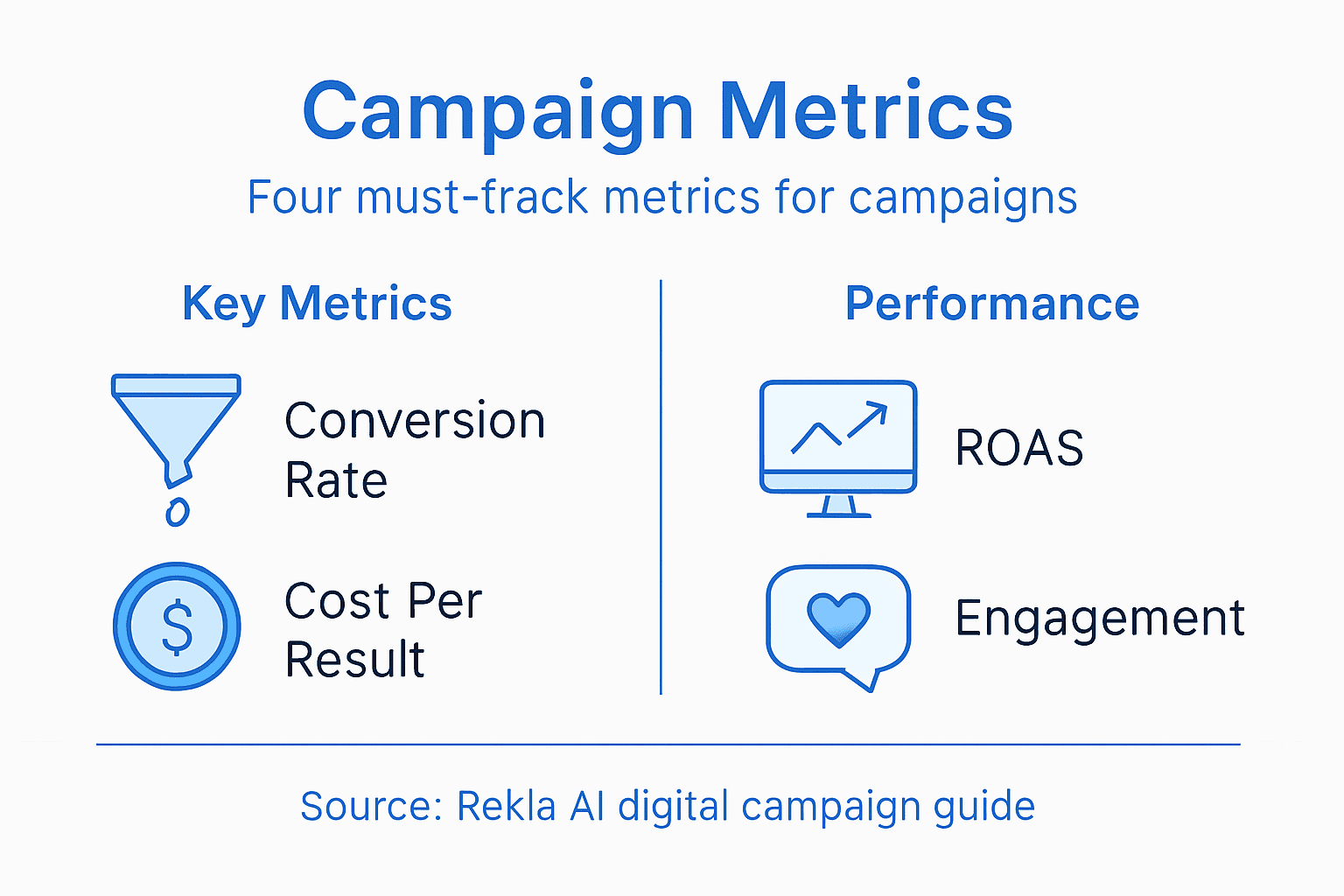
Dit zijn de statistieken die je dagelijks moet controleren:
Ter verduidelijking van prestatiebewaking volgt hier een overzicht van de belangrijkste campagnemetrics en hun zakelijke impact:
| Metrisch | Wat het meet | Waarom het belangrijk is |
|---|---|---|
| Omrekeningskoers | % van gebruikers die actie ondernemen | Geeft de effectiviteit van de advertentie aan |
| Kosten per resultaat | Uitgaven per conversie | Toont campagne-efficiëntie |
| ROAS | Inkomsten vs advertentie-uitgaven | Meet rendement op investering |
| Publiekskwaliteit | Afstemming op doelprofiel | Verbetert targeting en ROI |
| Kosten per klik | Uitgaven per klik op een advertentie | Signalen van concurrentie en vermoeidheid |
- Kosten per resultaat: Of het nu gaat om een aankoop, lead of app-installatie, deze metriek toont efficiëntie. Als je doel $30 per klant is en je haalt $45, dan moet je ingrijpen.
- Rendement op advertentie-uitgaven (ROAS): Voor e-commerce is dit cruciaal. Als je $1,000 uitgeeft en $4,000 aan inkomsten maakt, is je ROAS 4:1. Houd dit obsessief bij.
- Omrekeningskoers: Welk percentage van de mensen die je advertentie zien, onderneemt ook daadwerkelijk actie? Als dit daalt van 3% naar 1,5%, is er iets veranderd. Ontdek wat.
- Kosten per klik: Lagere kosten voor klikken zijn alleen van belang als ze converteren. Maar dramatische stijgingen duiden op toenemende concurrentie of publieksmoeheid.
- Publiekskwaliteit: Are you reaching the right people or the wrong people? Check demographic breakdown. If your audience shifted from 30-40 year olds to 18-24 year olds unexpectedly, your messaging might not be working for the new group.
Als je je statistieken de eerste twee weken niet dagelijks controleert, laat je geld liggen. Dagelijkse controle vangt problemen op voordat ze je duizenden euro's kosten.
Als de gegevens eenmaal stromen, laat AI dan de optimalisatie afhandelen. Digitale advertentie optimalisatie powered by machine learning automatically adjusts bids, reallocates budget, and refines targeting based on performance data. You set the goals (maximize conversions at $30 cost per acquisition), and the AI figures out how to achieve them. This beats manual optimization because AI can process thousands of data points and test combinations you’d never think to try manually.
AI optimization typically handles three areas automatically. First, bid optimization adjusts how much you’re willing to pay for each click or conversion. If an audience segment converts at a much higher rate, the AI increases bids for that segment. Second, budget allocation shifts money toward top performers. If Facebook is delivering 6:1 ROAS while Instagram is delivering 2:1, the AI moves budget accordingly. Third, audience refinement gradually shifts your targeting toward people most likely to convert. Over time, your campaign reaches fewer people but higher-quality people.
The key to AI optimization working well is setting clear constraints. Tell the system what you’re trying to maximize (conversions, revenue, leads), what you’re willing to spend per result, and which platforms or audiences to prioritize. Without these constraints, AI might optimize for the wrong thing. If you don’t set a cost per acquisition limit, the system might maximize total conversions but at unsustainably high cost.
Check your dashboard at least daily during the first two weeks. Look for anomalies. Did cost per result spike overnight? Did conversion rate drop? Did a particular audience suddenly underperform? When something breaks, you want to catch it immediately. After two weeks, you can move to checking every other day if performance stabilizes. But never go more than three days without looking.
Set up alerts for critical metrics. Most platforms let you configure notifications when cost per result exceeds a threshold or conversion rate drops below a target. These alerts catch problems when you’re not actively monitoring, letting you respond quickly instead of discovering issues days later.
Expect your first week to show high costs. This is normal. Your campaign is still learning which audiences and creatives work best. By week two, costs typically drop as the algorithm figures things out. By week three, you should see your campaigns running efficiently at your target cost per result. If you’re still at week one costs in week three, something’s wrong. Either your audience is wrong, your creative isn’t resonating, or your pricing is unrealistic.
Pro-tip: Create a simple spreadsheet that tracks your three most important metrics daily for the first 30 days. Plot them on a chart so you can visualize trends rather than just staring at numbers. You’ll spot problems and improvements much faster when you see the visual pattern, and you’ll have historical data to reference when planning your next campaign.
Stap 5: Analyse beoordelen om de strategie te verfijnen en de ROI te maximaliseren
Your campaign has run its course. Ads have stopped. Money has been spent. Now comes the analysis phase where you extract lessons and build a better strategy next time. This isn’t busywork. The insights you uncover here directly determine whether your next campaign costs half as much and delivers double the results, or repeats the same mistakes.
Start by pulling your complete campaign data. You’ll want to review the entire lifecycle, not just the flashy numbers. Look beyond clicks and impressions. Dig into what actually mattered: conversions, revenue, customer quality, and efficiency. Digitale marketinganalyse harnesses Big Data and AI to process vast information, providing actionable insights that inform strategic decisions. Real-time analysis facilities market responsiveness and personalization, essential for optimizing campaigns and maximizing ROI.
Dit is wat je moet analyseren:
- Welk publiek converteerde het best: Not which audiences were biggest, but which ones actually bought. If your 25-34 year old audience converted at 4% while your 45-54 year old audience converted at 2%, your next campaign should allocate more budget to the higher-converting segment.
- Welke ontwerpers wonnen: Presteerde video beter dan afbeeldingen? Waren carrouseladvertenties beter dan afzonderlijke afbeeldingen? Welke koppen genereerden de meeste conversies? Documenteer de winnaars en test variaties hiervan de volgende keer.
- Welke platforms leverden ROI op: Vergeet platformloyaliteit. Als Facebook 5:1 ROAS oplevert en TikTok 1,5:1, moet je volgende budgetopsplitsing deze realiteit weerspiegelen. Sommige platforms werken beter voor je bedrijf dan andere.
- Kostentrends in de tijd: Zijn de kosten stabiel gebleven, gestaag gestegen of zijn ze plotseling gestegen? Een vroege piek in de campagne gevolgd door stabilisatie is normaal. Maar als de kosten nooit daalden, had je publiek of je creativiteit problemen.
- Toewijzingspaden: Converteerden mensen bij de eerste indruk of nadat ze je advertentie meerdere keren hadden gezien? Als je dit begrijpt, kun je bepalen of je je hierna richt op bewustwordings- of conversiecampagnes.
De beste campagnes zijn geen eenmalige overwinningen. Het zijn geleerde lessen die herhaaldelijk worden toegepast. Van elke campagne leer je iets waardoor de volgende beter wordt.
Gebruik de juiste methodologie bij het evalueren van de ROI. Belangrijkste prestatie-indicatoren like traffic, engagement, conversions, and advertising costs form the foundation. But advanced approaches like attribution models and customer lifetime value calculations provide deeper accuracy. For e-commerce, this means tracking not just whether someone bought, but what they bought, how much it cost to acquire them, and whether they came back to buy again.
Calculate your actual return on ad spend. If you spent $2,000 on ads and generated $8,000 in revenue, your ROAS is 4:1. But don’t stop there. Calculate your profit, not just revenue. If those $8,000 in sales had a 40% profit margin, you made $3,200 profit on $2,000 spent. That’s strong. But if profit margin was only 10%, you made $800 profit on $2,000 spent. Suddenly that looks terrible. ROAS is one metric. Profit is the metric that matters.
Identify patterns across all your data points. Look for correlations. Did certain days of the week perform better? Did specific audience combinations outperform others? Did time of day matter? If you notice that Tuesday morning ads to the 30-40 female audience convert 2x better than Friday evening ads to the same audience, that’s actionable. Test this in your next campaign.
Build a simple scorecard documenting your top learnings. What worked? What didn’t? What surprised you? What will you do differently next time? This becomes your playbook. Over time, as you run more campaigns, these playbooks get more sophisticated. You start to see patterns across multiple campaigns that inform bigger strategic decisions.
Compare your results to benchmarks for your industry. If your conversion rate was 2.5% but industry average is 3%, you’re underperforming. If you hit 4%, you’re outperforming. Benchmarks help you understand whether your results were good, bad, or mediocre. Don’t celebrate a 2:1 ROAS if your industry average is 4:1. And don’t despair at 3:1 ROAS if your industry average is 2:1.
Document what you’ll test differently in your next campaign. Will you shift budget allocation? Try different audiences? Test new creative approaches? Will you expand to new platforms or double down on winners? These decisions should flow directly from your analytics review, not from guessing or following trends.
Pro-tip: Create a one-page campaign summary document immediately after reviewing analytics, while findings are fresh. Include top three learnings, top performing audience segment, best-performing creative type, actual ROAS achieved, and your three biggest changes for the next campaign. File these summaries and review them before starting new campaigns so you don’t repeat lessons you’ve already learned.
Maak gebruik van slimmere digitale campagnes met AI-automatisering
The challenge of defining precise campaign objectives, building targeted audience profiles, and managing multi-platform ad deployment can feel overwhelming. You want to avoid wasting budget on vague targeting or ineffective creatives. You need dynamic, AI-powered tools that continuously optimize your ads in real time to drive measurable results and maximize your ROI. Rekla.AI is ontworpen om precies deze pijnpunten op te lossen door het hele proces te automatiseren, van AI-gegenereerde advertentiecreatives en nauwkeurige doelgroeptargeting tot naadloze multi-channel inzet en budgetbeheer.
Met Rekla.AI je kunt:
- Genereer meerdere gepersonaliseerde advertentievariaties die aansluiten bij je echte publiek
- Automatiseer de budgettoewijzing voor verschillende platforms op basis van live gegevens en prestaties
- Implementeer en synchroniseer campagnes tegelijkertijd op Facebook, Google, TikTok, LinkedIn en meer
- Bewaak belangrijke statistieken en pas voortdurend AI-gestuurde optimalisaties toe
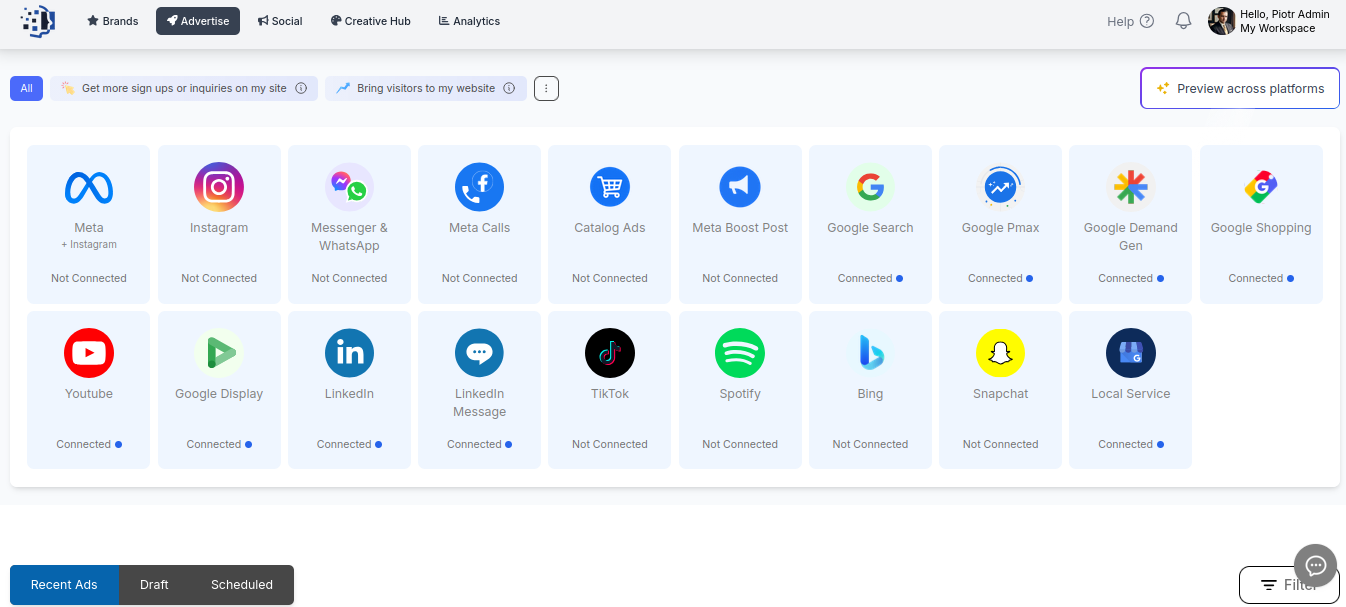
Klaar om uw digitale reclame te transformeren met slimmere strategieën en AI-gestuurde automatisering? Bezoek Rekla.AI nu om het opzetten van campagnes te vereenvoudigen en vandaag nog te beginnen met het maximaliseren van uw advertentieresultaten. Laat complex campagnebeheer u niet tegenhouden wanneer betere, eenvoudigere oplossingen slechts één klik verwijderd zijn.
Veelgestelde vragen
Wat zijn de belangrijkste doelstellingen die ik voor mijn digitale campagne moet definiëren?
To increase the likelihood of success, clearly outline specific objectives such as driving sales, generating leads, or building brand awareness. For example, specify a goal like “achieving 200 online purchases within 30 days” to guide your campaign effectively.
Hoe stel ik een doelgroepprofiel op voor mijn campagne?
Start by analyzing demographics, behavior, interests, and pain points of your potential customers. Create a detailed audience profile focusing on critical characteristics, like age and shopping habits, to enhance your targeting accuracy.
Welke soorten advertentiecreatives moet ik configureren voor mijn digitale campagne?
Focus on high-quality visuals, clear headlines, and strong calls to action that resonate with your target audience. Ensure your creatives highlight the product benefits and are consistent with your brand to improve ad performance.
Hoe kan ik mijn reclamebudget effectief toewijzen aan verschillende kanalen?
Distribute your budget based on where your target audience spends time and where previous successful campaigns were conducted. For example, if a platform generated 60% of your online purchases, consider allocating a larger portion of your budget there rather than spreading it too thin.
Welke statistieken moet ik volgen tijdens mijn campagne?
Keep track of key performance metrics like conversion rate, cost per acquisition, and return on ad spend (ROAS) daily, especially in the first two weeks. This helps identify problems quickly and allows for adjustments to maximize your campaign’s effectiveness.
Hoe kan ik mijn campagneresultaten analyseren om toekomstige campagnes te verbeteren?
After completing your campaign, review all data, focusing on audience performance, creative effectiveness, and ROI. Document your findings and create a one-page summary to guide adjustments for your next campaign, aiming for continuous improvement.
Aanbevolen
- Workflowgids voor digitale reclame: Stroomlijn het maken van campagnes
- Basisprincipes digitale advertentiecampagnes: Slimme ROI stimuleren
- Basisprincipes digitale advertentiecampagnes: Slimme ROI stimuleren
- Beheers het digitale campagneanalyseproces voor een hogere ROI
- Wat is advertentiecampagnebeheer? Compleet overzicht - Ads Daddy. Adverteer op alle platforms.
 English
 English (UK)
 Polski
 Deutsch
 Español
 Français
 Português
 Svenska
 Dansk
Dansk Nederlands