

Managing digital ad campaigns often feels like a juggling act for marketing managers at small e-commerce businesses, especially when balancing tight budgets with the pressure to drive engagement. Automation promises to relieve this burden by letting intelligent systems handle repetitive tasks, but persistent myths around complexity and loss of control create hesitation. By understanding automatisering av annonser och skilja fakta från fiktion, kan du positionera ditt team för att maximera effektiviteten samtidigt som du behåller kostnaderna och strategin i dina händer.
Innehållsförteckning
- Definition av annonsautomatisering och vanliga myter
- Typer av lösningar för automatisering av annonser förklaras
- Att välja rätt typ av automatisering för ditt företag
- Centrala funktioner: Ai, målgruppsanpassning och optimering
- Kostnadsbesparingar och effektivitetsvinster
- Risker, utmaningar och hur man undviker dem
- Praktiska skyddsåtgärder att implementera
- Jämförelse mellan manuell och automatiserad annonsering
- Jämförelsetabell
Viktiga punkter
| Punkt | Detaljer |
|---|---|
| Automation ökar effektiviteten | Automatisering av annonser minskar slöseri med budget och ökar kampanjens lyhördhet, vilket gör att företagen kan fördela resurserna effektivt. |
| Mänsklig tillsyn är fortsatt avgörande | Även om automatisering effektiviserar processerna är regelbunden mänsklig granskning avgörande för att säkerställa kvaliteten och förhindra algoritmisk partiskhet. |
| Användarvänlighet med moderna verktyg | De nuvarande plattformarna för annonsautomatisering har användarvänliga gränssnitt som förenklar installationen och gör den tillgänglig även för dem som inte har tekniska kunskaper. |
| Gradvis implementering rekommenderas | Börja med att automatisera en liten del av dina kampanjer för att övervaka resultatet och bygga upp förtroende innan du skalar upp. |
Definition av annonsautomatisering och vanliga myter
Annonsautomatisering handlar i grunden om att låta intelligenta system hantera repetitiva annonseringsuppgifter så att du kan fokusera på strategi. Det är dess kärna, automatisering av annonser means using software to automatically execute, optimize, and manage digital ad campaigns across multiple platforms with minimal manual intervention. Think of it as having an experienced team member who never sleeps, running A/B tests, adjusting bids, pausing underperforming ads, and reallocating budget to winners around the clock. The system learns from performance data and makes decisions based on rules you set, responding instantly to market conditions that would take you hours or days to identify manually.
However, significant misconceptions surround automation technology. Many SMB owners assume automation removes human judgment entirely or that machines will make poor decisions without oversight. The reality differs sharply. Automated decision-making systems don’t operate in a vacuum. They work within parameters you define and continuously surface data for human review. Another common myth suggests automation only works for massive budgets or complex campaigns. Actually, smaller budgets benefit most from automation because it eliminates waste through precision targeting and real-time optimization that manual management simply cannot match. Small e-commerce stores with limited advertising spend see proportionally larger returns when automation stops them from overspending on weak-performing audience segments.
En tredje missuppfattning är att automatisering är alltför tekniskt och kräver kodningskunskaper eller expertis inom reklam. Moderna plattformar som Rekla.AI specifically address this barrier by providing user-friendly interfaces that handle complexity behind the scenes. You input your business goals, product information, and budget constraints, then the system generates ad creative, selects optimal audiences, and deploys across channels. The platform does the heavy technical lifting while you maintain control over strategy and brand messaging. Many SMB owners also worry that automation creates generic ads that don’t reflect their brand voice. The opposite happens. AI-powered ad generation tools analyze your product details and create multiple creative variations specifically tailored to your offerings, often producing more relevant ads than generic templates or rushed manual creation. Real automation respects your input and builds from it rather than replacing creative thinking entirely.
Här är en sammanfattning av vanliga myter om automatisering av annonser jämfört med verkligheten:
| Myt | Verklighet |
|---|---|
| Automatisering eliminerar all mänsklig bedömning | Mänsklig tillsyn och granskning är avgörande |
| Fungerar bara för stora budgetar | Små och medelstora företag drar störst nytta av precisionsinriktad målstyrning |
| Kräver kodningskunskaper för att sätta upp | Moderna verktyg ger användarvänliga gränssnitt |
| Producerar generiska annonser som inte är varumärkesanpassade | AI anpassar kreativa produkter efter varumärket |
| Maskiner fattar dåliga beslut på egen hand | System följer parametrar och regler som du ställer in |
Proffstips: Start by automating just one platform or campaign type to build confidence in the system. Track the results against your previous manual management, then expand automation gradually as you see performance improvements. This approach lets you understand how automation works in your specific business context before scaling it across all channels.
Förklaring av olika typer av lösningar för annonsautomatisering
Ad automation isn’t one-size-fits-all. Different solutions exist across a spectrum, from tools that assist your decision-making to systems that operate almost entirely on their own. Understanding where each type fits helps you choose what works best for your e-commerce business. The simplest form is automatisering av beslutsstöd, which analyzes your campaign data and recommends actions like adjusting bids, pausing ads, or reallocating budget. You see the recommendation, review it, and approve or reject it manually. This approach keeps you in control while leveraging machine intelligence to spot patterns you might miss. The next level is halvautonom automatisering, where the system executes changes within parameters you’ve set. For example, you tell the system “pause any ad with a cost per acquisition above $25” or “increase budget for campaigns performing above 5 percent ROI.” The platform then makes these adjustments automatically without waiting for your approval, but only within those guardrails. This is where most SMBs find their sweet spot because it balances speed with safety.
I den andra änden av spektrumet sitter helt autonom automation, where algorithms make nearly all decisions with minimal human oversight. These systems learn your business objectives, monitor hundreds of variables simultaneously, and continuously optimize across all channels. Olika konfigurationer av mänsklig och algoritmisk beslutsbefogenhet exist depending on your industry, risk tolerance, and goals. For e-commerce SMBs, fully autonomous systems require significant trust and sophisticated setups, but they excel at managing complex multi-channel campaigns when you lack internal advertising expertise. Platforms like Rekla.AI överbrygga dessa tillvägagångssätt genom att erbjuda semi-autonoma funktioner som standard samtidigt som du kan öka automatiseringen i takt med att din komfort ökar.

Beyond this spectrum, automation solutions differ by function. Kreativ automatisering genererar annonstexter och bilder baserat på din produktinformation och testar flera varianter för att hitta vinnande kombinationer. Automatisering av målgrupper identifierar och riktar in sig på de mest värdefulla kundsegmenten utan att du manuellt behöver bygga upp målgruppslistor. Automatisering av budget fördelar dina utgifter mellan kanaler och kampanjer i realtid och flyttar pengar från de som inte presterar. Automatisering av bud justerar hur mycket du betalar per klick eller visning för att maximera konverteringarna inom din målkostnad. Automatisering av schemaläggning runs your ads at optimal times when your audience is most likely to engage. Smart SMBs use combinations of these. You might automate audience selection and budget distribution while keeping creative generation semi-manual so your brand voice stays consistent. The key is recognizing that mänsklig granskning är fortfarande avgörande vid sidan av algoritmiska rekommendationer för att hitta fel och se till att kampanjerna är anpassade till dina faktiska affärsbehov, inte bara statistisk optimering.
Här följer en snabb översikt över olika typer av annonsautomatisering och deras primära affärspåverkan:
| Typ av automatisering | Huvudfunktion | Påverkan på verksamheten |
|---|---|---|
| Beslutsstöd | Rekommenderar åtgärder, användaren godkänner | Ökad insikt, bibehållen kontroll |
| Semi-Autonom | Utför regler inom fastställda gränser | Sparar tid och påskyndar reaktionen |
| Helt självkörande | Optimerar nästan alla kampanjelement | Maximerar effektiviteten, kräver förtroende |
| Kreativ automatisering | Skapar och testar annonsinnehåll | Snabbare inlärning, ökad relevans |
| Automatisering av målgrupper | Identifiera de bästa kundsegmenten | Minskar slöseri med pengar och ökar konverteringarna |
| Automatisering av budget/anbud | Justerar utgifter och bud i realtid | Riktar budgeten till dem som presterar bäst |
Att välja rätt typ av automatisering för ditt företag
Your choice depends on three factors: campaign complexity, available budget, and your comfort level with machines making decisions. Simple campaigns with single products or straightforward messaging work fine with basic decision support. Complex catalogs with hundreds of SKUs benefit from full creative and audience automation. If your budget is small, automation prevents wasteful spending better than manual management ever could. If you have large budgets but limited staff, you gain more from autonomous systems because the potential upside from optimization far exceeds the downside risk. Start narrow and expand. Automate audience targeting first because mismatched targeting wastes the most money. Once that runs smoothly for two to three weeks, add budget automation. Then layer in creative testing. This gradual approach builds your confidence and lets you monitor real results at each stage.
Proffstips: Set up automation in test mode first by applying it to a small percentage of your daily budget, then compare performance against your non-automated campaigns. Once you see consistent improvements over at least two weeks, gradually increase the automation percentage until you reach full deployment.
Centrala funktioner: AI, målgruppsanpassning och optimering
Modern ad automation platforms rely on three interconnected powerhouses: artificial intelligence, precision audience targeting, and real-time optimization. These features work together to transform how SMBs compete against larger competitors with bigger budgets. The AI-motor is the brain of the system. It analyzes massive amounts of campaign data, learns what works for your specific products and audience, and makes intelligent decisions about how to spend your advertising money. Unlike simple rule-based systems that only follow instructions you program, AI-powered platforms learn patterns you could never manually detect. For example, AI might discover that customers who click on ads at 2 PM on Wednesdays convert at rates 40 percent higher than other times, or that certain product descriptions resonate with one audience segment but completely flop with another. This intelligence compounds daily as the system processes more data. The real advantage emerges over time because the system gets smarter and more precise the longer it runs your campaigns.
Målgruppsinriktning is where your budget stops bleeding away on wrong-fit customers. Rather than showing your hand cream to everyone between ages 25 and 55 with an interest in skincare, advanced targeting lets you identify which specific micro-segments actually buy from you. Dynamisk målgruppsinriktning med AI adjusts automatically based on real performance data. The system watches who engages with your ads, who clicks through, and critically, who converts into paying customers. It then finds more people who look, act, and shop like your best customers. This creates a virtuous cycle: tighter targeting means better conversion rates, which means lower cost per acquisition, which means you can bid more aggressively on winning audiences while cutting underperformers. For SMBs competing against established brands, this targeting precision levels the playing field. You don’t need a massive budget if you’re reaching only the people most likely to buy.
Optimering i realtid means your campaigns never sit static. The system constantly evaluates performance across every variable simultaneously. Budget allocation shifts automatically to winning campaigns and audiences. Ad creative variations that underperform get paused while top performers get boosted. Bid adjustments happen hourly based on conversion patterns. Manual management simply cannot match this speed. You might check campaign performance once daily or weekly, spotting trends too late to act on them quickly. Automation never sleeps. Optimering av digitala annonser that responds in real-time captures opportunities that slip away in the time it takes you to notice them and adjust manually. A customer interest surge in a specific region happens, and the system redirects budget there within minutes. Competitor activity shifts the market, and optimization adjusts your positioning instantly. This responsiveness directly impacts your return on investment because you’re capitalizing on momentum rather than fighting yesterday’s battles.
Hur dessa tre funktioner fungerar tillsammans
Think of it this way: AI provides the intelligence, targeting provides the precision, and optimization provides the speed. Separately, each offers value. Together, they multiply results. AI learns that men aged 35-45 in urban areas convert best on product comparison content. Targeting automatically reaches those specific people with messages they respond to. Optimization shifts budget away from underperforming variations toward the comparison content that works, all within hours. An e-commerce store selling fitness equipment might discover that gym owners in cities convert at rates five times higher than general consumers. AI identifies this pattern. Targeting focuses your spend exclusively on reaching gym owners. Optimization maximizes that spend by testing different messaging angles with gym owners until finding the strongest performers. The compounding effect means your cost per customer acquisition drops dramatically while your return on ad spend climbs steadily.
For e-commerce specifically, this trinity prevents the two worst outcomes: wasting money on the wrong audience, and failing to capitalize on audience segments that respond well to your offers. When all three features operate together, your ad spend becomes predictable and measurable. You see why customers convert, where they come from, and how much they spend. This data foundation lets you forecast growth and scale confidently.
Proffstips: Start by enabling AI targeting and optimization on your highest-performing product category, then review results daily for the first two weeks to understand how the system learns your business. Once you see the pattern of improvements, apply the same settings to other categories with confidence.
Kostnadsbesparingar och effektivitetsvinster
Cost savings from ad automation hit your bottom line in two ways: you spend less on advertising while generating more results. For SMBs operating on razor-thin margins, this dual benefit transforms profitability. The first savings comes from eliminerat slösaktiga utgifter. Manual campaign management often results in budget sitting with poor-performing ads, wrong-audience targeting, and outdated bids simply because you haven’t had time to review and adjust. Automation stops this bleeding immediately. The system pauses underperforming ads within hours rather than you discovering them days later. It cuts off spending on audience segments that consistently fail to convert. It adjusts bids downward for clicks that rarely turn into sales. One e-commerce store selling outdoor gear found they were spending 30 percent of their budget on mobile traffic that had a conversion rate below 1 percent. Manual reviews happened weekly. By then, thousands of dollars had already wasted on those low-converting clicks. Automation caught this waste in two days and rebalanced the budget. The second savings comes from förbättrad effektivitet i arbetet. Instead of spending 8 to 10 hours weekly analyzing spreadsheets, testing variations, and making bid adjustments, you focus those hours on strategy, product improvements, and scaling what works. Your time is freed from tactical execution to focus on decisions that actually move your business forward.

Effektivitetsvinsterna varierar dramatiskt mellan olika plattformar. Automatisering av rutinmässiga administrativa uppgifter effektiviserar arbetsflödena och optimerar resursallokeringen, and the same principle applies to advertising. When you manage campaigns across five different platforms manually, you’re essentially doing the same analysis work five times over. You review metrics on Facebook, then Google, then TikTok, then LinkedIn, then Pinterest. Each platform requires different login credentials, different metric definitions, and different optimization approaches. Automation consolidates this chaos. One system monitors all platforms simultaneously, identifies top performers regardless of channel, and reallocates budget where conversion costs are lowest. A customer acquisition that costs $12 on Google but $8 on TikTok gets increasingly funded on TikTok until the cost equilibrates. No human operator tracks these micro-adjustments constantly enough to capture this opportunity. Automation does it inherently. Teams report reclaiming 7 to 12 hours weekly previously spent on campaign management. For a small marketing team already stretched thin, this time reclamation means they can actually execute the creative and strategic work that drives differentiation.
The financial impact scales with your advertising spend. If you’re investing $10,000 monthly in ads, typical automation reduces your cost per acquisition by 15 to 30 percent through better targeting and budget allocation. That’s $1,500 to $3,000 monthly in direct savings. If you’re spending $50,000 monthly, that same 15 to 30 percent reduction means $7,500 to $15,000 monthly back in your pocket or reinvested for growth. More importantly, you’re generating the same or better results with less investment, which means you can increase your ad budget aggressively knowing you’re not proportionally increasing waste. Many SMBs initially fear automation costs will offset savings. The math rarely works out that way. A platform charging $200 to $500 monthly saves 10 to 15 hours of staff time weekly. That staff time costs $300 to $600 weekly in wages. The automation platform pays for itself through time savings alone before considering the direct waste reduction from smarter optimization.
Där de största besparingarna faktiskt sker
Budget reallocation across channels generates the largest savings. Most SMBs distribute ad spend based on hunches or habits. “We’ve always spent 40 percent on Facebook, 30 percent on Google, 20 percent on Instagram, 10 percent on Pinterest.” Automation removes the guesswork. It analyzes actual performance by channel and continuously shifts budget toward the channels and campaigns delivering the lowest cost per acquisition. One jewelry e-commerce store discovered their best customers came through Pinterest at a cost of $6 per acquisition, while Instagram cost $22 for the same customer value. Without automation, they would have maintained equal spend across both platforms. With automation, budget gradually shifted toward Pinterest until reaching a 70/30 split favoring Pinterest. Their overall cost per acquisition dropped 35 percent in three months with the exact same total ad spend. The system found optimal allocation they would have never discovered manually.
Creative efficiency also saves significant budget. Testing ad variations manually is slow and expensive because you’re essentially guessing which messages resonate. Automation tests dozens of creative variations simultaneously and quickly identifies winning combinations. A fashion retailer might test 24 different product images and 12 different headline combinations with audiences. That’s 288 potential combinations. Manual testing would take months and cost thousands. Automation cycles through these combinations in weeks, identifies the top performers, pauses underperformers, and focuses spend on winners. This faster testing cycle means you discover your best messaging much quicker, meaning budget gets allocated toward proven performers faster.
Proffstips: Calculate your current monthly time investment in campaign management by tracking hours spent analyzing metrics, adjusting bids, pausing ads, and testing variations. Multiply those hours by your hourly wage or what you’d pay someone to do it. This number almost always exceeds platform costs, making automation financially obvious before considering performance improvements.
Risker, utmaningar och hur man undviker dem
Automatisering är inte riskfritt. Tekniken förstärker både bra och dåliga beslut, vilket innebär att du måste ha skyddsåtgärder på plats innan du lanserar automatiserade kampanjer. Den allvarligaste risken är algoritmisk partiskhet. If your training data skews toward certain demographics, the system learns to favor those groups over others. For example, if historical customer data shows that men aged 25-40 generate higher average order values, the system might increasingly target men while neglecting women or older audiences. This seems logical mathematically but misses enormous opportunity if women actually buy more frequently even at lower order values. Bias creeps in subtly. The algorithm isn’t intentionally discriminating. It’s mathematically optimizing based on the patterns it learned from your past data. But the real world is more complex than historical metrics reveal. Avoiding this requires förstå potentiella partiskheter i AI-system och övervaka dem på ett konsekvent sätt. Don’t set the system to fully autonomous mode and forget about it. Review your campaign performance reports monthly and check whether certain audience segments are being systematically over-served or ignored. If women represent 40 percent of your customer base but only 15 percent of your ad impressions, something’s wrong. Adjust your automation rules to force broader testing and rebalance targeting.
Den andra stora risken är spenderar för mycket på fel mätvärden. An automation system optimizing for clicks will drive clicks at any cost, sometimes generating cheap clicks from audiences that never convert. You must set clear conversion metrics as your optimization target. Tell the system to optimize for purchases, not clicks. Optimize for revenue per customer, not just customer acquisition. Specify your target cost per acquisition and let the system know when to stop spending on channels or audiences exceeding that threshold. Vague goals create vague results. The platform needs precise instructions about what success looks like in your specific business. A third challenge is förändringar i plattformspolicy. Facebook and Google regularly modify their algorithms, change API access, adjust targeting options, and shift how metrics are reported. Your automation strategy built on yesterday’s platform capabilities might break when the platform changes. The solution is monitoring platform announcements and treating your automation settings as living documents that require quarterly reviews. Don’t set automation and ignore it for months. Dedicate 30 minutes monthly to checking platform updates and confirming your automation rules still make sense in the new environment.
En fjärde risk är datasekretess och efterlevnad. If you’re targeting audiences internationally, you must comply with regulations like GDPR in Europe or CCPA in California. Automation systems can easily violate privacy rules if not configured carefully. For instance, retargeting audiences based on browsing behavior might violate GDPR regulations in certain jurisdictions. Using customer data for lookalike audience creation might violate privacy rules depending on how consent was obtained. Skapa trovärdighet genom transparens och hantering av dataskyddsfrågor requires knowing your legal obligations before enabling automation. If you’re unsure, consult with a lawyer familiar with advertising regulations in your target markets. Don’t assume automation platforms handle compliance. They provide tools, but you bear responsibility for how those tools are used.
Praktiska skyddsåtgärder att implementera
Börja med öppenhet och dokumentation. Write down exactly what your automation system is supposed to do, what metrics it’s optimizing for, and what rules constrain its decisions. This documentation becomes your safety manual. When performance drops unexpectedly, this written record helps you understand what changed. Second, establish regelbunden översyn. Monthly reviews catch bias and overspending early. Set a calendar reminder to spend 30 to 60 minutes reviewing reports against your documented goals. Ask yourself: Are results tracking toward expectations? Are audience segments receiving appropriate spend levels? Are cost per acquisition metrics staying within target ranges? Third, maintain mänskliga godkännanden för större förändringar. Even with semi-autonomous automation, you might want the system to flag major budget shifts for your approval before executing them. If automation wants to move 50 percent of budget from one channel to another, require explicit approval before the change executes. Fourth, use Jämförelser med A/B-testning. Run comparable campaigns with and without automation side-by-side for your first month. Track whether the automated campaign outperforms manual management. If it underperforms, pause automation and investigate before expanding it to more campaigns.
Äntligen, börja smått och skala gradvis. Don’t automate your entire advertising budget immediately. Test automation on 10 to 20 percent of your budget first. Learn how the system behaves, spot issues, and build confidence. Once performance stabilizes and you’re comfortable, expand automation to larger portions of your budget. This approach lets you catch problems early when damage is limited.
Proffstips: Create a simple spreadsheet tracking your automation settings, what each setting does, and when you last reviewed it. This becomes your baseline for catching unexpected changes and understanding what adjustments made which performance improvements.
Jämförelse mellan manuell och automatiserad annonsering
Understanding the practical differences between managing campaigns manually and using automation helps you see exactly what you gain by switching. In manual advertising, you handle everything yourself or delegate to a team member. You log into each platform daily or weekly, review metrics, analyze performance data in spreadsheets, identify underperforming ads, pause them, increase budgets on winners, adjust bids, test new creative variations, and monitor results. This process is tactile and gives you direct control. You see every decision before it executes. You maintain deep familiarity with your campaigns. But manual management also consumes enormous amounts of time and introduces human inconsistency. Your reviews happen on your schedule, which means opportunities slip away between review sessions. A campaign might waste significant budget on a failing audience segment for three days before your next review catches it. Testing new variations happens slowly because manual testing requires you to write copy, design graphics, set up the test, wait for results, analyze data, then implement winners. This entire cycle takes weeks. Automated advertising inverts this dynamic. The system continuously monitors, evaluates, and optimizes across all your campaigns simultaneously. It never sleeps. It never overlooks a detail. But it operates within guardrails you establish, and results require regular human review to ensure quality.
Consider the speed advantage concretely. Manual management processes information weekly or sometimes daily. Automated systems process information hourly or even minutely. When customer interest spikes for a specific product in a geographic region, manual advertisers might not notice for days. Automated systems detect the pattern within hours and reallocate budget accordingly. When a creative variation suddenly starts underperforming, manual management waits until the next review cycle. Automation pauses it immediately. This responsiveness difference compounds dramatically over time. A manual advertiser loses hundreds or thousands to inefficient spending while waiting for their next review session. Automation prevents that loss. The cost per acquisition might improve 15 to 30 percent not because the automation is magic, but because it eliminates the time gaps where waste accumulates. Time gaps in manual management are where money bleeds. Another major difference involves testkapacitet. Manual testing of creative variations is slow and expensive. You might test three different headlines monthly because testing requires time, setup, and analysis. Automated systems test dozens of variations simultaneously and cycle through new tests continuously. This accelerates learning dramatically. After three months, automation has tested 100 variations and identified clear winners. Manual management has tested nine variations and is still uncertain about preferences. The automation system finds optimal messaging much faster, meaning budget allocates toward proven performers sooner. Varför optimera annonskampanjer för bättre resultat blir uppenbart när man ser den här prestandaförbättringen i praktiken.
Den dolda kostnaden för manuell hantering
Manual advertising has a hidden cost most SMBs don’t quantify properly: your time. If you spend 10 hours weekly managing campaigns, that’s 520 hours annually. If your time is worth $50 per hour, that’s $26,000 yearly in labor cost. If it’s worth $100 per hour, that’s $52,000 annually. Most SMB owners overlook this calculation and think manual management is free because they’re not paying external staff. But your time is your most valuable asset. Ten hours weekly spent on tactical campaign adjustments is ten hours not spent on product development, customer experience, or strategic growth initiatives. Automation reclaims those hours. You spend 30 minutes monthly reviewing reports instead of 10 hours weekly executing optimizations. Suddenly you have 39 hours monthly available for work that actually drives business growth. The financial impact extends beyond time savings. Manual campaigns often waste budget through inefficiency. Without real-time optimization, you continue spending on underperforming channels, wrong-fit audiences, and weak creative because you haven’t reviewed yet. Studies across industries show manual campaigns waste 15 to 25 percent of budget on these inefficiencies. Automation typically reduces that waste to 5 to 10 percent. The difference is substantial. On a $10,000 monthly budget, that’s potentially $1,000 to $1,500 monthly in recovered waste. Manual management offers one advantage: control and visibility. You see exactly what’s happening because you’re doing it. You understand your campaigns intimately. You catch nuances an algorithm might miss. For businesses with straightforward campaigns and small budgets, this hands-on approach might be sufficient. For scaling businesses managing multiple campaigns across several platforms with complex customer journeys, manual management becomes a bottleneck. Automated solutions with human oversight provide the best of both worlds: the efficiency and speed of automation with human judgment preventing drift.
Jämförelsetabell
| Aspekt | Manuell hantering | Automatiserad hantering |
|---|---|---|
| Frekvens för granskning | Varje vecka eller dagligen | Realtid (per timme) |
| Investering i tid | 8-10 timmar per vecka | 30 minuter per månad |
| Kreativa tester | 3 variationer per månad | 20+ variationer varje månad |
| Slöseri med budgetmedel | 15-25 procent | 5-10 procent |
| Reaktionstid på förändringar | Dagar | Timmar eller minuter |
| Inlärningskurva | Låg (du kontrollerar den) | Medium (justering av plattform) |
| Skalbarhet | Begränsad (tidspress) | Utmärkt (hanterar obegränsat antal kampanjer) |
| Förbättring av kostnad per förvärv | Gradvis | Snabb (första 90 dagarna) |
The table highlights why automation becomes increasingly valuable as your business scales. At small budgets with single campaigns, manual management works. At multiple campaigns across platforms with optimization needs, automation becomes essential.
Proffstips: Run a hybrid approach for your first month: automate 30 percent of your budget while managing 70 percent manually. Compare performance between automated and manual campaigns directly. When the automated campaign outperforms manually managed campaigns consistently, increase automation percentage gradually until reaching full deployment.
Lås upp smartare kampanjer med Rekla.AI Automatisering
Utmaningen för många små och medelstora företag är tydlig: att hantera digitala annonskampanjer manuellt slösar bort dyrbar tid och budget utan att leverera konsekventa, skalbara resultat. Du vill att minska kostnaderna, öka konverteringsgraden, och frigör timmar från tråkig kampanjhantering. Den här artikeln belyser hur automatisering av annonser, som drivs av AI-driven målinriktning, realtidsoptimering och kreativ automatisering, förvandlar din annonsering till en högeffektiv, datadriven tillväxtmotor. Rekla.AI erbjuder just den lösningen - en intuitiv plattform som gör det möjligt för företag att automatisera komplexa flerkanalskampanjer utan att behöva teknisk kompetens eller stora budgetar.
Använda Rekla.AI innebär att du utan ansträngning kan utnyttja sofistikerade AI-inriktning, budgethantering och kreativt skapande to stop overspending on underperforming audiences, launch continuous A/B testing, and unlock growth faster than manual methods. Start small, build confidence as you see real-time improvements in cost per acquisition and click-through rates, then scale confidently across platforms like Facebook, Google, TikTok, and more.
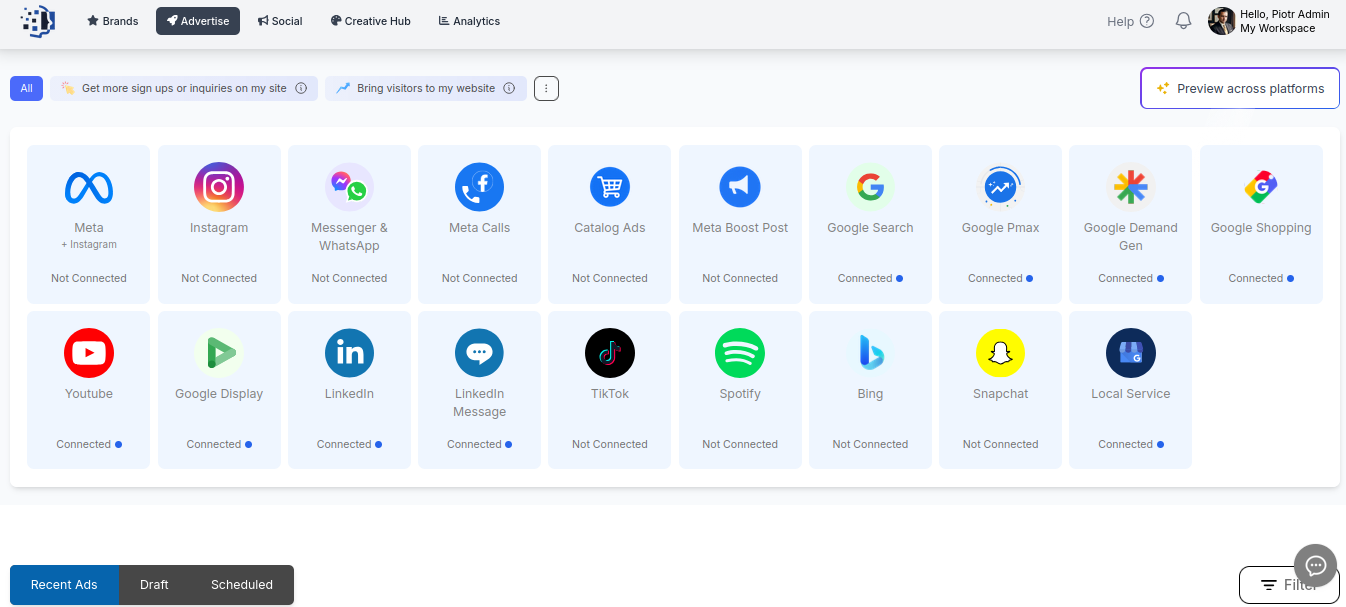
Är du redo att sluta slösa tid och pengar på manuella annonskampanjer? Upptäck hur Rekla.AI gör intelligent automation enkel och tillgänglig på Rekla.AI och starta din kostnadsfria testperiod idag. Automatisera din annonsering för att spara tid, sänka kostnaderna och vinna kunder smartare och snabbare. Ta reda på varför tusentals små och medelstora företag litar på Rekla.AI för att driva sina digitala annonser och förändra sina marknadsföringsresultat.
Vanliga frågor
Vad är annonsautomatisering och hur fungerar det?
Ad automation involves using intelligent software to automatically execute, optimize, and manage digital ad campaigns. It allows systems to handle repetitive tasks like A/B testing, bid adjustments, and budget reallocations based on performance data without requiring constant manual intervention.
Hur kan små och medelstora företag dra nytta av annonsautomatisering?
SMBs can benefit significantly from ad automation as it allows for precise targeting, real-time optimization, and reduces wasted ad spend. By using automation, SMBs can achieve better returns on smaller budgets than they would through manual management.
Behövs det teknisk expertis för att sätta upp annonsautomatisering?
No, modern ad automation platforms are designed with user-friendly interfaces, allowing users to input basic information like business goals and budgets without needing coding skills or advanced advertising expertise.
Vilka är de viktigaste typerna av lösningar för annonsautomatisering som finns tillgängliga?
Ad automation solutions vary from decision support automation that recommends actions to semi-autonomous systems that execute changes within defined rules, to fully autonomous systems that handle most decisions with minimal oversight. Each type serves different campaign complexities and business needs.
 English
 English (UK)
 Polski
 Deutsch
 Español
 Français
 Português
 Svenska
 Dansk
Dansk Nederlands