
Running a small e-commerce business often means stretching your team and budget thin, especially when every ad dollar counts. Choosing the right AI marketing tools is no longer a luxury reserved for American tech giants or British agencies—these platforms now give businesses everywhere the power to compete more efficiently without advanced skills. In this guide, discover how Las herramientas de marketing de IA combinan la recopilación de datos, el aprendizaje automático y el procesamiento del lenguaje natural para automatizar las campañas, personalizar los contenidos y optimizar los resultados para que pueda centrarse en el crecimiento en lugar de en las tareas rutinarias de marketing.
Índice
- Qué son las herramientas de marketing de IA en la actualidad
- Tipos clave y su papel en las campañas
- Cómo las modernas herramientas de IA impulsan el rendimiento de los anuncios
- Funciones esenciales para las pequeñas empresas
- Comparación entre los sistemas de IA y el marketing manual
- Coste, riesgos y dificultades habituales
Puntos clave
| Punto | Detalles |
|---|---|
| La IA amplifica los esfuerzos de marketing | Las modernas herramientas de marketing de IA mejoran las capacidades de los profesionales del marketing mediante la automatización de tareas repetitivas y el análisis de grandes conjuntos de datos para obtener información procesable. |
| Diverse Tool Functions | Las distintas herramientas de IA desempeñan funciones específicas, como la generación de contenidos y la segmentación de clientes, lo que permite a las empresas crear estrategias de marketing a medida. |
| Optimización en tiempo real | Los sistemas de IA optimizan continuamente las campañas publicitarias en función de los datos de rendimiento, lo que mejora la segmentación y aumenta el rendimiento de la inversión publicitaria. |
| Precaución | Las empresas deben evitar depender excesivamente de la IA sin supervisión humana para garantizar la coherencia de la marca y la calidad de los mensajes. |
Qué son las herramientas de marketing de IA en la actualidad
Las herramientas de marketing de IA han pasado de ser un simple software de automatización a sistemas inteligentes que gestionan toda la operación de marketing. Estas plataformas combinan recogida de datos, aprendizaje automáticoy procesamiento del lenguaje natural to transform how businesses create campaigns, understand customers, and make decisions. Rather than replacing marketers, they amplify what teams can accomplish by handling repetitive tasks and uncovering insights from massive datasets that humans couldn’t process manually.
Today’s AI marketing tools perform specific functions that directly impact your bottom line. They generate creatividades publicitarias personalizadas without requiring a designer, analyze customer behavior to predict what messaging will convert, automate campaign deployment across multiple platforms simultaneously, and optimize ad spending in real-time based on performance data. Some platforms use capacidades de IA generativa to create synthetic customer personas and test messaging before spending real money on ads. Others handle audience segmentation automatically, identifying which customer groups respond to which types of content. The key difference from traditional marketing software is that these tools learn from every campaign run, getting smarter and more accurate over time rather than operating on preset rules.
Para los propietarios de pequeñas y medianas empresas de comercio electrónico, esto es importante porque no se necesita un equipo de especialistas para realizar campañas sofisticadas. Un vendedor en solitario o un pequeño equipo pueden ahora lanzar campañas multicanal que hace cinco años habrían requerido la contratación de personal adicional. Estrategias publicitarias basadas en la IA enable you to test campaigns faster, allocate budgets toward what actually works, and reach customers at scale without the typical costs. The platform handles A/B testing automatically, identifies your best performing ad variations, and reallocates budget away from underperformers in real-time rather than waiting for monthly reports.
The practical reality is this: modern AI marketing tools give you access to capabilities that only large corporations with massive budgets could afford previously. You can generate multiple ad variations, test them across Facebook, Google, TikTok, and LinkedIn simultaneously, track which performs best, and optimize continuously. All of this happens while you focus on other parts of your business.
Consejo profesional: Start by identifying one specific marketing challenge your team struggles with (like slow creative production or wasted ad spend), then find an AI tool that directly solves that problem rather than adopting a platform with features you don’t need.
Tipos clave y su papel en las campañas
AI marketing tools aren’t one-size-fits-all solutions. Different types handle different parts of your marketing operation, and understanding what each does helps you choose the right combination for your business. The main categories include plataformas de generación de contenidos, motores de segmentación de clientes, herramientas de análisis predictivoy software de automatización de campañas. Cada uno de ellos resuelve un problema específico, y la mayoría de las estrategias de marketing de éxito utilizan varios tipos trabajando juntos en lugar de depender de una sola herramienta.
Plataformas de generación de contenidos crea automáticamente textos publicitarios, publicaciones en redes sociales y líneas de asunto de correo electrónico. Ahorra horas de redacción y prueba múltiples variaciones para encontrar lo que mejor se adapta a tu audiencia. Motores de segmentación y personalización de clientes analyze your existing customer data to identify patterns, then automatically group customers by behavior, purchase history, and preferences. This means you’re not sending the same message to everyone. Instead, a first-time shopper receives different messaging than a repeat customer, increasing relevance and conversion rates. Experiencias de cliente personalizadas consiguen un mayor compromiso porque los clientes sienten que el mensaje se ha creado específicamente para ellos en lugar de enviarlo a miles de personas.
Herramientas de análisis predictivo forecast which customers are most likely to buy, which campaigns will perform best, and when engagement will drop off. These use historical data to identify patterns humans would miss, allowing you to allocate budget toward high-probability opportunities. Software de automatización de campañas ties everything together by managing deployment across multiple platforms, handling scheduling, adjusting bids in real-time, and reallocating budget from underperforming ads to winners automatically. Rather than logging into Facebook, Google, TikTok, and LinkedIn separately to manage campaigns, Las herramientas de marketing de IA gestionan múltiples canales simultáneamente desde un salpicadero.

Here’s what matters for your business: most platforms combine several of these types rather than offering just one function. When evaluating tools, identify which functions address your biggest pain point first. Are you spending too long writing ad copy? Prioritize content generation. Is your ad budget scattered across bad-performing campaigns? Prioritize automation and predictive analytics. Building your marketing stack this way means you’re investing in solutions that directly impact your operation.
He aquí un resumen de los principales tipos de herramientas de marketing de IA y cómo afecta cada una de ellas a las operaciones empresariales:
| Tipo de herramienta | Función principal | Impacto empresarial |
|---|---|---|
| Generación de contenidos | Crea textos publicitarios y mensajes | Ahorra tiempo de redacción; aumenta la relevancia |
| Motores de segmentación | Agrupa a los clientes por comportamiento | Permite la mensajería personalizada |
| Análisis predictivo | Previsión de resultados probables | Identifica las mejores oportunidades |
| Automatización de campañas | Gestión de campañas multicanal | Reduce la carga de trabajo manual |
Consejo profesional: Don’t try to implement all tool types at once; start with the one that solves your most expensive problem (whether that’s time, wasted spending, or manual work), then add other types as you see results.
Cómo las modernas herramientas de IA impulsan el rendimiento de los anuncios
AI tools transform ad performance by doing three things simultaneously: creating better content, targeting the right people, and adjusting campaigns in real-time. Traditional marketing relies on guesswork and monthly reviews. A marketer creates an ad, publishes it, waits weeks for data, then analyzes results. By then, you’ve already spent thousands on underperforming ads. AI eliminates this cycle by making adjustments continuously, sometimes multiple times per hour, based on what’s actually happening with your audience.
La mecánica funciona así. Cuando cargas los detalles de tu producto y las directrices de tu marca, AI genera múltiples variaciones de anuncios automáticamente. No se trata de plantillas genéricas. En su lugar, analizan sentimiento del consumidor y pautas de comportamiento to create messaging that resonates with specific audience segments. One version might emphasize affordability for budget-conscious shoppers, while another highlights premium quality for luxury-seeking customers. All variations run simultaneously, and the system tracks which one generates the most clicks, conversions, and profit. Real-time optimization means your ads improve every single day without requiring manual intervention.
The numbers reflect this difference. Companies using AI-generated ad copy report measurable increases in conversion rates and lead generation. Rather than running one static campaign for 30 days, AI systems create and test dozens of variations, identify winners, and automatically shift budget toward top performers. When an underperforming ad reaches a predetermined spending threshold, the system pauses it and reallocates that budget to ads generating actual sales. This happens continuously. Los análisis basados en IA permiten la supervisión en tiempo real y optimización de las campañas, lo que se traduce directamente en una mejora cuantificable del ROI y en mayores tasas de captación de clientes.
For a small e-commerce business, this means your marketing dollars work harder. Traditional advertising wastes money on poor targeting and inefficient creatives because they take weeks to optimize. AI identifies waste immediately and corrects course. You also spend less time on campaign management because routine optimization happens automatically. Instead of manually adjusting bids, pausing ads, and testing variations, your team focuses on strategy and creativity, while the platform handles the execution. This combination of faster optimization, better targeting, and reduced manual work compounds into measurable performance improvements month after month.
Consejo profesional: Set spending limits and performance thresholds before launching campaigns, so the AI system has clear parameters for what success looks like and automatically pauses or adjusts ads that underperform against those specific benchmarks.
Funciones esenciales para las pequeñas empresas
Not every AI marketing tool feature matters for your business. When you’re running lean with limited budget and staff, you need tools that address your actual pain points rather than packed feature sets you’ll never use. The essential features for small businesses focus on saving time, reducing ad spend waste, and competing with larger competitors without requiring specialized expertise.
Automatización de tareas rutinarias ocupa los primeros puestos. Esto incluye la generación automática de variaciones de anuncios, la programación de publicaciones en varias plataformas simultáneamente y la gestión de ajustes de ofertas sin intervención manual. Atención al cliente basada en IA a través de chatbots also matters because handling customer inquiries manually drains resources you don’t have. A single team member can now respond to hundreds of customer questions through automated responses that feel personalized. Beyond customer support, look for segmentación de audiencias basada en datos that automatically identifies which customer segments are most likely to buy. Instead of guessing who your ideal customer is, the platform analyzes your existing customers and finds lookalike audiences. This means your ad spend reaches people actually interested in your products rather than scattered across random demographics.
Análisis de resultados e informes en tiempo real comes next. You need to see which ads are working without waiting for complicated dashboards. The best tools show conversion rates, cost per acquisition, and ROI at a glance so you can spot winners and losers quickly. Adaptación de la voz de la marca y planificación estratégica de contenidos also matters for small teams. Your tool should learn your brand’s tone and messaging style, then apply it consistently across all content. This prevents the common small business problem where marketing feels disjointed because different people write different things in different ways.
Multi-channel deployment deserves emphasis. You want one platform that manages Facebook, Google, TikTok, LinkedIn, and Instagram rather than logging into each separately. This consolidation saves hours weekly. Budget management features are critical too. Small businesses can’t afford to overspend, so look for tools that automatically pause underperforming campaigns, reallocate budget toward winners, and enforce spending limits. Finally, prioritize ease of use. If implementation requires a data science degree, it won’t work for your team. The platform should be intuitive enough that marketing staff can launch campaigns without extensive training.
Consejo profesional: Before committing to any platform, test it with a small campaign first; this reveals whether the interface matches your team’s skill level and whether the promised automation actually delivers before you invest heavily.
Comparación entre los sistemas de IA y el marketing manual
The difference between AI marketing and manual marketing comes down to speed, scale, and precision. Manual marketing relies on human intuition, creativity, and relationship building. A marketer reviews performance data weekly, makes educated guesses about what might work better, and adjusts campaigns based on experience. This approach works for complex, high-touch customer relationships where personal connection matters. However, it’s inherently slow. By the time you’ve analyzed last week’s data and made changes, market conditions have shifted and opportunities have passed. AI marketing eliminates this lag. It analyzes data continuously, tests variations simultaneously, and adjusts campaigns in real-time based on actual performance.
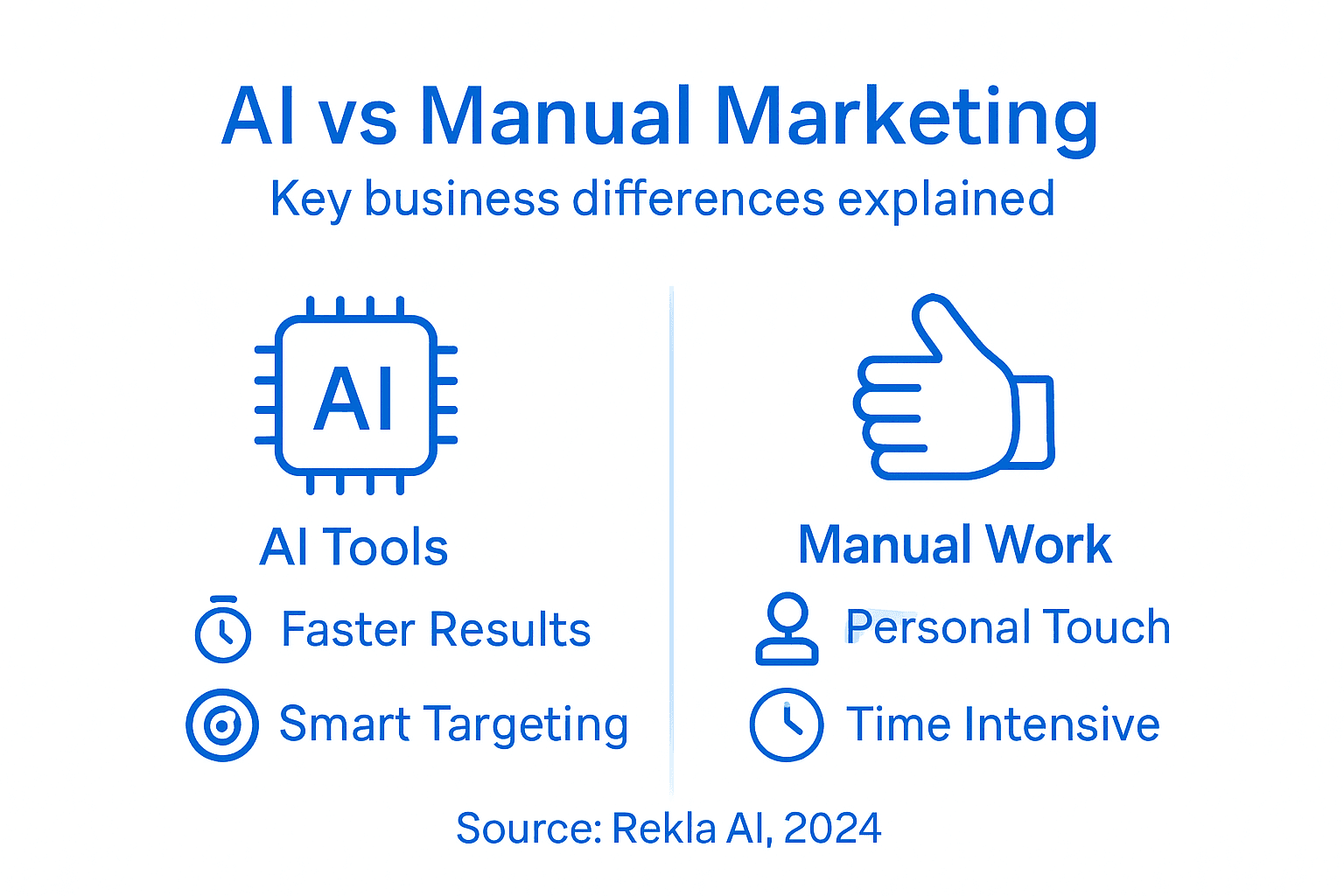
Donde destaca la IA es en el rendimiento medible y escalable. El marketing con inteligencia artificial supera a los métodos manuales en porcentaje de clics e índice de compras., consistently across industries and customer segments. The system creates dozens of ad variations, tests them all at once, identifies winners, and automatically reallocates budget toward top performers. A manual marketer might test two or three variations per month. An AI system tests that many variations per day. This acceleration compounds over time. After one month of AI optimization, your winning ads are significantly more refined than they would be with manual testing. After six months, the gap widens dramatically because the system has tested thousands of variations and learned which messaging resonates with which audiences.
But here’s the honest truth: human creativity and emotional connection matter. Manual marketers excel at understanding nuanced customer psychology and creating emotionally compelling narratives that resonate on a human level. AI struggles with this aspect. It optimizes for clicks and conversions, which sometimes conflicts with brand building and long-term customer loyalty. The winning approach for most small to medium businesses is hybrid. Use AI to handle the heavy lifting: generating variations, testing at scale, managing multi-channel campaigns, and optimizing performance automatically. Meanwhile, your team focuses on strategy, brand positioning, and the creative ideas that AI can refine but never originates. Los sistemas de marketing basados en IA proporcionan mejoras significativas en las tasas de conversión y el valor del ciclo de vida del cliente mientras su equipo se asegura de que esas conversiones beneficien realmente a su marca a largo plazo.
The practical reality is this: if you’re spending time manually adjusting bids, testing variations, or managing campaign schedules, you’re not competitive with businesses using AI. Those repetitive tasks don’t showcase your team’s creativity or strategic thinking. They simply consume time better spent elsewhere. AI handles the work that doesn’t require human judgment, freeing your team for work that does.
Esta tabla contrasta el marketing impulsado por IA con los enfoques manuales para las ventajas de las pequeñas empresas:
| Aspecto | Sistemas de marketing de IA | Marketing manual |
|---|---|---|
| Velocidad | Optimización en tiempo real | Cambios semanales o mensuales |
| Escalabilidad | Gestión de grandes conjuntos de datos | Limitado por el tamaño del equipo |
| Precisión | Anuncios hiperespecíficos | Se basa en la intuición |
| Toque humano | Matices emocionales limitados | Sólida dirección creativa |
Consejo profesional: Don’t view AI as a replacement for your team; view it as an amplifier that handles routine optimization so your team can focus on strategy, creative direction, and customer relationship management where human judgment actually adds value.
Coste, riesgos y dificultades habituales
AI marketing tools aren’t free, and understanding the real costs matters before you commit. Most platforms charge monthly subscriptions ranging from $99 to $500+ depending on features, ad spend volume, and number of campaigns you manage simultaneously. Some charge a percentage of your ad budget itself. For small businesses, this overhead is worth it only if the platform generates measurable returns. Many businesses adopt AI tools expecting automatic results, then abandon them after three months when they realize the tool requires actual strategy and testing, not just activation.
The biggest risk isn’t cost. It’s over-reliance on automation without human oversight. An AI system optimizing purely for clicks might generate ads that drive traffic but produce low-quality conversions. It might emphasize price discounting to boost click-through rates, eroding your brand’s perceived value. It might create technically compliant ads that violate the spirit of platform policies or consumer expectations. Los riesgos incluyen la homogeneización de los contenidos y la pérdida de la voz de la marca when marketers over-automate without maintaining human judgment. Your brand sounds like everyone else’s if you let AI generate all your messaging without strategic direction. Another pitfall is bias in audience targeting. If your historical customer data skews toward one demographic, the AI system learns that pattern and amplifies it, potentially excluding profitable customer segments. También hay problemas éticos y falta de transparencia. en la forma en que la IA toma decisiones, lo que puede dañar la confianza de los consumidores si estos se sienten manipulados por una orientación demasiado personalizada o por mensajes engañosos.
Privacy and compliance present real challenges. AI systems process customer data to make predictions and personalize content. If your tool doesn’t comply with GDPR, CCPA, or other privacy regulations in your markets, you face legal liability. This isn’t theoretical. Businesses have paid significant fines for AI marketing tools that collected or used customer data improperly. Intellectual property concerns also matter. Some AI tools trained on large datasets that may include copyrighted work. If your generated content infringes intellectual property rights, you’re liable, not the platform.
The practical solution involves integration of human judgment at critical checkpoints. Review AI-generated creatives before launch to ensure they align with your brand voice and strategy. Audit performance data to catch patterns where AI optimization conflicts with business goals. Use AI to automate what it’s good at (testing, bid management, audience identification) while keeping humans in charge of strategy, messaging direction, and quality assurance. Start small with limited budgets to test whether the tool actually delivers ROI for your specific business before scaling up.
Consejo profesional: Set clear performance benchmarks and spending limits before launching any AI campaign, then review results weekly to catch problems early; if the tool isn’t delivering measurable returns within the first month, pause and reevaluate rather than continuing to spend in hopes of improvement.
Desbloquee el crecimiento empresarial con la automatización del marketing con IA
Struggling with slow ad creation and wasted budget is a common challenge for many small and medium businesses. This article highlights how AI marketing tools solve these problems by automating campaign management, generating personalized ad creatives, and optimizing spend in real time. Rekla.AI is crafted precisely for businesses like yours looking to simplify digital advertising without needing expert skills. With features such as AI-driven ad generation, multi-channel deployment across platforms like Facebook, Google, TikTok, and LinkedIn, plus smart budget management, Rekla.AI le permite convertir complejas tareas de marketing en oportunidades de crecimiento sin esfuerzo.
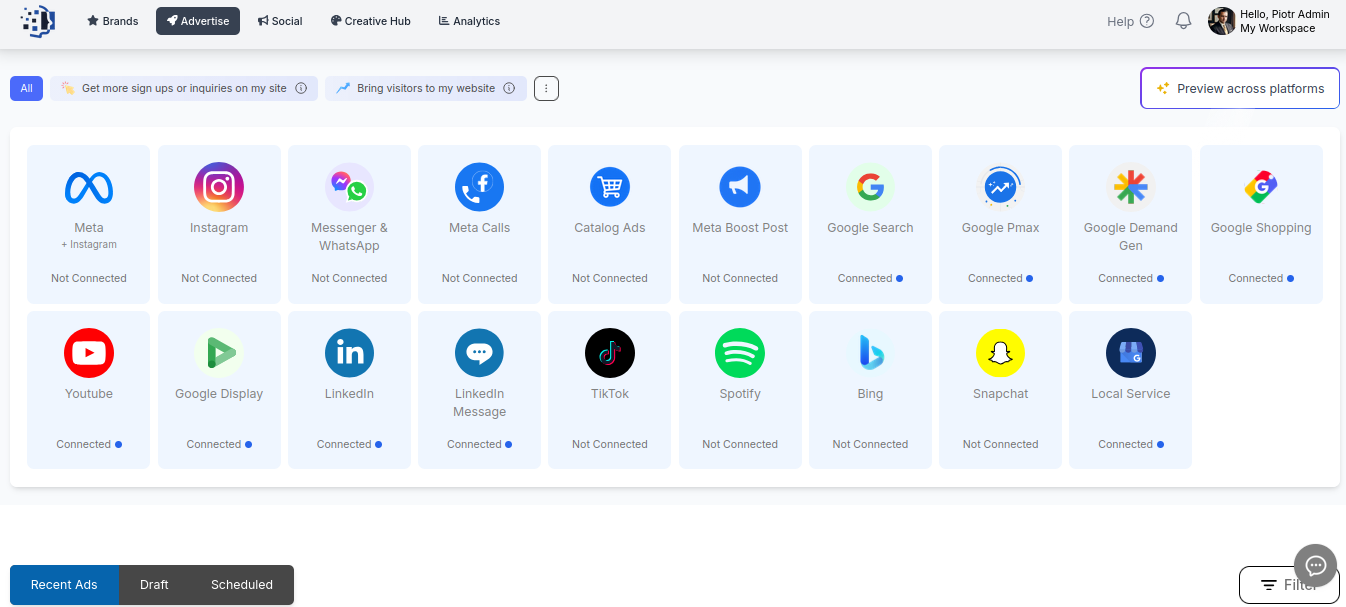
Listo para dejar de perder tiempo en tediosas tareas manuales y empezar a aumentar su ROI con campañas más inteligentes Utilice Rekla.AI hoy mismo para automatizar su publicidad, aumentar el porcentaje de clics y llegar a los clientes adecuados con precisión Visite Rekla.AI y descubra lo fácil que es lanzar campañas impactantes en múltiples plataformas sin complicaciones. Experimente ya el marketing con IA que funciona para su negocio.
Preguntas frecuentes
¿Qué son las herramientas de marketing de IA y cómo benefician a las empresas?
AI marketing tools are intelligent systems that automate and enhance marketing operations by using data collection, machine learning, and natural language processing. They benefit businesses by increasing operational efficiency, enabling personalized marketing, and optimizing ad spending.
¿Cómo elijo la herramienta de marketing de IA adecuada para mi empresa?
Start by identifying your specific marketing challenges, such as content creation or budget management. Look for tools that address these pain points first, and consider platforms that combine various functionalities, such as content generation, customer segmentation, and campaign automation.
¿Pueden las pequeñas empresas competir con las grandes utilizando herramientas de marketing basadas en IA?
Yes, small businesses can effectively compete with larger companies by utilizing AI marketing tools. These tools allow small teams to run sophisticated multi-channel campaigns, optimize ad performance, and allocate budgets efficiently without needing extensive resources.
¿Qué características esenciales deben buscar las pequeñas empresas en las herramientas de marketing de IA?
Small businesses should prioritize automation of routine tasks, data-driven audience targeting, performance analytics, multi-channel deployment, budget management features, and ease of use to streamline marketing efforts and maximize ROI.
Recomendado
- ¿Qué es la publicidad con IA? Campañas más inteligentes y rentables
- ¿Qué es la publicidad con IA? Campañas más inteligentes y rentables
- Guía de estrategia publicitaria digital para obtener resultados más inteligentes en tus campañas
- Guía de estrategia publicitaria digital para obtener resultados más inteligentes en tus campañas
 English
 English (UK)
 Polski
 Deutsch
 Español
 Français
 Português
 Svenska
 Dansk
Dansk Nederlands