

Scaling digital advertising feels impossible when costs spike every time you add a new channel or campaign. Digital marketing managers at growing e-commerce businesses often struggle to maintain control as their reach expands across platforms like Facebook, Google, and Instagram. This article cuts through complexity, highlighting scalable advertising strategies that help you increase impact without draining resources, drawing on research-backed methods to make multi-platform campaign growth smoother and more sustainable.
Inhoudsopgave
- What Makes Advertising Strategies Scalable
- Types of Scalable Digital Ad Campaigns
- How Automation and AI Drive Scalability
- Multi-Platform Campaign Optimization Tactics
- Common Scaling Pitfalls and How To Avoid Them
- Choosing the Right Tools for Your Business
Belangrijkste conclusies
| Punt | Details |
|---|---|
| Scalable Advertising Strategies | Businesses should adopt scalable strategies that leverage automation and AI to optimize targeting, budget allocation, and performance tracking without increased complexity. |
| Types of Scalable Campaigns | Focus on scalable digital ad campaigns such as Search Engine Marketing and Social Media Advertising, which allow for easy budget adjustments and precise audience targeting. |
| Automation and AI Integration | Implement AI technologies to enhance audience targeting, optimize budgets, and personalize content, reducing the need for manual intervention. |
| Avoiding Common Pitfalls | Establish robust monitoring systems, diversify advertising channels, and continuously refine strategies to mitigate risks associated with scaling advertising efforts. |
What Makes Advertising Strategies Scalable
Scalable advertising strategies represent systematic approaches that enable businesses to expand campaign reach and effectiveness without proportionally increasing costs or operational complexity. Digital advertising trends increasingly emphasize scalability as a critical metric for measuring marketing performance.
At their core, scalable advertising strategies possess several fundamental characteristics that differentiate them from traditional marketing approaches:
- Automated Targeting: Leveraging AI and machine learning to identify and reach potential customers more precisely
- Flexible Budget Allocation: Dynamic reallocation of resources based on real-time performance metrics
- Cross-Platform Compatibility: Seamless campaign execution across multiple digital advertising channels
- Prestaties bijhouden: Comprehensive analytics that provide immediate insights into campaign effectiveness
The technological infrastructure supporting scalable strategies has transformed dramatically. Modern platforms now integrate advanced technologies that enable marketers to manage increasingly complex campaigns with minimal manual intervention. Systematic research highlights organizational capabilities as a critical factor in developing truly scalable advertising approaches.
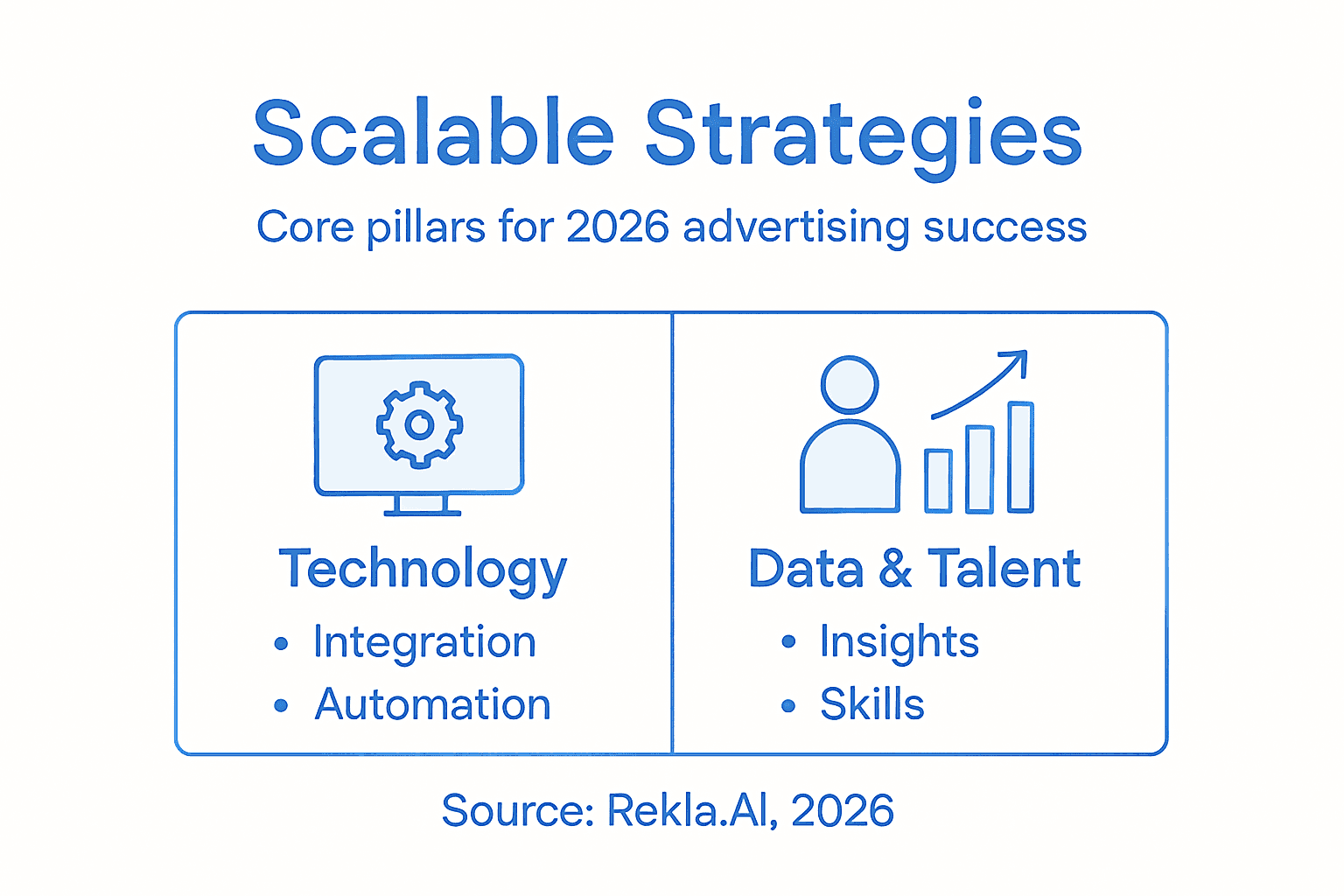
Successful scalable strategies depend on three primary pillars: technological integration, data-driven decision making, and adaptive campaign management. Businesses must invest in platforms that can automatically optimize targeting, adjust budgets, and provide granular performance insights without requiring constant human supervision.
Pro-tip: Start small with your scalable advertising strategy, focus on one or two channels, and gradually expand your approach as you understand the performance dynamics.
Types of Scalable Digital Ad Campaigns
Digital advertising offers multiple campaign types that enable businesses to expand their marketing reach efficiently. Social media marketing strategies demonstrate remarkable scalability, providing flexible options for businesses across different industries and budget ranges.
The primary types of scalable digital ad campaigns include:
- Search Engine Marketing (SEM): Paid advertisements appearing alongside search results
- Adverteren via sociale media: Targeted ads on platforms like Facebook, Instagram, and LinkedIn
- Display Network Campaigns: Visual ads displayed across websites and mobile applications
- Influencer Marketing: Collaborative promotions with content creators
- Programmatisch adverteren: Automated ad purchasing using real-time bidding technologies
Digital marketing strategies vary significantly in their scalability potential. Search engine and social media campaigns typically offer the most straightforward paths to expansion, allowing marketers to incrementally increase budget and reach without substantially changing campaign infrastructure.
Here’s a comparison of scalable digital ad campaign types and their unique benefits for businesses:
| Campaign Type | Scalability Advantage | Typisch gebruik |
|---|---|---|
| Search Engine Marketing | Easy budget adjustment | Drive immediate website traffic |
| Adverteren via sociale media | Precieze doelgroepbepaling | Build brand awareness and engagement |
| Display Network | Wide reach with automation | Retargeting and broad brand exposure |
| Influencer Marketing | Authentic audience trust | Niche market activation |
| Programmatisch adverteren | Real-time performance optimization | Large-scale, data-driven campaigns |
Successful scalable campaigns leverage advanced targeting technologies, enabling precise audience segmentation and performance tracking. Businesses can dynamically adjust their strategies by monitoring key metrics such as click-through rates, conversion percentages, and customer acquisition costs across different campaign types.

Pro-tip: Start with one or two scalable campaign types, master their mechanics, and gradually diversify your digital advertising portfolio to minimize risk and maximize learning.
How Automation and AI Drive Scalability
AI technologies are transforming advertising scalability by dramatically reducing manual intervention and enabling more sophisticated campaign management. Modern digital marketing requires intelligent systems that can adapt, optimize, and execute strategies with minimal human input.
Key mechanisms through which automation and AI enhance advertising scalability include:
- Intelligent Audience Targeting: Using machine learning to identify and segment potential customers with unprecedented precision
- Dynamic Budget Optimization: Automatically reallocating ad spend based on real-time performance metrics
- Predictive Performance Analytics: Forecasting campaign outcomes and suggesting proactive adjustments
- Personalized Content Generation: Creating tailored ad creatives that resonate with specific audience segments
- Cross-Platform Campaign Management: Seamlessly coordinating advertising efforts across multiple digital channels
Marketing AI applications continue evolving, providing increasingly sophisticated tools for businesses to expand their advertising reach. These technologies enable companies to overcome traditional scaling limitations by introducing unprecedented levels of efficiency and data-driven decision-making.
The most advanced AI systems can now perform complex tasks such as audience segmentation, creative optimization, and performance prediction with minimal human oversight. By leveraging machine learning algorithms, businesses can create advertising strategies that continuously improve and adapt to changing market conditions without requiring constant manual intervention.
Pro-tip: Start by integrating one AI-powered marketing tool and gradually expand your automation strategy to minimize disruption and maximize learning opportunities.
Multi-Platform Campaign Optimization Tactics
Digital advertising strategies require comprehensive cross-platform approaches that align performance metrics and audience engagement across multiple digital channels. Successful marketers understand that modern advertising demands a holistic, integrated strategy rather than siloed platform-specific tactics.
Key multi-platform optimization tactics include:
- Unified Performance Tracking: Establishing consistent metrics across all advertising channels
- Audience Segmentation: Creating detailed customer profiles that work across different platforms
- Creative Asset Adaptation: Customizing content to suit specific platform requirements while maintaining brand consistency
- Cross-Platform Retargeting: Implementing sequential messaging strategies that follow user journeys
- Dynamic Budget Reallocation: Shifting resources based on real-time performance data
Experimental methods can significantly improve campaign effectiveness, particularly when marketers continuously test and refine their approach. Advanced optimization requires a combination of data analysis, creative flexibility, and strategic thinking that goes beyond platform-specific best practices.
Successful multi-platform campaigns leverage technology to create seamless experiences, ensuring that each touchpoint builds upon the last. This approach requires sophisticated tracking mechanisms, intelligent data integration, and a willingness to experiment and adapt quickly to changing audience behaviors.
Pro-tip: Develop a centralized dashboard that aggregates performance data from all platforms, enabling real-time insights and rapid strategic adjustments.
Common Scaling Pitfalls and How To Avoid Them
Online advertising scaling presents complex challenges for businesses seeking predictable and sustainable growth. Successful digital marketing requires a nuanced understanding of potential obstacles that can derail advertising expansion efforts and strategic approaches to mitigate these risks.
The most significant scaling pitfalls include:
- Budget Misallocation: Incorrectly distributing advertising spend across platforms
- Audience Saturation: Exhausting target demographics through repetitive messaging
- Data Misinterpretation: Drawing incorrect conclusions from incomplete or misleading analytics
- Platform Dependency: Over-relying on single advertising channels
- Inflexible Strategies: Failing to adapt campaigns based on real-time performance metrics
Advertising research emphasizes continuous strategy refinement as critical for sustainable campaign growth. Marketers must develop adaptive frameworks that allow dynamic adjustments in response to changing market conditions and audience behaviors.
Mitigating scaling risks requires a multifaceted approach that combines technological sophistication, data-driven decision making, and strategic flexibility. Businesses should implement robust monitoring systems, maintain diverse advertising portfolios, and continuously test and refine their scaling methodologies.
For reference, here are common advertising scaling pitfalls and strategies to avoid them:
| Valkuil | Impact | How to Avoid |
|---|---|---|
| Budget Misallocation | Wasted spend, poor results | Implement performance tracking |
| Audience Saturation | Reduced engagement | Rotate creatives frequently |
| Data Misinterpretation | Incorrect decisions | Use reliable analytics tools |
| Platform Dependency | Growth limitations | Diversify channel strategies |
| Inflexible Strategies | Missed optimization chances | Schedule ongoing campaign reviews |
Pro-tip: Create a quarterly review process to systematically assess campaign performance, reallocate resources, and identify potential scaling bottlenecks before they become critical problems.
Choosing the Right Tools for Your Business
Marketing technology selection critically impacts business growth by determining how effectively companies can scale their advertising strategies. The right tools can transform marketing performance, while misaligned technologies can become significant operational barriers.
Key considerations when selecting advertising tools include:
- Scalability Potential: Ability to grow with your business needs
- Integration Capabilities: Seamless connection with existing marketing infrastructure
- Budget Alignment: Cost-effectiveness relative to expected returns
- User Experience: Intuitive interface for team adoption
- Analytics Depth: Comprehensive performance tracking and insights
- Customization Options: Flexibility to adapt to unique business requirements
Computational content analysis tools offer advanced marketing capabilities, enabling businesses to leverage sophisticated analytics for more precise campaign management. Modern marketing technologies go far beyond simple tracking, providing intelligent insights that can dramatically improve strategic decision-making.
Successful tool selection requires a holistic approach that considers not just current needs, but potential future requirements. Businesses should prioritize platforms that offer modular growth, robust support, and continuous technological innovation to remain competitive in rapidly evolving digital landscapes.
Pro-tip: Conduct a comprehensive audit of your current marketing technology stack, identifying gaps and overlaps before investing in new tools to ensure strategic, cost-effective expansion.
Scale Your Advertising Success with Rekla.AI Today
The article highlights how scalable advertising strategies demand smart automation, precise targeting, and real-time optimization to overcome challenges like budget misallocation, audience saturation, and platform dependency. If you want to boost ROI while managing multi-platform campaigns effortlessly, Rekla.AI offers the perfect solution. Our AI-powered platform integrates advanced audience segmentation, dynamic budget management, and automated ad generation so you can focus on growing your business without the typical complexities of digital marketing.
Take control of your ad campaigns with features that match the exact needs outlined in the article:
- AI-driven targeting that adapts in real time
- Multi-channel automation across platforms like Facebook, Google, TikTok, and more
- Budget optimization tools to reduce wasted spend
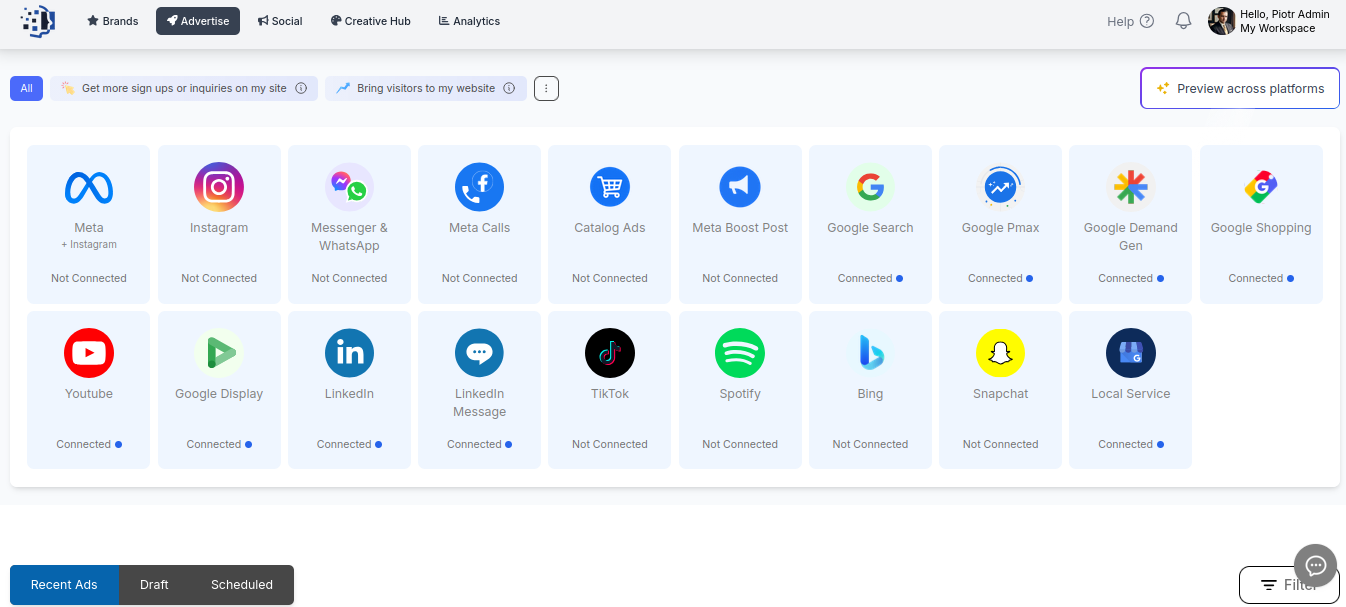
Experience how Rekla.AI’s intelligent automation transforms your advertising into a scalable growth engine. Start small, learn fast, and expand confidently with a user-friendly platform trusted by small and medium businesses. Visit Rekla.AI now to discover scalable advertising made simple and effective. Unlock the power of next-gen digital marketing and take your campaigns further than ever before.
Veelgestelde vragen
What are scalable advertising strategies?
Scalable advertising strategies are systematic approaches that allow businesses to expand their marketing reach and effectiveness without significantly increasing costs or complexity. These strategies prioritize automation, flexible budgets, and cross-platform compatibility.
How can automation and AI enhance advertising scalability?
Automation and AI enhance scalability by enabling intelligent audience targeting, dynamic budget optimization, predictive performance analytics, personalized content generation, and cross-platform campaign management, all with minimal human intervention.
What types of digital ad campaigns are most scalable?
The most scalable digital ad campaigns include Search Engine Marketing (SEM), Social Media Advertising, Display Network Campaigns, Influencer Marketing, and Programmatic Advertising. These approaches allow for easy budget adjustments and precise audience targeting.
What common pitfalls should be avoided when scaling advertising efforts?
Common pitfalls include budget misallocation, audience saturation, data misinterpretation, platform dependency, and inflexible strategies. To avoid these, implement performance tracking, rotate creatives, use reliable analytics tools, diversify channel strategies, and conduct regular campaign reviews.
 English
 English (UK)
 Polski
 Deutsch
 Español
 Français
 Português
 Svenska
 Dansk
Dansk Nederlands