
Choosing the right audience targeting strategy can feel overwhelming when you’re managing digital ad campaigns with limited resources. Small to medium-sized businesses often struggle to match their campaign goals with the best AI-powered targeting methods available across different platforms. This guide breaks down the essential criteria you need to evaluate, compares top Strategie ukierunkowania odbiorców oparte na sztucznej inteligencji, i pokazuje, jak zmaksymalizować zwrot z inwestycji dzięki sprawdzonym rozwiązaniom AI w 2026 roku.
Spis treści
- Wstęp: Jak wybrać odpowiednią strategię targetowania odbiorców
- Segmentacja Klientów Wspomagana przez Sztuczną Inteligencję
- Strategie targetowania specyficzne dla platformy
- Optymalizacja widowni w czasie rzeczywistym z wykorzystaniem sztucznej inteligencji
- Porównanie tradycyjnych i sterowanych przez AI metod targetowania
- Analiza kosztów i korzyści różnych strategii targetowania
- Multiplatformowa Automatyzacja i Optymalizacja AI
- Rekomendacje sytuacyjne: Wybór najlepszej strategii dla Twojej firmy
- Odkryj Rekla.AI w inteligentniejszym targetowaniu odbiorców opartym na sztucznej inteligencji
- Najczęściej zadawane pytania dotyczące strategii docierania do odbiorców za pomocą sztucznej inteligencji
Kluczowe wnioski
| Punkt | Szczegóły |
|---|---|
| Wpływ segmentacji AI | Segmentacja oparta na sztucznej inteligencji może poprawić zwrot z inwestycji w kampanię nawet o 30% dzięki precyzyjnej identyfikacji odbiorców. |
| Wydajność platformy jest zmienna | Narzędzia AI specyficzne dla platformy dostarczają różnych poziomów skuteczności, a grupy odbiorców podobnych do Facebooka zwiększają konwersje o 20-25%. |
| AI kontra tradycyjne targetowanie | Metody oparte na sztucznej inteligencji przewyższają tradycyjne targetowanie demograficzne o 18% w tempie konwersji. |
| Optymalizacja w czasie rzeczywistym Prędkość | AI przyspiesza usprawnienia kampanii o 40% dzięki szybszym testom A/B i dynamicznym dostosowaniom. |
| Efektywność budżetowa | Wieloplatformowa automatyzacja AI zwiększa efektywność alokacji budżetu o 25%. |
Wstęp: Jak wybrać właściwą strategię targetowania odbiorców
Your campaign objectives should drive every targeting decision you make. If you’re focused on brand awareness, you’ll need different audience parameters than if you’re pushing for direct conversions. Start by defining whether you want to reach new prospects, re-engage past visitors, or nurture existing leads.
Budget constraints directly impact which AI targeting strategies you can realistically adopt. Entry-level AI tools on single platforms typically cost $500 to $800 monthly, while comprehensive multi-platform solutions range from $1,200 to $2,000. Your available spend determines whether you start with basic AI segmentation or jump straight into advanced automation.
Platform capabilities matter because each advertising channel offers unique AI targeting features. Selecting the right targeting strategy means understanding that selecting targeting strategies aligned with business objectives boosts ROI significantly. Facebook excels at lookalike modeling, Google dominates intent-based targeting, and LinkedIn leads in B2B professional segmentation.
Jakość i rodzaje dostępnych danych demograficznych kluczowo wpływają na precyzję targetowania. Rozważ te kategorie danych przy ocenie strategii:
- Dane demograficzne obejmują wiek, lokalizację, dochód i poziom wykształcenia do podstawowej definicji odbiorców
- Dane behawioralne śledzą działania użytkowników, historię zakupów i wzorce zaangażowania w celu predykcyjnego targetowania.
- Dane kontekstowe analizują konsumpcję treści i kontekst przeglądania pod kątem odpowiedniego umieszczania reklam
- Dane intencyjne zbierają zapytania wyszukiwania i badania produktów w celu identyfikacji potencjalnych klientów o wysokim współczynniku konwersji.
Your AI integration level represents the final critical factor. Basic AI tools automate audience selection, while advanced systems continuously learn and optimize targeting parameters in real time based on performance feedback.
Segmentacja klientów oparta na sztucznej inteligencji
Artificial intelligence transforms audience segmentation by processing massive behavioral datasets that humans simply can’t analyze at scale. Machine learning algorithms identify patterns in user actions, content consumption, and purchase behaviors to create hyper-specific audience segments that convert better than broad demographic groups.
Combining contextual targeting with AI behavior analysis produces remarkable efficiency gains. When you layer where users consume content with what actions they take, you reduce wasted ad spend by approximately 25%. This dual approach ensures your ads reach people in the right mindset at the right moment.
Segmentacja odbiorców oparta na sztucznej inteligencji enables truly personalized ad experiences across multiple channels. Instead of showing the same generic message to everyone in a demographic bucket, you can deliver individualized creative that speaks to specific pain points, interests, and stage in the customer journey. AI segmentation increases ROI by up to 30% when implemented correctly.

The correlation between segmentation sophistication and campaign ROI is clear and measurable. Businesses using basic demographic targeting typically see 2-3% conversion rates, while those leveraging AI-driven behavioral segmentation achieve 4-5% or higher. That difference compounds quickly when you’re spending thousands monthly on ads.
Pro Tip: Prioritize feeding your AI segmentation tools diverse, high-quality data inputs from multiple sources. The more varied your data, from website behavior to email engagement to CRM purchase history, the more accurately AI can identify your best audience segments and predict future high-value customers.
Strategie targetowania specyficzne dla platformy
Facebook’s lookalike audience feature uses AI to analyze your best existing customers and find similar users across its network. Businesses typically see conversion rate increases of 20-25% when they build lookalikes from high-value customer lists rather than broader website visitors. The algorithm examines hundreds of data points to score similarity.
Google’s custom intent audiences reduce cost per click by around 15% by targeting users based on their search behavior and content consumption patterns. You input keywords and URLs related to your product, and Google’s AI finds people actively researching those topics. This intent-based approach captures users further down the funnel.
TikTok’s AI targeting algorithms analyze video engagement patterns, sound preferences, and content categories to boost engagement rates 1.5 times higher than platform averages. The short-form video format combined with sophisticated content recommendation AI creates unique opportunities for brands willing to adapt their creative approach.
LinkedIn Matched Audiences wykorzystuje dane profesjonalne do poprawić jakość leadów B2B o 30% compared to standard targeting options. You can upload contact lists, target website visitors, or create lookalikes based on your best accounts. The professional context ensures your ads reach decision-makers during work hours.
Oto jak te platformy porównują się w typowych kampaniach dla małych i średnich firm:
| Platforma | Najlepszy przypadek użycia | Średnia poprawa CTR | Typowe Minimum Miesięczne |
|---|---|---|---|
| Facebook Podobne grupy odbiorców | E-commerce, marki DTC | 20-25% | $500 |
| Niestandardowa intencja Google | Usługi, zakupy wysokiego ryzyka | 15-18% | $800 |
| TikTok AI Targeting | Świadomość marki, młodsze grupy demograficzne | 40-50% | $600 |
| Dopasowane grupy odbiorców LinkedIn | Generowanie leadów B2B, usługi profesjonalne | 25-30% | $1,000 |
Twój wybór powinien być zgodny z tym, gdzie spędza czas Twoja publiczność docelowa i celami Twojej kampanii. Platformowo specyficzne możliwości targetowania AI znacząco różnią się zarówno pod względem skuteczności, jak i złożoności implementacji.
Optymalizacja odbiorców w czasie rzeczywistym za pomocą sztucznej inteligencji
AI dramatically accelerates your A/B testing cycles by automatically analyzing performance data and shifting budget to winning variations. What used to take weeks of manual monitoring now happens in days or even hours. AI-powered A/B testing accelerates optimization by 40% compared to manual testing processes.
Dynamic creative optimization takes this further by testing multiple combinations of headlines, images, calls to action, and ad copy simultaneously. The AI learns which elements resonate with specific audience segments and automatically assembles the best-performing combinations. This approach can increase click-through rates by up to 35%.
Optymalizacja odbiorców w czasie rzeczywistym za pomocą sztucznej inteligencji allows agile campaign adjustments based on hourly performance data rather than weekly reports. When an audience segment shows signs of fatigue or a new segment emerges as high-performing, AI can reallocate budget instantly without waiting for your manual intervention.
Postępuj zgodnie z tym stopniowym procesem, aby skutecznie wdrożyć optymalizację opartą na sztucznej inteligencji:
- Określ swoją hipotezę, identyfikując, które segmenty odbiorców lub elementy kreatywne chcesz przetestować najpierw
- Uruchom różne warianty w wybranych segmentach z równym początkowym budżetem.
- Pozwól algorytmom AI na zbieranie statystycznie istotnych danych przez minimum 3-5 dni
- Analizuj sugerowanych przez AI zwycięzców na podstawie swojego głównego celu konwersji, nie tylko kliknięć.
- Wdrażaj zoptymalizowane reklamy na dużą skalę, jednocześnie utrzymując niewielki budżet na testowanie w celu ciągłego uczenia się
- Monitoruj wskaźniki zmęczenia odbiorców, takie jak rosnący koszt działania lub spadające zaangażowanie
Pro Tip: Refresh your ad creative based on AI performance feedback every 2-3 weeks to maintain audience engagement. Even winning ads eventually suffer from creative fatigue, so build a pipeline of new variations to test continuously rather than letting successful ads run unchanged for months.
Porównanie tradycyjnych i opartych na sztucznej inteligencji metod targetowania
Luka wydajności między tradycyjnym targetowaniem demograficznym a strategiami opartymi na sztucznej inteligencji stale się pogłębia. Tradycyjne targetowanie ma o 18% niższą konwersję niż metody oparte na sztucznej inteligencji ponieważ same dane demograficzne nie uwzględniają kluczowych sygnałów behawioralnych i intencji, które przewidują prawdopodobieństwo zakupu.
Click-through rates tell an even more dramatic story. AI-powered targeting that incorporates behavioral data, purchase intent signals, and contextual relevance achieves CTRs up to 3 times higher than basic demographic targeting. The precision of AI eliminates much of the spray-and-pray waste inherent in broader audience definitions.
Wasted ad spend represents the hidden cost of traditional targeting approaches. When you target all women aged 25-45 interested in fitness, you’re inevitably paying to reach thousands who will never convert. AI narrows that group to women showing active purchase intent signals, recent relevant searches, and behavioral patterns matching your best customers.
“The shift from demographic to AI-driven behavioral targeting represents the biggest efficiency gain in digital advertising since the move from print to digital. Brands still relying primarily on age and location targeting are leaving 20-30% of potential ROI on the table.”
Marketing AI Institute, Raport o wskaźnikach efektywności na rok 2025
To porównanie pokazuje mierzalne różnice:
| Metryczny | Demografia tradycyjna | Wspomagane przez sztuczną inteligencję zachowania |
|---|---|---|
| Średnia skuteczność konwersji | 2.1% | 3.8% |
| Współczynnik klikalności | 0.9% | 2.7% |
| Nieefektywne wydatki na reklamę | 35-45% | 12-18% |
| Czas na optymalizację | 3-4 tygodnie | 5-7 dni |
| Wynik Precyzji Celowania | 6.2/10 | 8.9/10 |
The Adweek AI targeting study examined over 500 campaigns and found consistent performance advantages across industries. The comparison of targeting methods helps SMBs understand why investing in AI capabilities pays off quickly despite higher initial costs.
Analiza kosztów i korzyści różnych strategii targetowania
AI targeting tools typically cost between $500 and $2,000 monthly depending on platform access and feature sophistication. For most SMBs spending $3,000 or more monthly on ads, this investment pays for itself within the first month through improved conversion rates and reduced waste.
Multi-platform AI tools improve budget allocation efficiency by approximately 25% by automatically shifting spend toward your best-performing channels and audience segments. Instead of manually monitoring five different ad platforms and making weekly adjustments, the AI rebalances daily based on real-time performance data.
The initial AI investment gets offset quickly by higher conversion rates and dramatically reduced wasted spend. If traditional targeting wastes 40% of your budget on low-intent audiences, and AI reduces that to 15%, you’ve effectively gained 25% more working budget. On a $5,000 monthly spend, that’s $1,250 in recovered efficiency.
Traditional targeting appears cheaper upfront because it relies on native platform tools with no additional software costs. However, the lower ROI and inefficient spend mean you need larger total budgets to achieve the same results as AI-driven campaigns.
Weź pod uwagę te czynniki przy ocenie kosztów:
- Narzędzia AI: Wyższy miesięczny koszt ($500-$2 000), lepszy zwrot z inwestycji (25-30% poprawy), szybsza optymalizacja (dni zamiast tygodni), skalowalność na wielu platformach
- Tradycyjne targetowanie: niższy koszt początkowy ($0-$200), podstawowe wyniki ROI, wolniejsza optymalizacja (tygodnie), wymaga więcej czasu na zarządzanie ręczne
- Punkt rentowności: Większość MŚP odzyskuje koszty narzędzi AI w ciągu 30-45 dni dzięki poprawie wyników
- Wartość długoterminowa: systemy SI stale się doskonalą, ucząc się na podstawie większej ilości danych, co z czasem powiększa lukę w wydajności
The Analiza kosztów i korzyści celowania AI favors adoption for any business spending over $2,500 monthly on digital advertising. Below that threshold, focusing on a single platform’s native AI features often makes more sense than comprehensive multi-platform tools.
Wieloplatformowa automatyzacja i optymalizacja AI
Integrated AI platforms solve the complexity problem that stops many SMBs from scaling their digital advertising efforts. Managing separate campaigns across Facebook, Google, TikTok, LinkedIn, and YouTube manually becomes overwhelming fast. Automation centralizes control while maintaining platform-specific optimization.
These unified systems enable seamless cross-channel optimization by sharing learnings between platforms. When the AI discovers that certain audience characteristics convert well on Facebook, it can apply those insights to refine targeting on Google and TikTok simultaneously. This cross-pollination of data accelerates the learning curve dramatically.
Automation drives budget efficiency gains of up to 25% by eliminating the delays inherent in manual management. The AI monitors performance 24/7 and shifts budget toward winning combinations instantly, not when you next log in to check your campaigns. Those hours of compounding advantage add up quickly.
Multi-platform approaches particularly benefit SMBs trying to compete against larger competitors with dedicated marketing teams. The automation levels the playing field by giving you sophisticated optimization capabilities that would otherwise require multiple full-time specialists.
Kluczowe zalety zintegrowanych platform obejmują:
- Zunifikowane pulpity zapewniają pełną widoczność kampanii we wszystkich kanałach w jednym interfejsie
- Zautomatyzowana realokacja budżetu maksymalizuje zwrot z inwestycji bez ciągłego monitorowania ręcznego.
- Wgląd w grupę odbiorców międzyplatformowych ujawnia, które segmenty działają najlepiej w każdym kanale
- Uproszczone raportowanie ułatwia prezentację zwrotu z inwestycji interesariuszom lub klientom.
The Korzyści z wieloplatformowej automatyzacji AI extend beyond just efficiency gains. You also gain the ability to test and scale strategies faster, maintain consistent messaging across channels, and avoid the creative fatigue that comes from manually managing too many campaigns.
Pro Tip: Choose platforms that offer unified dashboards with customizable views so you can monitor the specific metrics that matter most to your business goals. The ability to quickly spot trends across channels helps you make strategic decisions about where to invest more aggressively.
Rekomendacje sytuacyjne: Wybór najlepszej strategii dla Twojej firmy
Twoja konkretna sytuacja determinuje, która strategia ukierunkowania AI przyniesie najlepsze rezultaty dla Twojej inwestycji. Budżet, cele kampanii i rodzaj prowadzonej działalności mają wpływ na optymalne podejście.
For limited budgets under $3,000 monthly, focus on single-platform AI segmentation like Facebook lookalike audiences. This approach gives you sophisticated AI targeting without the overhead of multi-platform tools. Build your lookalikes from your highest-value customer segments for maximum impact.
B2B campaigns gain disproportionate value from LinkedIn’s AI Matched Audiences because of the platform’s professional data and decision-maker access. The higher cost per click is justified by significantly better lead quality and shorter sales cycles when you reach the right business contacts.
Brand awareness objectives are maximized using TikTok’s AI-driven targeting features, which excel at finding engaged audiences for video content. The platform’s recommendation algorithm can expose your brand to millions of relevant users quickly if your creative resonates with the target demographic.
Skalowanie złożonych kampanii w wielu kanałach najlepiej przynosi korzyści dzięki zintegrowanym, wieloplatformowym narzędziom automatyzacji AI, takim jak Rekla.AI. Koordynacja i optymalizacja w kanałach przynoszą zwroty, które uzasadniają wyższe koszty narzędzi, gdy wydajesz $5 000 lub więcej miesięcznie na reklamy.
Postępuj zgodnie z poniższymi wskazówkami, aby dopasować swoją sytuację do odpowiedniej strategii:
- Oceń swój całkowity miesięczny budżet reklamowy i określ, ile możesz przeznaczyć na narzędzia AI (zazwyczaj 10-15% wydatków reklamowych)
- Określ swój główny cel kampanii: świadomość, rozważenie czy konwersja
- Oceń, z których platform korzysta Twoja grupa docelowa najaktywniejsz, opierając się na danych klientów
- Zacznij od platformy oferującej najsilniejsze natywne funkcje sztucznej inteligencji dla Twojego celu
- Test trwający 60-90 dni, mierz poprawę wydajności w odniesieniu do podstawowych wskaźników
- Rozszerz na dodatkowe platformy lub przejdź na automatyzację wieloplatformową po udowodnieniu zwrotu z inwestycji na jednym kanale
The situational audience targeting recommendations should align with where you are in your business growth journey, not just what’s theoretically optimal. Start where you can prove value, then scale systematically.
Eksploruj Rekla.AI dla inteligentniejszego targetowania odbiorców dzięki sztucznej inteligencji
Wdrażanie strategii omówionych w tym przewodniku staje się znacznie prostsze, gdy korzystasz ze zintegrowanej platformy stworzonej specjalnie z myślą o potrzebach MŚP. Rekla.AI umożliwia dostarczanie możliwości targetowania AI na poziomie korporacyjnym za pośrednictwem łatwego w obsłudze interfejsu, zaprojektowanego dla marketerów bez wiedzy technicznej.
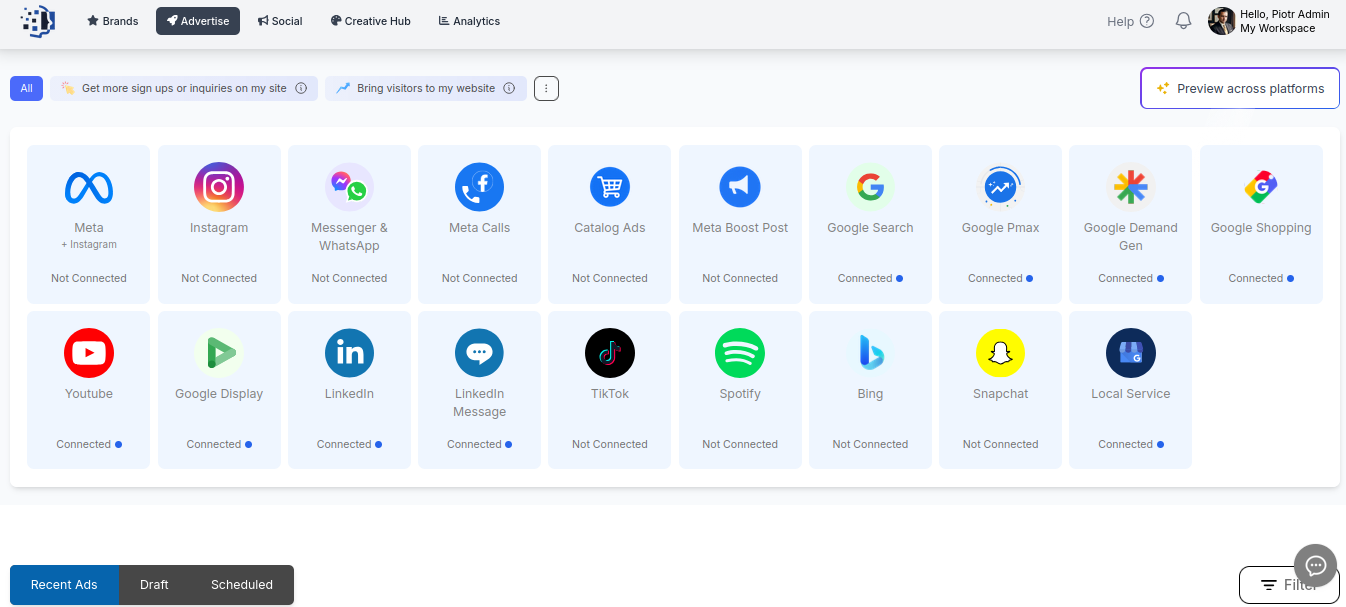
Platformowa sztuczna inteligencja zajmuje się dynamicznym targetowaniem odbiorców za pomocą Rekla.AI across more than 15 advertising channels, automatically optimizing your budget allocation to maximize returns. Instead of manually monitoring Facebook, Google, TikTok, LinkedIn, and other platforms separately, you get unified control with AI doing the heavy optimization work.
Rekla.AI’funkcje automatyzacji pozwalają na automatyzację kampanii reklamowych za pomocą Rekla.AI while maintaining full creative control and strategic oversight. The AI generates ad variations, tests them across platforms, and scales winners without requiring constant manual intervention. This frees you to focus on strategy and creative development rather than spreadsheet management.
Dla MŚP gotowych do przyjęcia podejść targetowania opartych na sztucznej inteligencji opisanych w całym tym artykule, Rekla.AI platforma provides the complete toolkit to implement, test, and scale effectively. The combination of AI ad generation, real-time optimization, and multi-platform automation addresses the core challenges of modern digital advertising.
Najczęściej zadawane pytania dotyczące strategii kierowania na odbiorców z wykorzystaniem sztucznej inteligencji
Jakie są najłatwiejsze w implementacji narzędzia do targetowania AI dla małych i średnich firm?
Facebook’s lookalike audiences and Google’s responsive search ads offer the most accessible entry points for AI targeting. Both require minimal setup, leverage existing customer data, and deliver measurable improvements within weeks. Start with one platform’s native AI features before investing in third-party tools.
Jak ukierunkowanie reklamowe AI wpływa na prywatność i zgodność z przepisami dotyczącymi reklam?
AI targeting actually improves privacy compliance by reducing reliance on third-party cookies and focusing on first-party behavioral data and contextual signals. Modern AI tools are built to respect privacy regulations like GDPR and CCPA while still delivering precise targeting. Always verify your platform complies with current regulations in your target markets.
Czy MŚP mogą bezpośrednio mierzyć poprawę zwrotu z inwestycji z targetowania AI?
Yes, measuring AI targeting ROI is straightforward by comparing conversion rates, cost per acquisition, and total revenue before and after implementation. Run campaigns with and without AI features simultaneously for 30-60 days to establish clear performance differences. Most SMBs see measurable improvements within the first month of proper AI targeting implementation.
Czy AI targetowanie jest odpowiednie dla wszystkich branż i typów kampanii?
AI targeting delivers value across most industries, but the specific approach varies by business model and campaign objective. E-commerce and lead generation campaigns typically see the strongest immediate results. Brand awareness campaigns benefit but may take longer to show clear ROI. Highly niche B2B companies with very small total addressable markets may need to combine AI tools with manual account-based targeting for best results.
 English
 English (UK)
 Polski
 Deutsch
 Español
 Français
 Português
 Svenska
 Dansk
Dansk Nederlands