

Digital marketers face a persistent challenge: producing engaging ad creatives quickly and affordably. Traditional methods demand significant time and resources, often yielding inconsistent results. Recent data reveals that AI-driven ad creative generation can boost engagement rates by up to 30%, transforming how small and medium-sized businesses approach digital advertising. This article explores how AI automates and optimizes ad content creation, the technologies powering these solutions, and practical steps to implement them successfully.
Spis treści
- Zrozumienie generowania kreacji reklamowych
- Mechanika generowania kreacji reklamowych AI
- Wpływ kreacji reklamowych opartych na sztucznej inteligencji na wydajność
- Powszechne nieporozumienia dotyczące sztucznej inteligencji w generowaniu kreacji reklamowych
- Porównanie sztucznej inteligencji i tradycyjnych metod tworzenia reklam
- Wyzwania i ograniczenia kreatywnego generowania AI
- Rzeczywiste zastosowanie i korzyści
- Wdrożenie i optymalizacja przy użyciu sztucznej inteligencji
- Odkryj kreatywne rozwiązania reklamowe Rekla.AI oparte na sztucznej inteligencji
Najważniejsze wnioski
| Punkt | Szczegóły |
|---|---||
| Sztuczna inteligencja znacznie zwiększa zaangażowanie Reklamy generowane przez sztuczną inteligencję mogą zwiększyć wskaźniki zaangażowania o 30% i obniżyć koszty o 25% w porównaniu z tradycyjnymi metodami. |
| Zaawansowane modele AI tworzą dostosowane treści reklamowe w oparciu o dane odbiorców, intencje i wzorce zachowań. |
| Ludzki nadzór pozostaje niezbędny. Sztuczna inteligencja zwiększa kreatywność, ale wymaga ludzkiej kontroli w celu utrzymania spójności marki i standardów jakości. |
| Szybsza, skalowalna produkcja | Sztuczna inteligencja generuje wiele kreatywnych wariantów 70% szybciej niż procesy ręczne, umożliwiając szybkie testowanie. |
| Integracja maksymalizuje wyniki | Połączenie narzędzi AI z istniejącymi przepływami pracy i ciągłą optymalizacją zapewnia najlepsze wyniki. |
Zrozumienie generowania kreacji reklamowych
Ad creative generation refers to the automated production of advertising content including text, images, video, and dynamic copy variations. This process transforms raw inputs like brand guidelines, product information, and audience data into polished, platform-ready ad assets.
The technology produces several creative formats. Static images serve display campaigns and social feeds. Animated visuals capture attention in stories and reels. Short videos engage audiences on platforms like TikTok and YouTube. Dynamic copy variations test different messaging angles simultaneously.
AI and machine learning revolutionize this process by automating repetitive tasks, personalizing content at scale, and accelerating production cycles. Machine learning refers to systems that improve performance through experience, learning patterns from data without explicit programming. Automation eliminates manual content assembly, freeing marketers to focus on strategy and refinement.
Kluczowe możliwości oferowane przez sztuczną inteligencję obejmują:
- Generowanie dziesiątek wariantów reklam z jednego briefu w ciągu kilku minut
- Personalizacja wiadomości na podstawie sygnałów demograficznych, behawioralnych i kontekstowych
- Automatyczne dostosowywanie formatów kreacji do różnych platform i miejsc docelowych.
- Systematyczne testowanie odmian w celu szybkiej identyfikacji najlepszych wyników
- Zmniejszenie zależności od drogich zasobów projektowych i długich cykli zatwierdzania
Ta zmiana umożliwia małym zespołom marketingowym konkurowanie z większymi organizacjami, tworząc ilość i różnorodność potrzebną do prowadzenia skutecznych kampanii wielokanałowych.
Mechanika generowania kreacji reklamowych AI
Zaawansowane modele AI, takie jak GPT-4 power modern ad creative generation by processing vast amounts of data to produce highly relevant content. These systems analyze audience characteristics, campaign objectives, and brand guidelines to craft personalized ad elements.
The generation process begins with data inputs. Demographics like age, location, and income level establish basic targeting parameters. Behavioral data including browsing history, purchase patterns, and engagement metrics reveal intent and preferences. Contextual signals such as time of day, device type, and platform inform format and delivery optimization.
AI models such as GPT-4 enable dynamic text generation that customizes ad copy to each user segment based on intent and past behavior, improving relevance. Visual generation tools create complementary imagery, adjusting color schemes, layouts, and focal points to match audience preferences and platform specifications.
Iterative machine learning continuously refines output quality. The system generates multiple creative variants, deploys them in live campaigns, measures performance metrics like click-through rate and conversion rate, then adjusts future outputs based on what works. This cycle repeats automatically, improving effectiveness without manual intervention.
Automated A/B testing accelerates learning. AI platforms can launch dozens of creative combinations simultaneously, quickly identifying winners and reallocating budget accordingly. This approach mirrors how successful brands approach their strategia reklamy cyfrowej, kładąc nacisk na optymalizację opartą na danych.
Kluczowe komponenty techniczne obejmują:
- Przetwarzanie języka naturalnego do generowania nagłówków i treści
- Wizja komputerowa na potrzeby kompozycji i optymalizacji obrazu
- Analityka predykcyjna do prognozowania wydajności
- Integracja ofert w czasie rzeczywistym w celu zwiększenia efektywności budżetowej
Pro Tip: Feed your AI tools diverse, high-quality data representing your actual customer base. Narrow or biased inputs produce repetitive, less effective creatives. Include various demographic segments, successful past campaigns, and clear brand voice examples to maximize output quality and minimize algorithmic bias.
Wpływ kreacji reklamowych opartych na sztucznej inteligencji na wydajność
Quantifiable results demonstrate the business value of AI-generated ad creatives. Research shows engagement rates improve by up to 30% when AI personalizes messaging and visual elements based on audience data. Cost efficiency gains are equally impressive, with cost-per-click reductions of approximately 25% in multi-platform campaigns.
Conversion rates benefit from enhanced relevance. When ads speak directly to user needs and preferences, prospects move through the funnel faster. The precision of AI-driven targeting and creative matching reduces wasted impressions on uninterested audiences.
Poniższa tabela porównuje średnie wskaźniki wydajności między tradycyjnym ręcznym tworzeniem reklam a podejściami generowanymi przez sztuczną inteligencję:
| Metryczny | Tradycyjne reklamy | Reklamy generowane przez sztuczną inteligencję | Ulepszenie |
|---|---|---|---|
| Współczynnik zaangażowania | 2.1% | 2.8% | +30% |
| Koszt kliknięcia | $1.20 | $0.90 | -25% |
| Współczynnik konwersji | 3.5% | 4.6% | +31% |
| Czas produkcji | 5 dni | 1,5 dnia | -70% |
301TP12Wyższe wskaźniki zaangażowania dzięki kreacjom reklamowym generowanym przez sztuczną inteligencję
These improvements compound over time. Faster production enables more frequent testing. Lower costs free budget for expanded reach. Higher conversion rates improve return on ad spend directly. Together, these factors transform campaign economics, making sophisticated advertising accessible to businesses with limited resources.
Związek między jakością kreatywności a Optymalizacja reklam cyfrowych i zwrot z inwestycji staje się jasne, gdy systematycznie mierzysz wydajność. Sztuczna inteligencja eliminuje zgadywanie, zastępując intuicję decyzjami opartymi na danych, które konsekwentnie przewyższają podejścia ręczne.
Powszechne nieporozumienia dotyczące sztucznej inteligencji w generowaniu kreacji reklamowych
Kilka mitów uniemożliwia marketerom pełne wykorzystanie narzędzi AI. Zrozumienie rzeczywistości pomaga skutecznie wdrożyć te technologie i uniknąć rozczarowań.
Mit: Sztuczna inteligencja zastępuje ludzką kreatywność. Reality: AI assists and augments human creativity, handling repetitive tasks and generating options quickly. Strategic direction, brand voice, and final approval remain human responsibilities. The best results come from collaboration between AI efficiency and human judgment.
Mit: Reklamy generowane przez sztuczną inteligencję są od razu doskonałe. Reality: Initial outputs require review and refinement. AI produces solid starting points, not finished masterpieces. You must test variants, gather performance data, and iterate based on results. Quality improves as the system learns from your feedback and campaign outcomes.
Mit: Kreacje AI działają dobrze niezależnie od jakości danych. Reality: Output quality directly reflects input quality. Limited, biased, or outdated data produces narrow, repetitive creatives that fail to resonate with diverse audiences. Invest time in preparing comprehensive, representative datasets that capture your brand voice and customer diversity.
These misconceptions arise from oversimplified marketing claims and misunderstanding of how machine learning works. AI excels at pattern recognition, variation generation, and optimization at scale. It struggles with nuance, cultural sensitivity, and strategic pivots requiring business context.
Recognizing these limitations helps you assign tasks appropriately. Let AI handle volume, speed, and data processing. Reserve human attention for strategy, creativity, and oversight. This division of labor maximizes both efficiency and quality.
Porównanie sztucznej inteligencji i tradycyjnych metod tworzenia reklam
Zrozumienie praktycznych różnic między ręcznym i opartym na sztucznej inteligencji rozwojem kreatywnym wyjaśnia, kiedy i jak korzystać z każdej metody.
Traditional approaches rely on design teams, copywriters, and iterative approval processes. Each creative requires individual attention, limiting output volume. Personalization happens at broad segment levels due to resource constraints. Production timelines stretch across days or weeks. Costs scale linearly with creative quantity.
AI-driven generation inverts this model. Systems produce dozens of variants simultaneously. Personalization reaches individual user levels. Production completes in hours instead of days. Marginal costs for additional creatives approach zero after initial platform setup.
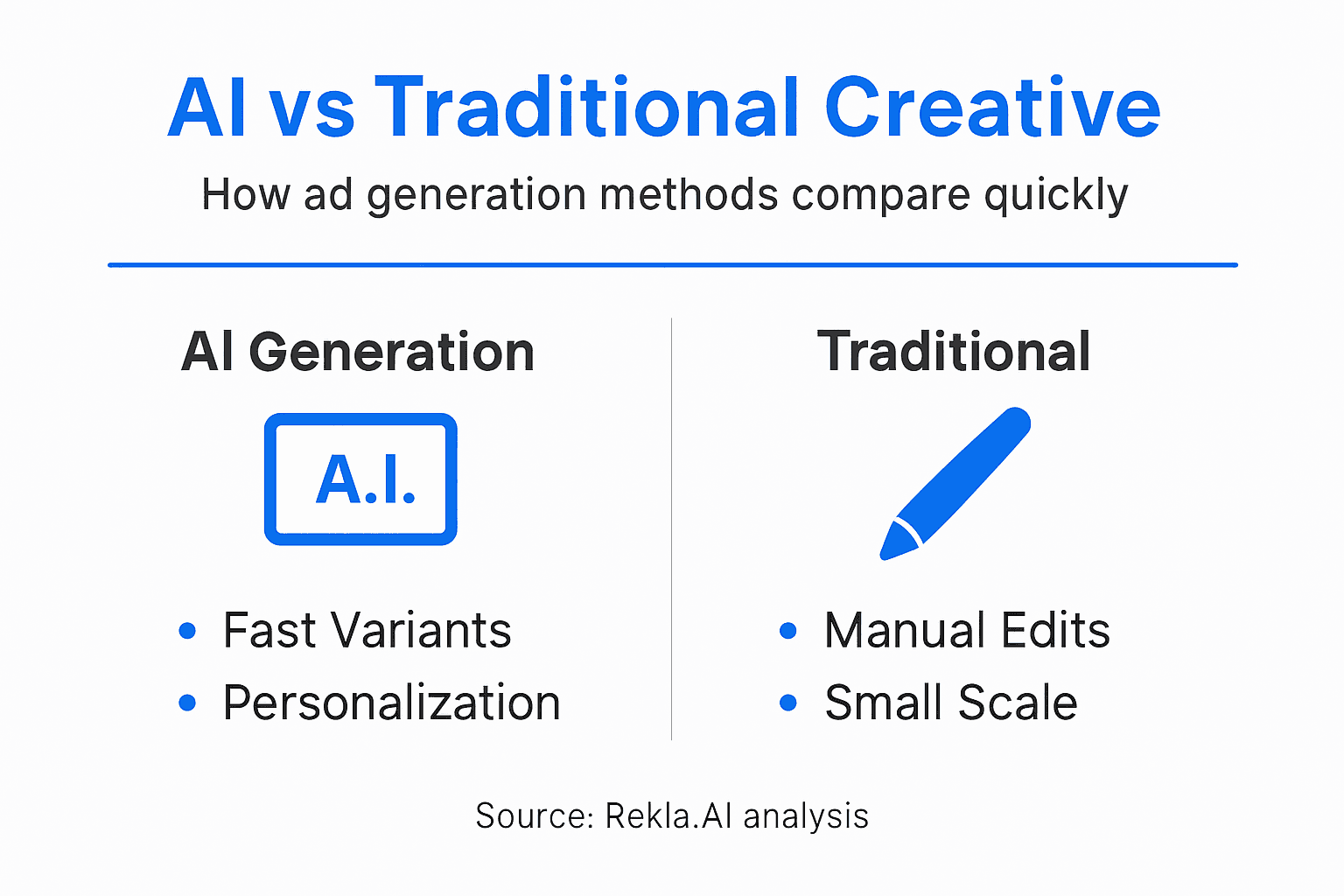
Poniższa tabela podsumowuje kluczowe różnice operacyjne:
| Czynnik | Metoda tradycyjna | Metoda oparta na sztucznej inteligencji |
|---|---|---|
| Czas produkcji | 3-5 dni na kampanię | 4-6 godzin na kampanię |
| Koszt kreacji | $200-500 | $10-50 |
| Głębokość personalizacji | Szerokie segmenty | Użytkownicy indywidualni |
| Wygenerowane warianty | 3-5 na kampanię | 50-100+ na kampanię |
| Prędkość optymalizacji | Cotygodniowy przegląd instrukcji | Automatyzacja w czasie rzeczywistym |
| Skalowalność | Ograniczona wielkością zespołu | Praktycznie bez ograniczeń |
Przepływy pracy AI płynnie integrują testowanie i wdrażanie na wielu platformach:
- Zautomatyzowane generowanie wariantów w nagłówkach, obrazach i wezwaniach do działania.
- Jednoczesne wdrożenie na Facebooku, Google, LinkedIn i innych platformach
- Śledzenie wydajności w czasie rzeczywistym z automatyczną realokacją budżetu
- Ciągłe uczenie się, które poprawia przyszłe kreatywne rekomendacje
- Łatwe skalowanie od pojedynczych kampanii do skoordynowanych strategii wielokanałowych
Pro Tip: Don’t abandon your creative team when adopting AI. Instead, redirect their expertise toward strategic planning, brand development, and quality oversight. Combine AI speed with human judgment for campaigns that perform well and maintain brand integrity.
Wyzwania i ograniczenia kreatywnego generowania AI
Odpowiedzialne wdrażanie sztucznej inteligencji wymaga zrozumienia potencjalnych pułapek i wdrożenia zabezpieczeń.
Bias poses a significant risk. If training data overrepresents certain demographics or perspectives, AI outputs will reflect and amplify those limitations. An AI trained primarily on ads targeting young urban professionals might generate irrelevant content for rural or older audiences. Regular audits of training data and output diversity help mitigate this problem.
Data dependency affects performance quality. AI systems require substantial, diverse datasets to produce effective creatives. Startups and new brands with limited historical data may see less impressive initial results. The solution involves supplementing proprietary data with industry benchmarks and competitor analysis where possible.
Human oversight remains non-negotiable. Automated systems occasionally produce nonsensical combinations, culturally insensitive content, or off-brand messaging. Every AI-generated creative should undergo human review before publication, particularly when entering new markets or addressing sensitive topics.
Typowe pułapki obejmują:
- Nadmierne poleganie na automatyzacji bez strategicznego wkładu lub monitorowania wydajności
- Ignorowanie zmęczenia kreatywnością, gdy odbiorcy męczą się podobnymi wzorcami generowanymi przez sztuczną inteligencję.
- Zaniedbywanie najlepszych praktyk specyficznych dla platformy na rzecz uniwersalnego podejścia
- Nieodświeżanie danych treningowych, co powoduje, że wyniki stają się nieaktualne i powtarzalne.
- Pomijanie testów A/B, które weryfikują rekomendacje AI w porównaniu z alternatywami stworzonymi przez człowieka.
Mitigation strategies focus on balance. Use AI for scale and efficiency while maintaining human involvement in strategy, oversight, and continuous improvement. Diversify training datasets intentionally. Monitor performance metrics closely to catch degradation early. Treat AI as a powerful tool requiring skilled operation, not a replacement for marketing expertise.
Rzeczywiste zastosowanie i korzyści
Konkretne przykłady pokazują, jak małe i średnie firmy osiągają wymierne korzyści dzięki kreatywnemu generowaniu AI.

A digital fitness brand reduced cost-per-acquisition by 28% after implementing AI-generated ad creatives. The platform produced 60 variants testing different headlines, images, and calls to action. Automated A/B testing identified top performers within 72 hours. The winning combinations emphasized transformation stories and used action-oriented imagery, insights the marketing team applied to future campaigns.
An e-commerce retailer selling home goods increased conversion rates by 32% using AI personalization. The system analyzed browsing behavior and purchase history to generate product-specific ads featuring items each user had viewed. Dynamic copy adjusted messaging based on cart abandonment status, price sensitivity signals, and seasonal trends.
A B2B software company scaled campaigns across 12 platforms simultaneously using AI automation. Previously, their small team managed only Facebook and Google due to resource constraints. AI creative generation enabled expansion to LinkedIn, Twitter, Reddit, and industry-specific platforms without additional hiring. Multi-channel presence increased qualified leads by 45%.
Kluczowe korzyści zrealizowane w tych scenariuszach:
- Znaczne skrócenie czasu od koncepcji do wprowadzenia na rynek, co umożliwia sprawne reagowanie na zmiany rynkowe.
- Oszczędności kosztów przekierowane na zwiększenie zasięgu i testowanie odbiorców
- Poprawa wydajności dzięki systematycznej optymalizacji jest niemożliwa przy prędkościach manualnych.
- Przewaga konkurencyjna dla małych zespołów rywalizujących z większymi, lepiej wyposażonymi rywalami
- Spostrzeżenia oparte na danych, które poprawiają ogólną strategię marketingową wykraczającą poza samą kreację reklamową
These successes share common elements: clear objectives, quality input data, human oversight, and commitment to iterative improvement. AI tools amplify good strategy but cannot compensate for fundamental marketing weaknesses.
Wdrożenie i optymalizacja przy użyciu sztucznej inteligencji
Praktyczne kroki prowadzą do udanej integracji generowania kreacji reklamowych AI z przepływem pracy marketingowej.
- Zbieranie i analizowanie podstawowych danych. Gather audience demographics, behavioral patterns, past campaign performance, and competitor benchmarks. Organize this information to feed AI systems accurately. Include successful ad examples that reflect your brand voice and visual identity.
- Wybór i konfiguracja platform AI. Evaluate tools based on platform compatibility, personalization depth, integration capabilities, and cost structure. Configure brand guidelines, targeting parameters, and performance objectives within the system. Most platforms require initial training periods to learn your specific needs.
- Generowanie i wdrażanie wariantów kreatywnych. Use AI to produce multiple headlines, images, and copy variations for each campaign. Deploy these across target platforms with appropriate budget allocations. Start with smaller test budgets to validate performance before scaling investment.
- Wdrożenie zautomatyzowanych testów i optymalizacji. Configure A/B tests comparing AI-generated variants against each other and against human-created controls. Enable dynamic budget allocation that shifts spending toward top performers automatically. Set performance thresholds that trigger alerts for human review.
- Przeprowadzanie regularnych przeglądów i udoskonaleń. Schedule weekly reviews of campaign performance, creative quality, and audience feedback. Identify patterns in top-performing creatives and update AI inputs accordingly. Remove underperformers and refresh creative pools to prevent audience fatigue.
Integration with existing digital advertising strategy frameworks enhances results. AI creative generation works best as part of comprehensive campaigns that include proper audience research, clear conversion paths, and post-click optimization.
Śledź sprawdzone Konfiguracja kampanii cyfrowej praktyki podczas uruchamiania inicjatyw opartych na sztucznej inteligencji. Prawidłowe wdrożenie śledzenia, konfiguracja pikseli konwersji i modelowanie atrybucji zapewniają uchwycenie pełnej wartości poprawy wydajności.
Poznaj zaawansowane techniki, aby Zwiększ zwrot z inwestycji w reklamę dzięki sztucznej inteligencji łącząc optymalizację kreatywną ze strategiami przetargowymi, poszerzaniem grona odbiorców i koordynacją międzyplatformową.
Pro Tip: Refresh your AI inputs monthly by feeding back performance data and successful creative elements. This creates a virtuous cycle where the system continuously learns what works for your specific audience and brand. Don’t let your AI run on stale data, even if current performance seems adequate.
Odkryj Rekla.AI’kreatywne rozwiązania reklamowe oparte na sztucznej inteligencji
Gotowy do przekształcenia swojej reklamy za pomocą inteligentnej automatyzacji? Rekla.AI dostarcza kompleksowe narzędzia, które upraszczają generowanie kreacji, zarządzanie kampaniami i optymalizację wydajności na ponad 15 platformach.
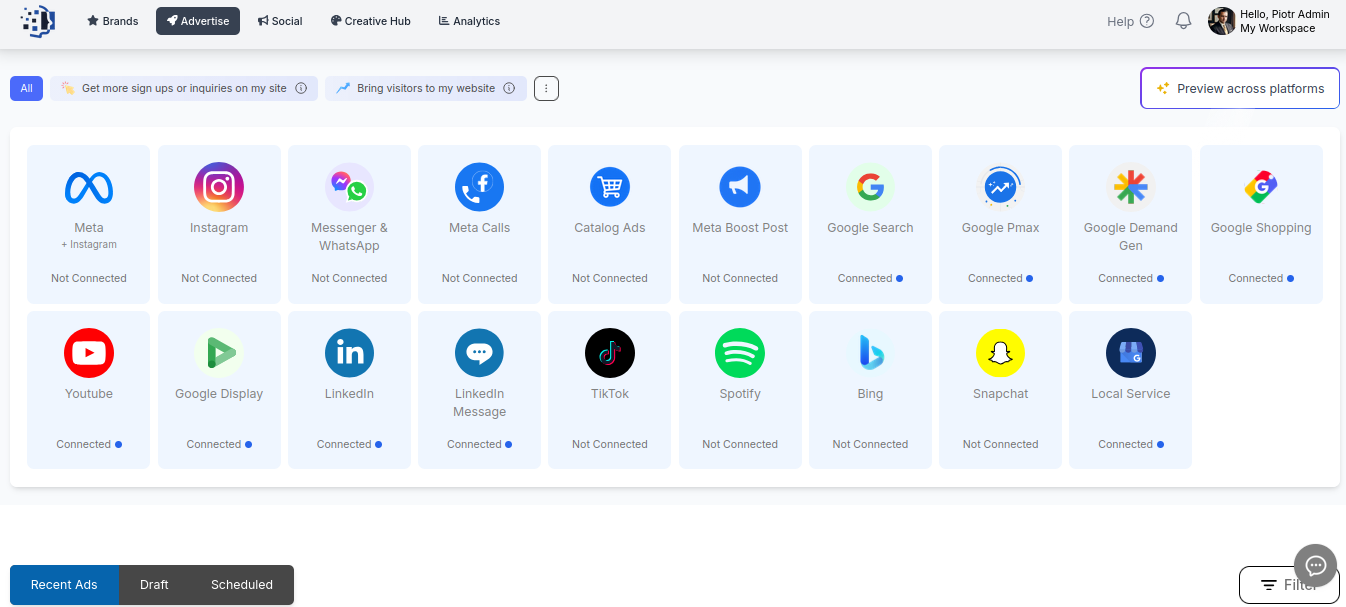
Our platform combines advanced AI models with intuitive interfaces designed for marketers, not data scientists. Generate hundreds of ad variants automatically. Deploy campaigns to Facebook, Google, TikTok, LinkedIn, and more with single-click simplicity. Monitor performance in real-time and let AI optimize budgets toward your best-performing creatives.
Małe zespoły marketingowe osiągają wyniki na poziomie przedsiębiorstwa dzięki Rekla.AI’automatyzacji. Zmniejsz koszty, przyspiesz produkcję i zwiększ zaangażowanie, korzystając z tych samych zasad strategii reklamy cyfrowej, które omówiono w tym artykule. Dowiedz się, jak Zmniejsz koszty reklamy dzięki sztucznej inteligencji przy jednoczesnej poprawie wyników. Dowiedz się, jak firmy generowanie setek kreacji reklamowych za pomocą sztucznej inteligencji korzystając z naszych najnowszych funkcji. Przekształć swoją reklamę cyfrową już dziś.
Czym jest generowanie kreacji reklamowych? Często zadawane pytania
Co odróżnia kreacje reklamowe generowane przez sztuczną inteligencję od tych tworzonych ręcznie?
AI creatives leverage machine learning to personalize content at scale based on audience data, while manual creatives rely on human designers creating limited variants. AI produces dozens of options quickly, tests them systematically, and optimizes automatically. Manual processes offer deeper creative nuance but cannot match AI speed or personalization depth.
Czy kreatywne narzędzia AI wymagają specjalistycznej wiedzy technicznej, aby efektywnie z nich korzystać?
Modern AI ad platforms feature user-friendly interfaces designed for marketers without technical backgrounds. You provide brand guidelines, audience information, and campaign objectives through simple forms. The system handles complex AI operations behind the scenes. Basic digital marketing knowledge suffices, though understanding performance metrics helps you optimize results.
W jaki sposób sztuczna inteligencja dostosowuje kreacje na różnych platformach, takich jak media społecznościowe i wyszukiwarka?
AI systems maintain platform-specific format requirements, character limits, and best practices in their generation logic. The same core message automatically adjusts to Facebook’s visual focus, LinkedIn’s professional tone, or Google’s search intent matching. This ensures native ad experiences that perform well on each platform without manual reformatting.
Jakie najlepsze praktyki pozwalają zachować kreatywną jakość podczas korzystania ze sztucznej inteligencji?
Provide diverse, high-quality training data representing your actual audience. Review all AI outputs before publication to catch errors or off-brand content. Refresh creative pools regularly to prevent audience fatigue. Combine AI-generated variants with human-created concepts to balance efficiency and originality. Monitor performance metrics closely and feed successful patterns back into the system.
Jakiej początkowej inwestycji i harmonogramu powinienem się spodziewać w przypadku narzędzi kreatywnych AI?
Most AI platforms offer subscription pricing from $200-1000 monthly depending on features and scale. Initial setup takes 1-2 weeks including data integration, brand configuration, and team training. Meaningful performance data emerges within 3-4 weeks of active campaigns. Full optimization and ROI improvements typically manifest over 2-3 months as the system learns your specific audience and business context.
 English
 English (UK)
 Polski
 Deutsch
 Español
 Français
 Português
 Svenska
 Dansk
Dansk Nederlands