

Running social media ads can feel like tossing dollars into the wind when results do not match your effort. For American e-commerce brands, the difference between wasted spend and measurable returns starts with strong planning. By focusing on SMART goals and aligning every dollar with specific objectives, you gain clarity and control from the beginning. This approach helps you build a strategy that guides budget decisions, audience targeting, and performance measurement at every step.
Spis treści
- Krok 1: Zdefiniuj cele kampanii i budżety
- Krok 2: Wybierz i celuj w odbiorców o wysokiej wartości
- Krok 3: Generowanie atrakcyjnych materiałów reklamowych opartych na sztucznej inteligencji
- Krok 4: Wprowadź testy A/B dla wariantów reklam
- Krok 5: Monitoruj analizy i dostosuj strategie
Krótkie podsumowanie
| Główna myśl | Wyjaśnienie |
|---|---|
| 1. Określ jasne cele kampanii i budżety | Ustal konkretne cele i budżet, aby zapewnić efektywne wydatki na reklamy i mierzalny sukces. |
| 2. Skup się na docieraniu do wartościowej grupy docelowej | Zidentyfikuj kluczowe segmenty klientów, aby zmaksymalizować zwrot z inwestycji, używając spersonalizowanych komunikatów, które trafią do zamierzonych odbiorców. |
| 3. Twórz angażujące kreacje reklamowe generowane przez SI | Wykorzystaj narzędzia AI do tworzenia różnorodnych formatów reklamowych, które przyciągają uwagę i skutecznie zachęcają do interakcji z odbiorcami. |
| 4. Przeprowadź systematyczne testy A/B | Testuj po jednej zmiennej naraz, aby zrozumieć, które aspekty Twoich reklam prowadzą do lepszych wyników i optymalizuj je stale. |
| 5. Monitoruj analizy i dostosuj strategie | Regularnie śledź kluczowe wskaźniki wydajności i wprowadzaj zmiany oparte na danych, aby ulepszać kampanie i osiągać swoje cele. |
Krok 1: Zdefiniuj cele i budżety kampanii
Before you spend a single dollar on social media ads, you need a clear destination. Defining your campaign objectives and budget is the foundation that separates businesses that waste money from those that generate real returns. This step determines what success looks like for your ads and ensures every dollar works toward measurable goals.
Start by getting specific about what you want to achieve. Are you trying to drive sales, collect email addresses, increase website traffic, or build brand awareness? Your answer matters because it shapes everything that follows. This is where Cele SMART dla kampanii w mediach społecznościowych come in, which stands for Specific, Measurable, Attainable, Relevant, and Time-bound objectives. Instead of saying “I want more sales,” you’d say “I want to generate 150 e-commerce purchases from Instagram ads within 60 days with a target cost per acquisition of $35 or less.” That specificity transforms a vague wish into an actionable target that you can actually measure against.
Once your objectives are locked in, allocate your budget strategically. Think about where your audience spends time and which platforms align with your goals. A local service business might find better returns on Facebook, while a fashion brand might dominate on TikTok. The strategiczne decyzje dotyczące tego, gdzie i kiedy wyświetlać reklamy directly impact your return on investment, so this isn’t a decision to make casually. Start with what you can afford to test, then scale what works. Most e-commerce brands find success starting with 30 to 50 percent of their advertising budget allocated to their strongest performing platform, with the remaining funds split across platforms being tested or maintained for stability.
Oto podsumowanie, w jaki sposób różne platformy mediów społecznościowych pasują do celów kampanii:
| Platforma | Najlepsze dla | Możliwości targetowania | Typowe Branże |
|---|---|---|---|
| Usługi lokalne, kontakty | Wiek, lokalizacja, zachowanie, zainteresowania | Usługi, lokalna firma | |
| E-commerce, świadomość marki | Zainteresowania, zaangażowanie, dane demograficzne | Moda, uroda, handel detaliczny | |
| TikTok | Zaangażowanie marki, wiralowość | Zainteresowania, wzorce zaangażowania | Moda, rozrywka |
| Reklamy Google | Ruch na stronie i sprzedaż | Intencja wyszukiwania, słowa kluczowe, odbiorcy | E-commerce, oprogramowanie |
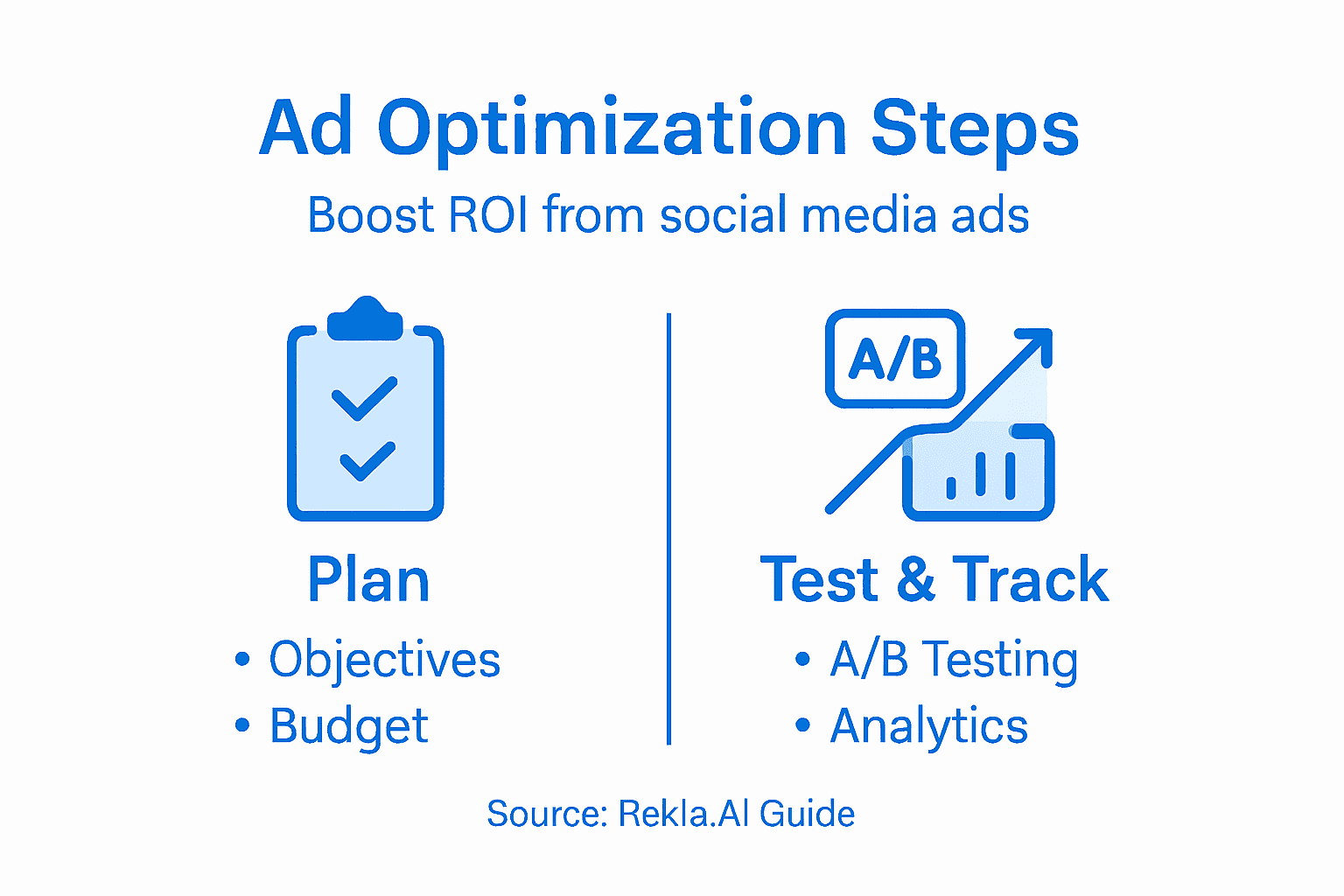
Porada profesjonalisty: Set aside 10 to 15 percent of your total ad budget as a testing reserve specifically for experimenting with new audiences, ad formats, or platforms, allowing you to discover high-potential opportunities without risking your core budget.
Krok 2: Wybierz i ukieruj wartościowe grupy odbiorców
Not all customers are created equal, and throwing your budget at everyone wastes money fast. This step is about identifying and focusing on the people most likely to buy from you, which directly impacts your ROI. The better you understand who your high-value audiences are, the smarter you can spend your advertising dollars.
Start by analyzing your existing customer data to spot patterns. Who are your best customers? What do they have in common? Are they repeat buyers, high-ticket purchasers, or people who refer others? Look at their demographics, behaviors, interests, and purchase history. This is where segmentacja odbiorców becomes powerful. By dividing your customers into smaller groups with similar traits, you can deliver personalized messages that actually resonate with each segment rather than broadcasting the same generic ad to everyone. A 35-year-old parent interested in home improvement will respond to completely different messaging than a 22-year-old gamer, even if they both visit the same websites.
Once you’ve identified your high-value segments, use platform targeting tools to reach them. Facebook and Instagram let you target by age, location, interests, and purchase behavior. Google Ads targets based on search intent and browsing history. TikTok targets by engagement patterns and interests. The key is matching your rynki docelowe do segmentów klientów, którzy najprawdopodobniej dokonają zakupu your product. Start narrow with your most profitable segments, then gradually expand to test lookalike audiences (people similar to your best customers). Your first campaigns should focus on precision over scale. A small, highly targeted audience often produces better returns than a massive, poorly targeted one. Test what works, measure the results, and scale the winners.
Porada profesjonalisty: Use your platform’s custom audience feature to upload existing customer email lists and create lookalike audiences from them, instantly expanding your reach to people with similar characteristics and purchasing power to your best customers.
Krok 3: Generuj atrakcyjne kreacje reklamowe oparte na sztucznej inteligencji
Great targeting means nothing if your ad looks like everything else scrolling past. This step is about creating visuals and copy that actually stop people mid-scroll and make them want to engage. AI-powered tools can help you generate multiple creative variations quickly, test them, and identify which ones resonate most with your audience.

Start by gathering inspiration from your competitors and industry leaders. What ad formats are they using? What colors, messaging styles, and layouts seem to work? Then use AI to generate variations of your best-performing concepts at scale. You can create wiele kreacji reklamowych ze sztuczną inteligencją uwzględniającą funkcje obrazu rather than hiring a designer for each variation, which saves time and money while still maintaining quality. The real power here is that AI can produce dozens of creative combinations based on your brand guidelines and target audience. One client might respond to a minimalist design with bold copy, while another prefers lifestyle imagery with softer messaging. Instead of guessing, you let the data show you what works.
Gdy będziesz miał gotowych wiele kreacji, Narzędzia oparte na sztucznej inteligencji analizują dane Twoich reklam, aby zidentyfikować skuteczne kreacje i zoptymalizować teksty dzięki przetwarzaniu języka naturalnego., conducting automated A/B testing to see which messages and visuals drive engagement. Your first round of testing should include variations in headlines, body copy, images, and calls to action. A/B test one element at a time so you actually know what moved the needle. For example, test two different headlines while keeping everything else identical. Run each test for at least 3 to 5 days before making decisions, giving the platform enough time to gather meaningful data. As results come in, pause underperformers and scale the winners.
Porada profesjonalisty: Build a swipe file of your top-performing creatives and use them as reference templates for generating future ads, creating a consistent visual language that your audience begins to recognize and trust.
Krok 4: Wprowadź testy A/B dla wariantów reklam
You can’t optimize what you don’t measure, and you can’t improve without testing. A/B testing is where you systematically compare different versions of your ads to see which one actually performs better. This step separates marketers who guess from those who know exactly what works for their audience.
Start with a single variable to test. Pick one element that could impact performance, like your headline, image, call to action, or color scheme. Change only that one variable while keeping everything else identical. If you test too many things at once, you won’t know which change actually drove the results. Run your test with a roughly 50/50 split of your budget between version A and version B. Both versions need to reach enough people to generate meaningful data, so don’t run tests on tiny budgets. A good rule of thumb is to allocate at least 20 percent of your total ad spend to testing. Using Metody testowania kombinatorycznego do oceny wariantów reklam pomaga obniżyć koszty testowania przy jednoczesnym poprawieniu wykrywania błędów poprzez skupienie się na najważniejszych kombinacjach parametrów. Takie naukowe podejście oznacza, że nie wydajesz pieniędzy na chybił trafił.
Let your test run for at least 5 to 7 days before making any decisions. Platforms like Facebook and Google need time to optimize delivery and show which version resonates more. After your test concludes, look at the metrics that matter to your business. If you care about clicks, compare click through rates. If you care about sales, compare conversion rates and cost per acquisition. Pause the losing version and scale the winner. Then immediately start testing the next variable. A/B testing is continuous. The best performers from this test become the baseline for your next test. Over time, these incremental improvements compound into significantly better overall campaign performance.
Porada profesjonalisty: Stwórz kalendarz testów i systematycznie rotuj zmiennymi, testując jeden element tygodniowo, aby zbudować bibliotekę zwycięskich kombinacji, które możesz wykorzystać w przyszłych kampaniach i na różnych platformach.
Krok 5: Monitoruj analizy i dostosowuj strategie
Launching your ads is only half the battle. The real work happens after they go live, when you watch the data come in and make smart decisions based on what you see. Monitoring analytics and adjusting your strategies is what separates campaigns that waste budget from those that generate serious returns.
Start by identifying the metrics that actually matter to your business. Don’t get distracted by vanity metrics like impressions or reach. Focus on what connects to revenue. If you’re selling products, track conversion rate and cost per acquisition. If you’re building an email list, track cost per lead and list quality. If you’re driving traffic, track click through rate and landing page conversion. Set up your analytics dashboard so you can see these numbers at a glance. Most platforms like Facebook, Google, and TikTok have built-in dashboards, but you might also pull data into a spreadsheet or analytics tool for a better overview. Check your metrics daily during the first week of a campaign, then move to every other day once things stabilize. Monitoring key performance indicators helps you assess campaign success and recognize trends in audience behavior and market dynamics, allowing you to pivot strategies to optimize ROI.
Ta tabela przedstawia kluczowe wskaźniki efektywności reklam i ich główne zastosowanie biznesowe:
| Metryczny | Co mierzy | Najlepsze do |
|---|---|---|
| Współczynnik konwersji | Odsetek osób podejmujących działania | Ocena efektywności oferty |
| Koszt pozyskania klienta | Koszt pozyskania klienta | Optymalizacja budżetu |
| Współczynnik klikalności | Zaangażowanie w reklamę | Kreatywność i testowanie przekazu |
| Koszt Pozyskania Leada | Koszt pozyskania leada | Kampanie generowania leadów |
When you spot underperformers, take action fast. If a particular ad, audience, or platform is losing money, pause it. Don’t wait hoping it improves. Conversely, when something works well, scale it gradually. Double your budget on a winner and watch for 2 to 3 days before doubling again. Scaling too aggressively can cause performance to drop because you’re reaching less qualified people. Also watch for seasonal trends, day of week patterns, and time of day performance. You might discover that your ads crush it on weekends but flop on Tuesdays. That’s valuable information. Use it. Document what works so you can replicate it in future campaigns. Keep notes on winning audiences, creatives, messaging angles, and offers. This swipe file becomes your playbook.
Porada profesjonalisty: Set up weekly analytics reviews where you compare performance against your original objectives, identify your top 20 percent of spending that generates 80 percent of results, and reallocate budget away from everything else.
Maksymalizuj zwrot z inwestycji w reklamy w mediach społecznościowych dzięki Rekla.AI
The challenge of crafting targeted, AI-driven ad campaigns that deliver measurable results is at the core of every advertiser’s goal. If you have struggled with pinpointing high-value audiences, generating compelling creatives, or continuously optimizing performance through A/B testing and analytics monitoring, you are not alone. Rekla.AI directly addresses these pain points by simplifying complex tasks like audience segmentation, AI-powered creative generation, and budget management across more than 15 platforms including Facebook and TikTok.
Unlock smarter advertising with features tailored to the exact needs outlined in the article — from precise audience targeting to real-time optimization — so you never waste budget on guesswork again.
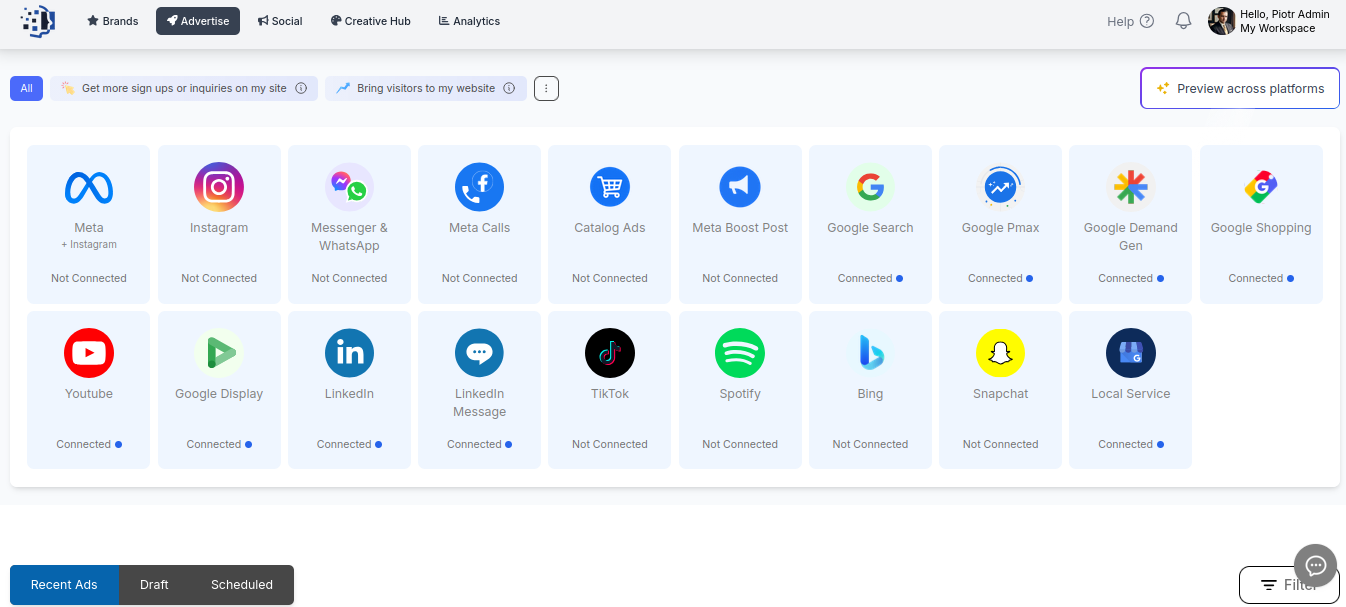
Gotowi zrewolucjonizować swoją strategię reklamową w mediach społecznościowych i zacząć widzieć wyższe zwroty już dziś? Osiągnijcie swoje cele kampanii szybciej, odkrywając, jak Rekla.AI wykorzystuje zaawansowaną technologię sztucznej inteligencji do tworzenia kampanii bez użycia rąk i ich ciągłego doskonalenia. Dowiedz się więcej i rozpocznij swój bezpłatny okres próbny już teraz na Rekla.AI. If targeting or ad creative creation feels overwhelming, see how our platform solves those challenges directly with our all-in-one tools designed for digital marketers and small businesses. Don’t let another dollar slip away without the power of AI-driven optimization on your side.
Często zadawane pytania
Jakie są pierwsze kroki w optymalizacji reklam w mediach społecznościowych pod kątem wyższego zwrotu z inwestycji?
To optimize social media ads, start by defining specific campaign objectives and setting a budget. Determine what success looks like for your ads, such as generating 150 e-commerce purchases within 60 days, and allocate your budget based on where your target audience spends their time.
Jak mogę zidentyfikować wartościowe grupy odbiorców dla moich kampanii w mediach społecznościowych?
Analyze your existing customer data to find patterns among your best customers. Focus on demographics, behaviors, and purchase history, then segment your audience to deliver personalized messages that resonate with each group.
Testy A/B odgrywają kluczową rolę w optymalizacji reklam w mediach społecznościowych.
A/B testing helps compare different versions of your ads to determine which performs better. Test one variable at a time, such as a headline or image, and run the test for at least 5 to 7 days to gather meaningful data before deciding on changes.
Jak monitorować analitykę, aby dostosować moje strategie w mediach społecznościowych?
Focus on metrics that directly impact your business, such as conversion rates and cost per acquisition. Regularly check these numbers, especially during the first week of your campaign, to quickly identify underperformers and reallocate your budget accordingly.
Jakie typy kreacji reklamowych powinienem zastosować, aby uzyskać lepsze zaangażowanie?
Create visually appealing and unique ad creatives that stand out in users’ feeds. Gather inspiration from competitors, then utilize AI tools to generate multiple variations of your visuals and copy, testing which combinations yield the best engagement rates.
Jak zapewnić efektywne wykorzystanie budżetu na reklamy w mediach społecznościowych?
Set aside 10 to 15 percent of your total ad budget for testing new audiences and ad formats. This reserve allows you to explore high-potential opportunities while maintaining your core budget for well-performing ads.
 English
 English (UK)
 Polski
 Deutsch
 Español
 Français
 Português
 Svenska
 Dansk
Dansk Nederlands